
If, for one month, you could live anywhere, any place, in a certain residence, or in a famous home, where would you pick? You can time travel into the past or future.
If, for one month, you could live anywhere, any place, in a certain residence, or in a famous home, where would you pick? You can time travel into the past or future.
Today’s post is by guest blogger, Guy Biederman
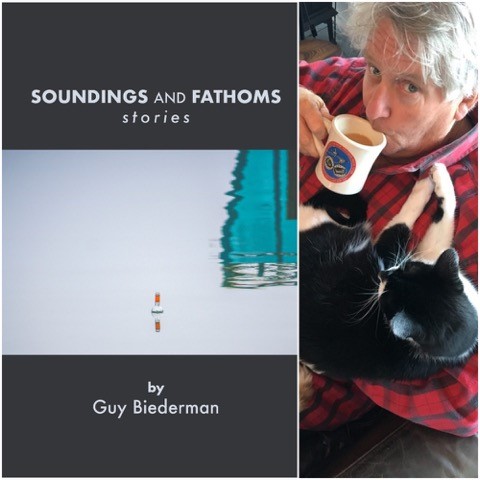
For years I wrote without sending my work out for publication. Publishing, and rejection, seemed rather beside the point. I wrote because I was a writer. Felt the pull, found the chair. Occasionally I’d send out a story. Some were published. I won a few contests. But mostly I was content with writing and teaching. I created a literary magazine, Bust Out Stories, and published books by others. One student called me a story midwife.
Two years ago, for whatever reason, I decided it was time to send out my work in earnest. I created a stable of revised stories and poems that felt ready to go and began to research and read — a lot. It was fun. I embarked on my own maniacal sending binge, sending out work every day, or at least several times a week.
Since then I’ve had over 500 rejections. I live for rejections. It means I’m sending. I’ve also had 60 acceptances, published a book, received invitations to be a featured reader, and in April, I’ll be hosting The Floating Word, on commercial-free Radio Sausalito.
I share my research with friends and they share with me. I believe in three essential ingredients—inspiration, deadlines, and a place to send the work. It was important to shift and change the narrative of this process.
Instead of submitting, I send. Instead of rejections, I’m declined. I record where, when, and what I send, and of course, the results. I record quality declines if I’m given feedback, especially from those who invite me to try them again. And when accepted, I write Yes! next to that entry in Zapfino font, just to party a little.
When someone declines my work, I send ’em two more. Unexpected pleasures have included correspondences and email friendships I’ve developed with publishers and editors. They’re writers, too. They appreciate being acknowledged and respected. They appreciate when I buy their magazines and chapbooks and let them know what I like about their books. They appreciate knowing I’m not scatter-shot sending, but sending with care and purpose.
I’ve had impersonal responses, funny responses, encouraging responses with suggestions that eventually led to that same story being accepted by another journal. Once I had a story declined that I hadn’t even sent. It was like they had peeked into my files and said, ‘Don’t even think about sending us that one, dude, don’t even write it.’
Of course I sent it elsewhere.
To paraphrase Goethe, as soon as we begin, we put ourselves into the flow and things start to happen. Little steps lead to big. It’s a numbers game. Send send send.
If you send out a hundred times, with care and purpose, you’re going to receive some acceptances. Attend open mics. Listen to new voices, lend your own.
You’ll meet people. Venn diagram relationships will form. Recently after a reading, I was handed a flyer and invited to send my work to a journal. I did. They accepted a story and a poem.
Last week a friend forwarded me the link to an online magazine. According to the guidelines (editors are grateful when writers read and follow them!), submissions were closed. I liked the magazine, made a small donation, expressed my admiration, and inquired about the next open submission period. That editor emailed back, thanking me. She had found my stories online, asked if I could send some work her way. I did. She accepted three.
This is what happens when you send your work out and it starts getting published. You develop a presence online. People from all over the world find you, read your work and get in touch. My stories and poems have appeared in New Zealand and England, as well as in the U.S.
I still love print magazines, too. Some publications have both. It’s not either/or, but and/or when it comes to publishing.
One of my concerns with this new practice was that it might adversely affect my writing and/or my teaching. It hasn’t. I still write at the same pace and my new work is being accepted. I may even be a better writer than before. I still teach. In fact, I now have an offering called Send It! for those who want to send their work out but desire some tools.
One thing leads to another. Work appears in print and online. Friends are made. Poems and stories enter your world and change your life. For me, it started with the decision to send my work out. I shifted. I changed the way I looked at rejection and developed momentum. Now when I’m asked to share my experience and discoveries, I distill my advice to two simple words: Send It!
The Write Spot Blog has a list of places to submit your writing.
Guy’s work has appeared in many journals including Carve, Flashback Fiction, Exposition Review, The Sea Letter, and The Write Spot: Reflections.
Guy’s collection of short work, Soundings & Fathoms, was published last fall by Finishing Line Press.
Pretty Owl nominated his flash fiction for Best of The Net 2018.
His book can be purchased from Finishing Line Press and on Amazon.
For a signed copy of Soundings & Fathoms, email Guy at Guyb-at-sonic.net
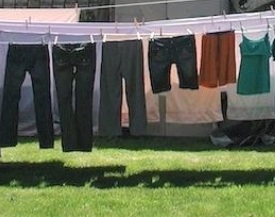
Writing Prompt: Today I saw . . .
You can write about what you saw today.
Start writing and see what happens.
Write freely and with no cares about the outcome. Just write!

You have just been notified that you have won a prize on the level of a gold medal at the Olympics, or a Grammy, or an Academy Award, or a Pulitzer Prize.
Write about a special skill you have and how you won an award for that.
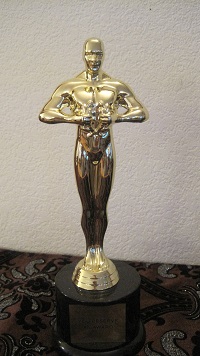
Let your imagination soar. What have you won a prize for?
What is your reaction?
Write your acceptance speech.

“A time comes when silence is betrayal.” Martin Luther King, Jr.
Write about a time you were betrayed. Or a time you betrayed someone.
You could start with: I felt betrayed . . .
Or write about a time you were silent and now wish you had spoken up.
Or write about a time you could no longer remain silent.
You could start with: I want to tell you about what happened . . .

Write about a lie someone told you, or a lie you told.
White lies, bald-faced lies, untruths, falsehoods, fabrications, whoppers . . . whatever you call ‘em, you have experienced ‘em . . . Now write about ‘em.

Today’s Guest Blogger is Bella Mahaya Carter. I have enjoyed her blog posts. I hope you do, too. Here is one of her inspirational stories.
When I was a film student in the eighties, my then-boyfriend and now-husband, Jim, and I borrowed a professional ¾-inch video camera from school and spent a long, magical afternoon taping an interview with his beloved grandmother. When we finished we had two-and-a-half hours of raw footage that required editing, but we didn’t have the equipment. One day we’ll get around to this, we thought.
A few years later, after we’d married and after his grandmother had died, we wanted to keep her legacy alive by sharing the footage we took of her with the family. We agreed it would make a great holiday gift for Jim’s siblings, aunts, uncles, and cousins. We had it transferred to VHS, but when we viewed it, we were painfully reminded that it was raw footage. It needed to be cut. But again, we had no editing equipment, nor funds to rent it.
Years later we reached out to John Crane, a talented filmmaker friend who’d created a beautiful video of his own grandmother, and asked if we could hire him to edit ours. He was busy at the time and couldn’t take on our project, but encouraged us to do it ourselves. “You have a problem with the sound,” he said. “Hear that background hiss?” He told us it could be adjusted if we uploaded the footage to our computer. But Jim had to teach himself iMovie, and despite our best intentions, more years passed by.
The subject of the grandmother video often surfaced right after Thanksgiving, which was our busiest time of year. Taking on a project like that at year’s end seemed impossible. It was this past December when Jim mentioned the grandmother video again. I once again cringed and thought, Yeah, right. We’ll whip it out in all our spare time. Impossible.
But then, a few days later, early one Saturday morning, on the eighth of December, I found myself listening to Michael Neill’s new podcast, Creating the Impossible. I’d read and enjoyed his book with the same title. For his podcast Michael interviewed speaker and author Anita Moorjani. Their discussion was lively and inspiring. When I finished listening, a small voice inside said, What if making that video is not impossible? What if you just think it is? What if it doesn’t have to be perfect? What if you can just crank it out? What if there really is enough time and you only think there isn’t?
Jim’s birthday is the week before Christmas. I knew there was no greater gift I could give him than completing this project.
When he woke up, I announced, “We have a busy weekend.”
“Why?” he asked. “What are we doing?”
“We’re going to crank out the grandmother video.”
He was thrilled. He’d been teaching himself iMovie and had the technical, hands-on editing skills I lacked, but what I hadn’t realized until we tackled this project together was that I had big-picture writing and editing skills that he needed. Although he knew how to use the software, he wasn’t sure how to approach the project. I knew we had to organize the material by first logging the footage and then organizing stories by theme.
We worked 10-hour days for four days and ended up with a half-hour tribute we both liked. And it was fun. It turned out we needed each other’s skills to complete the project. But first I needed to believe this project was possible. It wasn’t until I questioned my thinking, until I believed it could be done, that we accomplished this long-held goal.
Writing is like this. It takes time, sometimes years, as well as the acquisition of skills. Sometimes collaboration is necessary. Writers do well in communities, with support from teachers, coaches, and colleagues. And success is definitely swifter when you leave your limiting thinking alone. When, as Caroline Myss says, you don’t invest your “belief dollars” in limiting or self-defeating thoughts.
I leaned this while keeping my eye on the finish line of my memoir. This time last year I was four months away from publication. I still can’t believe it’s behind me. For years it loomed ahead—it was my future—and now that book launch is my past.
It’s nice to get to the other side of creative dreams and goals, whether personal or professional. And our success is directly related to what we believe about our own thinking.
I’ve started outlining my next book about how to Find Freedom and Peace of Mind While You Write, Publish, and Promote Your Book. The other day I detected a tiny but insidious thought: Who do you think you are writing a book like this? There are many more experienced and worthy writers who could do it. Why you? As a younger, less experienced writer I may have taken that thought at face value. I might have believed it. It may have temporarily stopped me. But I quickly responded: That may be true, but it’s something I want to do. It’ll be fun. I may not be perfect, but who is? The fact is I’m learning and growing all the time and I have tons to say on this topic. Why not me?
Thoughts arise in the mind all the time. I’ve discovered that I can amplify them with my emotions (energy in motion) and belief or tune them out and let them pass. It’s my choice which thoughts to believe.
People create the impossible every day, but to do so, you must believe that you can—despite the naysaying voices within and without.
What “impossible” venture are you ready to create? If it’s a writing project, or if you just want to start writing again, or for the first time, check out my workshops. I’d love to help you create the “impossible.”
Bella’s Personal Story
I’m a poet, author, writing teacher, developmental editor, and empowerment coach who believes in the power of writing to heal and transform lives.
My expertise is in helping students and clients find their voice on the page and in the world. I am passionate about facilitating artistic expression, and my mission is to heal myself and others through creative work.
My memoir, Raw: A Midlife Quest for Health and Happiness.
Book summary:
In an effort to cure chronic stomach problems, I adopted a 100 percent raw, vegan diet, which eased my symptoms and produced impressive, unexpected perks—but didn’t completely heal me. So I looked to my mind for answers, and discovered that unconscious negative thoughts, combined with a stressful, hectic life, were sabotaging my health and happiness.
Anxiety and a desire to heal it holistically—even before I knew what it was—is at the heart of this story, which reveals my struggle to face my fears, release perfectionism, surrender things beyond my control, and find validation within for my life and work.
Divided into three sections—body, mind, and spirit—Raw is a chronicle of my journey, which dragged me, kicking and screaming, into spiritual adulthood.
Prompt: Write about a time you felt different.
If you have time . . . write, using this prompt now. Or, think about a time you felt different. Pause. Take some time to remember,
“Diversity goes deep and is often handled on intellectual and political levels.” —Pat Schneider, Writing Alone and With Others.
Prompt: Generate a list of categories that make us different from one another.
Some ideas: Age – Gender – Socioeconomics – Background – Personality – Married or not – Have children or not – Parents alive or not – Lived/grew up with parents in the home – Vegetarian – Athletic – Bookworm – Seeker – Spiritual – Religious – Have tattoos – Have piercings – Hearing impaired – Race – Tall or short
Prompt: Choose a diversity and write a dialogue between two or three people.
Prompt: Write about someone being hurt as a result of being different.
Possibilities:
Write about a time you were hurt because of being different.
Write about a time you witnessed someone being hurt because of being different: Write in the first person, as you were the person being hurt. Stay in the voice of the person who was being hurt.
Write about witnessing someone being hurt and no one helped, including yourself. A time you saw someone being harassed or treated rudely or meanly and you did mothing.
“I saw this and I did nothing.”
Prompt: Write about a time you felt different.