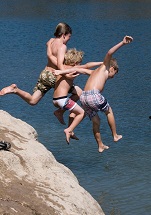
Write about something new you tried recently.
Did you love it?
Did you hate it?’
Spill the details!
Write about something new you tried recently.
Did you love it?
Did you hate it?’
Spill the details!
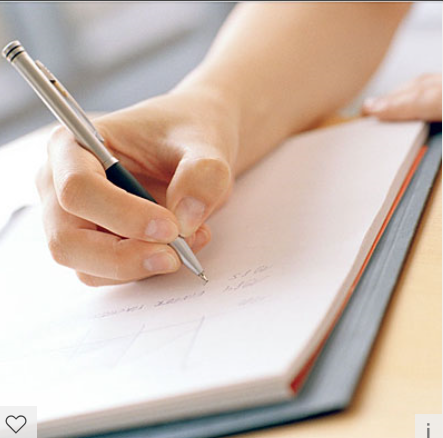
How to get to an epiphany in writing.
One way to discover an epiphany:
Start with: The problem began with wanting something.
I wanted . . .
I wanted it because (back story) . . .
To get it, I . . . (action)
However, something got in my way: (there may be several actions/reactions/sequences that got in the way) . . .
I had to try something different, so I . . .
At the time I was thinking that . . .
The turning point came when . . .
When that happened, I realized . . .
Resolution: After that I . . .
Another way to get to an epiphany:
Write about a pivotal event in your life. Something happened and you weren’t the same after. Narrow it down to the exact moment and location where it took place. It could be something wonderful or something painful. It could be funny, sad, heartbreaking or touching. Ideally, it’s a moment that changed your life. It changed how you live your life, how you view life.
If it comes
from your childhood. . . how has it formed you as an adult?
If it happened after you became an adult, how has it changed your life?
To get to the epiphany, drill down to the fine-tuning details of what happened that changed you. Be specific: Where, when, who was there, add any details you can remember.
Inspired by Adair Lara writing workshops.
You can also use this template to flesh out your fictional characters.
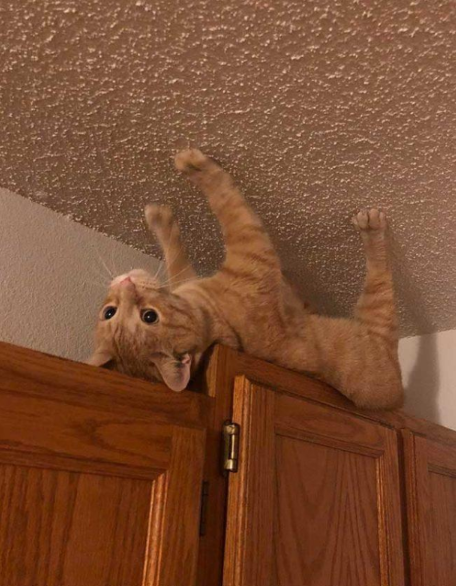
You can’t get away with it.
Or, can you?
Write about something you or someone else got away with . . . or didn’t get away with.
Today’s writing prompt is inspired by Jumpstart Writing Facilitator Lakin Khan.
From Lakin:
Participants in the Jumpstart Writing Workshops that I facilitate have been doing some ekphrastic writing, which is descriptive writing about or a response to visual art.
We have been having fun looking at paintings and photos, imaging stories and practicing writing visual descriptions.
Lakin’s response to a postcard of Claude Monet’s painting “Wheat Stacks at Dawn.”

“Frost is the frosting on these giant cupcakes of hay waiting in the pale pearly peachlight of dawn for the Giant of Alsace to stomp down the hill for his morning meal. At least so far, he’s been happy with hay. What might happen if he decides to go all keto on us and demand ostrich-eggs over easy and a side of humans to start his day?” ~ Lakin Khan
Another example is Anne Sexton’s poem “Starry Night” one of many ekphrastic responses to the painting of the same name by Vincent Van Gogh.
Perhaps you remember Don McLean’s song, “Starry Starry Night” — another example of an artist in one medium responding to an artist from another.
I hope you find a chance to write ekphrastically, locating an image that sparks your imagination or elicits a response.
Or take a chance with random postcards or images in a magazine or museum brochure.
Or even better, treat yourself to a trip to an art museum and spend some time writing there.
Originally posted on January 29, 2020 by Lakin Khan on her blog, Rhymes With Bacon.
Lakin Khan facilitates Jumpsart Writing Workshops in Sonoma and Marin Counties.
Write about something that makes you laugh every time.
Or write about someone who makes you laugh.
~ “Men like my father cannot die. They are with me still, real in memory as they were in flesh, loving and beloved forever.” How Green Was My Valley. Write about someone who lives on in you or someone you will never forget.
~ “We’ll always have Paris.” Casablanca. Write about something you will always have or something you no longer have and wish you still had it.
~ “I was to think of these days many times. Of Jem, and Dill . . . and Atticus. He would be in Jem’s room all night, and he would be there when Jem waked up in the morning, To Kill A Mockingbird. Write about someone who is always there for you. Or someone who needs you.
~ In Butch Cassidy and the Sundance Kid, there’s a scene where Butch and Sundance run up a mountain to avoid the relentless posse, finding themselves at a dead end. Butch says the only way is to jump, a hundred feet or so to the fast-moving stream below. But Sundance won’t hear of it.
Butch: “It’s the only way. Otherwise we’re dead.” They argue about it for a while until Sundance admits the real reason he doesn’t want to jump. “I can’t swim.”
Butch: “You stupid fool, the fall’ll probably kill you.”
Write about a time you had a close call or a chance you took.
~ Gene Wilder agreed to play Willy Wonka under one condition: that his character make a wildly grand entrance:
“When I make my first entrance, I’d like to come out of the door carrying a cane and then walk toward the crowd with a limp. After the crowd sees Wonka, they whisper and then become deathly quiet. As I walk toward them, my cane sinks into one of the cobblestones I’m walking on and stands straight up, by itself. But I keep on walking, until I realize that I no longer have my cane. I start to fall forward, and just before I hit the ground, I do a beautiful forward somersault and bounce back up, to great applause.”
His reason for wanting to include the dramatic entrance: “Because from that time on, no one will know if I’m lying or telling the truth.”
Write about an agreement you made or a lie you told.

Today’s writing prompts are inspired from movies.
~ Thelma and Louise, National Lampoon’s Vacation, Little Miss Sunshine. Write about a road trip.
~ Dirty Dancing, Saturday Night Fever, Footloose. Write about how you learned to dance.
~ The Sting, two con men outcon a con. Write about a time you were tricked, or you tricked someone.
~Forrest Gump. Life is like a box of . . . [fill in the blank and continue writing].

What responsibilities did you have as a child?
What was required of you from the adults in your life?
What responsibilities do you carry over from your childhood?
What responsibilities do you want to give up?
You are free to write whatever you want, using these prompts to spark ideas.
As a child, did you get an allowance?
If yes, how much? What did you spend it on?
If you didn’t receive an allowance, what did you do for spending money?
If you didn’t receive spending money, do you wish you had? What would you have spent it on?