Category: Prompts

  • Edges . . . Prompt #446

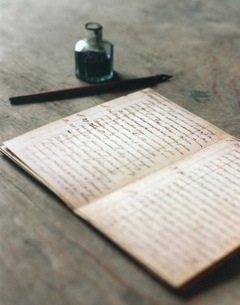
    Photo by Marlene Cullen

    If your life was surrounded by a frame, what would the edges look like?

    Sharp, soft, curvy, plain, straight?

    Brightly colored, small, large?

    Dull, deep, shallow?


    Stand out?

    Plain, simple, fancy?

    Blend in?

    Fierce?

    Protective?

    Describe what the edges of your life’s frame would look like.

    Does your frame help you or hinder you?

    What kind of edge does your life hold?

    Write about a frame that borders your life.

  • Character’s Voice . . . Prompt #445

    Your fictional characters should be as different from one another as the real people in your life. One way to show differences is in their voices.

    Years ago, returning home from Aqua Zumba, I drove past Hermann Sons Hall and remembered the German woman who managed the building as if it were her immaculate residence. On our early morning walks, my husband and I watched as she polished door knobs, washed windows, and replaced gravel in the driveway. Her mission was to keep “her” building spotless. You didn’t want to cross her.

    How does a writer establish “voice” for characters? 

    If your character is a stoic German woman who manages a building as if it were her pristine cottage, picture what she looks like. Short hair, stern features, sensible shoes, tailored clothing. Then you can imagine what she sounds like: sharp, clipped sentences, uses precise words sparingly.

    Contrast that with a Mother Goose type:  round in looks, ample lap for children to sit on, laugh lines forming parenthesis around her mouth, her eyes crinkle with merriment. She might talk softly or slow. You can hear the smile in her sugary voice.

    Write a scene showing two characters’ personalities using dialogue.

    For more on writing about character: Three-dimensional characters . . .  Prompt #444 on The Write Spot Blog.

  • Three-dimensional characters . . . Prompt #444

    You have probably heard about the importance of knowing your fictional characters so well that you know what he/she had for breakfast. Readers don’t need to know this, but the writer does.

    You don’t need to include everything you know about your characters in your story, but as the writer/creator, you need to know a huge amount of information about the people (and animals) who populate your story.


    The challenge is to create memorable characters rather than one-dimensional characters. Your fictional characters are like actors in a scene.

    Some fictional characters seem shallow while others seem richer. The difference could be that the writer knows the characters/actors so well, that the dialogue and the details fit the character.

    Your fictional actor may want to step out of character and exhibit new behavior. This is fine, as long as it’s credible. Your job as writer is to drop convincing clues so when the character does an about face, the reader believes it. You can still have twists and turns that are surprising for the reader, but everything needs to be consistent with what the character would or could do.

    Examples:

    Is your character a loving husband who shows his affection with gentle actions towards his wife? If yes, then it would be out character for him to leave her stranded at a party. There would need to be a reason for his out-of-character behavior. Maybe he found out she isn’t who he thought she was.

    If your character shuffles in worn-out bedroom slippers, listens to the radio from 4:30 pm to 6 pm in her favorite armchair while knitting, then goes to bed at 7:30 pm, it would be strange for her to dress up in Spanx and a tight red dress to go bar hopping. She could do this, but you would have to set up the scene so it’s believable.

    If you portray your characters as authentic, then when your characters drive off a cliff in a convertible, the reader believes they would really do this. Yes, I’m thinking about Thelma and Louise.

    Want to practice?

    Write three scenes.

    Show your character in an ordinary scene . . . something they usually do, their routine, their habits.

    Write a scene with details about what might make that character go over the edge, a “last-straw” type of thing, a friend or a relative did something one too many times. Or the character receives news that spins his/her life in a new direction.

    Write the final scene showing the character exhibiting new behavior.

  • Describe an item. Prompt #443

    Photo by Marlene Cullen

    In “The Art of Fiction,” John Gardener describes “the fictional dream.” This is when the author has described a scene so viscerally, the reader can see, feel, hear, taste, or smell what’s going on in the scene. Sensory detail is important in writing, but how to achieve it?

    Practice!

    Try this:

    Study an object for ten minutes. It can be something you are wearing, an item on your desk or on a kitchen shelf. It can be something you use every day or a special item put away to keep it safe. You can describe the glass flower decoration above.

    Notice the details of the object — the shape and texture. Explore the pieces that make up the whole. Hold or touch the item. Notice the texture, the heft. How does it feel? Does it have a smell? Look at the object from all angles.

    After ten minutes, write a description of the item so thorough that a reader can imagine, see, feel, smell this object.

    Next, if appropriate, write about a memory associated with this object.

    That’s it. This is great practice for writing details that enrich your stories with visceral elements.

  • Finding balance . . .Prompt #442

    Balance is a tricky act.

    Like a pie crust, balance is sometimes tender and light, and sometimes fails.

    Sometimes we find balance. Then we totter. Then we regain balance. And totter again. And find balance once more.

    Write about finding balance.

    You can use any of these phrases for your writing prompt or use the image. Isn’t this a beautiful pie crust topping? Not something I made. But something I would enjoy eating!

  • When the flame flickers . . . Prompt #441

    When the flame flickers and goes out, sometimes the simplest thing is to let it go, other times just re-light it.

    You know what to do with these writing prompts, right? Don’t overthink them. Just write!

    Freewrites can open doors to discoveries.

  • Random Phrases . . . Prompt #440

    Choose a phrase and write whatever comes up for you:

    You can’t move forward from a stuck place.

    Let go of perceptions.

    Acceptance.

    If you are not part of the solution, you are part of the problem.

    What matters?

    Learn to let go.

  • Tapestry of Fortunes Inspired . . . Prompt #439

    I’m spending this summer re-reading Elizabeth Berg’s books. Perhaps I’m trying to recreate the summers of my pre-teen years. After morning chores, afternoons were mine to do what I wanted. I walked to the library every Saturday and checked out an armload of books. Starting with the letter A in the children’s section, I worked my way around the room. I don’t remember what letter I was on when I abandoned the children’s section for adult fiction, upstairs in the grand and austere room, seeped with old-world charm, burnished wood stair railings, mahogany wainscoting, heavy oak chairs, and of course stacks and stacks of books. Those were the days of hushed voices and the librarian whispering shhhhh, pointer finger over pursed lips.

    This summer, I’m enjoying the cool breeze from a portable fan while Berg’s characters march and dance through my head.

    Here is an excerpt from Tapestry of Fortunes from pages 7 and 8:

    {The main character, Cecilia Ross, is a motivational speaker. She is Atlanta in this scene, at the Oshaka Women’s Club.)

    “I’m standing at the window in the speaker’s room and looking through the slanted blinds at the women gathered on the lawn, chatting amiably, laughing, leaning their heads together to share a certain confidence. They’re pretty; they look like so many butter mints, dressed in pastel greens and pinks and yellows and whites. It’s a warm spring day after a rainy night, and the women who are wearing high heels are having trouble with them sinking into the earth.

    A fifty-something woman wearing a yellow apron over a print dress comes into the room holding a little gold-rimmed plate full of food: tea sandwiches, cut-up melon, cookies. ‘I have to tell you, I am really looking forward to hearing you speak. I hope you won’t mind my telling you this, but you said something in your last book that truly helped change my life: Getting lost is the only way to find what you didn’t know you were looking for.’”

    Prompt: Write about something you have looked for.

    Or write about getting lost in order to find what you were looking for.

    Or write about a warm spring day.

    Links to “Lost” writing prompts on The Write Spot Blog:

    Write about a time you were lost. Prompt #60

    Something lost or stolen from you or from your fictional character. Prompt #321

    Something that was lost or stolen. Prompt #326

    You can also write on any of the photos that accompany these writing prompts.

  • Comfort Zone . . . Prompt #437

    Comfort zone – write about a time you were out of your comfort zone.