Category: Quotes

  • Trust Your Instincts

    Gabriel Packard asked Bo Kaprall: What is the most important thing you’ve learned about writing? — The Writer magazine, June 2015

    Kaprall answered, “Probably the most important single thing I’ve learned about writing is to trust your instincts, because, especially with comedy, it’s so subjective. One person will love it; another person will hate it. Everyone seeks comments and reinforcement or criticism, but really you need to trust your instincts, and that’s harder for someone who’s new at it than someone who’s a little more seasoned.”

    Marlene’s Musings: I agree. When in doubt, listen to your “gut feeling.” Your instincts are right on . . . you just have to trust yourself. With that in mind, when working with an editor . . . listen to what the editor has to say . . . you don’t always have to agree, nor make the suggested changes. Just listen carefully, then go with what your instincts say.
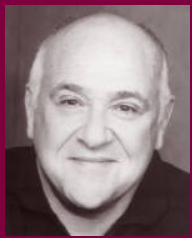
    Bo KaprallBo Kaprall writes, directs and produces Saturday Night Live’s Weekend Update. He has written for The Carol Burnett Show, The Cher Show, The Partridge Family, Welcome Back Kotter, Laverne & Shirley and the Bob Hope Christmas Special, among other accomplishments.


  • If you have built castles in the air . . .

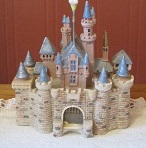
    “I learned this, at least, by my experiment: that if one advances confidently in the direction of his dreams, and endeavors to live the life which he has imagined, he will meet with a success unexpected in common hours. He will put some things behind, will pass an invisible boundary; . . . If you have built castles in the air, your work need not be lost; that is where they should be. Now put the foundations under them.” — Henry Thoreau, Walden or Life In the Woods

    Marlene’s Musings:  In order to advance confidently as a writer. . . you need to think like a person who is in the business of writing.  It’s one thing to be a writer, it’s another thing to be a published author.  And if you don’t care about being published. . . then I hope you are enjoying your writing.

    CastleBuild those castles with word pictures, include a moat, a forlorn prince or princess, a formidable problem to overcome.  Throw in a fire-breathing dragon, a jealous cousin. . . Just Write!

  • Everything will be okay in the end. If it’s not . . .

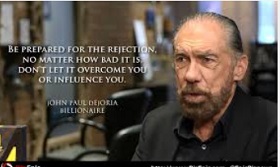
    “Everything will be okay in the end. If it’s not, it’s not the end.” — John Paul DeJoria, Co-founder of Paul Mitchell hair products and Patron Spirits companies.

    John is referring to his early life knocks, but he could also be referring to writers, especially when he says, “Be prepared for rejection.”

    Writers are given rejection advice all the time.

    “Don’t take it personally.”

    “Rejection slips means you are submitting.”

    “At least you’re trying.”

    All these words . . . do they really help when you receive a rejection notice?

    I worked hard a few months ago refining a piece I’ve been working on for a long time. I felt confident and satisfied when I hit the “submit” button.

    And then waited. And waited. Waited some more. You probably know this story. Finally, the notice arrived that although my piece was well-written, it wasn’t accepted. I felt . . . rejected. Yes, I felt personally rejected. “Buck up,” I told myself. “You did the best you could.”

    Later that day, I read John Paul DeJoria’s story. . . “From Foster Care Kid to Billionaire,” in the April 23, 2015 issue of People magazine.  I realized that things could be worse and a publication’s non-acceptance of my writing is only one rejection and their lack of interest isn’t a reflection of me nor my writing.

    John Paul DeJoria.2As John Paul says, “Open yourself up to what is possible.”

    And I say: Because you never know . . . sometimes great things happen in the unlikeliest places!

    So, keep trying. Keep writing and continue submitting. Good things are bound to happen. Click here for Places to Submit.

  • You cannot change the past nor control the future.

    “Live in the present, since you cannot change the past or control the future.” — B. Lynn Goodwin

    Marlene’s Musings: Good advice for anyone, especially writers. Just do your best to be the most authentic writer you can be. Your truth and your genuineness will come out in your writing. Your poignancy, your humor, your unique “you-ness” will bring a freshness and honesty to your writing.

    Be your best self . . . who else can you be?

    Except from “Celebrate Your Uniqueness,” by B. Lynn Goodwin

    B. Lynn GoodwinB. Lynn Goodwin is the owner of Writer Advice, www.writeradvice.com, which is currently holding its 10th Flash Prose Contest. She’s the author of You Want Me to Do WHAT? Journaling for Caregivers, and a YA called Talent, which Eternal Press will be publishing this year. Her short pieces have been published in local and regional publications.

    Lynn will be on a panel of editors at Writers Forum in Petaluma, California on May 21, 2015.

  • Your Story Is Buried Treasure.

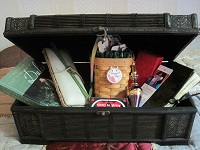
    Chest box“Writing is therapeutic. It saves lives. Your truths are eager to come out. Let them spill onto the page, and see what doors writing opens for you. Your story is buried treasure.

    One of the simplest, most private places to write is in a journal. It allows you to vent, delve into issues, and untangle messes. It lets you analyze or celebrate. It allows you to finish a thought without interruption. The journal validates your right to be who you are.” — B. Lynn Goodwin, “Celebrate Your Uniqueness” in Inspire Me Today.

    B. Lynn Goodwin is the owner of Writer Advice, which is currently holding its 10th Flash Prose Contest. She’s the author of You Want Me to Do WHAT? Journaling for Caregivers, and a YA called Talent, which Eternal Press will be publishing this year. Her short pieces have been published in local and regional publications.

    Lynn will be on a panel of editors at Writers Forum in Petaluma, California on May 21, 2015.

  • I write to understand . . . — Elie Wiesel

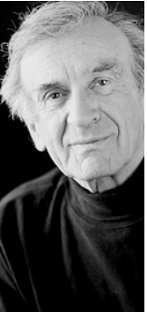
    Elie WieselI write to understand as much as to be understood. Literature is an act of conscience. It is up to us to rebuild with memories, with ruins, and with moments of grace. — Elie Wiesel


  • Rescuing Your Past – Barbara Sher

    Barbara Sher in Rescuing Your Past says:

    “People say we should let go of the past and move on. But you’ll never move into your future unless you take your beloved past with you. And that’s exactly as it should be.”

    “Rescuing Your Past,” from I Could Do Anything If Only I Knew What It Was by Barbara Sher

  • “We write to exert power. . . ” Nellie Hermann

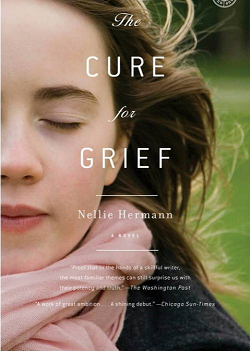
    Nellie Herman. Cure.1“We write to exert power over something we can never control . . . The past.”  —Nellie Hermann

     — excerpted from “Why We Write,” by Carolyn Roy-Bornstein, Jan/Feb 2015 Poets & Writers


  • Roseanne Cash—feeling alive when immersed in her work

    Roseanne Cash1

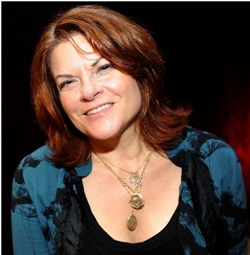
    ” . . . [my] profession, like anyone’s, requires constant innovation if it is to remain fresh. I feel alive when I’m immersed in my work—when I’m fully employed, as Leonard Cohen says, as a songwriter, ‘You have to keep cracking yourself open or you become a parody of yourself. ‘” —Roseanne Cash in an interview by Geoffrey Himes, “The Long Way Home, Smithsonian, November 2014

    Note from Marlene: How about you? What keeps you immersed in your work? If your writing has hit the doldrums, how about mixing it up? If you usually write memoir, try fiction. If you are a fiction writer, try poetry.   If you want ideas for freewrites, click here for writing prompts.

  • “The key to a good essay is conflict, and . . . Victoria Zackheim

    “The key to a good essay is conflict, and the story’s (and character’s) arc. People have to change during the story, whether fiction or non-fiction. — Victoria Zackheim, interviewed by Chris Jane in JaneFriedman.com.

    Victoria Zackheim is the author of the novel The Bone Weaver and editor of six anthologies:

    He Said What?

    Women Write About Moments When Everything Changed

    The Other Woman

    Twenty-one Wives, Lovers, and Others Talk Openly About Sex, Deception, Love, and Betrayal

    For Keeps: Women Tell the Truth About Their Bodies, Growing Older, and Acceptance

    The Face in the Mirror

    Writers Reflect on Their Dreams of Youth and the Reality of Age

    Exit Laughing: How Humor Takes the Sting Out of Death

    and the upcoming FAITH: Essays from Believers, Agnostics, and Atheists (Feb. 2015).

    Victoria’s play, The Other Woman, based on her first anthology, will be featured in OneNight/OnePlay, and her play Entangled, an adaptation of the memoir Entangled: A Chronicle of Late Love, is in development at Z Space in San Francisco.

    Victoria’s first screenplay, MAIDSTONE, is now in development. She is story developer and writer of Where Birds Never Sang: The Story of Ravensbruck and Sachsenhausen Concentration Camps, aired nationwide by PBS.

    Victoria teaches Personal Essay in the UCLA Extension Writers’ Program. Victoria was a 2010 San Francisco Library Laureate.

    Note from Marlene: I have taken classes by Victoria. She is an amazing teacher, well worth the price (and it wasn’t that expensive!).

    Want to challenge yourself?  Take one of your characters (fiction or non-fiction) and do what Victoria suggests . . . give him or her a conflict.  Spend thirteen minutes on a freewrite. See what happens.  Need a boost?  Take a look at Prompts 132 and 133 for ideas on character development.