Category: Just Write

  • Flash Fiction – What it is and is not.

    When I prepared this blog post, I neglected to note the source. I only have “White” as the author. I considered not posting this, but I love this definition of flash fiction. If you know who “White” is, please, let me know.

    Flash Fiction

    According to White, flash fiction “combines the narrative grip of traditional short fiction with the compression, imagery and allusiveness of poetry. A good flash tale instantly intrigues us, may also momentarily bewilder us, and delivers an emotional jolt to the solar plexus—all in fewer than 1,500 words.”

    White lays out the steps to writing flash fiction. Briefly:

    • The best flash stories are bona fide stories in which a viewpoint character struggles with internal or external conflict.
    • Aims for intrigue and complications.
    • Includes unique ways the protagonist struggles with the problem.
    • A lesson is learned or an epiphany experienced.
    • Uses sensory detail.

    What Flash Fiction is not

    A flash story isn’t merely a hyper-compressed regular-length story; rather, the compression unlocks a dimension of experience that eludes us in other modes of creative expression. — White

  • Make Sense of Your World Through Writing

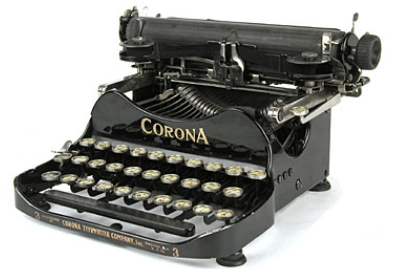
    “Portable Corona number 3. That’s my analyst.” — Ernest Hemingway

    Heal Through Writing

    “Several incidents contributed to social psychologist James W. Pennebaker’s interest in ‘healing writing.’ But when his parents’ visit during college launched a bout of the asthma he thought he’d left behind in the dry Texas of his childhood, he realize climate wasn’t to blame; his emotions were. Once he recognized the connection, the asthma attacks stopped.” —“Writing to heal,” by Gail Radley, May 2017 The Writer magazine.

    Pennebaker has conducted multiple studies indicating that writing can lead to healing.

    Dr. Edward J. Murray investigated healing through writing and concluded “’It seems that putting our thoughts and feelings into language helps confront them, organize them, and wrest the meaning from them. . .” —Gail Ridley, May 2017 The Writer magazine.

    Perhaps we can make sense of our world by using freewrites as a vehicle.

    Note: If you are experience troubling thoughts that are disabling or disturbing, please seek professional help.

    Posts on The Write Spot Blog about healing through writing

    How To Write Without Adding Trauma    

    Does Your Heart Hurt? Prompt #269   

    Things Falling Apart is a Kind of Testing  

  • Mini memoirs unfold naturally

    Remember the joke: “How do you eat an elephant?”

    “One bite at a time.”

    Same with writing memoir . . . one incident at a time.

    “Whether your life story has an over-arching motif or you plan to cobble together a montage of more diverse meditations, the project can seem less overwhelming if you approach it as a series of mini memoirs—two-to three-page essays . . . pivotal points. . . in the broader portrait of your life.” Richard Campbell, January 2017 Writers Digest

    “The beauty in approaching your life story in terms of mini memoirs is that when it comes to themes, you don’t have to pick just one. Write scenes or vignettes on each theme that speaks to you.

    You may find that mini memoirs unfold more naturally than the more unwieldy, longer story you have to tell—and that they build momentum strong enough to carry you through the manuscript.”

    More on How To Write Memoir:

    How To Write A Memoir – Part One

    How To Write A Memoir – Part Two

    However you decide to write . . . Just Write!

  • Sonoma Festival of Light and Rhymed Verse

      Submissions now requested for presentation at the

    SONOMA FESTIVAL

      of

    LIGHT and RHYMED VERSE

    Poems due by: May 6, 2017


    Festival takes place: May 21, 2017

    Time: 1:00 pm-4:30 pm

    Location : Trinity Episcopal Church Courtyard, 275 East Spain St., Sonoma, Ca.

    Quatrain submissions in one or all of three categories:

    4 line

    16 lines

    24 lines

    Please include biography in three lines or less.

    For more information, please contact:  Patricia Bradley   bradley2006 -at – gmail.com

  • Details are critical

    When telling stories, details matter. You know that. Details, especially sensory details, enhance your story and allow your reader to:

    ~ Fully enter the world you are creating

    ~Suspend disbelief

    ~ Connect emotionally with your characters

    “All you need to build your setting is in the world around you. Observe, observe, observe.” Elizabeth Nunez, January 2017 Writer’s Digest magazine.

    Elizabeth Nunez:

    “. . . like me, you probably wanted to be a writer because you found a lot of joy and pleasure by making up stories in your head. I love living in my imagination—so much so that when I was younger, my siblings would say: ‘Divide everything Elizabeth tells you in half. One half is true and the other is make-believe.’”

    Can you relate to that? I bet you can!

    “The emotions and conflicts your characters experience can be made more vivid by the setting you choose.”

    Nunez gives examples of stories enhanced by setting:

    The Sea by John Banville, which opens with “a strange tide, a morning under a milky sky, a bay that swelled and swelled, rising to unheard-of heights. With that beginning, the mood is established for Banville’s moving story about a man who loses his beloved wife to cancer and retraces his past to a seaside cottage, hoping for respite from his grief.”

    Middlemarch by Georg Eliot contains “a setting that contrasts with . . . character’s emotions.”

    “When the two lovers finally come together, there is not brilliant sunshine, but instead a burst of thunder and lightning. The effect is to convey to the reader the intensity of the passion between the two characters.”

    How to set your story in a place you have never been?  The obvious answer is to go there. If that isn’t possible, research using tools that give detailed descriptions:  Google Earth to see the site, Wikipedia to learn about weather, geographical, historical details. Access newspapers and magazine articles for information using microfiche records (available at libraries).  Interview people who lived there. Watch movies. Use your creative imagination to research as much as possible. But don’t spend all your time researching. Remember to take time to write!

    Blog posts about using sensory detail:

    Imagery and sensory detail ala Adair Lara Prompt #277

    33 Ideas You Can Use for Sensory Starts Prompt

    Sensory Detail – Smell

  • Voices of Lincoln – Poetry Contest 2017

    POETS WANTED


    You do not have to live in Lincoln, CA to enter the Voices of Lincoln Poetry Contest.

    Five (5) categories include: Love Is All Around Us,  Dreams Do Come True,  On The Street Where I Live,  Gone But Not Forgotten,  and  A Second Chance.

    You may submit a maximum of three (3) poems: One poem for each category.

    Poems may be in rhyme, free verse, Haiku, or other accepted poetry forms and of any length, up to a maximum of 60 lines.

    Young Poets, 18-years of age or under, are encouraged to submit poems and will compete in a special “Young Poets” category.

    Entry Form and Contest Rules

    Contest Deadline: Poems must be received no later than Saturday, July 22,    2017.  Early submissions are appreciated.  Questions—contact Alan Lowe at    slolowe – at – icloud.com

  • Why should you use strong verbs?

    Action words

    “A French research team found that action words (kicked, stomped, raced) fire up the motor cortex, which governs how the body moves. Even more specific, describing body parts, such as an arm or a leg, activates the part of the brain that controls arm and leg movement. Using evocative language also wakes up a part of the brain called the hippocampus, which activates long-term memories and plays a significant role in how a reader’s mind turns language into a meaningful experience.” Writer’s Digest, Sept. 2016

    And that’s why it’s important to use strong verbs.

    Make a list of strong verbs and action words. 

    Keep your list handy.  Use it like a thesaurus when you are stumbling for that strong verb that’s on the tip of your tongue, within your grasp, but not quite accessible.

    Or, use a thesaurus.

    To learn more about using strong words to convey emotion, action and memorable characters, click on the following topics. You will end up on another page, here on The Write Spot Blog.

    Use sensory detail and be specific  

    How to be a better writer  

    Vex, Hex, Smash, Smooch  

    Just write!

  • Use emotions in your writing.


    “Readers covet an emotional experience above all else. When you write scenes, use all the methods you can to help your readers feel the emotions you want them to have—sadness, anger, confusion, mistrust, love, lust, envy, greed and so on. If you want readers to hate your character, show him being despicable to someone who doesn’t deserve his wrath or to someone he supposedly loves. The more you draw readers in to the emotional experience, the more they will engage, and the more likely they’ll want to read your next book.”

    Excerpted from the September 2016 issue of Writer’s Digest magazine

    There are over 300 prompts on The Write Spot Blog. Choose one and practice incorporating emotions in your writing. For example:   Physical gestures can reveal emotions . . . Prompt # 211 

    Just write!


  • The Writer Magazine

    In April 1887, two newspaper men designed an 18 page pamphlet they called The Writer. It was designed to be “a monthly magazine to interest and help all literary workers.”

    Today, The Writer magazine “is dedicated to expanding and supporting the work of professional and aspiring writers with a straightforward presentation of industry information, writing instruction and professional and personal motivation.”

    The Writer is looking for your story ideas:

    “Our editors are interested in query letters on concrete topics written by emerging and experienced writers in all genres. We are looking for clear takeaway for our readers: What can they learn to improve their writing or advance their careers? What how-to tips and strategies will accomplish this?

    Queries should briefly describe your background and provide details for your story idea. We are interested in how-to stories, reported pieces, narrative essays and profiles of writers and others in the field. . . . We do accept queries that include finished pieces for consideration. We do not accept material that has been previously published in any form in print or online.”

    Email queries to tweditorial-at-madavor.com. Include your name, phone number and a short bio.

    We receive hundreds of pitches every week and cannot respond to all of them. If you haven’t heard from us in two weeks, please feel free to move your submission to another publication. If you’re unfamiliar with our magazine, we recommend reading a few issues, subscribing, or at least signing up for our newsletter to get a feel for the kind of work we publish.

    Article lengths vary widely from 300 to 3,000 words. On occasion, longer articles and excerpts also appear in the magazine.”

    Read Submission Guidelines before querying and submitting.

  • Sixteen Rivers call for poems for anthology


    Sixteen Rivers Press is seeking unpublished poems that respond to the cultural, moral, and political rifts that divide our country: poems of resistance and resilience, witness and vision that embody what it means to be a citizen in a time when our democracy is threatened.

    Sixteen Rivers editors welcome voices raised in passion and in praise, whether lyrical, philosophical, visionary, or personal.

    Submit 1 to 3 unpublished poems, totaling no more than 3 pages.

    Deadline:  May 15, 2017