Figuring out the important thing

  • Figuring out the important thing

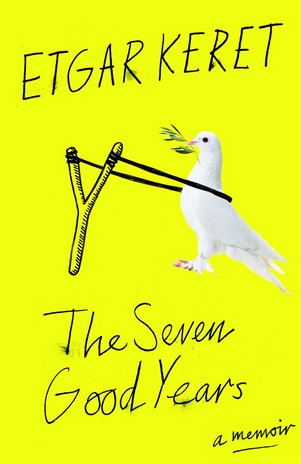
    “Writing essays is like therapy because you’re figuring out: What was the important thing in that incident? ”   —   Etgar Keret

    Keret, an “acclaimed Israeli writer . . . known for his unique and distinctive writing style” began writing essays after the birth of his son.

    “. . . because I’m sensitive about family issues. . . It never stops me from writing it, but it might stop me from publishing it.”  He wrote personal essays to “have a literary tombstone” for his father.  He is able to create work that is “moving and deeply affecting in only a few pages.”

    Excerpted from the February 2017 issue of The Writer magazine.

    Your turn: No pressure to write the next great American novel, just write what you know, what you experience. Write about your trip to the grocery store where you observed an act of kindness or had a weird encounter. Write about your ordinary-to-you holiday event . . . something you will find later and be glad you captured those exquisite moments that you had forgotten:  The funny story your grandfather told, your sweet aunt and her infectious laugh, the annoying presents you received from your equally annoying cousin/uncle/sister/friend. Write the good stuff, the bad stuff and the in-between stuff. Just write.

  • Nostalgia and writing

    writers-dreamingWhen responding to a writing prompt, you are completely free to write the absolute truth, with no worries about what anyone will think.  You are also free to write fiction. You have the freedom to write whatever you want . . .  these writings are called freewrites.

    There are over 300 prompts on The Write Spot Blog. You can choose one at any time and just write.

    Sometimes our writing takes us to memories from our childhood, a very powerful place that is important and so intoxicating.

    From Writers Dreaming, by Naomi Epel,  chapter by James W. Hall:

    “One of the things that I’ve discovered through reading a lot of best-sellers, studying a lot of popular fiction for courses that I’ve given at the university, is that there are certain recurrent, mythic qualities in books that we could consider, from an elitist academic viewpoint, to be pulp or low-life, mass-market fiction. But obviously they have a certain kind of power or else three million people wouldn’t buy and be excited about them. One of the things I found out was that there were these recurrent patterns. One, for instance, that I feel has a kind of mythic quality, is what I came to call, in a particular class on bestsellers, “the golden place.” This is where the novel begins to picture a time and place, usually both of those, where the grass was greener, the flowers smelled better, the birds chirped more purely and everything was simply better. Usually associated with childhood and long ago. It’s a form of nostalgia, I suppose, but when you see it in a fictional form it has a tremendous power to call us to our best, ideal selves. We feel in ourselves that such golden places are possible to return to, to reacquire, to rediscover and I think that one of the hungers we bring to the reading experience is to go to other people’s golden places and live there, temporarily. A place that is coherent, that makes sense, where values are still valuable and ideals are possible to achieve.”

    Note from Marlene: Our freewrites are much like what Hall describes – when we go back in memory, we touch “the golden place” and “nostalgia” — a place where the reader/listener wants to live where you did and do what you did— and that speaks to the power of writing.

    Your writing has  “. . . in a fictional form. . . a tremendous power. . . “

    So, keep writing. Write for yourself with no judging nor critiquing. Just Write.

  • Outside magazine

    outsideThe mission of Outside magazine:

    To inspire active participation in the world outside through award-winning coverage of the people, sports, places, adventure, discoveries, healthy and fitness, gear and apparel, trends, and events that make up an active lifestyle.

    Contributor guidelines

    Outside is a monthly national magazine dedicated to covering the people, sports and activities, politics, art, literature, and hardware of the outdoors. Although our features are usually assigned to a regular stable of experienced and proven writers, we’re always interested in new authors and their ideas. In particular, we look for articles on outdoor events, regions, and activities; informative seasonal service pieces; sports and adventure travel pieces; profiles of engaging outdoor characters; and investigative stories on environmental issues.

    Queries should present a clear, original, and provocative thesis, not merely a topic or idea, and should reflect familiarity with the magazine’s content and tone. Features are generally 1,500 to 5,000 words in length. Dispatches articles (100 to 800 words) cover timely news, events, issues, and short profiles. Destinations pieces (300 to 1,000 words) include places, news, and advice for adventurous travelers. Review articles (200 to 1,500 words) examine and evaluate outdoor gear and equipment.

    Print Guidelines
    Please send queries (not manuscripts) and two or three relevant clips along with a self-addressed stamped envelope to: Editorial Department, Outside magazine, 400 Market St., Santa Fe, New Mexico, 87501. If interested in your story, we will respond within six to eight weeks.

    Photographers’ Guidelines
    We rely on regular contributors for many images, but we are always open to innovative work that creatively reflects the essence of the magazine.

    Features represent the best of outdoor writing and photography. Exposure is a gallery-style section devoted to showcasing exceptionally engaging photography and its creators. Parting Shot, the last image in the magazine, is a signature page that highlights a single image with a humorous twist.

    Please send Exposure and Parting Shot submissions as low-res JPGs or a link to a web gallery to photo@outsidemag.com

    Outside Online

    To do a better job of presenting our content and integrating yours, we’ve redesigned the site’s look and structure, and we think you’ll find Outside Online easier and more fun to use in its new form. That form is constantly evolving, so let us know what you’d like to see. We not only welcome your feedback, we rely on it. We hope you share our excitement about Outside Online and its endless possibilities. Please return often to participate and watch us continue to grow.

  • In troubled times . . . write.

    clarissa-pinkola-estesLetter To A Young Activist During Troubled Times by Clarissa Pinkola Estes

    One of the most calming and powerful actions you can do to intervene in a stormy world is to stand up and show your soul. Soul on deck shines like gold in dark times. The light of the soul throws sparks, can send up flares, builds signal fires, causes proper matters to catch fire. To display the lantern of soul in shadowy times like these – to be fierce and to show mercy toward others, both, are acts of immense bravery and greatest necessity. Struggling souls catch light from other souls who are fully lit and willing to show it. If you would help to calm the tumult, this is one of the strongest things you can do. There will always be times when you feel discouraged. I too have felt despair many times in my life, but I do not keep a chair for it; I will not entertain it. It is not allowed to eat from my plate. The reason is this: In my uttermost bones I know something, as do you. It is that there can be no despair when you remember why you came to Earth, who you serve, and who sent you here. The good words we say and the good deeds we do are not ours: They are the words and deeds of the One who brought us here. In that spirit, I hope you will write this on your wall:

    When a great ship is in harbor and moored, it is safe, there can be no doubt. But that is not what great ships are built for. This comes with much love and a prayer that you remember who you came from, and why you came to this beautiful, needful Earth.

    Note from Marlene:  In troubled times: Write. In happy times: Write. Write to celebrate, write to remember, write to recognize, write to be heard. Write to share.

    And listen . . . to others . . . to whatever noises there are. Be silent when listening. Notice. Observe. Just listen. And then . . . Just Write.


  • Use your writing to heal.

    bookshawlUse the difficulties in your life and represent them in your writing.  Describe the difficulties as if writing a scene in a novel. Look at your situation from a different point of view – from that of a character in a story.

    Take A Break

    When your writing becomes too difficult, stop. Take a break. Take a walk. Treat yourself to a glass of iced tea or hot apple cider. Wash your hands with special scented soap. Do something physical to relax your mind.

    Use a focal point as a reminder to relax and breathe deeply. A focal point is anything you like to look at: in your home, your writing environment, or outside.

    Have A Plan

    Have a plan for when you are feeling overwhelmed and need relief from emotional tension while you are writing.

    Prepare a healthy snack before you begin to write. When the writing gets difficult, take a few minutes to nurture yourself, whether it’s food, or a visual treat – look at a pleasant picture or a memento that has good memories for you, or being physical  – Go for a walk, a run, move around.

    Empowering

    This type of self -care can be very empowering and gives you some control in your present situation where you didn’t have control in a past experience.

    Use your writing to heal, being careful to not re-traumatize yourself.  This way, you can benefit from the healing potential of telling your story.

    Practice writing about your past without it overwhelming you.

    “If we write about our pain, we heal gradually, instead of feeling powerless and confused, and we move to a position of wisdom and power.” — Writing As A Way of Healing by Louise DeSalvo 

    How to write without adding trauma.

    The Healing Power of Images Prompt #139

    Transforming Depression Into My Writer’s Muse — by Teresa LeYung-Ryan

    Does your heart hurt? Prompt #269

  • Five Points is ready for your writing.

    five-pointsFive Points: A Journal of Literature and Art welcomes unsolicited submissions of fiction, poetry, and literary non-fiction.

    Deadline:  All categories have a December 1 deadline.  Entry fees range from $2.50 to $25.

    The James Dickey Prize for Poetry

    Send three previously unpublished poems no more than fifty lines each.

    Simultaneously submitted manuscripts are accepted.

    $25 Entry fee includes a one-year subscription.

    Winner receives $1000 and will be featured in an upcoming issue of Five Points.

    Essay

    Each essay should be no longer than 7500 words.

    Reading Period 2 is: Jan. 11 through March 31

    Fiction   

    Each story should be no longer than 7500 words. Reading Period 2 is: Jan. 3 through March 31.

    Poetry

    Each poem should be no longer than fifty lines.  Reading Period 2 is: Jan. 3 through March 31.

    Very Short Prose (Fiction or Nonfiction)   

    Up to 500 words maximum.

    SPECIAL ISSUE – Flash Fiction

    Maximum 250 words.

    Note from Marlene:  Good Luck!

  • What do Contest Judges Look for?

    Notepaper.make a listRecently I was one of three judges for a writing contest. We didn’t agree during the first round of reading on the winners. It took re-reading and much discussion to select the three winners. So that got me to thinking. What do contest judges look for when choosing winning entries?

    My fellow judges and I came up with:

    Make sure to follow the guidelines. They aren’t arbitrary. The guidelines are specific for a reason.

    Make sure to follow the criteria of what genre the contest is. Don’t submit memoir if the contest is fiction. Even though the judges may not be able to tell for sure if something is fiction or memoir . . . if it feels like memoir, it probably is. And that won’t work in a fiction contest.

    The winning entries that stood out excelled in creative writing and well-crafted stories. The writing and stories were compelling, keeping reader engaged to the end.

    Proofread. I know this is obvious, but many of the entries had typos or punctuation errors.

    Have someone read your entry – both for feedback and to proofread.

    If it’s a fiction contest, make sure your entry is a story. Many of the entries were anecdotes, rather than full pieces (beginning, middle, end with a definable plot and fleshed out characters).

    Avoid clichés – in words, phrases and story line. This goes back to the unique story. Tell us something new, or write something old with an interesting twist.

    Understand and use correct point of view. Many entries jumped around with point of view, sometimes it was hard to tell who “he” and “she” referred to.

    Stay with the same verb tense, except when appropriate to use past or future tense. Stories got extra points from me when using present tense (because that’s harder to do than using past tense).

    Susan Bono shares her views on contests in her essay, A Thought or Two on Writing Contests, originally published in Tiny Lights, A Journal of Personal Narrative, 2/9/2007.

    More thoughts on entering writing contests:

    “Don’t assume the winners of a writing contest were the only ones to submit excellent work. There are only so many prizes available in any given contest. Winning may equal good, but losing does not always equal bad. Your turn will come.” —Susan Bono, author of What Have We Here: Essays about Keeping House and Finding Home, has judged many, many contest entries.

    “Make us see something about the world in a fresh way or remind us of something important that has an arguable public dimension.” — Dan Lehman, River Teeth, A Journal of Nonfiction Narrative

    “There is a difference between experience and meaning-making. If we are reading along and this happens and this happens, and we still don’t know why it is important, then we know the writer might not be up to it . . . just writing about something that has happened to you is never enough. It’s what the writer does with her own experience, what she makes of it that counts.” —Joe Mackall, River Teeth, A Journal of Nonfiction Narrative, (paraphrased from original quote by Judith Kitchen).

    River Teeth Journal, Editor’s Notes, Volume 17, Number 2, May 31, 2016

    Are you motivated? Ready? Enter!

    River Teeth Submissions

    Redwood Writers, a branch of The California Writers Club sponsors contests year-round.

    The Writer Magazine regularly calls for contest submissions.

    Writer’s Digest Magazine lists contests.

    Links to writing contests.
  • Are Writing Contests For You?

    writing-contest-and-penDo you enter writing contests?  If you do, please share your experience here or on the Writers Forum Facebook page.

    If you don’t enter writing contests, why not?  Share your reasons here or on the Writers Forum Facebook Page.

    “Writing contests give me short pieces to concentrate on, in between my bigger works. Contests allow me to write in genres that I never would have otherwise, causing me to do research, which helps me to grow as a writer.

    Contests motivate me to write and challenge me to meet a certain word quota. This forces me to pare down my story to its essentials, choosing my adjectives very carefully, and paying close attention to my word choices.” — Jeanne Jusaitis, First Place Winner of The 2016 Steampunk Contest, sponsored by Redwood Writers, a branch of the California Writers Club.

    Links to Writing Contests:

    Fan Story

    Writer’s Digest

    The Writer

    Poets & Writers

    Freelance Writing, including: “7 Tips For Winning A Writing Contest”

  • Darkest Hours Contest

    Have you been following the writing prompts on The Write Spot Blog? Especially Prompt #293 and Prompt #294. If you have, you might have some ideas for The Writer magazine writing contest.

    If you wrote true stories for these prompts, turn fact into fiction and enter the contest.

    Write a 2,000 word fictional short story using any nuance, definition or understanding of the word “dark.”

    “Our Darkest Hour” writing contest, sponsored by The Writer Magazine.

    Deadline: November 15, 2016

    Story starts from The Writer magazine:

    After dark . . .

    Deep, dark secrets . . .

    A dark horse . . .

    The dark side of the moon . . .

    That line’s gone dark . . .

    Don’t leave me in the dark . . .

  • Porter Gulch Review

    Cabrillo Community College produces Porter Gulch Review, a literature and arts journal.

    The journal reflects the diversity and creativity of its contributors. 2,000 print copies are given away free and there is a longer online version.

    Submit: stories, poems, novel excerpts, plays, screenplays, photos and artwork.

    Submit work to PGR – at – cabrillo.edu; include the work as an RTF (rich text format) attachment, with your name on it, a short, playful bio, and your contact information. All visuals images must be high quality, 300 DPI or higher. They may need to sent individually or uploaded through Dropbox.

    Deadline for Spring issue: December 1, 2016

    NOTE: If you have work ready to submit, scroll through Places to Submit, find a place where  you can submit, check the deadline and go ahead. . . Submit.

    Places that are currently accepting submissions:

    Reed Magazine (No. 1, 2016)

    Writer Advice Scintillating Starts (Dec. 1, 2016)

    The Forge Literary Magazine (ongoing)