Use emotional experience for fiction

  • Use emotional experience for fiction

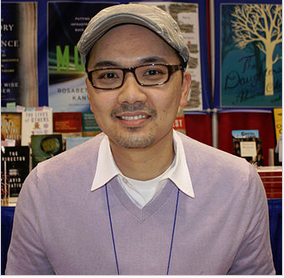
    Vu Tran“Vietnamese American Vu Tran says when he writes fiction, he is less concerned about using any ‘factual experience’ he has had, but instead seeks to relate the ’emotional experience’ he has lived.” — The Writer Magazine, December 2015

    When I read this, I sat up and paid attention.

    “Aha,” I thought, “Brilliant idea to tap into the emotional element of an experience and bring that into fiction writing.”

    Vu Tran used a traumatic event in his life to explain a pivotal character in his fiction.

    “. . . fiction writers can often have more impact if they draw on their emotional experiences rather than just relating what actually happened.”

    Vu Tran used this philosophy when writing Dragonfly (set in Las Vegas) while in Chicago. “. .. the distance from Las Vegas worried me at first. But I decided the emotional memory of Las Vegas  . . . allowed me to recreate the city in a more realistic way than if I was taking notes in front of the casino doors.”

    Your turn. Write about an emotional experience. For ideas, click on Write Authentically About Difficult Subjects and How To Write Without Adding Trauma.

    Use the details from that writing to develop character and scene when writing fiction.

    File all of this writing where you can access it when you are ready to use it in your writing.


  • Conjunctions . . . submit if you dare.

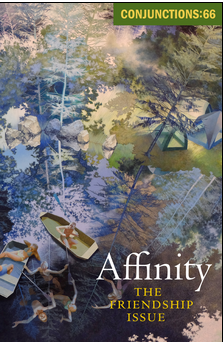
    ConjunctionConjunctions is accepting submissions for the Fall 2016 issue, Conjunctions: 67, Other Aliens, a collection of works of literary science and speculative fiction: innovative short stories, poetry, and essays that explore the vast precincts of unfamiliarity, of keen difference, of weirdness and not belonging.
    “’Alien’” is a powerful and flexible word. Aliens are Other, aliens are the stuff of science fiction and fantasy, aliens are traditional literary figures who, when we witness our ‘normal’ lives through their strangers’ eyes (think Frankenstein), cause us to see ourselves anew. Indeed, we become the unfamiliar ones. ”

    Conjunctions on the Web features an ever-expanding constellation of innovative fiction, poetry, drama, interviews, and other work by some of the leading literary lights of our time. . . We are always adding new selections to our current inventory of contemporary writing.

  • Broad Street seeks writing that shows the truth in a new way

    Broad Street magazine is “always looking for more talent . . .  so if you have an interesting piece of nonfiction—poetry, essay, reportage, memoir or other writing—or art” . . . Submit!

    “Nonprofit semi-annual magazine featuring true stories told in many different ways. Seeks beautiful crafted poetry, essay, reportage, memoir or other writing that present the truth in a way that’s new and special.” — The Writer magazine, June 2015

    Submisssions/themes, see if there is something just right for you. Upcoming theme:

    Birth, School, Work, Death (submit until April 1, 2017 for spring/summer 2017 issue).
    The Seven Ages of Man have become the Four Ages of Humankind.  We’re born, we learn, we work, we die. Broad Street has conceived of a four-part magazine with several features exploring each phase of life.  Give us your origin stories, your schoolroom struggles, your cubicle frustrations, your tales of passing on.  Where has this road taken you?

    Broad Street


  • Find the right magazine for your article.

    Rachael Herron wrote an article, soon to be published in Vogue magazine. Not about “fashion, beauty, culture, living, runway, met gala.”

    Rachael’s article is about clearing out craft supplies.

    Imagine that.

    What a brilliant idea! I imagine most crafters would benefit from an article about how to organize material and/or encouragement to let go of scraps of fabric, wisps of ribbon, etc.

    Do you have a special skill, a hobby, a special interest? Write about it. Think about a magazine that might seem an unusual fit. Tweak your essay to fit the magazine’s demographics. Research the magazine’s mission statement, purpose, intent, masthead.

    Do you have a pet peeve, an obsession, a unique collection? Turn your thoughts into an article, then research and submit!

    Browse magazines at the library. Search online for potential magazines.

    Find the right magazine for your piece:

    Every Writer

    Wikipedia List of American Magazines

    How a Freelance Writer Should Submit an Article to a Magazine by David Kirk
    Magazines that accept freelance articles.

    All Indie Writers.

    The Write Life’s list of where to publish personal essays.

    Share your ideas and your publishing success stories here, on The Write Spot Blog.

    Not only does  Rachael Herron write, she knits. And she writes about knitting.

    Herron.3 covers

  • Writing settles my soul —Rachael Herron

    Today’s “Just Write” post is an excerpt of Holly Robinson’s interview of Rachael Herron. (Edited for brevity. Click on Huffpost link below to read entire interview.)

    Holly Robinson writes:

    One of my favorite things about being a writer is having the chance to meet other writers whose books I admire. I probably admire few books as much as I do Splinters of Light, my new friend Rachael Herron’s powerful, poignant, and surprisingly comic novel inspired by a People magazine article about the impact of early-onset Alzheimer’s on a woman and her family.

    In the hands of another writer, this topic could be dreary and depressing, but Rachael spins a story of resilience and love that leaves you believing in the healing power of family and forgiveness. Splinters of Light is a reading experience you won’t soon forget. Here’s a look at how Rachael works — she’s a prolific author of romance novels, women’s fiction, memoir and essays.

    Give us a peek at your workspace. (I’m imagining lots of animals milling about, baskets of yarn, an unfinished sweater.) Do you have any special foods or drinks that keep your butt in the chair as you write?

    I recently found the desk of my dreams, a roll top behemoth with cunning pigeon-holes and drawers for everything. I literally have a drawer for lip balm, one for beach glass, one for hair ties (all very important in the writing process, of course). I do have baskets of yarn around and usually have a cat or two on my lap, but what keeps me in my chair is having nothing else in front of my gaze but my computer and a mug of coffee with cream. Moving my desk away from the window was one of the best things I ever did for myself, productivity-wise.

    Splinters of Light is both one of the most joyful and one of the most devastating novels I’ve ever read, partly because you do such a wonderful job of tapping into the worst fear we all have as parents: that we will somehow fail our children. What was the inspiration for this novel, and for the brave, wonderful, and touchingly resilient character of Nora Glass?

    The inspiration for the novel came from, of all places, a People magazine article about a young teen-aged boy taking care of his mother who’d been diagnosed with early-onset Alzheimer’s. This was before Still Alice, before many of us had ever heard of this disease, and I was transfixed by the thought of a parent having to teach their child how to be an adult so long before it was time. Nora herself comes from a good mix of my sisters and my mother, the strongest, bravest women I’ve known.

    You do a stellar job of writing from the point of view of a resentful but loving teenager in Splinters of Light. Was that difficult?

    Should I admit it was easy? I’m forty-two, but I was a terrible teenager. When I was turning seventeen, Ellie’s age in the book, I thought I hated my mother. I couldn’t stand to be in her presence. Everything she said grated on my nerves, and I couldn’t understand how we could possibly be related. Of course, when I turned nineteen or twenty, she suddenly “became” much smarter and more interesting (go figure!), and by the time I was twenty-five, she was my best friend and stayed that until the day she died. I really regret what a pain in the ass I was to a phenomenal woman. Ellie is, in a small way, an apology for that (and maybe a beacon of hope to mothers of teen girls—they do snap out of it).

    You’re originally from New Zealand. How did you end up living in the U.S.? And what do you think being an “outlander” contributes to the fiction you write set in the U.S.?

    Actually, I’ve always been a half-and-halfer. My mom was Kiwi, my dad an Arizonan. I have dual citizenship, and I had the New Zealand accent until I was seven (I still remember embarrassing myself in first grade for asking for the cello-tape). Living on the imaginary border gave me a really good place to stand growing up. My mother never became an American, and national holidays like Thanksgiving were celebrated, of course. But we also pulled the thrippence out of the flaming plum duff on Christmas and I knew more about Maori myth than Native American. My parents let us choose our identity, and I’m happy to say that all three of us girls are proud of both heritages.

    Prior to Splinters of Light, you authored a memoir. Was the process of writing nonfiction very different from your fiction writing process? Which do you prefer?

    Nonfiction is so much easier! You’re limited to the truth (or as close as you can come to it, years later) so the only big choice is how you frame the storytelling. For that book, I chose to look at my life as seen through the sweaters I’d knitted, from the first one I attempted at eleven in an attempt to bond with my entrepreneurial father to the dress I failed to knit for my wedding. I love creative nonfiction, but I have to confess, while novels are more difficult, I find a bigger sense of satisfaction in their completion.

    As a writer who previously wrote a series of successful romance novels as well as a memoir before producing Pack Up the Moon and Splinters of Light, both of which I would describe as “literary” or “women’s fiction” (if I had to use typical publishing categories), how do you describe your work?

    Oh, god. I never know what to say. Writing literary women’s fiction has always been my goal—and what I’m probably best at—so I lead with that. But then I usually fade out and mumble something lame like, “I guess I write mainstream? And, um, romance. And um, memoir. Um. Do you need more coffee?”

    With all of the different types of writing you’ve done, you must have met some challenges and hurdles along the way. What has kept you going through times of self doubt?

    Publishing is not for the faint of heart, that’s for sure. Hard times come fast and often, but two things have kept me going. First, I’ve always known this was what I was meant to do, even before I was actually doing it. I spent my teens and twenties yearning to write and not getting the work done. Writing is the only thing that settles my soul, whether it’s fiction or just a private journal entry. I could never let that part of myself go. Second, my writer friends have been my rock. The most important thing for a new writer to do (besides writing) is to make writer friends who are at the same stage in their careers. Nothing is more valuable.

    Did getting an MFA help you on your writing journey? Would you recommend that path to other aspiring writers?

    Nope, I rarely recommend it even though I don’t regret getting mine. It was lovely to be in the ivory tower for those two years. But what I needed to learn about writing I didn’t learn there. School can’t teach you how to finish a book. It can’t teach you how to find your core story. It can’t teach you how to get back up and start over after your first publisher drops you. It can’t teach you how to cultivate real, rich relationships with your readers. I only learned how to do this by writing, every day, for many years after I got that MFA.

    If you could list three unbreakable rules for writers, what would they be?

    Write as much as you can every day. Even if that’s just a sentence. Write.
    Read. Read every day, read everything. Don’t be snobby.
    Be generous and gracious, giving of yourself, your knowledge, your time, and your words. In this profession, what goes around comes around in an almost insta-karma way. Be good.

    Interview originally posted on Huffpost Books  3/3/2015

    Novelist, journalist and celebrity ghost writer Holly Robinson is the author of several books, including The Gerbil farmer’s Daughter: A Memoir and the novels Beach Plum Island and Haven Lake. Her articles and essays appear frequently in The Huffington Post, More, Parents, Redbook and dozens of other newspapers and magazines.

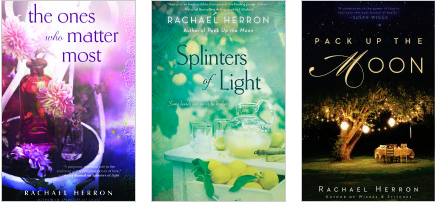
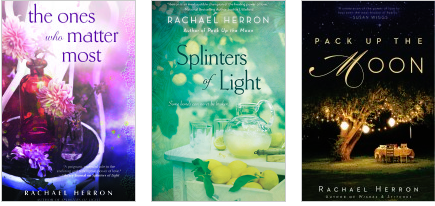
    Rachael Herron’s Beautiful Book Covers.
    Herron.3 covers


  • Brick . . . anthology of enthusiams

    Brick features literary nonfiction about arts and culture: book reviews, personal essays, memoirs, interviews and letters.  That’s you: Essayists and Memoirists.

    For today’s place to submit, I was looking for something fun. Excited to find Brick.

    Brick has been called many things: an “anthology of enthusiasms” (Michael Ondaatje), “the best literary publication in North America” (Annie Proulx), and “more fun than any other literary magazine around” (Robert Hass). Brick is where the world’s best-loved writers have wide, lively, personal discussions about art, culture, and the written word.

    Brick was founded in London, Ontario, in 1977 by Stan Dragland and Jean McKay. From 1985 until 2013, Michael Ondaatje led the magazine and helped to establish its international reputation, leaving a legacy of intellectual curiosity and passion for the written word.

    Brick’s mandate: to create a beautiful product filled with the most invigorating and challenging literary essays, interviews, memoirs, travelogues, belles lettres, and unusual musings we can get our hands on.

    Brick is published twice a year and distributed to bookstores worldwide.

    Brick Submission Guidelines

    Brick accepts unsolicited manuscripts of non-fiction only: book reviews, personal essays, memoirs, interviews.

    Suggestion: Familiarize yourself with Brick and the kind of writing Brick publishes before submitting.

    Brick does not set a word limit, it is suggested that submissions not exceed 5,000 words.

    Brick accepts submissions both by mail and online through Submittable  For online submissions, a modest fee of $3.00 is charged to cover our costs.

    “Brick is an unpredictable, original, yet reliable feast which I’ve enjoyed year after year. Nobody who cares about books or life could be disappointed in it.” — Alice Munro

    Brick

  • The Blotter Magazine might be perfect for you

    The Blotter MagazineIs The Blotter Magazine a good place for you to submit your work? Maybe. Read on.

    “The Blotter Magazine exists to nurture underground, outsider literature and art and to provide it to a wide audience. We believe that the economic viability of good art and writing should not interfere with its life, liberty, or happiness; and we deliberately seek to avoid the pretension and “overintellectualism” for which the world of literature and art has become known. Our goal is to treat contributors, donors, and readers alike with dignity, friendship, and respect.

    The Blotter Magazine is a 501(c)3 non-profit organization. That organization currently publishes The Blotter Magazine and is pursuing a book-publishing venture. . . . In May, 2003, the magazine began distributing free at selected newsstands in the North Carolina Triangle area. Since then, our free distribution has expanded to other fine cities in the Southeast. We also ship subscriptions throughout the United States.

    Our editorial direction draws equally from classic and mundane, sublime beauty and a good Saturday-morning sugar buzz. What would be fun for our readers? What would yank their chains? What would make them laugh, or cry? How can we teach old dogs a new trick or two? Every emotion is fair game.”

    Note from Marlene: I say “go for it.” The Blotter Magazine sounds like a fun and interesting place to submit your work.


  • Got fiction, essay , poetry, art? West Marin Review wants.

    West Marin ReviewFiction! Essays! Poetry! Art! Got any? West Marin Review, a literary and art  journal, wants ’em.

    Deadline:  September 1, 2016. West Marin Review is such an upbeat publication, this should be called Upline: September 1, 2016.

    Need ideas for material to write about? Click Prompts. Choose one and write. Edit. Submit.

    West Marin Review Submission Guidelines.

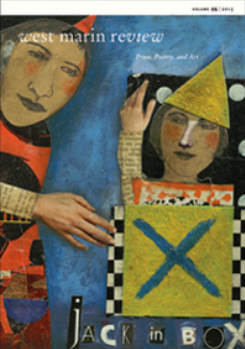
    Cover art for current issue of West Marin Review.


  • The Bitter Oleander is ready for your submission.

    Bitter Oleander

    The Bitter Oleander Press:

    Home of Fine Poetry Collections and The Bitter Oleander: A Journal of Contemporary International Poetry & Short Fiction

    The Bitter Oleander Press publishes works that contain imagery revealing a “world we thought we knew but were mistaken.”

    We believe in bringing our readers and writers face to face with each other, with the reality of our uncommon world, like the one that exists in grape seeds blown by hurricanes into hidden corners doors form when closed.

    The Bitter Oleander prefers “poetry devoid of clichés and predictable twists of well-worn or entrenched truths. We prefer a heightened music driven by a profound linguistic rhythm.”

    “Because we are open to submissions from all cultures, people and languages, we regard their investment of time spent submitting and creating to be very critical. We pride ourselves on answering every request, every order, every submission, every letter of gratitude and annoyance personally because we feel there’s absolutely no substitute for that one-to-one exchange which can and should take place between an editor and writer. Building this bond emphasizes the importance such interaction can have on one’s work and on one’s publication. We’re indebted to all those poets and writers for making us what we are and for all the trust they continue to place in us.”

    Fiction: word count ~ 2500.

    Poems: No more than 8.

    Accepts Submissions year-round, excluding July.

  • New England Review

    The March/April 2016 issue of Writer’s Digest Magazine is bursting with excellent information for writers. For example: Details about submitting to New England Review.

    TypewritersNew England Review: “Offers readers poems, stories and essays that are formally inventive and traditional.”

    There is a $2 fee for poetry submissions and $3 fee for prose.

    About NER: “By publishing new fiction, poetry, and nonfiction that is both challenging and inviting, New England Review encourages artistic exchange and thought-provoking innovation, providing publishing opportunities for writers at all stages in their careers. ”

    Payment: Payment for work published in the journal is $20 per page (with thanks to a grant from the NEA), $100 for cover art, plus two copies of the issue in which the work appears and a one-year subscription.

    For online publication in NER Digital, payment is $50 and a one-year subscription to the print magazine.