Sensory Detail – Taste

  • Sensory Detail – Taste

    When writing simmers with sensory detail, readers digest the story and perhaps, are satiated with emotionally charged memories.

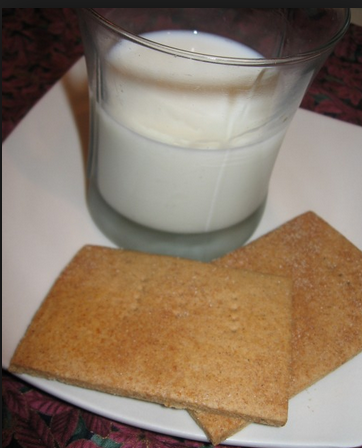
    Do you remember dipping graham crackers in milk and eating it quickly before it broke off and became a soggy mess? You might use something like this in a scene where the hero/heroine has just been dumped by a boyfriend/girlfriend.

    Perhaps your character can’t make decisions. Employ a scene where he taste tests while walking a buffet line; a bite here, a nibble there, unable to settle on a nourishing decision.

    Employ sensory detail to involve readers in the story’s emotional ingredients.

    Match emotions with taste receptors:

    Bitter: She recoiled and didn’t know whether it was from her bitter coffee or his abrupt, “We’re done.”

    Salty: “The oysters were so fresh they tasted like my tears. I closed my eyes to feel the sensation of the sea.” — Laura Fraser, “Food for the Heart,” Eating Well Magazine   Jan/Feb 2007

    Sweet: She lifted the chocolate to her mouth, gazing at the young man across the room. She held him captive and slowly savored the chocolate.

    Sour: “Lemon with your squid?” She pinched her nose, “No, thank you.”

    Umami: Their classroom integrated a variety of cultures, much as umami unites disparate flavors.

    Match emotions with taste:

    Ebullient, getting away with murder:

    ” . . . the fat Georgia man told Big George that it was the best barbecue he had ever eaten, and asked him what his secret was.

    Big George smiled and said, ‘Thank you, suh, I’d hafto say the secret’s in the sauce.’” —Fried Green Tomatoes at the Whistle Stop Cafe, Fannie Flagg

    Emotionally charged:

    “She reached for a cherry tomato and popped it into her mouth. The juices exploded on her tongue. Carly wanted her attention? I’d give her anything she wants.” — A Wedding in Provence, Ellen Sussman

    Hopeful, positive, upbeat:

    “Taste this . . . I swallowed. She had fed me a fluffy cloud, no more than pure texture, but as it evaporated it left a trail of flavor in its wake . . . That’s an amazing combination. The saffron’s brilliant—it gives it such a sunny flavor.” —Delicious! Ruth Reichl

    Comparing food with nature:

    “Moving constantly, she caressed the chocolate like a lover, folding it over and over on a slab of white marble, working it to get the texture right. She stopped to feed me a chocolate sprinkled with salt, which had the fierce flavor of the ocean . . . One chocolate tasted like rain, another of the desert.”—Delicious! Ruth Reichl

    “That’s the spring cheese. . . When I put the cheese in my mouth it was richer, and if I let it linger on my tongue I could taste the lush fields of late summer, just as the light begins to die.” —Delicious! Ruth Reichl

    Taste and texture detail:

    “It was accompanied by lamb cutlets, which Cuneo had passed three times over the open flame, and a snow-white, melt-in-the-mouth garlic flan.” —The Little Paris Bookshop by Nina George

    In previous posts we talked about sensory detail using sight, sound, smell and kinesthetic.

    Taste and memory: Proust’s Remembrance of Things Past:

    “I raised to my lips a spoonful of the tea in which I had soaked a morsel of the cake. No sooner had the warm liquid mixed with the crumbs touched my palate than a shudder ran through me and I stopped, intent upon the extraordinary thing that was happening to me. An exquisite pleasure had invaded my senses, something isolated, detached, with no suggestion of its origin. And at once the vicissitudes of life had become indifferent to me, its disasters innocuous, its brevity illusory – this new sensation having had on me the effect which love has of filling me with a precious essence; or rather this essence was not in me it was me. I had ceased now to feel mediocre, contingent, mortal. Whence could it have come to me, this all-powerful joy? I sensed that it was connected with the taste of the tea and the cake, but that it infinitely transcended those savours, could, no, indeed, be of the same nature. Whence did it come? What did it mean? How could I seize and apprehend it?

    I drink a second mouthful, in which I find nothing more than in the first, then a third, which gives me rather less than the second. It is time to stop; the potion is losing it magic. It is plain that the truth I am seeking lies not in the cup but in myself.” Remembrance of Things Past, Proust
    Graham crackers and milkClick on Prompts, try a freewrite, using sensory detail.  Just Write!



  • Ruminate is ready for your submission

    ru’mi-nate: to chew the cud; to muse; to meditate; to think again; to ponder

    Ruminate is an award-winning quarterly literary arts print magazine engaging the Christian faith.

    Ruminate publishes poetry, short stories, photography, visual art reproductions, short fiction, memoir, creative nonfiction, essays, reviews, and interviews.

    Ruminate sponsors four contests each year—poetry, short story, nonfiction and visual arts.

    Ruminate suggests slowing down and paying attention. “We love laughter. And we delight in telling the truth, asking questions, and doing small things with great love,’ as Mother Theresa said.”

    You are invited to submit your work.

    Note from Marlene: Writers Forum of Petaluma presenter Rayne Wolfe, October 15, 2015:
    Newspaper reporter and columnist, Rayne Wolfe will share her methods for identifying sources, mining for quotable gold and turning interviews into stories.

    Whether you are focusing on non-fiction, fiction, historical fiction or memoir, Rayne will share her tools for enriching all writing by becoming an ace interviewer. Attend this forum, learn the art of interviewing, then submit to Ruminate.

    Ruminate

  • See your story and tell it.

    Relax into your chair.

    Escort your inner critic . . . your editor out the door.

    Shed your ideas about what perfect writing means.

    Give yourself permission to write the worst stuff possible.

    Writing isn’t about talent, it’s about practice.

    Creative writing is an act of discovery.

    Take a deep breath. Relax into your breathing.

    Rather than write for an audience, write from an instinctual level.

    Immerse yourself in writing. Let go of your worries. Just let go.

    Write to satisfy an inner desire and to go to a meaningful place, that’s all your own.

    Go deeper into the recesses of your mind and really write.

    Write to get to a powerful level – not for an audience.

    If you notice thoughts and feelings that cause discomfort, take a deep breath and exhale. Look around the room. Get up and walk to a window, or get a drink of cool, refreshing water. Then get back to writing.

    Write from the well that stores the fears. Let the tears come, let the stomach tie up in knots. It’s okay to write the story that is difficult to tell.

    When you are writing, if you run out of things to say, or don’t like the direction your writing is taking, write “What I really want to say . . .”

    If you want ideas about what to write, click on Prompts on The Write Spot Blog.

    My Journal.1


  • 100 Word Story

    Do you like to write short pieces? If yes, then Grant Faulkner’s 100 word story is for you!

    From the 100 word story website:

    “One hundred seems perfect. It’s the basis of percentages, the perfect test score, the boiling point of water (Celsius), purity. Pythagoreans considered 100 as divine because it is the square (10 x 10) of the divine decad (10). Even a Scrabble set has 100 tiles.

    And yet 100 is a fragment. It’s an arbitrary marker, like the ‘First 100 Days’ of a president’s term—merely a promise of what’s to come, or a whiff of what has passed.”

    Submit: 100 words … no more or no less. Tell a story, write a prose poem, pen a slice of your memoir, or try your hand at an essay.

    100 word story

  • Brevity publishes extremely brief essays.

    Brevity is an online journal,  publishing short narrative essays (750 words or less).

    Employing strong verbs and using sensory detail increase chances of your writing being selected.

    “There is no room for throat-clearing in search of a point. . . You need each sentence to do more than one thing . . . provide setting, forward the action and give insight into character, all at once.” Founder and editor Dinty W. Moore, interviewed by Kerrie Flanagan, The Writer August 2015

    Information about using sensory detail can be found in the Just Write section on The Write Spot Blog.

    Good Luck!

    Brevity

  • What does “show rather than tell” mean?

    Writers have been told to “show” rather than “tell.” Do you wonder what that means?

    Barbara Poelle, “Funny You Should Ask,” Writer’s Digest, September 2015 says this about that:

    Telling supplies information while showing explores information. In order to expand a narrative into more showing, think about the complete sensory experience of a scene.”

    If you rely on narrative, you run the risk of an “information dump,” where you give all the facts in a few sentences. Poelle suggests, and I agree, “Don’t fall into the trap of quickly getting information ‘out of the way’ so you can ‘get to the story.’ . . . Take your time to explore [the facts] through action, dialogue and the senses of the characters involved.”This way, you set the scene with a “kinetic feel.”

    All well and good, but what does this really mean?

    I played around with some scenarios:

    #1: I set my timer. I have thirty minutes to finish this blog post before starting dinner. My husband and I had to eat early so I could be at my writing workshop by 6:30 pm, my Monday evening commitment. In the old days, this would have been impossible, since there would have been carpooling for kids’ activities, overseeing homework and laundry.

    So, you know that I’m just as busy now as when the kids lived at home. But you don’t know how I feel about my current commitments nor how I feel about being an empty-nester. Now, I’ll try for a kinetic feel:

    #2: Twisting the dial on the timer to go off in thirty minutes, I settle into my cushy chair. Dinner would be easy, salad with whatever leftovers I can ferret from the fridge. My husband isn’t as picky as the kids were. Back in the day, it would have been pasta with marinara sauce and garlic French bread. Carbs for calories to sustain them through ballet, piano, baseball, soccer, basketball (depending on time of year) practice. Sometimes I miss the patter of sports-clad footwear and washing uniforms. I got so used to being interrupted, now I interrupt myself. I’ll be humming away, concentrating on a blog post when I must check Facebook. Twenty minutes later, I realize I need to prepare prompts for tonight’s writing workshop. Completely absorbed in creating clever and inspirational prompts, I remember I need to finish the blog post in time for tomorrow morning’s post. The timer dings, sending my heart racing. Gotta go.

    So, what’s the difference? #1 is an “information dump.” Not too much detail, just a list of facts. You might not be able to “see” or “feel” this scenario.

    #2:You can infer I am on deadline (setting the timer) and I am capable of cooking a nice dinner. You might imagine I miss the days when my activity-bound children needed me, but I’m pretty happy and content with my life now as an empty-nester with more me-time. #2 has more of my personality, so the reader might feel a connection . . a kinetic connection with me.

    Marlene and dreadsYour turn: Write about something you routinely do . . . implementing sensory detail. Go ahead. . . Write with gusto as you writhe in agony over what to expound. Just write!

    Candid shot of Marlene hard at work in her corner office. Can you see the wheels turning and steam rising as she madly meets deadlines with blog posts! Ignoring conventional punctuation, feeling free to dance along the page, her faux dreads keeping time to the muse.

  • Writer Advice: Scintillating Starts Contest

    Writer Advice announces its Fourth “Scintillating Starts” contest.

     $20 ENTRY FEE     —     3 PRIZES OF $100


    B. Lynn Goodwin, Writer Advice: Whether you’re writing fiction, memoir or another prose genre, entice us. Grab our attention. Make us want to know more. Give us reasons to care. Submit the opening (up to 1500 words) of your book (any prose genre).

    Your cover letter must include your contact information. We don’t need a summary nor your publishing history. We’re looking at the manuscript opening, not the query.

    This contest is for those who have not yet received a contract for submitted work.

    Send your work to Writer Advice through Writer Advice Submission Manager.

    Lynn Goodwin will respond like an agent or editor who is looking for good writing that will sell. You’ll get perspective and insight. The prizewinners will be published.

    Deadline: 11/10/15.

    B. Lynn GoodwinNote from Marlene: Don’t wait until the deadline to submit!  Lynn’s offer of perspective and insight about your submitted writing is very generous. But, if everyone waits until the deadline. . . well, I’m thinking you will get more substantial comments if you enter sooner than later. So . . . get your piece as polished as you can and submit soon!

    If you type “B. Lynn Goodwin” in the “Search for” box on the home page of The Write Spot Blog, you will find articles by Lynn that have been featured here.

  • Sensory Details – Kinesthetic, motion in writing

    How do we convey the sense of touch, or feel, or kinesthetic (motion) in writing?

    “The key to good imagery is engaging all five senses.” Five Types of Imagery:

    “The five senses: visual, auditory, kinesthetic, olfactory (smell), and gustatory (taste).”

    Previous posts about using sensory detail in writing:  visual, auditory and olfactory.

    Now, let’s explore using the sense of touch to embellish and enhance writing.

    Sometimes, the best way to learn is by example, learning from what others have written.

    “At school, the guilt and sadness were like wearing clothes still damp from the wash,” and “Whenever I moved, I felt as though I were touching something icy.” —Family Life by Akhil Sharma

    I know what that feels like, so when I read this, I can feel those damp clothes and know what the author wants to convey.

    Here’s an example of using movement in writing:

    “By the thirteenth loop, my hands were cement-scuffed and my head was spinning from being at knee height for so long, but the parade of hoping, bear-crawling, push-upping women showed no sign of slowing.” — Natural Born Heroes by Christopher McDougall, describing parkour (a training discipline using movement developed from military obstacle course training.)

    McDougall could have written “I was worn-out” or “I was tired.”  Instead he uses specific details: “cement-scuffed” and “my head was spinning.” He employed strong verbs: “bear-crawling” and “push-upping.”

    With this type of strong writing, readers can feel the chafed hands and most of us probably can relate to “head-spinning.” I can see “bear-crawling” and “push-upping.”

    A note about parkour: “Practitioners aim to get from one point to another in a complex environment, without assistive equipment and in the fastest and most efficient way possible. Parkour includes running, climbing, swinging, vaulting, jumping, rolling, quadrupedal movement, and other movements as deemed most suitable for the situation.” — Parkour, Wikipedia

    Looking at websites about physical activities (martial arts, gymnastics,dance, etc) could help you find action verbs.

    In Vex, Hex, Smash, Smooch, Let Verbs Power Your Writing, Constance Hale regales readers with her unique style about usage of the English language, especially strong verbs.  Constance has been dubbed “Marion the Librarian on a Harley, or E. B. White on acid.” Kathy Myers wrote an excellent review of Vex, Hex, Smash, Smooch.

    Practice using strong verbs and specific descriptive words to make your writing strong and create images the reader can see and sense.  You can go to Parkour Images, choose a photo and describe it, using sensory detail. Just write!

    Parkour

    Basic Parkour Movements

  • Chicken Soup for the Soul always looking for new talent

    Have you wondered how Chicken Soup for the Soul chooses their stories? Do you have a story you think might qualify for selection for being published? What you need to know about Chicken Soup submissions:

    Recipe for A Winning Chicken Soup for the Soul submission

    A Chicken Soup for the Soul story is an inspirational, true story about ordinary people having extraordinary experiences. It is a story that opens the heart and rekindles the spirit. It is a simple piece that touches our readers and helps them discover basic principles they can use in their own lives. These stories are personal and often filled with emotion and drama. They are filled with vivid images created by using the five senses. In some stories, the readers feel that they are actually in the scene with the people.

    Chicken Soup for the Soul stories are written in the first person and have a beginning, middle and an end. The stories often close with a punch, creating emotion, rather than simply talking about it. Chicken Soup for the Soul stories have heart, but also something extra—an element that makes us all feel more hopeful, more connected, more thankful, more passionate and better about life in general. A good story causes tears, laughter, goose bumps or any combination of these.

    Submit Your Story

    Visit the Chicken Soup Story Guidelines page, which will answer many questions about subject matter, length, and style. Following these guidelines will give you the best possible chance of being accepted.

    For a list of current topics, complete with descriptions and deadlines, please visit: Possible Book Topics page.

    Chicken SoupNote from Marlene: Don’t worry if “your” topic isn’t listed. Check every month or so, your topic might be on their new list. Follow submission guidelines.

    When submitting, it’s very important to follow submission instructions. Do exactly what they want. If you don’t, your piece will be disqualified no matter how fantastic the writing is.

    Chicken Soup for the Soul is “always looking for new talent.” That’s you, my friend. Keep writing and revising and have your piece ready when your topic pops up.

  • Sensory Detail – Smell

    How do you put the sensory detail of smell in writing? Let’s sniff out ideas.

    Take a deep breath and imagine the smell of:

    fresh lemons

    watermelon

    chocolate

    coffee

    fish – cooked, or freshly caught

    roast turkey right out of the oven

    popcorn – movie popcorn with melted butter

    How would you describe these smells to someone who cannot smell or who never smelled these particular scents?

    What does a crunchy red apple smell like? Does a red apple smell the same as a green apple? Does an apple smell different if it’s crunchy or mushy? If it’s cold, it might have that earthy smell of a river. Or an apple might smell like a hot summer afternoon in an orchard. Can you put apple smell into words?

    If you can, walk through an orchard or a field where the earth has recently been plowed. Inhale. Describe that earthy smell.

    What does a river smell like?

    Describe fresh cut lawn.

    What about describing smells for other things? What does” old,” ancient” and “calm” smell like?

    Here are some ideas:

    old . . . smells like parchment paper

    ancient . . . smells like musty book

    calm . . . smells like summer rain candle

    But what does parchment paper, musty book and rain candle smell like? Can you describe these smells?

    How about adding sounds:

    “old” sounds like coughing and wheezing

    “ancient” sounds like rattling breath

    “calm” sounds like church . . . sitting in church

    The following is from The Martian Chronicles by Ray Bradbury:

    There was a smell of Time in the air tonight. . . What did Time smell like? Like dust and clocks and people. And if you wondered what Time sounded like, it sounded like water running in a dark cave and voices crying and dirt dropping down upon hollow box lids, and rain. Time looked like snow dropping silently into a black room or it looked like a silent film in an ancient theatre one hundred billion faces falling like those New Year balloons down and down into nothing. That was how Time smelled and looked and sounded.

    A glorious line about smell:  “The air took on its mossy evening smell.” — Elizabeth Sims, September 215 Writer’s Digest.

    Your turn: How do you infuse smell in your writing? Tell us. We want to know.

    Lemons                        River                 red apple