Letting Go . . . An Essential Skill For Writers

  • Letting Go . . . An Essential Skill For Writers

    Guest Blogger Bella Mahaya Carter:

    Last week, I went to the dark side.

    I kept trying to get out of my low mood, which I created by misinterpreting a situation, making presumptions about other people’s opinions about me, and then listening to—and believing—the small voice inside my head ranting about what a terrible person I am. These thoughts looked real.

    They weren’t. They were expressions of fear.

    Having been beaten as a small child, I can sometimes be a hyper-vigilant people-pleaser, and when I sense others are unhappy with me, it can trigger the kid who feels unsafe.

    Last week, when I was in that low mood, I kept trying to do things to get out of it, but nothing helped.

    I finally realized there was nothing to do except sit with my uncomfortable feelings, be compassionate with myself, and wait for my mental storm to pass.

    There was nothing to do but recognize my mind was playing tricks on me and hijacking my well-being.

    Seeing this made letting go—and freedom—possible.

    Letting go is an essential skill for writers. We are not in charge. The more we can relax our ideas about what, how, or when we “should” write, the better we can receive what wants to be expressed through us on its own terms.

    When struggling, people often ask, “Why is this happening to me?” Why questions can become rabbit holes. The “why” doesn’t matter as much as how you respond to what’s happening.

    I find it more productive to ask “how” questions.

    Here are a few examples:

    • How can I find peace right now?

    • How can I feel good about myself?

    • How can I experience more joy?

    • How can I be free?

    • How can I liberate myself from my mind’s destructive habits?

    • How can I write this story?

    • How can I be more loving with myself and others?

    • How can I live with a spacious, open heart?

    I enjoyed exploring these questions in my journal and found the directive “let go” answered most of them. Let go of my illusions of control. Let go of needing to perceive myself as outstanding or correct. Let go of ruminating on the past and the future, which rival social media as attention thieves, taking me out of the present moment—our point of power. The place where life is unfolding now.

    And, yes, let go of fear. To the extent we are able.

    Faith is the most valuable if fear is the cheapest room in the house.

    Bella Mahaya Carter is passionate about the power of writing to heal and transform lives. “It took me decades to understand how to get out of my own way so that what wanted to be expressed through me could come forward. When I finally embraced this process, it was a game changer. Ever since, I’ve been helping other writers, artists, and healers navigate work and life from the inside out.”

  • Help might be where you least expect it. Just ask.

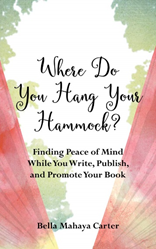
    Excerpted from “Where Do You Hang Your Hammock?: Finding Peace of Mind While You Write, Publish, and Promote Your Book” by Bella Mahaya Carter.

    When you’re out there promoting your book, you’ll have to ask for all sorts of things. This might feel hard. You may make up stories, such as I don’t want to “bother” people or be a nuisance. You may feel as if you have no right to ask for what you want. You may even feel, deep down, as if there’s something wrong with asking.

    Of course, nobody likes rejection, either. We don’t want to hear the word “no.” But how people respond has more to do with them than with you. If you can blow by the nos, you’ll pick up enough yeses along the way. So don’t let that stop you.

    Those stories running through your head, that make asking for what you want seem unsavory, doesn’t mean your ask will not be welcomed or even appreciated. I have had this experience too many times to count. Sometimes when I’ve struggled to ask a person for something, he or she is in fact happy to help. Here’s an example.

    Years ago, I received an email from Jack Grapes, my old writing teacher and mentor, who published my poetry book in 2008. Jack is a well-known and beloved literary figure in Los Angeles and has been teaching for more than four decades. His email promoted an upcoming writing workshop offered by a former student of his. I wonder if he’d do the same for me, I thought, in the midst of putting together my fall writing classes.

    The next day, I put “email Jack” on my to-do list. It didn’t get done. The following day, I wrote it again. Usually when I carry over an action item from one day to the next, I cross it off my list on the second day. Not this time. For a week straight, the directive “email Jack” continued to appear on my list. Why is this so hard to do? I wondered. I knew Jack loved me. I knew he respected my work. Still, asking him to do this for me felt monumental.

    A week later, feeling uneasy, I forced myself to just do it.

    Ten minutes after I hit the send button, I heard back from him. “I’d be happy to do that,” he responded.

    A few days later, while exploring in my journal why writing and sending that email had been so hard, I realized the heart of the matter: shame. Deep down, I felt as if I shouldn’t need help, which created embarrassment and shame about asking. I worried that my request might seem needy or inappropriate. And from there, the sorry old I’m not good enough voice, a close sibling of I’m not worthy and therefore don’t deserve this, found its toehold and sprang into action, hoping I’d take the bait and fall. Once I realized that my reluctance to ask had stemmed not from a fear that he’d say no but rather from this feeling of unworthiness, something inside me released and I felt free.

    How many times have you been reluctant to make a request of someone you perceived as more established, successful, or powerful than you? How often have you felt like you didn’t have the right to “bother” or “intrude upon” them? How many times have you reproached yourself, saying you shouldn’t need to ask for help? How many times have you berated yourself, thinking, I should have my shit together and not need anyone else—especially when it comes to my career?

    Talk about “should-ing” all over yourself. Let’s agree right here and now to quit feeling crappy!

    For years, I believed that one of the things writers needed most to succeed was chutzpah. Google defines this Yiddish word as “shameless audacity.” Some of its synonyms are “nerve,” “boldness,” and “temerity.” Hispanics use cojones, or “balls.”

    I used to think writers needed balls of steel. Had my dilemma with Jack been a reminder that I needed to grow a pair, or toughen up the metaphorical ones I had?

    And then it hit me: Instead of bigger balls, instead of fighting, I needed to drop down into myself, to connect with that place where absolute tenderness for and faith in myself and others reside. The key, I realized, was to be shameless in the sense of understanding that we are all worthy and that there’s nothing wrong with asking for what we want. There’s no shame in it; in fact, it’s a blessing. None of us lives alone on this planet. We are part of a community, a web of loving, supportive relationships. We all give and take all the time; these are reciprocal energies, regardless of our professional accomplishments (or perceived lack thereof). Thomas Jefferson once wrote, “Remember that no one is better than you, but that you are better than no one.”

    In order to ask for what you want, you have to know what you want. Sometimes this is clear. Other times, you have inklings and intuitions. Trust your worthiness, even when you can use a little help. Especially then.

    Posted 6/1/2021  on Jane Friedman’s Blog, “Writers Ask for What You Want.”

    Amazon / Bookshop

  • What calls to you? Prompt #582

    It feels to me like we’re coming down from a precipice, a surreal 15 months.

    As we enter this new phase, what calls to you?

    What are you ready to let go of?

    How can you release or lighten the load you carry?

    Prompt inspired from “Where Do You Hang Your Hammock?” by Bella Mahaya Carter.

  • Finding Time to Write

    Guest Blogger Bella Mahaya Carter writes about:

    A Cure for Writer’s Block: Write without “Writing”

    Many of my students and clients tell me that they have a hard time finding the time to write. This is totally understandable. Our lives are busy. We have obligations and commitments we must fulfill, or face tangible consequences.

    Writing is not like this. Nobody knows or cares if we don’t write. 
     
    But people who have the urge (calling) to write and don’t act on it often experience dissatisfaction, even angst. They feel like they have an itch they can’t scratch. Part of the problem—what keeps people from sitting down to write—is their own imagination. They’ve made up stories about what “writing” is supposed to look like. They assume they need to carve out huge chunks of time. They believe that they have to feel energized or inspired. They might envision their writing hurting people they love. They may worry they lack talent. They’re convinced they have to know what they want to say, despite the fact that writers often have no idea what’s on their minds until they’ve written. 
     
    Drop Your Limiting Stories and Write Where You Are
     
    When you realize that these inner voices are keeping you from doing what you say you want to do—write—you get to show up exactly as you are. This means you accept yourself and your circumstances, and instead of feeling like you have to stretch into some impossible, imagined version of yourself as a writer, you take “writing” off its pedestal, cradle it in both hands, and invite it into your crowded, messy, busy life. 
     
    Ask yourself these questions: How can I make writing fit within the real world that is my life? How can I create just a little bit of space to write? Can I sit down and scribble in a journal for twenty or thirty minutes once or twice a week?  How about fifteen minutes once a week? Start small. 
     
    Some people don’t think this qualifies as writing, but experienced writers know better. Small efforts taken over time become large. Minutes become hours, so have at it: dump thoughts out of your head and onto the page. Romp around. Have fun. Take your shoes off. Strip naked. No one’s watching and there aren’t any rules. Until you start to take this process seriously, at which point you might want to hit the pause button
     
    Writing Is Not Heavy
     
    Author Jack Canfield tells a story about his spiritual teacher pointing to a boulder in the woods and asking, “Is that heavy?” Jack replied that of course it was, to which his teacher said, “It’s only heavy if you pick it up.” Trick question? Maybe, but it serves as a lesson for writers: Don’t pick up and carry heavy thoughts that prevent you from writing.
     
    If you show up for yourself in this way—even once a week—you’ll be writing without “writing,” and effortlessly developing a practice. I advise people to work by hand at this stage, which ignites the heart-hand connection. Intimacy flourishes when we bring pen to paper. Author Natalie Goldberg says, “Just because you can drive a car doesn’t mean you should stop walking.” Take one step at a time. Feel your way.
     
    Type and Edit Your Work 
     
    Once you’ve developed a “writing without ‘writing’” practice, you may want to expand that by devoting a small amount of time each week to typing up what you’ve scribbled, editing as you go. When you feel like you’ve shot your creative load with any given piece, set it aside. When you allow time to pass and come back to your work, you see it with fresh eyes. Edit some more. You’ve no doubt heard the expression “writing is rewriting.”
     
    Create Lists
     
    Keep lists of (a) journal entries that feel relevant or alive in some way that you’d like to develop, (b) typed and edited pieces in process, and (c) places to send your work when it’s ready.
     
    To recap, you’re basically just showing up a couple times a week to scribble and play in your journal, and also devoting one hour a week to typing, editing, and developing ideas that surfaced during your playtime scribble session. With these two practices in place you are “writing without writing.” But really, you’re writing! Congratulations! Keep going.
     
    My dad used to say, “If you love your work, you’ll never work a day in your life.” I’d like to add: If you don’t think of what you do as “Writing” with a capital “W,” if you shift your thinking about what it means to write and be a writer, and allow yourself to have a good, long scribble, rant, or rave, free from ego demands or expectations, you will be living the “writing without ‘writing’ life”—and loving it!

    Note from Marlene:

    The Write Spot Blog as over 475 writing prompts to spark your writing and places to submit your writing. Good Luck!

    Bella Mahaya Carter is an author, creative writing teacher, and empowerment coach, who helps writers (and others) experience greater freedom, joy, and peace of mind.

    She believes in the power of writing to heal and transform lives, and views publishing as an opportunity to deepen self-awareness, nourish meaningful connections, and delight in peak experiences while being of service.

    Bella has been teaching and coaching for over a decade. Bella coaches authors one-on-one who are ready to take a deep-dive into their writing, or need help with a book proposal, or are navigating publishing decisions, book launches, promotional activities, and more. 

    Her memoir, “Raw: My Journey From Anxiety to Joy” won a silver medal in the Mind, Body, Spirit category at the Benjamin Franklin Book Awards, sponsored by the Independent Book Publishers Association. Aspire Magazine selected Raw for its “Top Ten Inspirational Books” for June 2018, and Independent Publisher called it an “Indie groundbreaking book.”

    Note from Marlene: I highly recommend this book.

    Since the publication of her memoir, Bella has become an Anxiety-to-Joy coach. Readers reached out to her for help and she couldn’t turn them away.

    “This work has chosen me and it’s powerful. I’ve gone from being a person paralyzed by an anxiety disorder—afraid to leave my house—to someone who teaches others how to holistically heal anxiety! I never planned this; life unfolds in mysterious ways, and I’m both honored and grateful to be of service in this way.”
      
    Bella’s Blog explores intersections between the writing life, spirituality, and personal transformation and growth. She writes about how to stay sane and joyful as a writer, from inspiration to publication, and beyond. She is concerned with the whole-person—body, mind, and spirit. Her posts include information about self-care, nourishment, mental health (especially anxiety), and more. She is a healer.


  • Bella Mahaya Carter & The Priority Pyramid

    Today’s guest blogger, Bella Mahaya Carter offers inspiration with a “Priority Pyramid.” The following is an excerpt from her original post.

    Last November, I worked with Dan Blank, author of Be The Gateway: A Practical Guide to Sharing Your Creative Work and an Audience. In his book, Dan recommends an exercise to help creative professionals get clear about their life and work priorities.

    If you’d like to try this exercise, get fifteen index cards and write down one word on each card indicating what’s important to you. Then prioritize your cards into a pyramid, with your most important priority at the apex, and work down from there. These cards are a wonderful reminder of what matters if you lose your way. Each person will obviously have different words on their cards.

    Here’s what mine looks like:

    For me, a deep spiritual connection with Self comes first. When I lose that I’m like seaweed tossing in the ocean, and life feels disorienting, even painful. After that my priority is my family and also my writing. While the importance of family is obvious, it’s not always been easy for me to explain why my writing holds such a high priority in my life. The best way to describe it is to say that writing enhances my connection with my True Self. It helps me remember who I am.

    Many of my students and clients tell me that writing is also foundational in their lives. It helps them navigate their days with greater clarity and grace, stay grounded, identify and release limiting thoughts, express joy, share stories, and reimagine what’s possible.

    It’s useful to look at priorities independently, but also in relationship to one another.

    I’ve added “I believe” statements to my “pyramid landscape” to remind me why I do what I do.
    I believe in the power of writing to heal and transform lives, and I view publishing and book promotion as opportunities to deepen self-awareness, nourish meaningful connections, and delight in peak experiences while being of service.
    I believe in authentic, creative self-expression.
    I believe that we all have access to unlimited creativity.
    I believe miracles happen when we consciously choose love over fear.
    I believe suffering is not the price of admission to a creative life.
    I believe that freedom and peace of mind are available when we look in the direction of our own innate wisdom.

    I agree with Natalie Goldberg, who, in her book, The True Secret of Writing: Connecting Life with Language, says “you can anchor your mind with your breath, but also you can anchor your mind with pen on paper.”

    But perhaps the most reliable “anchor” of them all is love, which, ironically, is also the ideal launching pad. The best of what gets created through us comes from love.

    This index card—the oldest of my bulletin board relics which I wrote around age six—sat for years beneath a sheet of glass that protected my mother’s mahogany sewing machine table. Mom put in long hours there. It was a palace of creation and love—and so was she!

    I had no clue when I wrote this all those years ago that as an adult I’d need to keep reminding myself to be guided by love rather than fear. Old habits may die hard, but they pass more peacefully—and lose their power over us—when we see them for what they are and let them go.

    Love is patient and kind, and it allows us to start over and reinvent ourselves. Again and again.

    As I sorted through the items I removed from my bulletin board, two of them went right back up. I wasn’t ready to clear these messages. One says, “Listen,” and the other says, “The only time is NOW!” I don’t know about you, but I need reminders like these.

    I’ve also left a lot of blank space on my bulletin boards to create room for what’s coming.

    Writing Circles begin January 29th. Enroll here.

    I have two openings for private coaching clients. Let me know if you’d like to work with me one-on-one.

    I wish you a new year filled with health, happiness, creative expression, and love.

    Thanks for being part of my journey.

    Blessings and gratitude, Bella

    Click to read Bella Mahaya Carter’s original post.

  • I didn’t want to go.

    “I didn’t want to go but I’m glad I did.”

    Bella Mahaya Carter’s title for her early December email caught my attention, probably because so many times I didn’t want to go but I was glad I went.

    Here’s what Bella wrote:

    Dear Friends,

    I hope you had a wonderful Thanksgiving and are enjoying the holiday season! 

    Today’s post is about showing up for ourselves and for each other.
     

    This past Monday night, I did not want to attend Forest Lawn’s annual “Lights of Remembrance: An Evening of Honoring the Memories of Your Loved Ones.” I was tired (hadn’t slept well the night before) and felt like I was getting sick. I also didn’t want to drive twenty miles at night to a place I’d never been, or go alone (my husband was too tired and my friend declined). I wanted to stay home, lounge by the fireplace, and watch The Crown
     
    I also did not want to kick off my holiday season with sadness. I did not want to do the grief dance. (My mom died seven years ago, in December.) I did not want to be reminded about the ways I’d failed her.
     
    But Melissa Gould was the guest speaker. I had to go. Melissa is a former student of mine, whose memoir Widow. . . ish, is being published by Little A books next year. Witnessing her journey has been remarkable.
     

    When she first showed up in my class, Melissa had recently lost her husband and was grieving. An award-winning screenwriter, Melissa’s inclination was to write fiction, but she needed to tell her own story. She didn’t yet understand the value her personal narrative held, nor the healing that would come as a result of sharing it. But she showed up in a big way (even when it was scary). 

    She began her process by writing simple exercises from class prompts, which over time became seeds from which essays sprung about her life as a young widow. Her essays have since been published in The New York Times, the Los Angeles TimesThe Washington PostThe Huffington PostThe Girlfriend by AARPBuzzfeed, and elsewhere. 
     
    In addition to all the other reasons I didn’t want to go, I told myself it would be better if I got dressed up. I thought the event was happening at a sanctuary, which made it feel like an occasion, but the last thing I felt like doing was putting on heels or makeup. 
     
    But then I realized that all had to do was show up. I set aside the need to “dress” and instead put on comfy leggings, boots, a sweater, hat, and scarf. No make-up. 
     
    When I arrived, I discovered the event was being held outdoors, and saw other people dressed casually.  


    A choir sang, Melissa read her poignant work, poems were shared, and then Melissa led a “silent reflection,” a guided meditation in which she invited the audience to close our eyes and imagine ourselves in a room with a deceased loved one. 
     
    I was with my mom in New York, in our old living room.
     
    “Can you forgive me?” I asked.
     
    “For what?” she said.
     
    “For not being more present in your life, especially as you aged.”
     
    “There is nothing to forgive,” she said.
     
    I felt the truth of that statement.
     
    Then I heard, “You were there for me in countless ways, large and small. You were a wonderful daughter.”
     
    I realized that we all do the best we can, given our consciousness and circumstances—and that this applies to me as well as anybody else. It also occurred to me that I’d been weaving (and believing) a “not-good-enough” story in my role as her daughter, and was finally able to release it.
     
    Tuesday morning I put the candle from Monday night’s ceremony on my altar, placed an empty chair beside it, and invited my mother to join my meditation. During the journal writing that followed, I wrote her a long letter. And she “wrote” back. I heard her voice and wrote what she said. 
     
    Since then I have felt her presence strongly, but instead of feeling familiar sadness, regret, and shame, I am filled with love and joy! What a sweet way to kick off the holiday season! 
     
    I keep thinking how I didn’t want to go to the event and the one thing that dragged me out of the house was that I wanted to show up for Melissa. She had demonstrated incredible tenacity, courage, persistence, and faith. This is worth celebrating.
     
    I was also grateful to receive an email from her saying that she was moved to see me there and that my presence had been a gift. She told me how writing continues to heal her and is yet another gift.
     
    What strikes me is that gift-giving is fluid and creative, and we sometimes don’t even realize what we’re giving—when or to whom. But also, we never know when we’ll receive a gift.

    I showed up for Melissa, and she showed up for me—and for everyone gathered to honor memories of loved ones. The gift I received from her was both unexpected and priceless.
     

    This is what’s possible when we show up for ourselves and for each other. 
     
    Stories nourish, heal, and uplift us all. Monday night reminded me that we rarely know the power of our own stories—until we share them!

    If you have a story you’d like to share, or if you’d like to explore what’s possible for you through writing, check out Bella’s upcoming writing circles. Start the new year (and decade!) with the gift of creative expression and healing. 
     
    Blessings and gratitude, Bella

    Bella Mahaya Carter is an author, creative writing teacher, and empowerment coach, who helps writers (and others) experience greater freedom, joy, and peace of mind. Her winter writing circles (online and on-site) begin January 29, and are filling up fast! Grab your seat while there are still openings. Bella is be happy to speak with you to answer any questions you may have. 


    Bella believes in the power of writing to heal and transform lives.

    Note from Marlene: I also believe you can use your writing to heal.

  • Early Christmas Morning

    As I write this, it’s early Christmas morning, 2019. It will be a quiet day here at Chateau Cullen, except for the swishing of a broom while I sweep the porch and the hum of the washer and dryer, getting ready for our holiday party this weekend and for my granddaughter’s third birthday.

    Today will be a busy day for some, filled with happy feet and sparkling eyes as young and old open presents under a decorated tree. For others, it will be quieter.

    Today’s guest blogger, Bella Mahaya Carter shares her holiday thoughts.

    Dear Friends:

    I hope you’re enjoying the holiday season—or getting through it with as much grace and ease as possible. One thing that helps keep me calm is walking our dog, Katie, who insists upon frequent and leisurely outings. I don’t mind (usually), because they provide exercise, time outdoors, and inspiration.

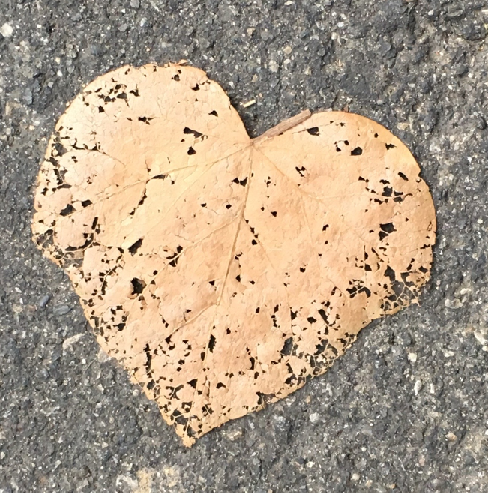
    Check out this leaf she’s circling:

    This reminds me of a stanza in Mary Oliver’s poem, “Sometimes”:

    Instructions for living a life:
    Pay attention.
    Be astonished.
    Tell about it.

    I feel like I don’t do these things often enough. But it’s what I love most about my creative life. 

    Now that the holiday season is in full swing, a snarky inner voice says, “Yeah, right. Get real. You don’t have time for this.” 

    But I’m learning to ignore this voice, which I know is stale, conditioned thought, and instead listen to my wisdom. My wisdom reminds me that my sense of joy and well-being goes up exponentially when I follow Oliver’s instructions, and also, my busyness is up to me.

    I’m at a place in my life where much of what I do is by choice, and not a requirement. Even when I was younger, a lot of what I thought I had to do came from within. It seemed like I had to achieve certain things, or behave (or appear) a certain way, but I realize now that I was taking orders from an inner voice that wasn’t particularly kind, expansive, or helpful. It sounded more like a drill sergeant than a wise guide. Mary Oliver is a nourishing companion. Her “instructions” are both simple and complex. Let’s take a closer look.

    Pay attention.

    We are designed to pay attention. But we forget and become distracted. If you’re like me, you might spend too much time judging, expecting, evaluating, proclaiming, analyzing, defending, and protecting, which is the opposite of paying attention. However, the instant we remember to pay attention, everything changes. A world of possibility opens to us and we are free to observe (and relate to) what’s here in new ways.

    Be astonished.

    Life is astonishing—especially when you’re able to see the beauty around you (particularly during busy or turbulent times). Allowing yourself to be astonished might mean shifting from a fearful perspective to a loving one. And we cannot be astonished if we’re not paying attention, which happens when we’re hijacked by our thinking. We also cannot experience astonishment when we think we know what to expect. In this context uncertainty is a gift–if we can embrace, rather than fear it.

    Tell about it.

    Even after thirty-plus year’s writing I still have inner voices that heckle, taunt, and say things like: Don’t write that. Don’t share it. It’s no good. You’ve said this all before. Who cares? Who do you think you are?

    Many writers worry about speaking their truth. They don’t want to make waves, or they’re afraid of hurting someone they love, or they believe old, limiting, fearful beliefs that stifle or even paralyze them. Many don’t realize that their vulnerability is their strength and also their gateway to creative freedom. When you relinquish your illusion of control you invite something large and luminous to come through you. Your job is to get out of your own way and share it.

    I have my own instructions for living a life. They were given to me over time, in small doses, during meditations, when I needed help in my life. I had to get out of my own way and become quiet to hear them.

    Bella’s Instructions for living a life
    (especially during the holidays):

    Slow down.
    Stop fighting.
    Let go.
    Trust life.

    I will unpack these “instructions” in a future post.

    Meanwhile, I began this one saying that I feel like I don’t pay attention, allow myself to be astonished, or tell about it often enough. I’m realizing that the key is to make room for these opportunities, to give ourselves these gifts daily, if only for a few moments.

    If you’re ready to explore what’s possible in terms of “pay[ing] attention, be[ing] astonished, and “tell[ing] about it,” check out my upcoming writing circles (online and on-site), which are almost full. I have two openings in my online class and three in my on-site class. Happy to answer any questions you may have. Start the new year (and decade!) savoring your life, speaking your truth, and sharing your wisdom! 

    I also have two private coaching openings if you’d like to work with me one-on-one. Contact me if you’re interested.

    My memoir, Raw, is for sale through my website.

    Here are two bonus photos from this morning’s walk.

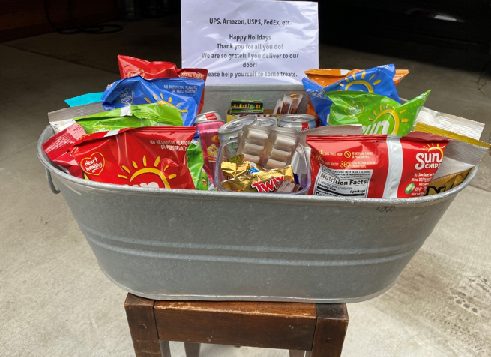
    A neighbor left these treats out for UPS, Amazon, FedEx, and USPS employees to thank them for their fine work delivering packages. It inspired me to ask, How can I be more thoughtful and generous this holiday season?

    This made me smile. I love these trees, and have used their berries to make wreaths and floral arrangements throughout the 20+ years we’ve lived in Studio City.

    I appreciate having neighbors who bring beauty and joy to our neighborhood—and I appreciate you for being part of my journey!

    Happy Holidays. I’ll see you in the new year!

    Blessings and gratitude,
    Bella Mahaya Carter

  • Just be yourself.

    The definition of marketing is connecting with people in a human way and doing it as authentically as possible.

    Writing can heal and transform lives.

    Guest blogger Bella Mahaya Carter shares her epiphany about newsletters and marketing.

    Sometimes I want to lay down my ambition, hit cruise control, and glide through life.  But as an author (and human being) there’s so much I don’t know and want to learn. Case in point: I had a wonderful experience publishing my memoir with She Writes Press. I’ve come close to selling out my 1000-book print run—except for a few boxes left in my garage, which remind me of this important fact: books don’t sell themselves
     
    The realization that I (along with most authors today) need to take responsibility for the business part of my writing life has been sobering—but also, surprisingly fun. I’ve been reading marketing books the way I used to read craft books as a young writer—inhaling them with wonder and awe. But these days, more than ever, authors are expected to sell their books, no matter how they publish. Knowing as much as we can about publishing and book promotion is essential for success, not to mention peace of mind.
     
    Dan Blank, author of Be the Gateway, has been on my radar for years. His book sat on my shelf unread. When I finally picked it up a few weeks ago, I couldn’t put it down. Just as I was beginning to become curious about blogging and newsletters and wanting to understand these tools better, Dan offered a four-week workshop on this subject, so I signed up.
     
    I didn’t expect what came next. 
     
    Dan had me evaluate my priorities, craft a mission statement, and get clear about what I was doing and why.
     
    And then he challenged—disrupted—my ideas about author marketing. 
     
    Disruption is your friend.
     
    I don’t know about you, but when someone tells me something that contradicts what I believe to be true, my default position is to become defensive. This makes learning difficult. But the reason we hire coaches and teachers is to learn from them. It made sense to set my ego aside and listen to, and at least try, Dan’s suggestions. 
     
    This instruction challenged me most:
     
    Dispense with your fancy designed newsletter and send out a plain text email. Reach out to the people on your email list as a person, not a brand. 

    Publishing and book promotion are opportunities to deepen self-awareness, nourish meaningful connections, and delight in peak experiences while being of service.

    I thought about how I paid my web designer to create a spiffy Mail Chimp template that reflected my brand, complete with banner, logo, and author photo. Dan said that I didn’t need these advertising bells and whistles. 
     
    But the thought of showing up without them—just me (as if I’m not enough without my “brand”)—made me nervous. I didn’t feel completely naked, but I definitely felt vulnerable—and scared.
     
    That’s when I realized it was easy to hide behind the window-dressing of my newsletter/brand.
     
    I asked myself: What do I like to see in my inbox? I had to stop and think about this. I knew what I didn’t like: anonymous advertising and people overwhelming me with information, offers, and promotions. By contrast, I realized that I looked forward to Dan’s emails, as well as others who regularly offer valuable insights (and free) advice and suggestions that enrich my life and work. People writing from their hearts about what they’re seeing and learning, and sharing their hard-earned discoveries with me. I savor this type of human connection. And then this became clear: 
     
    The definition of marketing is connecting with people in a human way and doing it as authentically as possible. 
     
    Many authors don’t realize that marketing can be as innovative and raw a process as writing. The difference is that instead of communicating just with yourself (and your higher power), you’re communicating with others. Sixteen (instead of the usual five or six) people on my email list replied to my first (experimental) plain text email. They responded with great ideas, conversation, and support. More people opened that email, too. And a few people even shared it with others! Hearing that made my day. Someone enjoyed what I wrote so much they felt compelled to share it! Amazing. I felt rewarded for my courage and grateful to Dan.
     
    The deeper reason I hired him is that I’m working on a proposal for my new book, and although I have confidence in the material, I realize that my author platform may not be robust enough to attract a traditional publisher. And, regardless of how I publish, I want to learn more about finding and building an audience for my work.
     
    The title of my new book is Where Do You Hang Your Hammock: How to Find Freedom and Peace of Mind While You Write, Publish, and Promote Your Book. Between the books I’m reading, the Nonfiction Writers Conference I attended last week, and the work I’m doing with Dan, my mind is flickering with marketing ideas. For example, I heard that there’s a “National Hammock Day,” which “commemorates the universal symbol for relaxation.” Who knew? Perhaps publishing my book on or near this date might provide publicity opportunities. 

    Although my book is geared toward writers, its message of resilience, flexibility, and cultivating freedom and peace of mind extend well behind this niche. Several ideas come to mind: I could write and pitch stories about relaxation to media outlets when my book launches—and every year after on my book’s “birthday.” I could reach out to special sales clients for bulk sales.  Maybe writing associations, organizations, nonprofit groups, or even writers’ clubs might want to purchase copies to give to their author-members as a welcome or thank you gift. The possibilities are fun to consider.
     
    I’m not saying I’ll never send out another designed newsletter, but for now I’m challenging myself to show up “plain”—just me and my thoughts about my unpredictable journey, in conversation with beloved readers and friends. One of the things I discovered while speaking to a writing colleague recently is that I’ve spent too much of my life hiding and trying to look good and it’s time to stop and just be me.
     
    Here’s the mission statement I wrote for Dan’s class:  
     
    I believe in the power of writing to heal and transform lives, and I view publishing and book promotion as opportunities to deepen self-awareness, nourish meaningful connections, and delight in peak experiences while being of service.

    Dan also encouraged me to get clear about my blog’s subject matter, which wasn’t hard to nail down. My blog explores intersections between the writing life, spirituality, and personal transformation and growth. That’s what my new book is about, too. I want to give this project its due. I want to give it space, let it breathe. I’m not in a hurry. 

    Is this easy? No! Does it diminish your overall creativity and writing output? No! Does it make you immune to vulnerability? No! But, honestly, I wouldn’t want to live any other way. I’m human. I vulnerable. I’m afraid. I take chances. And I sometimes fall on my ass. 

    There’s no one right way for authors to market their books. What works for one person may not work for another. The key, as I’ve said, is to come from your heart and to be authentic.


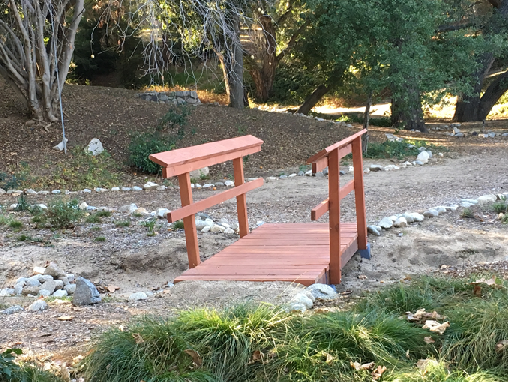
    While visiting the Descanso Gardens, I took this photo. Bridges literally connect us from one place to another. They are also great metaphors for psychologically transporting us from where we are to where we’d like to go. People can be bridges. So can unexpected situations or sudden insights. While writing this post, it occurred to me to do some additional, authentic marketing by putting my memoir on sale for the holidays.

    My memoir, Raw: A Midlife Quest for Health and Happiness, is available for $9.99 (no tax and free shipping)—if you buy it directly through my website. I’d be happy to sign the book to you or a friend or family member before mailing it. This offer is good through December 21. If you haven’t ordered a copy yet, please do. And if you read and enjoyed Raw, please consider buying a copy as a holiday gift. Your support means more than I can say.

    [Note from Marlene: Raw is excellent. I have learned from it personally and have given it as gifts.]

    Thanks for being part of my journey!

    Resources: 
    These are my favorite books that lay out today’s publishing landscape: The Business of Being a Writer, by Jane Friedman and Green-Light Your Book: How Writers Can Succeed in the New Era of Publishingby Brooke Warner

    These books are excellent for marketing: Online Marketing for Busy Authors: A Step-by-Step Guide, by Fauzia BurkeYour First 1000 CopiesThe Step-by-Step Guide to Marketing Your Book, by Tim Grahl; and Be the Gateway: A Practical Guide to Sharing Your Creative Work and Engaging an Audienceby Dan Blank.

    Bella Mahaya Carter is a poet, author, teacher, and coach. In 2008 Bombshelter press published her poetry book, Secrets of My Sex. Her poems, stories, essays, and articles appear in dozens of print and online journals. A practicing Spiritual Psychologist, whose mission is to heal herself and others through creative work, Bella serves clients around the world with her transformational classes, workshops, and coaching.

  • Activating Your Creative Goals

    Creating The Impossible

    Today’s Guest Blogger is Bella Mahaya Carter. I have enjoyed her blog posts. I hope you do, too. Here is one of her inspirational stories.

    When I was a film student in the eighties, my then-boyfriend and now-husband, Jim, and I borrowed a professional ¾-inch video camera from school and spent a long, magical afternoon taping an interview with his beloved grandmother. When we finished we had two-and-a-half hours of raw footage that required editing, but we didn’t have the equipment. One day we’ll get around to this, we thought.

    A few years later, after we’d married and after his grandmother had died, we wanted to keep her legacy alive by sharing the footage we took of her with the family. We agreed it would make a great holiday gift for Jim’s siblings, aunts, uncles, and cousins. We had it transferred to VHS, but when we viewed it, we were painfully reminded that it was raw footage. It needed to be cut. But again, we had no editing equipment, nor funds to rent it. 

    Years later we reached out to John Crane, a talented filmmaker friend who’d created a beautiful video of his own grandmother, and asked if we could hire him to edit ours. He was busy at the time and couldn’t take on our project, but encouraged us to do it ourselves. “You have a problem with the sound,” he said. “Hear that background hiss?” He told us it could be adjusted if we uploaded the footage to our computer. But Jim had to teach himself iMovie, and despite our best intentions, more years passed by.  

    The subject of the grandmother video often surfaced right after Thanksgiving, which was our busiest time of year. Taking on a project like that at year’s end seemed impossible. It was this past December when Jim mentioned the grandmother video again. I once again cringed and thought, Yeah, right. We’ll whip it out in all our spare time. Impossible.

    But then, a few days later, early one Saturday morning, on the eighth of December, I found myself listening to Michael Neill’s new podcast, Creating the Impossible. I’d read and enjoyed his book with the same title. For his podcast Michael interviewed speaker and author Anita Moorjani. Their discussion was lively and inspiring. When I finished listening, a small voice inside said, What if making that video is not impossible? What if you just think it is? What if it doesn’t have to be perfect? What if you can just crank it out? What if there really is enough time and you only think there isn’t? 
    Jim’s birthday is the week before Christmas. I knew there was no greater gift I could give him than completing this project.

    When he woke up, I announced, “We have a busy weekend.”
    “Why?” he asked. “What are we doing?”
    “We’re going to crank out the grandmother video.”

    He was thrilled. He’d been teaching himself iMovie and had the technical, hands-on editing skills I lacked, but what I hadn’t realized until we tackled this project together was that I had big-picture writing and editing skills that he needed. Although he knew how to use the software, he wasn’t sure how to approach the project. I knew we had to organize the material by first logging the footage and then organizing stories by theme. 

    We worked 10-hour days for four days and ended up with a half-hour tribute we both liked. And it was fun. It turned out we needed each other’s skills to complete the project. But first I needed to believe this project was possible. It wasn’t until I questioned my thinking, until I believed it could be done, that we accomplished this long-held goal.

    Writing is like this. It takes time, sometimes years, as well as the acquisition of skills. Sometimes collaboration is necessary. Writers do well in communities, with support from teachers, coaches, and colleagues. And success is definitely swifter when you leave your limiting thinking alone. When, as Caroline Myss says, you don’t invest your “belief dollars” in limiting or self-defeating thoughts.

    I leaned this while keeping my eye on the finish line of my memoir. This time last year I was four months away from publication. I still can’t believe it’s behind me. For years it loomed ahead—it was my future—and now that book launch is my past.

    It’s nice to get to the other side of creative dreams and goals, whether personal or professional. And our success is directly related to what we believe about our own thinking.

    I’ve started outlining my next book about how to Find Freedom and Peace of Mind While You Write, Publish, and Promote Your Book. The other day I detected a tiny but insidious thought: Who do you think you are writing a book like this? There are many more experienced and worthy writers who could do it. Why you? As a younger, less experienced writer I may have taken that thought at face value. I might have believed it. It may have temporarily stopped me. But I quickly responded: That may be true, but it’s something I want to do. It’ll be fun. I may not be perfect, but who is? The fact is I’m learning and growing all the time and I have tons to say on this topic. Why not me? 

    Thoughts arise in the mind all the time. I’ve discovered that I can amplify them with my emotions (energy in motion) and belief or tune them out and let them pass. It’s my choice which thoughts to believe.

    People create the impossible every day, but to do so, you must believe that you can—despite the naysaying voices within and without. 

    What “impossible” venture are you ready to create? If it’s a writing project, or if you just want to start writing again, or for the first time, check out my workshops. I’d love to help you create the “impossible.”

    Bella’s Personal Story

    I’m a poet, author, writing teacher, developmental editor, and empowerment coach who believes in the power of writing to heal and transform lives.

    My expertise is in helping students and clients find their voice on the page and in the world. I am passionate about facilitating artistic expression, and my mission is to heal myself and others through creative work.

    My memoir, Raw: A Midlife Quest for Health and Happiness.

    Book summary:

    In an effort to cure chronic stomach problems, I adopted a 100 percent raw, vegan diet, which eased my symptoms and produced impressive, unexpected perks—but didn’t completely heal me. So I looked to my mind for answers, and discovered that unconscious negative thoughts, combined with a stressful, hectic life, were sabotaging my health and happiness.

    Anxiety and a desire to heal it holistically—even before I knew what it was—is at the heart of this story, which reveals my struggle to face my fears, release perfectionism, surrender things beyond my control, and find validation within for my life and work.

    Divided into three sections—body, mind, and spirit—Raw is a chronicle of my journey, which dragged me, kicking and screaming, into spiritual adulthood.

  • Bella Mahaya Carter writes about courage, love, and intuition

    Guest Blogger Bella Mahaya Carter writes about courage, love, and intuition.

    In fall 2014, I attended Hay House’s I Can Do It! Conference in Pasadena, California. It was a spur-of-the-moment decision to attend what was being advertised as a “mind, body, and spirit retreat.” The conference featured luminaries in the fields of self-help, personal growth, and spirituality. Looking back over that experience, I felt like a kid in a candy store with a twenty-dollar bill in my pocket.

    I’d been scared to go. I was just coming off a year of grief and debilitating anxiety. I’d felt like I couldn’t breathe, and an irrational thought that I’d quit breathing and drop dead in public haunted me. So the thought of being at a venue with three thousand people unnerved me. Why was I going? I asked myself. What was I looking for? What did the words I Can Do It! mean to me? I wasn’t sure, but I felt drawn to the event, and I knew I had to face my fears and go.

    The conference helped me identify three staples in my life that have a big impact on my writing: courage, love, and intuition.

    As a poet and memoirist, I have to dig down deep inside myself and come to terms with the good, the bad, and the ugly. I have to make peace with my terror, accept what hurts, and understand that a broken heart is an open heart. There’s strength in vulnerability. I often tell my students people don’t care about you, per se, but if your writing is honest and closely observed, they will care about your writing because they’ll see themselves and their own lives reflected in your words. We all have challenges. We all struggle.  We all long for freedom from our fears. I love that the root of the word “courage” means heart. It was the first staple I identified, and I want to live more from my heart than from my head. I want to release fear and be guided by love.

    Love was the second staple of my writing life. Anita Moorjani, a Hay House author who had a remarkable near-death experience and then wrote Dying To Be Me: My Journey From Cancer, To Near Death, To True Healing, said at the conference, “Love yourself as if your life depends on it—because it does.” Loving yourself means staying by yourself no matter what. It means being your own best friend. It means believing in yourself when nobody else does. It means giving up the idea that you must win the approval of others.

    “Don’t dance for the people whose approval you don’t have,” Anita said. “Win your own approval by following your heart.” She also said that many people seek approval from the one person who won’t give it to them. Boy, could I relate. I spent my childhood trying to gain the approval of my stepfather, who couldn’t see or appreciate my gifts. Then, as a young writer, I sought the approval of my father-in-law, whose response to my work was that I should write male characters, because “Not everybody wants to read about women all the time.” If only I’d realized these men were not my audience—and never would be! I wish I’d trusted myself more as a young writer. I wish I’d validated myself, and honored my instincts and intuition. I’ve come a long way, but I’ve learned that valuing and appreciating myself is an ongoing and ever-deepening practice.

    Attending the Hay House Conference, even though I wasn’t sure exactly why I was going, and despite my fears, was a sign of growth. I followed my heart and my gut and—as is usually the case when people listen to and act from these body parts—was rewarded. One highlight for me was attending a talk by David Kessler, an expert on grief, death, and dying, who happens to be an old friend. Our kids went to kindergarten together. It was wonderful to reconnect with him after many years, and hear him validate that much of what I’d been going through in my grieving process was normal.

    Sometimes we don’t know why we’re drawn to a place or to a project, or to a situation or event. Following my intuition was the third staple in my writing life. This requires trust and faith. I often tell my students that even though they may not be sure where they’re going with their writing, when they follow their instincts, when they listen to that small voice inside, and to the voices of their characters, the work eventually reveals itself. All we have to do is pay attention, though sometimes paying attention is difficult. Distractions uproot us like seaweed in a turbulent sea.

    In retrospect, I know exactly why I went to the Hay House conference, and what I hoped to gain from the experience. Inner peace topped my list. And I wanted to feel like myself again, like the person I’d been before my mother died. I wanted to move forward with the writing and teaching careers I’d spent my entire adult life building. I wanted stability, strength, and clarity. I wanted to heal, and to live a calm, inspired, and courageous life.  I wanted to quit feeling sorry for myself, stop feeling like a victim, and find some joy. I can do it, I thought driving home from the conference that Sunday night in November—I am doing it!

    Marlene’s Musings: Bella wrote a fabulous article called, “8 Tips for Taking Care of Yourself while Writing Painful Memories,” in SHE WRITES. Definitely worth reading these important tips.
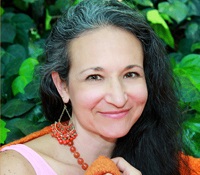
    Bella Mahaya CarterBella Mahaya Carter is a poet, author, teacher, and coach. In 2008 Bombshelter press published her poetry book, Secrets of My Sex. Her poems, stories, essays, and articles appear in dozens of print and online journals. Bella is currently writing a memoir, The Raw Years: A Midlife Quest for Health and Happiness. A practicing Spiritual Psychologist, whose mission is to heal herself and others through creative work, Bella serves clients around the world with her transformational classes, workshops, and coaching. She’s a featured columnist at SHE WRITES, an international online organization serving over 25,000 writers, and maintains her own blog, Body, Mind, Spirit: Inspiration for Writers, Dreamers, and Seekers of Health & Happiness. Visit her online: www.bellamahayacarter.com.