Imagine you are invited. . . Prompt #64

  • Imagine you are invited. . . Prompt #64

    You're invited 2.2

    Imagine. . . . You receive an invitation to a party.

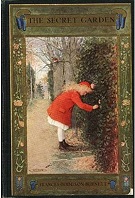
    The Secret Garden Book.1

    You are invited to dress as a character according to the book you are currently writing or reading.

    OR, you are invited to the type of party you’ve always wanted to be invited to . . .1950s cocktail? 1880’s garden party? Costume party? Bon voyage party? 


    Garden Party

    Options:

    ~Write about the invitation you received.

    ~Your thoughts, or your fictional character’s thoughts, as you or he/she anticipate the party. You're invited 1.1

    ~Write about a party you have attended.

    ~Write about a party you would like to give or attend.

    Invite.1

    Prompt: Imagine you are invited to a party . . .

    Invite.2

  • In this photo . . . Prompt #55

    This is a two-part prompt.

    Part 1:  Get a photo of yourself.  We’ll wait.

    Toe tapping . . . humming.  Photo in hand?  If not . . . close your eyes for a moment and picture a photo of yourself.

    Write,  starting with:  “In this photo . . . ”

    Go! Now! Write before reading Part II.

    Wait. . . did you write on the prompt?

    If yes . . . proceed to the next part.  If not, take 10 or 15 minutes to write, “In this photo . . . ”

    We’ll wait for you to catch up.  Maybe we’ll hum a little tune. . . la. . . de. . . dum. . .

    Ready?

    Part II:

    Add three sentences after every sentence you have just written.  Start first additional sentence with “I felt” and then add two sentences after that.

    Example of adding three sentences to what you have already written.

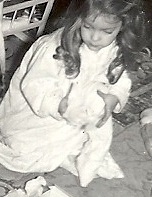
    Original Sentences:  In this photo, I’m opening a present. I’m four years old. It’s Christmas.

    Original sentence #1 plus three sentences:  In this photo, I’m opening a present. I felt happy. I loved being surrounded by my parents, grandparents, aunts and uncles. I’m excited to open this present.

    Original sentence #2 plus three sentences:  I’m four years old. I felt happy.  I am older than my sister. I liked playing with her.

    Original sentence #3 plus three sentences:  It’s Christmas. I felt content. I liked being in Nana’s living room. She made the nightgown and robe that I’m wearing in the photo.

    This is one way to go deeper in your writing.

    I first experienced this writing prompt with Adair Lara, at a writing class in her home, Summer 2009.  She teaches classes in her home. If you live in the San Francisco Bay Area and are interested, contact her. Click here for information about Adair Lara.

    scan0001


  • What I want to say . . . Prompt #53

    Today’s Prompt:  What I want to say . . .

    Post your writing and watch for comments.

    Tina-Turner-e03

  • Write the Scene. Prompt #51

    Prompt #48 was about how to “Grow Your Character.”  Prompt #49 was about setting the mood. Prompt #50 was “The Problem.”

    Let’s put them all together and write the scene.  If you have freewrites on character, mood and a problem. . . use these elements to write a scene. Or, write a scene, using all new material.

    If writing memoir, write what actually happened, as best as remembered. Be sure to include details. Be specific. Not “car,” rather “1966 blue Dodge van.”

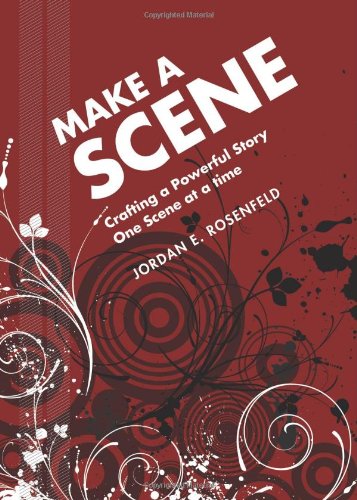
    “Scenes are capsules in which compelling characters undertake significant actions in a vivid and memorable way that allows the events to feel as though they are happening in real time. When strung together, individual scenes add up to build plots and storylines.  — Make A Scene, Crafting a powerful Story One Scene at a Time,  by Jordan E. Rosenfeld

    In Make A Scene, Jordan includes a recipe for basic ingredients for compelling scenes. If you are looking for an excellent book on how to write, this is it! Click here for my review of Make A Scene.

    Make A Scene.Rosenfeld

  • The Problem . . . Prompt #50

    Prompt #48 was about how to “Grow Your Character.”  Prompt #49 was about setting the mood.

    Today’s prompt is about “The Problem.” These series of prompts are based on Sheldon Siegel‘s 2011 Writers Forum workshop.

    We’re working on how to write suspense, mystery, thriller. If that doesn’t interest you, you can also use these prompts to write memoir.

    Write a one-sentence premise.  What’s at stake? Why should the reader care?

    If we follow along with Prompt #49: Our heroine is about to get into a limo to meet with Monsieur Blanchard. We know her father is concerned about her. We know she wants to look professional for this meeting. That’s about all we know.

    Let’s play with this. What if our heroine is a contracted killer? What if she is meeting with Monsieur Blanchard to receive her next assignment?  What if she needs the money because her father is in danger of losing their house for failure to pay back taxes? What if Monsieur Blanchard is about to blackmail her? What if she has information to blackmail him?  All sorts of possibilities.

    Premise:  Our heroine, Monique, needs money to pay her father’s bills.

    Stake:  He could lose the house. She could lose her life.

    Care: She will die.

    When you are writing thriller, mystery or suspense, Sheldon says to know the enemy. Know who it is and what we’re scared of. Then you can manipulate the reader.  Need to feel the enemy. Personified.  Fear the murderer.

    You can use your list of fears from Prompt #47 to incorporate with your character’s problem. Or you can think about your fears and work one of those into the premise.

    Prompt:  The problem is . . . Or, The problem was . . .

    Note:  If you are writing memoir, write what actually happened, as best remembered. Be sure to include details, such as character description and location.  When writing about real people, they become “characters” in the story. Use sensory detail such as smell. Use the weather to mirror mood of character and of story.

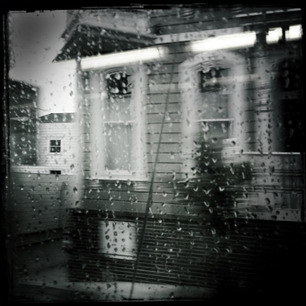
    rainy house

    Photo by Sasha Oaks

  • Grow your characters. Prompt #48

    Grow your characters.

    For the next three writing prompts, we’re going to build our repertoire, so that we’ll have characters, location and a problem leading us to write a scene.

    One step at a time.

    First step:  Write a brief description of character or characters.  If  you have a work in progress, use this time to discover something new about your characters. If writing memoir, same thing . . . find a new way to describe character.  Include flaw or flaws.

    Example:  Self-doubt, what would be challenging to character?  What does the character fear? What big events molded character? Character’s likes and dislikes.  What drives character? How does character react to pressure? Give your character a personality quirk, add internal conflict. These examples are from Sheldon Siegel’s 2011 talk at Writers Forum of Petaluma.  Sheldon Siegel is one of my favorite authors.

    Need more ideas? Fill in the blanks. Answer these questions for each of your characters.

    Character’s name
    Nickname

    Personality trait character is most proud of.

    How did character get this trait?

    What do people like least about character?

    What habit would character like to change?

    If someone looked in character’s bathroom garbage right now, what would they find?

    What scent does character like and what does it remind him/her of?

    What scares the character?

    Answer these questions for each of your characters (whether fictional or real). Real people become “characters” in your story once you start writing about them.

    For more prompts about character:

    Develop Character, put your character in an unusual situation and see what happens – Prompt #4

    Interview Character – Prompt #6

    Your Character Has A Surprise Secret – Prompt #7

  • Things you fear. Prompt #47

    Make a list of things you fear or have feared.

    Using items from your list, write a story, poem or essay.

    blog_star_1_1

  • Essence of you. Prompt #45

    Step 1. Make a list of significant events that have happened in your life. Start with the year you were born . You can list important dates such as the year you graduated, got married, started jobs, vacations. Also, list emotional highs and lows:  betrayals, losses, inspirations, revelations, epiphanies.

    Step 2. Choose specific years from this list and research historical events that happened during those years.

    Step 3.  From your lists: Choose an event that you think people would want to know more about.  Or, choose events that capture the essence of you.

    Step 4: Write about the event. Include specific details and use anecdotes.* Tie in your personal events with historical events. For example:  My junior high friends and I swiveled on cherry-red stools at Woolworth’s in 1962 in San Francisco, not realizing that folks with certain colored skin were not allowed the same privileges in other parts of the world.

    *Anecdote:  A short account of a particular incident or event, especially of an interesting or amusing nature.

    Next step:  Turn this freewrite into a personal essay.  For ideas about personal essay, click on the Just Write category on The Write Spot Blog. 


    Lighting the path for reflection


  • Who knows more about you than you? Prompt #44

    Imagine a room full of people, they are looking at a speaker behind a podium. They want to know more about the topic. In a way, they want to be entertained, even though it’s a somber occasion.  They are talking about you . . . in the past tense.

    Who knows more about you than you?  Who best to talk about the essence of you, than you?  For today’s prompt, write about you. Provide enough information so the reader or the person in that room has a view of your life.  Write about high points, achievements, life markers. Write about what is important to you.

    You can make a list in chronological order of events that have shaped you.

    You can look up various years and discover what historical events took place in particular years. Write what your life was like during those historical events. Did they affect you?

    Today’s prompt:  Write about you. We can call it Life Changing Events or The Chronicles of [insert your name here].  Or we can call it your eulogy.

    remember old timey


  • What trolley did you get on? Prompt #43

    When using prompts for writing, you can answer from your personal experience, or from your fictional or real character’s point of view. Feel free to let your imagination meander.

    If you only know where the trolley you got on would take you . . .  What trolley did you get on, and where did it take you? What other trolleys were running then? What if you had taken one of them?  Not had kids, had kids, chose to live on the Atlantic instead of Pacific, gave up art or gave up law, married him/her or didn’t. Tell us about your trolley.

    Prompt:  What trolley did you get on?