Imagery and sensory detail ala Adair Lara Prompt #277

  • Imagery and sensory detail ala Adair Lara Prompt #277

    “Write five images every day, for seven days, using as many of the senses as possible.”— Adair Lara

    From Adair’s book, Naked, Drunk, and Writing:

    “Writing is turning your thoughts, abstractions, generalizations, and opinions back into the experiences you got them from.”

    Adair’s example:

    “Not ‘women my age become invisible,’ but ‘they handed drinks around and forgot me, again.’”

    Using imagery involves the details about what happened.

    Show what happened so that readers can see the scene, hear the sounds, feel the sensations, taste the elements, and smell the aroma.

    Adair advises, “. . . every time you write a sentence, ask yourself, How can I show this? Try to get image and detail into every sentence. ”
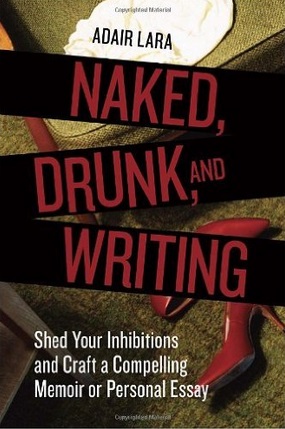
    Naked Drunk and WritingTidbits from Chapter Six, Using Images and Details:

    “We want experience, not information. ‘Joan was distressed’ is information. ‘Joan looked away’ is an image. The reader notices Joan looking away, and has the pleasure of concluding for herself that Joan is distressed.”

    Today’s writing prompt is the same one Adair assigned to her students on that hot August night in the octagonal room that served as her writing classroom, the room in the sunny yellow Victorian, where we had to walk up a gazillion stairs to reach the front door.  I so want to add, . . . and where we were greeted by her tail-wagging, smiling pooch, but that would be too much, wouldn’t it?

    Writing prompt: Write five images for seven days using as many of the senses as possible. Set aside to simmer.

    Stir the imagination when re-reading your list, looking for images that call to you, that want to be sniffed out, that won’t fade away, images that linger.

    Use that imagery to write whatever comes up for you.

    For more creative and juicy writing ideas, pick up a copy of Adair Lara’s book, Naked, Drunk, and Writing, with over seven pages of “Suggestions for Writing” as Adair calls these writing prompts.

    Writing Prompt #276 and my freewrite in that post were inspired from Adair’s assignment first encountered on that hot August night in the octagonal room . . .

     

  • Vegetables – Not Just For Eating . . . Prompt # 276

    What are vegetables good for, besides eating?

    vegetablesSome gardens are bursting right about now with zucchini, green beans, summer squash, cucumbers, yellow squash, kale, rhubarb, patty pan squash, lettuce, have I mentioned squash?

    Here in northern California, growing squash is easy and so abundant that we don’t leave our car doors unlocked, or we might find a bushel of zucchini on the seat.

    Write about other things that vegetables can do.

    Inspired from Adair Lara‘s writing workshop.

    Write about new uses for vegetables.

  • What do you pretend to not care about? Prompt #274

    Excerpt from I Could Do Anything . . .  If I only knew what it was, by Barbara Sher

    Sher. I could do anything I wantRescuing Your Past

    Something inside you is too loyal to permit you to turn your back on everything you loved and simply walk away. No matter how many times people tell you to let the past go, it’s never possible. You’ll never  move wholeheartedly into the future unless you take your beloved past with you.  And that’s exactly as it should be.

    There’s no reason to turn your back on a happy past. Sometimes we try to turn away from the past because we feel it somehow betrayed us. It’s as though we loved our past, but our past didn’t love us. So we go on strike and pretend we don’t care, as if to punish fate for being unkind. Fate never cares, of course, so we only hurt ourselves.

    Prompt:  What do you pretend to not care about?


  • Our Tribes . . . Prompt #273

    I’m thinking about our connections with one another. This excerpt seems timely.

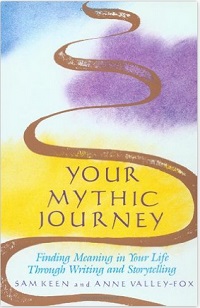
    Your Mythic JourneyExcerpt from Your Mythic Journey by Sam Keen and Anne Valley-Fox

    “Pre-modern people didn’t think of themselves as individuals — they were members of a tribe as well as of a family. Ancient philosophers knew that human dignity begins with ‘We are a people, therefore I am.’ Modern people are tribal too but we call our tribes by different names —  churches, corporations, states, nations. Each of us was nurtured within and shaped by several corporate bodies, voluntary organizations and professional corporations that molded our values and behavior — schools, athletic teams businesses, clubs, temples, and local, national, and international governments.”

    Prompt:  I am from . . .

    Or: What uniforms or emblems have you worn?

    Or: What groups have you been a member of?  Brownies, Blue Birds, Daisies, Girl Scouts, athletic groups, sorority, secret clubs.

  • Threads Connect Generations Prompt #272

    I’m thinking about ancestors this week and how we inherit some of their traits, like threads weaving from one generation to the next, connecting us.

    For this prompt, remember your grandfather, your father or an uncle doing something he likes, or liked to do, whatever it is or was.  If they built something or maintained something . . . picture what that looks like.

    Take a deep breathe in. Let it out.

    Now, think about your grandmother, your mother, or an aunt, doing something she likes, or liked, to do,  whatever it is or was.

    If she built something, or made something, picture what that looks like.

    Go back a generation or two or three, before electricity, before modern conveniences, pioneer days.

    Picture your grandfather or grandmother or great-grandparents. If you know how they spent their time, picture that.

    If you don’t know how they spent their time, use your imagination.

    Perhaps someone chopping wood for the fireplace.

    Maybe great-grandmother is sitting by the fire, with her needlework on her lap. Perhaps she wears a contented smile as she darns, or knits, or crochets.

    Deep breathe in. Let it out.

    Maybe she reflects on her ancestors, those who told stories either orally or through their needlework.

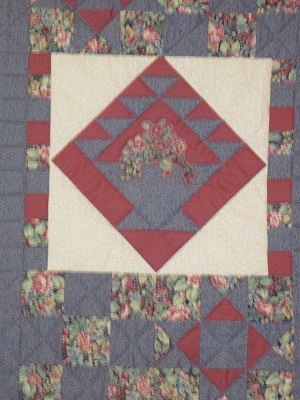
    Heart quilt wall hangingMaybe you remember a special quilt, or a tablecloth or a doily—something your grandmother, or her mother, or her mother made—maybe an embroidered pillowcase or a sampler.

    This is where we come from—these ancestors. We are hand-me-downs of these people. We have their characteristics, their traits, their mannerisms.

    Writing Prompt: When you’re ready, write about something an ancestor made.

    Wall hanging quilt made by Marlene’s sister, Janet.

  • “Show” Using Dialogue . . . Prompt #271

    Today’s writing prompts are about “showing” through dialogue.

    Show what characters are thinking, show their personalities, their quirks, move the story forward through dialogue.

    Remember, with freewrites, the writing is spontaneous. There is no crossing out.  This could be called “practice writing,” as Natalie Goldberg says.

    With dialogue we can show character, scene and drama.

    Use these prompts for practice writing. Respond as your fictional characters would respond.

    Or, respond in the first person, “I,” with yourself as the primary character . . . You playing the character of you.

    Prompt: Write a scene, where two characters talk about what they are afraid of.

    Prompt: Same or different characters. One confesses “I’ve lied about . .  .”

    Prompt: Same or different characters: “I wish I would not have . . . ”

    Taylor. Cat On a Hot Tin RoofYou can have a turning point – where the drama takes an unexpected turn, excitement mounting.

    Throw is some twists, turns, surprises. After all, people are surprising, aren’t they? You expect one thing and something else pops up.

    Use this writing for fun . . . “What would happen if. . . ”

    Use this writing to understand what happened in your life.

    Just write!

    Elizabeth Taylor and Paul Newman in Cat On A Hot Tin Roof.

  • Just when the caterpillar thought her life was over . . . Prompt #270

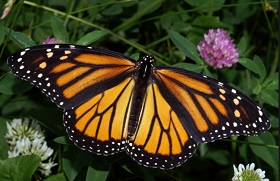
    Monarch butterfly Just when the caterpillar thought her life was over, she began to fly.

    If you have been following the prompts on The Write Spot Blog, you know what to do.

    If you are new to freewriting: set your timer for 15-20 minutes and just start writing. Write whatever comes up for you. Shush your inner critic, invite your internal editor to sit outside the room. This is your time to write freely and openly. Just as the caterpillar’s cocoon morphs into a butterfly, let your writing become whatever it wants to be. Just write.

  • Does your heart hurt? Prompt #269

    Broken heartDoes your heart hurt?

    I’ve been hearing “My heart hurts” from  several friends these past few days. And when I hear their stories, my heart hurts, also.

    What to do?

    I believe in healing through writing. So, let’s write.

    Write about: Does your heart hurt?   Write all the details you can about this.

    What happened?  Write all the details that you know. If you were directly involved: Be as detailed and as explicit as you can.

    When did it happen?  Day of week? Time of day? Where did it happen? Who was involved?

    What were you wearing? Were you standing or sitting?

    If you weren’t directly involved: Write as many details as you know. Then, focus on why you are affected. What connects you to what happened? Why are you affected so strongly?

    Read the next part after you have written about why your heart hurts and how and why you are affected.

    Okay, I know, if you are like me, you will read the whole thing now and write later. That’s fine. Go ahead and read the next part.

    Louise De Salvo, Writing As A Way of Healing, says by writing our stories fully, we can begin to understand what was formerly unclear.   By writing, we can understand what we didn’t previously understand. What we’re writing is called a narrative.

    In order to come away with this as a learning experience and with a good feeling, we need to make this writing a healing narrative.

    A healing narrative is a balanced narrative.

    This type of narrative uses negative words to describe emotions and feelings …. Probably what we just did in our writing about a hurting heart. A healing narrative also uses positive words.

    Take a minute now to rethink your experience that you just wrote about and see if you can find something positive and hopeful about your encounter.

    Even if your event was traumatic and extremely unpleasant, is there anything positive you can add to your narrative?

    Write: Take a few minutes to write about something good — anything — that came from that experience.

    For example, after writing about my difficult situation, I realized I was right to pay attention to my intuition.

    How are you feeling now? Take a few minutes to jot down what you are feeling now.

    Go ahead. Write down your feelings. Even if you didn’t write on the prompt. . . take a few minutes to jot down your feelings. Later, when you write on the prompt, compare your feelings then with now.

    You can use writing to shift your perspective. Sometimes you can’t change the situation that’s causing you pain. You can change how you look at it.

    The key is to write about events and the emotions surrounding those events.

    James Pennebaker describes this in his book, Opening Up.  Healing starts when you write about what happened and how you felt about it then, and how you feel about it now.

    And in order for our writing to be a healing experience, we need to honor our pain, loss and grief.

    As we write, we can become observers. It is not what you write, or what you produce that is important. It is what happens to you while you are writing that is important.

    So, that’s why we write . . . to understand ourselves, our emotions and our world.

    Please, if you are feeling completely overwhelmed, seek professional help.

    For more details on how to write about difficult topics: please click on How to write without adding trauma.

  • You have survived. Prompt #267

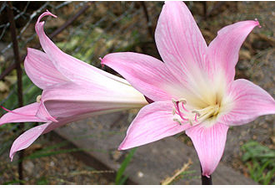
    Pink LadiesThe pink ladies are about to bloom in Northern California where I live. Their proper name is Amaryllis belladonna.

    “A plant gone wild and therefore become
    rugged, indestructible, indomitable, in short: tough, resilient,
    like anyone or thing has to be in order to survive.”   —  The Ubiquitous Day Lily of July by David Budbill


    This last sentence in The Ubiquitous Day Lily of July reminds me of our pink ladies and is the inspiration for today’s writing prompt.

    Write about something you have survived.

  • Something you will never forget . . . Prompt #266

    Today’s prompt is inspired by Hal Zina Bennett, Write From The Heart

    Pink lemonadeFor some people, summer means sipping cool drinks. For others, summer might mean sitting around a campfire after a day of hiking, swimming, exploring. Summer might mean telling stories —tall tales or short ones— while lounging on a porch, a patio or a boat deck. There is a rhythm to summer, unlike any other time of year.

    Summer ’round the campfire brings out story tellers. The shaman storyteller of ancient times, embraces his own life experience, tells stories to the community that gathers in a circle around him, a fire blazing at its center. In the telling of what most deeply touched his life, the shaman helps others to see that they are not alone. And in the process both storyteller and listeners are healed.

    Imagine now, that you are sitting ’round a campfire, very comfortable with the folks you are sitting with. It’s story telling time. Each person tells a story about a time that was so meaningful, it is something they’ll never forget.

    Prompt: Write about something you will never forget.   Remember: first thoughts are where the energy is. If you can, start writing where your first thoughts take you. If that becomes difficult, write about another time, another story. And when you are finished writing, please take a few minutes to do some clearing (described below).

    Right after writing: Take a deep breath in. Hold for a moment. Let it out. Shake out your hands. Another deep breath in. Let it out.

    Again: A deep cleansing breathe in. Hold and release.

    If you wrote about something that leaves you feeling wonderful, keep it. Hold it close to your chest.

    If you wrote about something that leaves you feeling uncomfortable . . .  release it. Gather your thoughts and your words. Send them up in the campfire smoke. Send those thoughts up with the smoke.

    We’re going to replace the space that those thoughts occupied with an image that comforts you.

    Choose an image that is comforting to you. Any image you like, as long as it soothes. Give it a color.

    Fill the space in your heart with this image and the color.

    Take a deep breath in. Hold for a moment. Let it out. Stretch. Another deep breath in. Hold and release. Congratulate yourself. Even if you didn’t write, you may have thought about what you could have written. Maybe, when you have time, you will write on this topic: Something you will never forget.