We won’t forget . . . Prompt #884

  • We won’t forget . . . Prompt #884

    My Dear Writing Friends,

    This isn’t the writing prompt I originally planned for today, September 11, 2026.

    As the 25th anniversary of 9/11 approached, there were many mentions of that horrific day.

    So, I pivoted, thinking it’s a good time to reflect, to remember.

    If you are inclined, write what that day was like for you.

    Or write about the days that followed.

    Were you in a daze?

    Did your life change after those events? If yes, how?

    Did you feel the need to be around people?

    Or did you need to isolate, to cocoon?

    How did you cope?

    Why write about this now?  Because one way to manage intense feelings is to write about them.

    September 11, 2001

    My neighbor called early in the morning. “Do you think it’s safe for the kids to walk to school?”

    I stepped outside. The sky was blue. Birds were singing.

    We were safe here in Northern California, I thought. Many others are not okay. But we are. For now.

    That Saturday my daughter left for college, having to cross the Golden Gate Bridge. I was sure the bridge would be bombed while she was on it.

    A ridiculous fear? Maybe. Probably. But that’s what tragic events can do. Plant irrational fears.

    I remember the days after, attending to what needed to be done while carrying disbelief, holding grief.

    “We’ll never be the same,” I thought.

    American flags appeared on porches as if to say, “We’re in this together.”

    Women At Ground Zero

    A few weeks after the attack, Susan Hagen and Mary Carouba boarded a plane for New York City to interview female responders.

    “Women at Ground Zero” is a powerful collection of first-person stories told by female firefighters, police officers, paramedics, EMTs, and others who risked their lives to save others.

     Write to Heal

    “When we experience an emotional event, we tend to replay it in our minds. Sometimes we want uncomfortable situations to disappear, so we try to ignore and suppress what happened.

    But we don’t forget.” — Excerpt from Write to Heal

    Write to Heal has tips on taking care of yourself when writing about difficult topics.
  • Guest Blogger Susan Hagen: Birthdays, cupcakes, and healing through writing

    Note from Marlene: Guest Blogger Susan Hagen encourages us to have fun. And shows us how we can heal through writing . . . one of my strong beliefs, also.

    I hope you enjoy Susan’s post:

    To celebrate our 62nd birthdays, my best friend and I recently spent the weekend in Disneyland. Despite creaky knees and stiff backs, we were ready to party like … well, like eight-year-olds.

    We had great fun on the (not-too-wild) rides and enjoyed being playful and somewhat silly. But in that space of awareness about our childhoods, what arose in both of us were memories of disappointing birthdays of the past.

    It’s never too late to have that birthday cupcake.

    For me, it was 1963, the year I turned eight. My mother was supposed to bring chocolate cupcakes to my third-grade class at the end of the school day.

    But a few days before my birthday, President John F. Kennedy was shot. Guess what day his funeral was? That’s right. My birthday. No school, no cupcakes, no party. I was too young to understand why everything shut down that day. All I knew was that my birthday was ruined, and I was devastated.

    Disneyland was my cupcake.

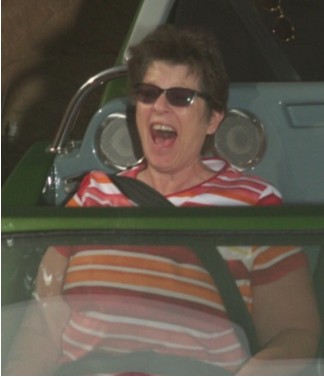
    So at age 62, I made Disneyland my cupcake. I screamed like an eight-year-old on the roller coaster. I ate the ears off more than one Mickey Mouse confection. I even climbed aboard a few kiddie rides with my BFF, who found a way to heal her own birthday traumas, too.

    When the weekend was over, we declared it all complete. We’d both had the best birthday EVER in the Happiest Place on Earth.

    You can heal that stuff through writing, too.

    Sometimes it takes putting your story down on paper to see how you can heal things from the past. Writing helps us bring ourselves current. We write a story about some part of our lives, and then we see how we’ve grown—not only since that time, but maybe even because of it. Writing helps us illuminate the dark places. It helps us bloom into greater self-awareness and self-acceptance. And it helps us make sense of our lives: how we got to here from there.

    So go ahead. Have that birthday cupcake, even if it is 54 years old! 

    Susan Hagen’s writing career began in the 1970s as a newspaper reporter in Northern California. She later served as editor of employee publications. She has since worked as a freelance writer for more than 100 corporations and nonprofit agencies across the country.

    In 1994, Susan became a firefighter and emergency medical technician in rural Sonoma County, California, where half the members of her firehouse were women. Following the September 11, 2001 terrorist attacks on the World Trade Center, she and her colleagues were acutely aware of the absence of women in media portrayals of rescue workers at Ground Zero.

    Susan combined her knowledge of the fire service with her experience as a writer to conceive of the idea for the book, Women at Ground Zero: Stories of Courage and Compassion, with co-author, Mary Carouba.  She and Mary traveled to New York City to find and interview female first responders for their award-winning book, which was published by Penguin Putnam in 2002.

    Since the publication of Women at Ground Zero, Susan has seen firsthand the power of sharing one’s story. Many of the women featured in her book believe that telling their stories was the first step in healing from the tragedy of 9/11. Susan draws on these experiences, along with those from her own life-changing journey, to help others give voice to the stories of their lives.

    Note from Marlene: Women at Ground Zero is one of my favorite books. A fascinating story of remarkable courage . . . the courage that took Hagen and Carouba from their comfortable home in Northern California to New York City to learn more about the first responders for the attack on New York City. They interviewed 30 women whose stories are told in detail in this riveting book that reads like a novel.