FAD: Feeling-Action-Dialogue

  • FAD: Feeling-Action-Dialogue

    Nancy Julien Kopp

    Today’s guest blogger is Nancy Julien Kopp. Her blog, Writer Granny’s World features tips and treats about writing.

    Her brilliant August 20, 2019 post (excerpt below) focused on how to use action with dialogue.

    Fingers flying across keyboard, Marlene types, “On with the show, Nancy.”

    How to show action when writing dialogue.

    I see writers putting action after dialogue. That’s backwards.

    Examples of action with dialogue.

    A.  “Stop that!” Sally slapped his hand from her arm.

    B.  Sally slapped his hand from her arm. “Stop that!” 

    C. “Stop that!” Sally said. Sally slapped his hand from her arm.

    Which is the best? The worst?

    I think B is best.

    And C is the worst.

    In B, we see the action, then hear the words that go with it.

    In A, would Sally say the words, then slap his hand away?

    Note from Marlene: This would be a “delayed reaction.”  Sally says “Stop that.” THEN slaps his hand away. In real life, of course, it would happen at the same time.

    Although it’s hard to show action and dialogue that happens simultaneously, I think B does that.

    Back to Nancy’s post:

    Your mind sees the action in Example B, then absorbs the words.

    And C? Adding the tag is unnecessary as the action tells you who is speaking. 

    Another example but this time adding feeling (or thought) prior to the action and dialogue. It’s called the FAD Principle. Feeling-Action-Dialogue

    “Susan knew Mary would take the biggest piece of cake. She stepped between her friend and the table full of cake slices. ‘I’ll take this one.’”

    Feeling-Action-Dialogue:

    “Susan knew Mary would take the biggest piece of cake. (Feeling/thought) She stepped between her friend and the table full of cake slices. (Action) ‘I’ll take this one.’” (Dialogue)

    The Marshall Plan for Novel Writing  features the FAD principle: Action should be shown first.

    It seems more logical that Susan would step in front of the table before she speaks.

    Even if you don’t have the Feeling part in the dialogue, just the Action and Dialogue, put the action first, then the spoken words.

    Why? For clarity.

    Develop the habit of using the action prior to the dialogue. We aren’t always going to have the Feeling included, but if you do, remember FAD.

    Feeling-Action-Dialogue

  • Myths and Realities of Blogging

    I recently spoke at a meeting of the Writers of the Mendocino Coast, a branch of the California Writers Club, on the subject of blogging.

    I recommend the blogs and books mentioned below. And of course there are many other blogs, books, and information about blogging on the world wide web.

    Highlights from my talk on “Myths and Realities of Blogging”

    If you don’t have a blog, but think you should, something to think about is why?

    Why should you have an author blog?

    “Blogging is simply a medium that allows you to connect with people who love the same books, hobbies and activities you do.”  — Gabriela Pereira, May/June 2018, Writer’s Digest magazine

    Author Blog

    Find Your Target Audience: Read the reviews of books in your genre on Amazon or Goodreads. Use words from the reviews for your headlines and tags in your posts.

    What to Post

    Stories about you: Your interests, hobbies, pets, hometown. Interviews.

    Platform

    One way to build your platform is to be a guest blogger. I welcome your essays about encouraging writers and writing tips on The Write Spot Blog. Go to “Guest Bloggers” to see what others have done (800-1200 words).

    Book reviews are also welcome on The Write Spot Blog.

    The Benefits of Blogging for Writers by Nancy Julien Kopp

    • Name recognition in the Writing World
    • Helps promote your books
    • Connections with other writers
    • Can exchange guest posts with other bloggers
    • Makes you write regularly/inspires other forms of writing

    A few blogs for writers:

    Marlene Cullen, The Write Spot Blog

    Nancy Julian Kopp, Writers Granny’s World           

    Jane Friedman, Blog for Writers                 

    Books on Blogging

    How To Blog a Book, Nina Amir

    The Author Blog, Anne R. Allen

    The Write Spot Anthologies: Prose, poetry, and prompts to spark your writing

    The Write Spot to Jumpstart Your Writing: Discoveries

    The Write Spot to Jumpstart Your Writing: Connections

    The Write Spot: Reflections

    The Write Spot: Memories

    Should you host an author’s blog to build your platform? You don’t have to, but it’s a good idea . . . as long as you stay focused on your “main” writing . . . your fiction, non-fiction, poetry, memoir. And if you love posting on your blog . . . do it! Just write!

  • A Special Gift

    Today’s guest post is by Nancy Julien Kopp. I have been enjoying Nancy’s posts on her blog, Writer Granny’s World.

    Nancy writes:

    Here we are in the last month of the year and one of the busiest. I went to a Christmas party Friday evening and a Christmas Tea at my church Saturday. Definitely getting me in the mood for the season.

    One of the things the hostess of the tea did was ask each person to tell about a Christmas gift that was very special. What a delight it was to listen to the 25-30 women share details about the time and circumstance of their gifts.

    Stories ranged from engagement rings to dolls to pets and a few other things. Many prefaced the story by mentioning that there were very few presents given in their family when they were children because money was short. One woman told us about the Christmas her parents had no money for gifts so her mother made each child something from whatever she had on hand. This woman received twin rag dolls that turned out to be one of her very favorite gifts ever.

    As the memories came alive, I couldn’t help but wonder if any of these women had written the story somewhere for her family. Had she ever even told her own children or grandchildren about that special gift? It’s precious memories like this that should—no, must—be recorded. As we moved from woman to woman and listened to their memories, I thought that many of them could turn into a story for a Chicken Soup for the Soul book. But would they? Most doubtful.

    I wanted to tell each one that they had a great story and I’d write it for them. But, no, that would not be the thing to do. She should do it on her own.

    How about you? What Christmas or Hanukkah memories have you written about for your family or for publication? Why or why not? There are reasons for both sides. I did write a memory of a special gift I received when I was six years old. It was published in one of the Chicken Soup for the Soul Christmas books quite a few years ago. I’ll post it below. Maybe it will trigger a holiday memory for you and give you something to write about for your own family or for another Christmas anthology.

    Note from Marlene: Please do write your story . . . for fun or for someone to read. Just Write!
    My Special Christmas Doll

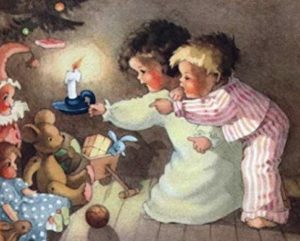
    A special doll named Katherine lives in my four-year-old granddaughter’s room. The doll perches on the window seat, arms out and head cocked a bit. Muted red polish covers her fingernails, and a few of her fingers and toes are chipped. The doll’s dark blonde hair could use a bit of attention, for it looks limp and badly in need of a stylist.

    “This was my mommy’s doll,” Jordan tells me.

    I pick up the doll, smooth the flower-print flannel gown she wears. “A long time ago, she belonged to me.” I give Katherine a little hug and place her on the window seat again.

    Jordan grasps my hand. “I know that, Grandma. Will you tell me about her?”

    I scoop Jordan into my arms. “Time for bed now, but maybe tomorrow we’ll talk about Katherine.” I tuck her into bed and kiss her twice.

    Later that evening, I sip a cup of tea and think about the doll Santa brought me more than sixty years ago. The decades slip away like quicksilver, and I am six years old again. My parents and little brother are asleep, still snuggled under warm comforters, but I’m tip-toeing down the hallway early on Christmas morning. It’s so quiet and very dark in the hallway, but I know my destination and continue on.

    When I reach the living room, the early morning light filters through the windows. I kneel in front of the decorated Christmas tree, and a little shiver runs up my spine. It’s cold in our apartment, but the shiver comes from what I spy next to the gaily wrapped packages. Santa left me a beautiful doll looking very much like Shirley Temple. She’s dressed in a bridal gown made of a snowy, gossamer material. Tiny satin rosettes run from waist to hem, and lace adorns the neckline and sleeves. The matching veil, trimmed in lace, surrounds her head like a billowy cloud. A white nightgown and soft blue robe lie beside her. It’s the kind seen only in the movies. So pretty! Her dark blonde hair curls to perfection, and her eyes appear to glow. I inch as close as I dare, for I know I should not touch her yet, not until Mommy and Daddy wake up. For now, the anticipation of holding her seems to be enough. I name her Katherine while I wait for my family to wake up.

    Years later, I learned that my mother had made the bridal gown and night clothes for the doll in the late hours on December nights. My grandmother was the one who took hair she’d saved from my mother’s first haircut to a specialty shop where they created a wig for my doll. Hearts and hands joined in this special gift.

    I played with Katherine for many years, then saved her in hopes I might pass my special doll to a daughter someday. My daughter, Karen, loved the doll too, even though she no longer had the original clothes. Once again, Katherine made a little girl happy. Karen secreted the doll away in hopes that she, too, could pass her on to her own child someday. Now, Karen’s daughter, Jordan, is the keeper of the doll. Though a bit tattered, Katherine’s smile is just as sweet, and her blue eyes still appear to shine. Even her wilted curls are precious to me and to Karen.

    I think one day Jordan will feel the same, for she is our special family doll and always will be. I will tell my granddaughter about the Christmas I found Katherine under the tree, and later, when she’s older, I will relate the part of the story about Jordan’s great-grandmother who made special clothes for Katherine, and about her great-great-grandmother who saved her child’s hair to make into a wig for a doll.

    This one cherished doll holds five generations of my family within her heart. Two created her, three have played with her, and all have loved her. I hope Jordan will have a daughter one day so that this chain of love might continue.

  • Why write your story?

    Why write your story? So you can move on.

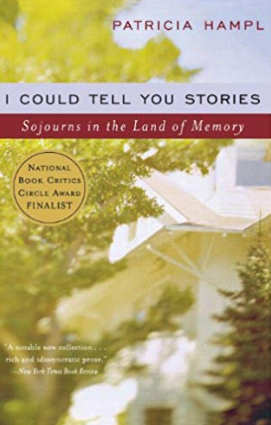
    Today’s post is inspired by Patricia Hampl’s book, “I Could Tell You Stories: Sojourn in the Land of Memory.”

    Tell your story so you can move on.

    “When a writer keeps things inside, it becomes a ball of tangled yarn. As each story is told, the ball becomes untangled. Writing from memory can help us to let go of those stories we tell over and over again. We may not even need to tell them again [after writing about them].”

    Note from Marlene: I think writing from memory can also be a type of self-help . . . a vehicle for transporting oneself back in time and getting in touch with what really happened.

    Patricia Hampl is an American memoirist, writer, lecturer, and educator. She teaches in the MFA program at the University of Minnesota at Minneapolis and is one of the founding members of the Loft Literary Center. Source: Wikipedia

    How to write without adding trauma

    Does your heart hurt?

    Writing about difficult times in your life by guest blogger Nancy Julien Kopp.

  • The Courage to Write

    My new writing friend, Nancy Julien Kopp, writes beautiful and inspiring posts on her blog, Writer Granny’s World by Nancy Julien Kopp.

    New Writers Need To Believe—Memoirs and Family Stories, by Nancy Julien Kopp

    Ever hear naysayers in the world of those who want to write a memoir or family stories who utter things like:

    I’m not a professional writer.

    I can’t write like some people do.

    I want to write the story but I wouldn’t know where to start.

    My grammar is not good enough to write.

    My writing is boring.

    All of the above can be overcome. But the first thing you must do is believe that you can write a memoir or a book of family stories. Sounds easy? Maybe.

    Possible? Yes.

    It takes some courage to do something new. Look at the people who zipline.

    Looks like fun but maybe a bit scary, too. Those who try to zip from one end of a line to the other have to believe they can do it or they’d never take step 1.

    An athletic kid who tries out for a sport has to believe in him/herself enough to make that effort. They know success is not ensured but they believe they can make it so they try. They’re brave enough to give it a whirl.

    If you have a little bit of courage and a small dose of bravery, you can do many things you never thought you could.

    Believing in yourself is only part of being able to overcome the problems listed above. Another part is having the courage to try. Still another is working hard to be a better writer. How?

    Read. If you want to write a memoir, read as many as you can find. You’ll see the various methods used.

    Read books on the topic of general writing—not just memoir or family stories.

    Attend conferences to learn more about writing methods.

    Do writing exercises. I pound and pound about this and too many writers want to skip it. Don’t!

    Many books on writing have exercises at the end of each chapter. They are to help you. Try them!

    Sign up for a writing class, either locally or online. Don’t be embarrassed to tell the others you’re new at this game and here to learn. They’ll admire you for that.

    Don’t start out attempting to write a full book. Try short snippets that can be put together later.

    Taking on too much at the onset is overwhelming and sometimes defeating, and can be a quick way to stop believing in yourself.

    Becoming a better writer doesn’t happen overnight or in a week or two. Time and hard work and writing on a regular basis all help you achieve that goal.

    Originally posted on Writer Granny’s World by Nancy Julien Kopp, August 15, 2018

    Note from Marlene: Great advice, Nancy.

    I’m currently reading The Sound of Paper by Julia Cameron. I highly recommend this book to help go from “What was I thinking” to “I can write this.”

    Nancy Julien Kopp:

    Nancy has been published in 21 Chicken Soup for the Soul books, several other anthologies, newspapers, magazines and ezines. Her writing includes award winning fiction for children, creative nonfiction, poetry, travel and personal essays. She was named Prose Writer of the Year in 2013 by the Kansas Authors Club. A former teacher, she continues to teach through the written word.

  • Writing About Difficult Times In Your Life

    Guest Blogger Nancy Julien Kopp writes about a topic I am passionate about: Healing through writing.

    WRITING ABOUT DIFFICULT TIMES IN YOUR LIFE

    When life hands us situations that hurt, we sometimes want to push it away, hide it in a closet. It’s too hard to bring it forth and try to deal with the misfortune. There are so many events in our life that create deep wounds and leave scars—the death of a spouse, losing a child, being in a terrible accident, losing a home to fire or a tornado, a difficult romance and break-up. The list could go on and on.

    I believe that writing about whatever happened has benefits. It is cathartic for the writer and can be a help to readers who have gone through a similar situation. You’re a double winner if you aid both yourself and those readers who have been through something difficult.

    It’s definitely not easy to write about a tragedy in your life. It cannot always be done immediately after the event. For me, it took almost 30 years before I could write about the loss of two infants born three years apart. I wanted to but the time was not right for me to do that. When I finally was able to write about those two difficult times in my life, and my husband’s, it seemed that a dam opened and I wrote one story after another. Did it help me? I think it finally brought the peace I had sought and not found all those earlier years. It also made me feel good that I brought something to others who had gone through a similar tragedy. I would not advise waiting such a long time to write, however.

    Ernest Hemingway has passed on many pieces of advice for writers. His quote that fits today’s topic is “Write hard and clear about what hurts.” When you’re writing about something that has hurt you deeply, it’s best to address it head first. Some writers will tip-toe around whatever happened and perhaps infer but not really explain. That’s not fair to you or your readers. If you decide to write about that deep hurt, do it the way the quote says—write hard and clear.

    Give the facts of what occurred but also reach into your mind for your feelings, your attitude, the way you dealt with it. This kind of writing is filled with emotion and should be. For you, the writer, it can be a blessed release. Occasionally, what you write will surprise you. You’re not aware of some the buried thoughts you have.

    There are writers who can’t or won’t write about a hard time they experienced because they feel it is too personal to share with others. That’s showing the difference in people and personalities. If you can’t write about a hard time to share with others, do it for yourself. Write the story and how it affected you and put it away in a drawer or a safe deposit box or a computer file—somewhere that is just for you to see and read. There’s nothing wrong in not sharing with others. The main thing is that writing about whatever hurt you will be helpful. If nothing else, you can realize exactly how the situation did affect you or how it may have changed you.

    Whether you write about tragedies in your life for yourself only or for others, do write. It can’t hurt and it certainly might help.

    Nancy Julien Kopp lives and writes in Manhattan, KS. She writes creative nonfiction, poetry, personal essays, children’s fiction, and articles on the craft of writing. She has stories in 21 Chicken Soup for the Soul anthologies, ezines, other anthologies, newspapers and magazines.

    She posts Monday through Friday on her blog about her writing world with tips and encouragement for writers.

    Note from Marlene:  I recently discovered Nancy and her blog, Writer Granny’s World by Nancy Julien Kopp, and am loving her writing and thought process. I like the way she thinks and encourages writers.

    For suggestions about how to write about difficult things:

    Does your heart hurt? Prompt #269

    Make Sense of Your World Through Writing

    How To Write Without Adding Trauma

    Use Your Writing To Heal

    Things Falling Apart Is A Kind of Testing-Pema Chodron