Layering

  • Layering

    Layering: The goal of layering in writing is to take unrelated elements and bring them together in a single piece of writing.

    “Layering means that we’re weaving in different elements of our story, characters, writing craft, etc. Some writers even start with just one element—such as writing their whole story just as dialogue—and then layer in everything else once they have the shape of the story.” — Jami Gold

    Ideas to add layering in your writing.

    Start with lists:

    List #1: Some facts about yourself or your fictional character

    List#2: Favorite food or music

    List #3: Favorite movies or TV shows

    List #4: Philosophical sayings

    List #5: A type of clothing or furniture

    Freewrite: #1: Using a word or phrase from each of the lists, spend a few minutes creating a piece of writing.

    Freewrite #2, Layering: Add an outside event as a metaphor to echo the theme of your freewrite.

    If you are writing about love, compare two people in love with two doves sitting on a wire.

    Use the movie, “Love Story,” or the TV show, “Love Boat,” or a book one of the character picks up from the coffee table while waiting for the other person.

    One of the characters could pick up something from a loveseat.

    A pin in the shape of a heart could snag on a sweater.

    If your theme is death, use an analogy from the game of chess.

    Quotes

    You can use quotes to mirror the theme of your writing:

    “Love means never having to say you’re sorry.” — “Love Story”

    “Love is heavy and light, bright and dark, hot and cold, sick and healthy, asleep and awakeit’s everything except what it is!” — “Romeo and Juliet.”

    Ideas to layer your writing:

    Use something from nature: Land formations, flora, vistas, terrain, etc.

    Something human-made: Buildings, dams, highways, art, transportation.

    Use your imagination and create a memorable piece of writing by layering.

    Examples of layering in writing:

    Delicate as a Hummingbird’s Heart

    Reverberations

    Memory of a ‘giorno dei morti’ in Italy

    Thanks to Becca Lawton for inspiring this prompt at Writers Sampler in 2009.

  • Use these words . . . Prompt #580

    Use all of these words or some of these words in a freewrite:

    Hot tub, paper umbrella, palm tree, camp or camping, vigil, convertible, transformation, fire.

    Inspired by “The Oasis This Time, Living and Dying with Water in the West,” by Rebecca Lawton, a fluvial geologist.

  • If you could change . . . Prompt #469

    If you could change anything in the world, it would be . . .

    Or . . .

    The time I felt most changed in a single second was when . . .

    Use one or both writing prompts. Just write!

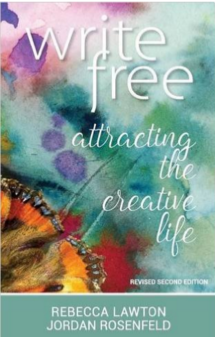
    Prompts are inspired from Write Free – attracting the creative life, revised second edition by Rebecca Lawton and Jordan Rosenfeld.

  • Staying Grounded and Centered.

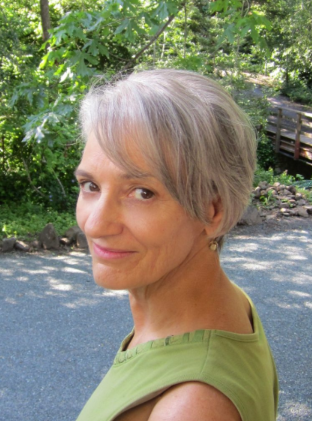
    Today’s insightful post is by guest blogger, Rebecca Lawton.

    I have a dear friend who jokes that, in 2020, we’ll have no need for glasses. A long-time wearer of glasses himself, this friend also loves punning. With or without glasses in 2020, we who love writing and reading want to see clearly in all our endeavors.

    For me, seeing clearly means staying grounded and centered, understanding what I’m observing with all senses. Doing so requires that I stick with various creative practices, whether in writing, communicating, playing music, reading the work of others, or learning new skills and ideas.

    Basically, for everything.

    I consult writing-related resources as well. This time of year, I offer a list of them on my blog. For the first time ever, I’ve also included a few references for clearing the mind.

    May your practice buoy good health and happiness, for you, yours, and those you meet. May the goodwill you generate extend to the well-being of the planet. I join you in working for all of that. Joyful 2020.

    Books by Rebecca Lawton


  • Corral your best time of day for maximum creativity

    Rebecca Lawton posted “Ring-fence” on her blog in August 2013.  If you are struggling with your writing, or finding a routine that works for you, this might help.

    Ring-fence

    What is this malaise? This lack of focus and ennui combined with a skimming restlessness? My mind won’t settle on anything for more than an instant. The piles of paper around me are growing, escaping my recycle bin. I can’t seem to force myself to get to work on them or anything else. Those short stories I was revising religiously every morning? Not today.

    Today my mind is a cloud pushed by the wind.

    It could have been a regular workday with a schedule I knew from experience to be effective. Usually I rise between 5:30 and 6:30 AM, head for the meditation chair, sit for 20 minutes, then concoct morning chai for the household. Next I’m off to my writing desk. I work for two hours on my latest manuscript (these days, it’s that collection of short stories), after which I stop for breakfast. Later I’m on to returning phone calls, making progress on consulting work, emailing friends and clients, or blogging. Somewhere in the day will be a swim, walk, or bike ride. Then I’ll go back to writing, especially if I’m on deadline.

    Today I broke that pattern. I thought taking a shortcut past the meditation and morning writing and getting directly to business and accounts meant I was being responsible. I could return to the short stories in the evening, I told myself. I’d be efficient and effective, putting important, earning work first.

    How wrong I was. Without that morning ritual, as well as the critical, concentrated creative time, I was like a ship with no compass. The usual landmarks I look to for guidance weren’t there. Not only did I not accomplish my non-writing tasks more efficiently or quickly, I found them curiously evading my prized problem-solving ability.  In short I didn’t get anything done before breakfast and very little after.

    I had missed my most creative time, when my circadian rhythms allow me to sink most deeply into the world of make-believe. By not stopping in at the usual checkpoints, I scuttled the well-honed craft of my general working life.

    Mark McGinnis, poet and business coach, puts it this way: “Ring-fence your most creative time.” He advises that we pick our rich, creative time of day and separate it from the rest for our lives.

    Apart from the lack of external interruptions, I write first thing in the morning because (once I’m up) that’s the time of day when I’m most focused and alert. I experience a greater mental clarity in the first couple of hours of the working day than any other time. As a writer, that quality of attention is my most valuable asset, so I’ve learned to guard it carefully. If I start plowing into emails, reading blog feeds, or doing mundane tasks such as accounts, then I’m squandering my most precious resource.

    Mark admits that, for him, finding extra hours in the morning means rising earlier than he would if writing weren’t his heart’s desire. It’s the same for me. Without those morning hours I carve out (which might be afternoon hours for you, or after dinner, whatever you can “ring-fence”) I wouldn’t have a writing practice, which is the core of my work. I wouldn’t feel authentic passing myself off as a writing instructor or as speaker at a community writer’s night. I wouldn’t rest easy selling copies of my novel or proposing a new book to my agent or filling in a grant application to support a new project. The creative practice makes up the core of my writing identity. From that ring-fenced time also comes, apparently, my ability to do other work.

    It’s true there are other aspects to my life and me, but for that part wearing the author hat, the ring-fence is as mighty as the pen. Mightier.

    Rebecca Lawton’s books and articles are available through her website, www.beccalawton.com

    Note from Marlene: Reading Water is one of my all-time favorite books for writing prompts. I highly recommend it.

  • Modeling— Becca Lawton’s Cool Writing Tips . . . Prompt #285

    Becca LawtonHere’s an entertaining idea from Rebecca Lawton’s Cool Writing Tips.

    Becca’s advisor at Mills College introduced “Modeling,” — an exercise “in which you select an excerpt of masterful writing … and fill in the blanks.”

    Rebecca Lawton writes, “Modeling is a sort of Mad Lib exercise, where each part of speech is swapped out for a word of your choice.”

  • What haunts you? Prompt #284

    Sit still for a moment. . . take a few deep breaths. Relax into your chair.

    For this writing experience, tap into what haunts you. As Rebecca Lawton says in Cool Writing Tips:

    ” See the detail of the memory with clear eyes and write it down as best you can remember it.”

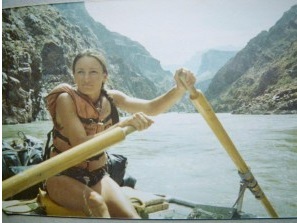
    Becca RowingThere will be a repeat series of Becca Lawton’s Cool Writing Tips. This will only be available for the month of September, 2016. Sign up now so you don’t miss a single inspirational tip.

    Write as if you were dying” features Rebecca Lawton as a guest blogger and highlights one of her Cool Writing Tips. I found her friendly style of writing about writing to be affirming and inspiring. I think you will, too.

  • I went deep into storytelling mode — Becca Lawton

    Today’s quote is from Write Free – Attracting the Creative Life by Rebecca Lawton and Jordan E. Rosenfeld.

    Rebecca wrote:

    “I wrote another personal essay, in part with the column in mind but mostly with the intention of simply telling my story. There was a message I wanted to convey in the piece: one of loss and sadness, but also of triumph and survival. Because I had taken my focus off publication while writing, I went deep into storytelling mode. Much of the writing for the piece was done in subconscious writing fashion. When I finished a decent draft, I went outside to water my flower garden. I felt a certainty that hadn’t been there before. the essay was so good, so moving. I knew it would be published — if not in the target column, then certainly elsewhere.”

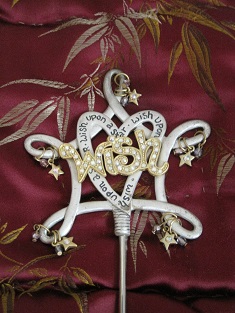
    WandNote from Marlene: What strikes me as being important in this passage is when Becca let go of the thought of publishing, she was able to go “deep into storytelling mode.” That’s my wish for you.

    Write whatever you want to write. Don’t worry about a thing. . . don’t think about publishing, don’t think about anyone looking over your shoulder. No judging. No criticizing. Just write.

  • Stroll down memory lane . . . Prompt # 81

    Today’s writing prompt is inspired by Rebecca Lawton’s May 26, 2014 blog post, which begins:

    “Candles of buckeye blossoms and their subtle fragrance have always confirmed the return of summer. Seeing them this week reminded me that certain sights, sounds, and smells trigger strong memories. The whisking sound of a broom on stairs recalls family vacations at the lake, where our host rose early to sweep fallen live oak leaves. The musky scent of open water reminds me of being on a raft enjoying the primal sensations of floating a muddy river. The first bars of a Beatles song bring back the excitement of junior high school dances. Sipping tequila reminds me of kayaking from Loreto to La Paz on the Sea of Cortez.”

    Click here to read the rest of the post.

    Writing Prompt: Stroll down memory lane . . . pause when a remembered event causes a visceral reaction: you might feel a sensation in your gut . . . write about that event, using sensory detail.

    You can use the Summer Prompt as a starting place. Not the “how I spent my summer vacation” September school essay. Focus on detail . . . using sensory description in your writing. Capture that musky lake smell, the charred wood campfire smell. Go with tactile detail: the sticky marshmallows on your fingers, the feel of a rough floor on your bare feet, the bright sun fighting closed eyelids. Wake up! Go deep in your writing. Reach out and capture those feelings. . . whatever they are.

    BuckeyeAfter you write, take a look at the responses to Prompt #77    (scroll down) . . . folks used wonderful detail writing about summer.

    Join us! Write your freewrite. Post your writing on The Write Spot Blog.

  • Rebecca Lawton Week

    This is “Rebecca Lawton Week” on The Write Spot Blot. Today’s inspiration for “Just Write” is from her book, Reading Water, Lessons from the River:

    The water-level fluctuations, both daily and seasonal, gave us regular lessons in how the river varied depending on flow. The thalweg, or deepest or best navigable channel, didn’t always follow a direct path. On one key day early in my training, I followed a boatman friend named John through the long, straight, placid reach of the Stanislaus below Razorback Rapids. As I rowed down the middle of the river, choosing the course where the main flow had been weeks before, I noticed John’s boat meandering from one side of the river to the other. He kept his hands on the oars but barely exerted himself, simply using the oars to adjust his boat’s position on the water surface. He moved briskly downstream through the calms with little effort. Even as I rowed steadily to keep up, he beat me by finding the strongest flow and doing the bare minimum to stay on it.

    “It’s true,” John told me later. “You’ve just got to use the current. It’ll carry you if you don’t fight it.”

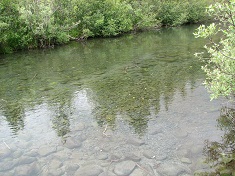
    Water.BreanaNote from Marlene: Sometimes our writing meanders, like John and his boat, and that’s just fine. Find the current in your writing. Let your mind wander and let your freewrite take you on a meandering route and you might find the rhythm for your best creative writing. Just Write!

    Photo by Breana Marie.

    Click here for Rebecca Lawton’s website.