 Today’s writing prompt:
What Comforts Me.
 Today’s writing prompt:
 The Write Spot Blog is all about writing: Writing Prompts to inspire you; Just Write tidbits to motivate you; Quotes to let you know others are in the same boat as you; Places to Submit to get your work out there; Book Reviews to share authors’ work; Guest Posts for all kinds of writing-related things.
Today’s Guest Blog Post by Suzanne Murray talks about increasing your creativity by relaxing. Sounds easy, doesn’t it? But what about cortisol, adrenaline, and epigenetics? Factor those in, and it becomes apparent that relaxation isn’t as easy as drifting in a hammock.
Fortunately, Suzanne Murray offers strategies to help us learn to relax.
We all know that relaxation makes us and our bodies feel good whereas stress causes us to tense up and feel less that optimum. New scientific research shows just how important relaxing our bodies and minds is.
The emerging science of epigenetics shows that our genetic expression is not permanently fixed at birth, but actually evolves as we grow and learn. Environmental factors including nutrition, stress and our emotional responses can affect how our genes express themselves without changing the basic blueprint of our DNA, the genetic material in our cells.
When we are stressed our genes produce hormones associated with fight or flight like adrenalin and cortisol that are associated with aging and making us more susceptible to disease. When we are relaxed and feeling good our genes produce chemistry that boosts our immune system and helps with cellular repair and growth.
A study looking at mindfulness practices like meditation, yoga, breath work, and other relaxation techniques, showed that we can actually “turn on” disease-preventing genes and “turn-off” disease-causing genes through relaxing. Research on the energy psychology modality EFT (Emotional Freedom Techniques), an easy to use self-help strategy that combines western psychology with Chinese acupressure, found that an hour session of EFT lowered cortisol levels by 24 percent.
I’d like to add creativity to ways we can relax as well as develop more of our potential.
Creativity is really a form of mindfulness since it puts us in the flow of the moment and feels good. Adult coloring books have been shown to reduce stress. I like doodling or free writing where you just let the words flow out of the pen with no thought to what you are writing.
Bringing play to whatever process you are working with and letting go of attachment to outcome is important.
Stress so often stems from the fact that our mind has leapt ahead with worry about the future or is chewing over something that happened in the past. When we do things that bring us into the moment we naturally relax.
Find what works for you. Play with it and see if you feel better.
Suzanne Murray is a gifted creativity and writing coach, soul-based life coach, writer, poet, EFT practitioner and intuitive healer committed to empowering others to find the freedom to ignite their creative fire, unleash their imagination and engage their creative expression in every area of their lives. She works with simple, powerful techniques to help clear whatever gets in the way and creates a safe and sacred space for your creative and soulful life to blossom. She provides an experience of the joy and beauty that comes from embracing your gifts and expressing them in the world. With a lifelong connection to the natural world, she enjoys sharing the grace and wonder that Nature can bring to your life and creativity
Writing and Creativity in Nature
One Day Workshop Point Reyes CA
April 22, 2017, 10 am to 4 pm
Spending time in nature is good for our health, enhances our creative capacities and increases our general sense of wellbeing. It can help us enter the flow. Join me for this one day workshop where we will work with our creativity in the beauty of nature.
EFT (Emotional Freedom Techniques)
I’ve been working with EFT in new ways that allow us to laser in on the issue and shift it at the core. We often make significant shifts in a single session. Sessions are available by phone and Skype
Original posted on Suzanne’s April 2, 2017 Blog
 The best way to respond to a writing prompt is to just write. You can set a timer for 12 or 15 minutes. Twenty minutes, if you have that much time to write. The length of time isn’t important. The important part is to let go of your inhibitions, your fears and your worries. Just write.
Today’s writing prompt: No matter how hard I tried . . .

“Readers covet an emotional experience above all else. When you write scenes, use all the methods you can to help your readers feel the emotions you want them to have—sadness, anger, confusion, mistrust, love, lust, envy, greed and so on. If you want readers to hate your character, show him being despicable to someone who doesn’t deserve his wrath or to someone he supposedly loves. The more you draw readers in to the emotional experience, the more they will engage, and the more likely they’ll want to read your next book.”
Excerpted from the September 2016 issue of Writer’s Digest magazine
There are over 300 prompts on The Write Spot Blog. Choose one and practice incorporating emotions in your writing. For example: Physical gestures can reveal emotions . . . Prompt # 211
Just write!
 There are tacky gifts, insulting gifts, selfish gifts the giver secretly wants, cheap gifts and re-gifted gifts.
But some gifts are transcendent. Have you ever received such a perfect gift? One that amazed you with its imagination? Perhaps it was a gift that completely touched your heart, changed your life, or opened a new world. Maybe it was a gift so dear you held on to it for a lifetime. What was it and why was it so special to you?
Prompt: Your best gift or your all-time favorite gift.
 Many of us have vignettes, little stories of things that happened, that we could write about: Events or situations that enlightened, inspired, or changed us. All are memorable and could be written. But why? Why should you write these stories?
“All humans understand and use story on an intuitive level. It’s our most effective teaching tool. It’s how we understand our world, ourselves and each other. It’s how we make and deepen our connections. It’s how we draw meaning from experience.” — Deb Norton, “Story Structure, Simplified,” WritersDigest, February 2017
What if there was a recipe for this type of writing like there is for voodoo doughnuts?
“Learning when to throw the flour, proper handling of a rolling pin, the intricacies of an old fashion, the ‘flip,’ and countless other tricks of the trade were now in the hands, minds, and notebooks of Cat Daddy and Tres.” Voodoo Doughnut
Recipe for Writing Vignettes
Learning when to throw in anecdotes, proper handling of strong verbs, the intricacies of memory, the fear of exposure, and countless other tricks of the trade are in your hands and your creative mind. There are many resources to help shape your creation.
Click Memoir for recipes . . . how-to ideas . . . for writing anecdotes. Now, get to creating!
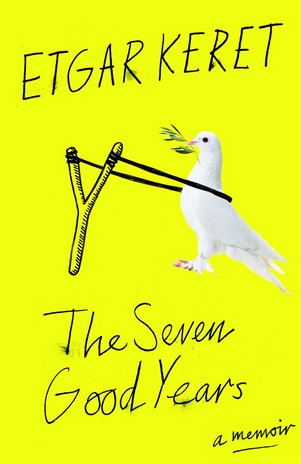 “Writing essays is like therapy because you’re figuring out: What was the important thing in that incident? ” — Etgar Keret
Keret, an “acclaimed Israeli writer . . . known for his unique and distinctive writing style” began writing essays after the birth of his son.
“. . . because I’m sensitive about family issues. . . It never stops me from writing it, but it might stop me from publishing it.” He wrote personal essays to “have a literary tombstone” for his father. He is able to create work that is “moving and deeply affecting in only a few pages.”
Excerpted from the February 2017 issue of The Writer magazine.
Your turn: No pressure to write the next great American novel, just write what you know, what you experience. Write about your trip to the grocery store where you observed an act of kindness or had a weird encounter. Write about your ordinary-to-you holiday event . . . something you will find later and be glad you captured those exquisite moments that you had forgotten: The funny story your grandfather told, your sweet aunt and her infectious laugh, the annoying presents you received from your equally annoying cousin/uncle/sister/friend. Write the good stuff, the bad stuff and the in-between stuff. Just write.
 You might know that I facilitate Jumpstart writing workshops. One day, a participant read her freewrite which contained the phrase, “Despair and broken promises.” I immediately thought that would make a great writing prompt. What do you think?
And that reminds me, during this season of many deaths, if you need to write a condolence note and are stymied about what to write, take a look at “The Condolence Note – What to Write.” You might get some ideas.
Today’s writing prompt: Despair and broken promises.
Post your writing on The Write Spot Blog and I’ll offer commentary . . . always positive.
 When responding to a writing prompt, you are completely free to write the absolute truth, with no worries about what anyone will think. You are also free to write fiction. You have the freedom to write whatever you want . . . these writings are called freewrites.
There are over 300 prompts on The Write Spot Blog. You can choose one at any time and just write.
Sometimes our writing takes us to memories from our childhood, a very powerful place that is important and so intoxicating.
From Writers Dreaming, by Naomi Epel, chapter by James W. Hall:
“One of the things that I’ve discovered through reading a lot of best-sellers, studying a lot of popular fiction for courses that I’ve given at the university, is that there are certain recurrent, mythic qualities in books that we could consider, from an elitist academic viewpoint, to be pulp or low-life, mass-market fiction. But obviously they have a certain kind of power or else three million people wouldn’t buy and be excited about them. One of the things I found out was that there were these recurrent patterns. One, for instance, that I feel has a kind of mythic quality, is what I came to call, in a particular class on bestsellers, “the golden place.” This is where the novel begins to picture a time and place, usually both of those, where the grass was greener, the flowers smelled better, the birds chirped more purely and everything was simply better. Usually associated with childhood and long ago. It’s a form of nostalgia, I suppose, but when you see it in a fictional form it has a tremendous power to call us to our best, ideal selves. We feel in ourselves that such golden places are possible to return to, to reacquire, to rediscover and I think that one of the hungers we bring to the reading experience is to go to other people’s golden places and live there, temporarily. A place that is coherent, that makes sense, where values are still valuable and ideals are possible to achieve.”
Note from Marlene: Our freewrites are much like what Hall describes – when we go back in memory, we touch “the golden place” and “nostalgia” — a place where the reader/listener wants to live where you did and do what you did— and that speaks to the power of writing.
Your writing has “. . . in a fictional form. . . a tremendous power. . . “
So, keep writing. Write for yourself with no judging nor critiquing. Just Write.