
Why Follow Submission Guidelines?

  • Why Follow Submission Guidelines?

    Guest Blogger Tish Davidson writes:

    Don’t Sabotage Your Submissions

    What is the first thing you do when you cook a new recipe? Read the directions to determine if you have the necessary ingredients. What is the first thing you do when you assemble a piece of Ikea furniture? Read the directions. So why do so many writers seem unable to read and follow the directions when submitting to a journal or contest?

    I’ve judged a lot of writing from independently published books to high school writing contests. I was an editor of the 2019 CWC Literary Review with responsibility submission intake as well as judging. What I’ve learned is how few supposedly literate people read and follow the submission directions. Maybe because they are called “guidelines” people consider them optional. Or perhaps the requirements seem overly picky or silly. Take fonts. Why use Courier as requested when your work will stand out from the crowd in Verdana? Well, one reason for a specified font is that all fonts are not equal. New Times Roman, for example, is proportional. Each letter takes up a different amount of space depending on its shape. Some fonts like Courier are nonproportional, meaning that each letter, like an “i” and an “m,” take up the same amount of space. Using the requested font helps the journal editor figure out how much space the work will take up on the page.

    Names are another issue. Some contests request the name only in the body of the email, not on the submission itself. Apparently many writers either 1) don’t read the directions; 2) forget to remove their name from the piece; or 3) are afraid the submission editor is incapable of keeping straight which submission goes with which person, so to feel secure, they include their name.

    Exceeding word lengths, block paragraphing rather than indenting (or vice versa as requested), using another person’s copyrighted song lyrics, subject matter inappropriate to the journal or contest, failing to observe the deadline or contest limitations such as age, or state/country of residence—all these will get your submission sent to the trash without being read, and as a judge evaluating a hundred or more submissions, less work is always welcome.

    Read and follow submission guidelines Don’t sabotage your work.

    Originally published in the Fremont Area Writers newsletter. Fremont Area Writers is a branch of the California Writers Club.

    Tish Davidson has published ten nonfiction books for children with Scholastic and Mason Crest and eight for adults published by Bloomsbury. Her creative nonfiction has appeared in collections published by Harlequin, Adams Media, and Scribe Press. She is a member of the Fremont branch of California Writers Club and was on the editorial team of the 2019 CWC Literary Review.

  • Something happened, and you weren’t the same . . . Prompt #780

    Use a pivotal event as a way into writing a personal essay, or a slice of your life . . .  a memoir, or creative non-fiction.

    A pivotal event is something happened and you weren’t the same after.

    Obvious pivotal events are graduating from school, first job, getting married, having a baby, retiring.

    There are more subtle events that, at the time, you didn’t know would be a pivotal event. Those are the events that could result in a riveting essay, or give you closure.

    Prompt 1

    Make a list of things, events, people that you carry in your mind. These are events that you can’t forget. People who haunt you. Memories that you can’t seem to let go.

    These are things you think about over and over, events that are on repeat in your brain. Things that happened that you can’t stop thinking about, maybe things you lose sleep over.

    Just a list. 

    Visualization

    As you go through this visualization, if you experience anxiety or stress, tap on your sternum with the tips of your fingers. This is a calming and centering activity.

    Stretch. Breathe in. Let go.

    As you go through this visualization, when you get a feeling jot it down.

     Note what the feeling is.

    Note where you feel it in your body.

    And note what caused this feeling.

    If you can, put your hand on where the feeling is and breathe into that space. If you can’t put your hand there, put your thoughts there.

    Go back in in time to when you were 3 or 4 years old.

    See the people surrounding you. Perhaps your parents . . . siblings . . . grandparents.

    Is there something about these people that stand out? Jot down thoughts or ideas that come to you while going through this visualization.

    Make a note where there is energy, perhaps an exciting or an uncomfortable feeling.

    Picture yourself at age 5 or 8. See your aunts . . . uncles . . . cousins. People you spent time with.

    Go to age 9 . . . 10 . . . 11.  Who did you play with? Go to school with?

    Teenage years. What did you do? Who did you hang out with?

    Let a montage of pictures roll by of dating and college years.

    Remember to tap on your chest if you are feeling uneasy or uncomfortable.

    Early married or living together years. See your children, or nieces/nephews as babies, little children.

    Take a deep breath and release.

    Prompt 2

    Choose one thing from your list. Write what happened. Include as many details as you can.

    Excerpt from Brad Yates, Guest Blogger on The Write Spot Blog:

    The Mind Can’t Tell The Difference

    #amwriting #justwrite #iamawriter

  • High white clouds skittered . . .

    “High white clouds skittered, their color matching the sheep that ambled below.”

    From: “How to Knit a Love Song,” by Rachael Herron

    Your turn: What beautiful phrasing can you conjure?

  • Woulda, coulda, shoulda . . . Prompt #778

    Woulda, coulda, shoulda . . .

    If I had . . . then . . .

    Or, the opposite:

    If I hadn’t . . .  then . . .

    #justwrite #amwriting #iamawriter

  • Something no one knows about . . . Prompt #777

    Writing Prompt:

    Write about something no one knows about you.

    “The Write Spot: Memories” available from your local bookseller and as print and ebook from Amazon.

    Just Write!

    #amwriting #justwrite #iamawriter

  • Bold Step . . . Prompt #776

    Write about a bold step you took or are taking.

    #justwrite #amwriting #iamawriter

  • Role Model . . . Prompt #775

    Do you have a role model?

    Write about a person who inspired you, encouraged you, didn’t ask for anything back in return.

    Someone who enhanced your life.

    Or: Write about someone you mentored or were/are a role model for.

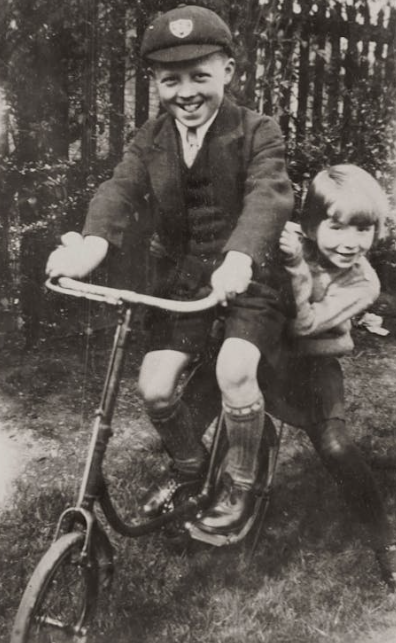
    Photo of my role model: My paternal grandmother showing my sister and niece how to make noodles circa 1974.

  • Magic by Rebecca Evans

    Rebecca’s writing and her workshops are magical, showing what happens when we let go and are open to making discoveries.

    Magic by Rebecca Evans:

    I am an AI Rebutter.

    I am a Long-Hand-Writer Endorser.

    I pen pages each morning in a journal, jot a list of tasks to (almost) complete, scaffold essays and poems across composition notebooks. In separate journals, I copy beautiful lines from artists I love, wishing to transfer talent by osmosis.

    For me, magic begins within this first planting.

    I lean into an unfolding. Instead of writing towards an idea or theme or popular topic, I follow the words where they lead. It is from this space in my first drafts, I discover seedlings. Tiny sprouts. Sometimes one piece feels as though it could be in conversation with a piece of work I developed earlier. Other times, I might recognize the start of the poem. I rarely see the entire piece, near completion, in that first long-hand written scratch. And when I do, I most likely have been working out that essay or poem in my head and heart for some time. Perhaps decades.

    From these drafts, I transfer work—out of my notebooks and into my computer. I sort them, temporarily name them, file them, hope to return and flush them out and into some semblance of literary art. Some of them make it out alive. Many appear dormant. They are not. These are transplanted seeds now contained and, in their incubation, like a compost-covered perennial, they rest until ready to bloom.

    Every artist holds a process of their own. This is mine. And this early delicate care is critical for my art. This is the beginning. The revision and the polishing—the places I thin and prune or add nutrients—come much later. THAT process requires highlighters and research and sitting with my art as if I’m with an old friend from far away.

    The argument I’ve heard from my writer-friends who use Artificial Intelligence seems reasonable. One friend shares that she uses AI to get the first draft down and save time. And I think, Oh! She wants quantity. She’s writing for a page number, not the process of art. Another writer explains that AI works with her initial idea and AI helps expand her thoughts into a draft that is further along, something she can begin editing. And I think, Ok, she’s looking for a short cut.

    I know I sound judgey and each writer has the right to produce a product for the world to enjoy by whatever means.

    And yes, I’ve heard the AI argument trickle: Well, I built the foundation, which is my idea, with a new medium—the computer. And from there I revise. And, isn’t true art in the revision?

    I couldn’t agree more. As we polish, we begin to see the shape, the story line, the narrative arc, the angel in the stone. Someone, somewhere taught me this same concept, Art is in the revision.

    I repeat this to my writing students. I say this aloud to myself.

    Yet when I hear this phrase resurrected in the context of an AI defense, it feels as if my child is misquoting me.

    If you extend the argument that generative AI is still your work, your heart-art, and working with a draft generated for you is still your art, then I believe you’ve lost your artist’s way.

    If you share your idea with another writer and paid writer to write your first draft, yet you polish the draft, are you still the artist?

    Isn’t this now a collaborative?

    Perhaps your name is on the byline, but the piece is ghostwritten.

    Aren’t you editing AI’s work?

    My worry for future artists is their need for instant-gratification. Our society pressures this fast-paced finishing, pushing artists to produce more and produce it as quickly as possible. I think we lose something special in our hyper-production mentality. It’s the difference between delicately placing a spotless ladybug on a rose bush, allowing her to do her job, versus spraying that rose with chemicals that harm us—you, me, our soil, our air—to quickly rid the buds of aphids.

    We’re losing the slow-infusing, benefits of  nature.

    The investment of curation has been replaced. We’ve the cut-and-pasted Happy Holiday text message sent to the masses instead of our soft-curly strokes of the handwritten card. We’ve lost the home-made bread aroma, the gathering ‘round a table for a game, the random phone call, the old-fashioned family portraits.

    Time is our greatest commodity. The way we use time defines us. This sets our tone, our day, our hearts. We will feel the dew of grass beneath our feet? We will stop and smell the roses…or anything? The micro moments are where we live and absorb the world. The pause is often the loudest note in a song. The space between the first long-hand under- or over-written draft becomes the pulse of the poem.

    I want the entire art experience. I want this whether I’m the artist or the audience. I want to feel the duende in the flamenco, the fire in the cello, the tears in the writer. I want to feel this as I create—one slow step to the next. This intentional early movement helps me discover me, helps me understand the way I’m ingesting the world around me. Helps me. 

    Originally published January 29, 2024 as “A Little Letter from an AI Rebutter” in The Brevity Blog.

    Rebecca Evans, memoirist, essayist, and poet, writes the difficult, the heart-full, the guidebooks for survivors. She teaches writing in the Juvenile system and co-hosts the Writer to Writer radio show. She’s also disabled, a military veteran, and shares space with her sons and Newfoundlands.

    Her work has appeared in Narratively, The Rumpus, Hypertext Magazine, War, Literature & the Arts, The Limberlost Review, and more.

    She’s earned two MFAs, one in creative nonfiction, the other in poetry, University of Nevada, Reno at Lake Tahoe.

    She’s co-edited the anthology, when there are nine, a tribute to Ruth Bader Ginsburg (Moon Tide Press, 2022).

    She’s penned a memoir in verse, Tangled by Blood (Moon Tide Press. 2023) and has a book-length poem forthcoming in 2024. 

  • What bothers me . . . Prompt #773

    Writing Prompts:

    What bothers me . . .

    Or: I don’t care about . . .

    Or: I’m tired of . . .

    #just write #iamwriting #iamawriter

  • Best Writing: From the Heart

    Guest Blogger Sarah Chauncey writes about increasing energy, exploring ideas, and preventing burnout:

    You’re driving on a long stretch of highway when you have an insight about your main character’s childhood. Or you’re mid-hair-rinse in the shower, when you suddenly understand how to bring together the braided strands of your novel. Or you wake up at 2 a.m. with the resolution to that thorny plot issue you’ve been wrestling.

    Have you ever noticed how many ideas arise when you’re not sitting at the keyboard? 

    As writers, we’ve all experienced the law of diminishing returns—the point at which our writing stops being generative and begins to feel like we’re pulling each word from our synapses by hand. I spent the better part of a decade investigating how to create what I half-jokingly call a “law of increasing flow.” How might writers support our writing practice in a way that doesn’t leave us mentally burned out?

    Conventional advice: butt in chair, hands on keyboard

    For decades, writers have been told the most important thing to do is to put “butt in chair, hands on keyboard.”

    BICHOK is essential to writing. You can’t publish a book without sitting down to write, to revise, to revise again (and again and again), to query, or to fill out your author questionnaire. Yet so often, it’s treated like a Puritan work ethic or a punishment: “You put your backside in that chair, young man, and don’t get up until you’ve written 10 pages.”

    That may work for some writers, and if you’re among them, more power to you! That kind of disciplinarian approach, though, doesn’t work for me.

    Putting hands on a keyboard doesn’t make someone a writer, any more than holding a Stratocaster makes someone a musician. There are many times when we can gain insight by looking away from our work. These include: Before we sit down to write, during the writing process, and between revisions. What we do during those times is every bit as important as getting the words down.

    To understand how this helps your writing, it’s important to understand the interplay of the conscious and subconscious mind.

    How the subconscious and conscious mind work

    When I was younger, I used to tell people that my best writing bypassed my intellect entirely; it came from my heart and flowed down my arm. While that might sound precious and woo-woo, it turns out my instincts were right on. The intellect has many wonderful uses—categorizing and sorting (and revising, oh so much revising.)—but it’s a terrible writer.

    The thinking mind informs our writing; it’s what allows us to conduct research, analyze information and execute the ideas we have. Original ideas, though, can only come up when we deliberately allow the mind to wander—and pay attention to its whereabouts.

    The conscious or rational mind, including what we call the intellect, takes in about 2,000 bits of information per second. However, it can only process about 40 bits of information per second.  

    The subconscious mind, on the other hand, takes in upwards of 11 million bits of information per second. We know more than we are aware of knowing. The subconscious retains everything we’ve ever experienced. It combines seemingly disparate ideas and experiences and comes up with new and unusual connections. Just ask anyone who’s ever dreamt about their aunt Myrtle performing Riverdance in a T-Rex costume. The subconscious is creative.

    Creativity comes from beyond the thinking mind

    J.D. Salinger once wrote, “Novels grow in the dark.” By that, he meant that they emerge from the subconscious mind. In my experience, what we call intuition is logic of the subconscious, delivered to us in aha moments after it has had time to percolate.

    Consider the old-fashioned tin coffeemaker, the kind you put on a stove. You add the ingredients—water in the bottom, coffee grounds on top—but you don’t expect coffee right away. The stove has to heat up; the water has to boil. Then it has to percolate, mixing the bubbling water with the grounds, as the water slowly takes on the flavor of the grounds. The process takes time and can’t be rushed. Creative percolation is the same.

    Many of us get ideas from sudden insights, but waiting around for those is a fool’s errand, because there’s one major block: The thinking mind is as noisy as a jackhammer, whereas intuition whispers. As long as our thinking mind is engaged, it will be difficult to notice subconscious insights.

    When we look away and we relax the thinking mind, we’re more receptive to our intuition.

    Looking away gives the subconscious time to percolate.

    Click on BICHOK to read the rest of this excellent and informative essay by Sarah Chauncey.

    Originally posted on Jane Friedman’s Blog, January 18, 2024, “Beyond BICHOK: How, When and Why Getting Your Butt Out of the Chair Can Make You a Better Writer.”

    Sarah Chauncey is a veteran writer, freelance editor and writing coach, as well as the author of P.S. I Love You More Than Tuna. She helps her clients enhance their creative flow through mindfulness. Subscribe to her newsletters: Resonant Storytelling (writing) and The Counterintuitive Guide to Life (inner peace).

    Sarah has written for Tiny BuddhaLion’s Roar and Eckhart Tolle’s website

    From Sarah’s website:

    I was raised to worship at the altar of the intellect. I studied at Sarah Lawrence College and graduated magna cum laude from George Washington University with a BA and partial Masters in social psychology, with a focus on psychoneuroimmunology and community health, through the lens of the AIDS epidemic.

    When I burned out from grieving dozens of friends, I shifted into the theatre world and attended Yale School of Drama for stage management. Later, I attended Goddard College’s MFA in Creative Writing program (fiction).

    In the 1990s, I was head writer for the web’s first entertainment magazine, Entertainment Drive, and I content-designed and ghostwrote several of the first official celebrity websites (Cindy Crawford, Britney Spears and others).