Writing

  • Writing

    Memorable writing that sparks imagination. Lean in. Hear the writer’s voice on the page.

    Writing

    By Cheryl Moore

    A silver tongue would be nice

    A pen that wrote golden prose

    Or poetry would be better.


    How would it feel to be Billy Collins

    Whose books sit

    On my bedside table?


    His small journeys

    Make magic of the mundane

    Of ordinary daily events


    One poem describes

    Sitting at his desk words flow

    Seemingly without his bidding


    I sit at my desk

    Pen posed over paper

    Nothing comes out


    I could doodle a picture

    Make it look like a word

    And start from there


    Would it be like opening a tap

    With words pouring out

    Given enough time?


    My words wouldn’t be golden

    Nor even silver

    Probably just tin


    Maybe Billie’s don’t flow golden

    Until he works and revises

    As most good writers must


    It’s like panning for gold

    A lot of water flows

    Before a bit of gold dust settles


    Maybe more discipline

    An ear for the music

    Use metaphors and similes


    I might rise above tin, to copper?

    Roses blooming, lilacs too

    Spring arriving, so much to do


    Am I running late?

    Look at that—it’s almost eight

    When Cheryl Moore came to California in the early 1960’s, she realized she’d found her home. Then moving to Petaluma in the 70’s, she was as close to paradise as she’d ever be.

    Travel has taken her to Europe and the Middle East. She has written on these memories as well as on the flora and fauna of the local river and her own garden.

    You can find more of her writing in “The Write Spot to Jumpstart Your Writing: Discoveries” and “The Write Spot: Musings and Ravings From a Pandemic Year.”

  • I wish I had known . . . Prompt #726

    I wish I had known . . .

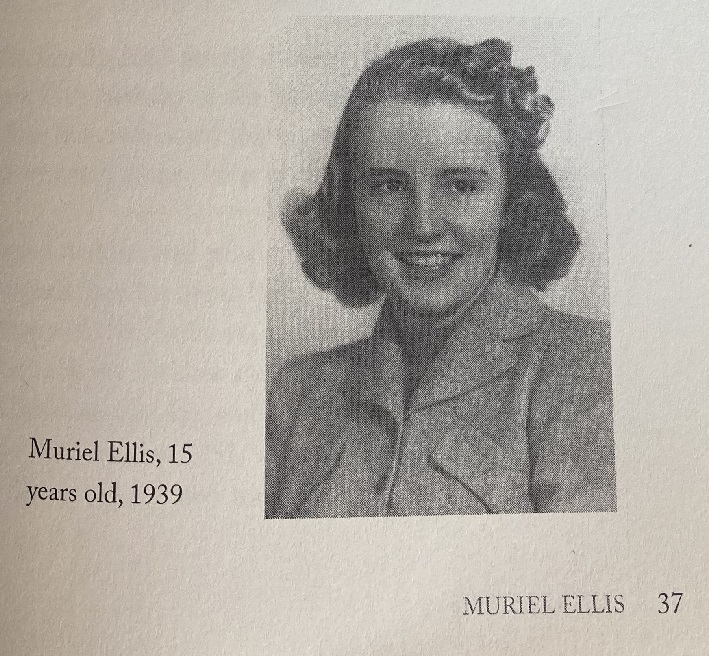
    Response by Muriel Ellis:

    I don’t think I would really want to have known what my life would bring. Of course, I wish I’d done some things differently, made more time for the family I loved. I wish I hadn’t abandoned writing for so many years, over and over again.

    I certainly wish I’d known when I heard the grim news “malignant,” when it applied to lungs that it did not mean horrendous surgery with scant hope of recovery.

    And I wish that, before I knew all would be well, that I had actually written all those letters of accumulated love and wisdom that I planned to leave for my family—maybe even a page or two for assorted nieces and nephews and their offspring. Well, I didn’t. And, yes, I know it’s not too late, but that’s another story.

    Life is full of “what ifs?”

    It’s a delightful waste of time to ponder. Never mind the personal—the turmoil of the past few months reminds me of the heady days when my daughter’s generation took to the streets with protest marches They brought change just as the freedom Riders changed the face of the South.

    What if they’d all stayed home muttering their discontent?

    It’s turmoil time again. I stayed placidly on the sidelines in the sixties and seventies for the sake of peace in my own house. I sympathized, but . . .

    Not this time.

    A wheelchair handed down to me when my sister-in-law died served as a walker and a much needed place to sit through a lot of singing and speeches when I joined that merry creative crowd in small town Ukiah to protest on a Saturday in January, 2018.

    I just know that I needed for once in my life to be a part of something I believed in.

    “What I wish I had known” by Muriel Ellis in “The Write Spot to Jumpstart Your Writing: Connections.”

    Writing Prompts:

    What I wish I had known.

    Or: Not this time.

    The anthology, “The Write Spot to Jumpstart Your Writing: Connections” is not for writers only.

    The short vignettes are entertaining and some are thought-full. Like this one, by Muriel.

    “Connections” could be a “just because” gift that might inspire writing.

    “The Write Spot to Jumpstart Your Writing: Connections” is available from your local bookseller and from Amazon (both ereader and print).

  • If . . . Prompt #725

    Writing Prompts inspired from “The Write Spot to Jumpstart Your Writing: Connections.”

    If I had my life to do over  . . .

    What I Know Now . . .

    Note To Self . . .

    Notes To My Younger Self . . .

    Choose one or more and Just Write!

  • April . . . Prompt #724

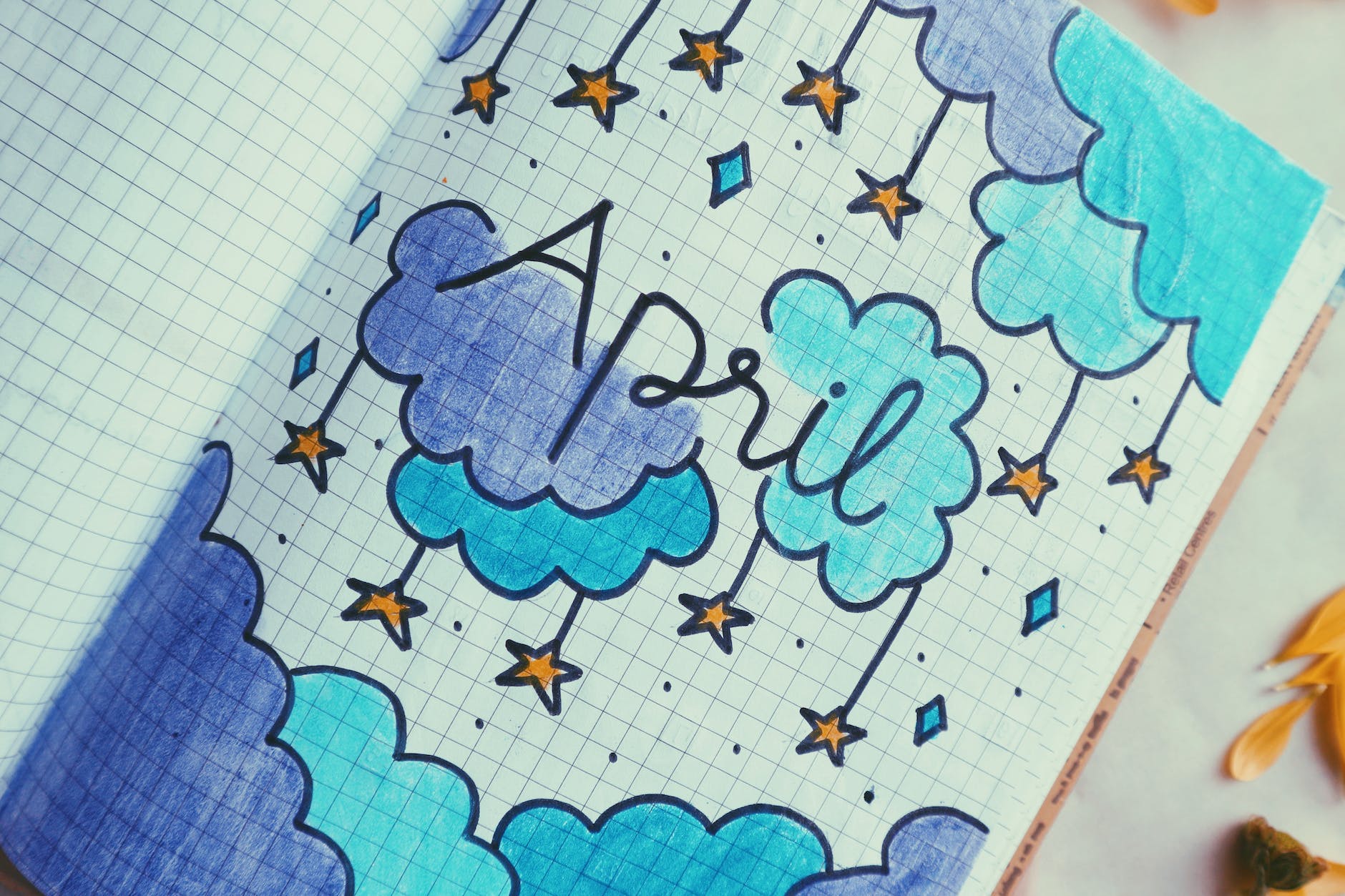
    white blue and purple stars illustration
    Photo by Bich Tran on Pexels.com

    April 1, 2023.

    April Fool’s Day.

    April: In like a whimper?

    Or, in like a bang?

    How was your April?

    Amusing? Charming? Frustrating?

    Anything new or unusual  happen?

    What did you like about this month of April?

    What didn’t you like?

    #justwrite #iamwriting #iamawriter

  • Someone Who Helped You . . . Prompt #723

    Write about someone who has helped you.

    Or maybe it was Some Thing that has helped you.

    Write about someone or something that has helped you.

    #justwrite #amwriting #iamawriter

  • A Day In Your Life . . . Prompt #720

    Write about a day in your life.

    It could be about a miserable day.

    Or a spectacularly wonderful day.

    Or an ordinary day.

    Prompt: A day in your life.

    #justwrite #amwriting #iamawriter

  • Connections . . . Prompt 718

    Write about someone you could or should connect with, but you just can’t.

    Why should you?

    Why don’t you?

  • Discoveries and Inventions . . . Prompt #717

    It seems there is a new-fangled contraption invented almost daily.

    Imagine . . .  before there were cars, printing machines, and cell phones . . . when these were new . . .

    Horseless carriage . . . Motor wagon . . . Model T

    Printing Press . . . Manual typewriter, Electric typewriter

    Tin can telephone . . . Telegraph . . . Rotary phone with curly wire attached to a wall, Princess Phone

    Electricity, hot and cold water from a faucet.

    Imagine what our parents, grandparents, ancestors thought of these.

    Will you engage in the next innovation?

    Imagine what the next invention will be.

    Just Write!

    #amwriting  #iamawriter   #justwrite

  • Trompe L’oeil . . . Prompt #716

    Art by David Zinn

    Writing Prompt: Trompe l’oeil

    Trompe l’oeil is a French phrase that means “deceive the eye.”

    It’s used to describe a style of painting that uses shading and perspective to make a two-dimensional painting appear to be three-dimensional. Wikipedia


    From Webster’s Dictionary:

    1. A style of painting in which objects are depicted with photographically realistic detail.

    2. Something that misleads or deceives the senses, illusion.

    Examples of trompe l’oeil: Creative Blog

    Write about: Trompe l’oeil.

    Artist David Zinn has been creating original artwork in and around Ann Arbor, Michigan since 1987. For more than twenty years, he freelanced for a wide variety of commercial clients while simultaneously sneaking “pointless” art into the world at large.

    His professional commissions included theatrical posters, business logos, educational cartoons, landfill murals, environmental superheroes, corporate allegories and hand-painted dump trucks, and his less practical creations involved bar coasters, restaurant placemats, cake icing, and snow.

    Now, thanks to the temptations of a box of sidewalk chalk on an unusually sunny day, Mr. Zinn is known all over the world for the art he creates under his feet. David’s temporary street drawings are composed entirely of chalk, charcoal and found objects, and are always improvised on location through a process known as pareidolic anamorphosis or anamorphic pareidolia.

    Most of Zinn’s creatures appear on sidewalks in Michigan, but many have surfaced as far away as subway platforms in Manhattan, village squares in Sweden and street corners in Taiwan. He has achieved global notoriety through sharing on the pages of Facebook, Instagram, Huffington Post, Graffiti Art Magazine, Bored Panda, Central China Television, Street Art Utopia, and Archie McPhee’s Endless Geyser of Awesome.

    His most frequent characters are Sluggo (a bright green monster with stalk eyes and irreverent habits) and Philomena (a phlegmatic flying pig), but the diversity of Mr. Zinn’s menagerie seems to be limited only by the size of the sidewalk and the spirit of the day.

  • How Photography Inspires Writing

    Memorable writing that sparks imagination. Lean in. Hear the writer’s voice on the page.

    How Photography Inspires My Writing

    By Simona Carini

    On January 18, 2016, walking around North Berkeley, I was brought to a halt by the look of a house: the right and left side were painted in different colors and the overall effect was that of a line bisecting the façade. I took a photo and resumed my walk but kept thinking about the house. At home, I wrote down what I had seen and the musings the sight had stirred, then distilled the material into my first poem “The Divorced House” which was published in the journal, Star 82 Review, together with the photo.

    At the time, I had been writing for almost 10 years, mostly about food and more recently memoir. Poetry was a new endeavor. As I developed my style and voice, I continued using my photos as writing prompts. I still do.

    I start by describing the image, not only the visual details, but smells, sounds, things I touched or that touched me, and/or the situation that led to the photo being taken. While I free-write I may remember something I felt or thought when the image was taken, or a story may emerge. Ultimately, the poem needs to transcend the description to a deeper theme, a shared emotion. What is the story? Why am I telling it? The process may remain a writing exercise, still useful as it helps me focus on sensory details.  

    I usually don’t know where writing about an image will lead me. The bisected house in Berkeley made me think about my parents’ divisions which affected my early life.

    Taking photographs for me is a way of taking notes. A photo helps me remember what I saw and what I felt. As writer I am a hoarder: of sights, sounds, smells, flavors, textures. I gather sensory details and musings and store them for immediate or future use.

    A bench overlooking the Pacific Ocean photographed on a foggy day (so that it appears to overlook nothingness) led me to think about refugees crossing the Mediterranean Sea not being allowed to rest when they arrive wherever the waves pushed them. “The Bench” was published with the inspiring photo in Star 82 Review.

    The cover of my recently published poetry collection, Survival Time, features the photo that inspired the opening poem: It shows the inside of Lærdal Tunnel, in Norway. The poem references the experience of driving through that tunnel and weaves into it the experience of my husband’s cancer diagnosis. At some point the poem describes what the photo shows but in the broader context of the life event for which it is a metaphor.

    “December 31” (originally published in Italian Americana) is about the time I spent the last afternoon of 2018 on the beach of Pismo Beach, CA, bathed in glorious sunset colors, watching surfers ride the last waves of the year, and observing shorebirds. The poem describes them and meditates on breathing and death, as the year is about to die:

    The end

    arrives with our last breath. A long sigh the last

    sound we make. We carry nothing with us,

    not even a gulp of air. Will I, on the final

    exhale, remember kindness in your gaze?

    Simona Carini was born in Perugia, Italy. She writes poetry and nonfiction and has been published in various venues, in print and online.

    Her first poetry collection, Survival Time ,  was published in 2022 by Sheila-Na-Gig Editions. She lives in Northern California with her husband, loves to spend time outdoors, and works as an academic researcher.