Or, what talent do you have that you are proud of?
Dubbed “America’s Funniest Cowgirl,” Karen Questhas been blazing a trail since 1998 with her one-woman award-winning original comedy act, Cowgirl Tricks. Skillful trick roping, impressive whip cracking, outstanding audience rapport and improvisational kooky cowgirl shenanigans have proven wildly popular at venues for audiences of all ages.
Karen’s talents include juggling, clowning, acrobatics, fire-eating, unicycling, and stunt work,
Your turn:
Write about your talents. Or your fictional character’s talents.
I don’t like being late – to classes I teach or the airport to catch a plane. My anxiety meter goes haywire if I haven’t given myself the time to organize before school or when I’m packing to go away. Will I need my swimsuit? What about those shoes? I allow extra time wherever I go, which means I’m usually early.
My stepfather once told my daughter as he drove her to a summer job, “You’re on time if you’re ten minutes early.”
I’ve taken that to heart.
When my daughter and I went to a wedding in Montana a few years ago, we were excited about the event, and to see the big sky landscape we had heard so much about. I didn’t want to feel rushed or anxious, so I allowed for plenty of extra time to get through security and find our gate.
We watched planes taxiing to other gates from the rocking chairs we sat in. For three hours.
But when it comes to my writing, I don’t follow my own advice. I often rush it. I think I’m done way before I really am. My husband, a former journalist and editor, reminds me frequently to slow down, think the piece through, whether it’s an essay or a profile I’m working on. Wait, he says, before sending it out. There are always opportunities to expand or transform my writing.
I don’t always listen. Often, I already have a good sense of what’s working and where I need more, but instead of figuring out the fixes, I get jittery and eager and I send off the piece to trusted readers and editors, hoping they won’t notice the holes.
Not only do they notice, they fall in them.
I encourage the writers in my workshops to take their time. Sit on your work for a day or two, or more, I tell them. If it’s a timely essay, sit on it for a few hours. Wait and see how the work matures over time. Then revisit and revise. Don’t rush. Wait before taking a bite of the cookie that’s just come out of the oven. Don’t burn your mouth.
I spoke with a writer recently who has a book of essays out, and she told me some of the essays took her years to write. Years.
I don’t have years. I want to get my book of essays out now!
I’m a problem solver. I like immediate results. I can usually fix someone else’s challenge, edit their work, or find their lost car key. Helping myself is more perplexing and time consuming.
But when I linger on my pieces, like waiting to bite that hot cookie, it’s always worth it. I might remember another aspect of the topic I want to add in, or recognize a theme I didn’t see before.
I’ve been working on a collection of essays for, yes, years, and I thought I knew their purpose. but recently, I realized I was going in the wrong direction. There was a theme in my work I hadn’t seen earlier, a theme that tied my shorter pieces together from two separate projects. I am now going to select, toss, and revise. Because I’d taken my time with the essays, the theme had time to marinate before it jumped out at me.
Now I’m eager to get going. But I need to heed the yellow light ahead and slow down, take my time, let the pieces simmer, blow on them a little so they’re not so hot and I can hold them.
If I rush to pack, I might forget the shoes I need, or my bathing suit in case there’s a pool. Sometimes I have to unpack and repack to make sure I have everything I need—editing my suitcase like I edit a book. I repack, rolling my clothes instead of folding them. They take up less room that way, and there is more room to add and substitute items. Just as I can revise once more, allowing for expansion and transformation.
“Don’t Rush It” first appeared on Brevity’s Nonfiction blog on June 6, 2022.
Morgan Bakerhas written forThe Boston Globe Magazine, The New York Times Magazine, The Bark, The Bucket, Talking Writing, Cognoscenti, Motherwell, and several times for theBrevity Blog.
Morgan’s debut memoir will be out in Spring 2023 (Ten16 Press).
She lives in Cambridge, MA with her husband and two dogs where she teaches at Emerson College and facilitates writing workshops.
When you are freewriting and there is more time to write, but you feel ready to stop . . . try to keep going. Push the limits. Push past the urge to go no farther.
After the fluff is written, deeper writing can happen. Perhaps a doorway to intuitive writing will open.
One of the benefits of writing fine details when freewriting, besides exploration and discovering forgotten items, is that details are what make stories interesting and make them come alive.
I Feel Statements The reason for “I feel” statements in freewrites is that this is a way to learn and access your emotions about what happened. This is what personal essay or memoir writing is all about. The facts are interesting, but what the reader wants to know is:
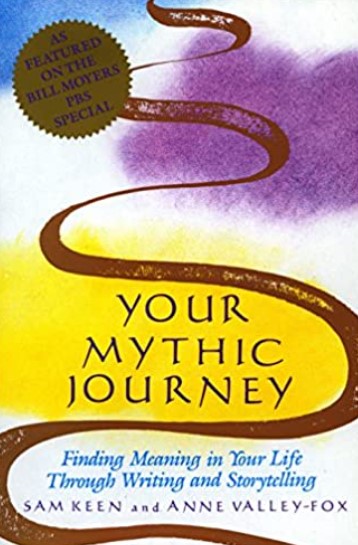
What if we could change the past? According to Sam Keen and Anne Valley-Fox, in “Your Mythic Journey,” we can change the past simply by retelling it differently than we usually do.
“The past is open to revision because memory is a function of present intention. You can turn your story over (and over) and find new perspectives on past events and emotions.” —Sam Keen
Think about some stories you have told over and over again. It could be a little thing or a big thing. It could be something that happened a long time ago, or recently. It can be repetitive thoughts you have.
Choose one story or one repetitive thought.
In your mind, “see” that story you have been telling and re-telling.
Pause, while you choose a story.
See this scene as if you are looking at a wide screen. You can see everything in this scene.
Where are you?
Who is in this scene?
Are you hot or cold or can’t feel a thing?
What is the dominant emotion?
Where do you feel this emotion in your body?
Take a deep breath.
What do you smell?
Scan the entire scene, from left to right, top to bottom
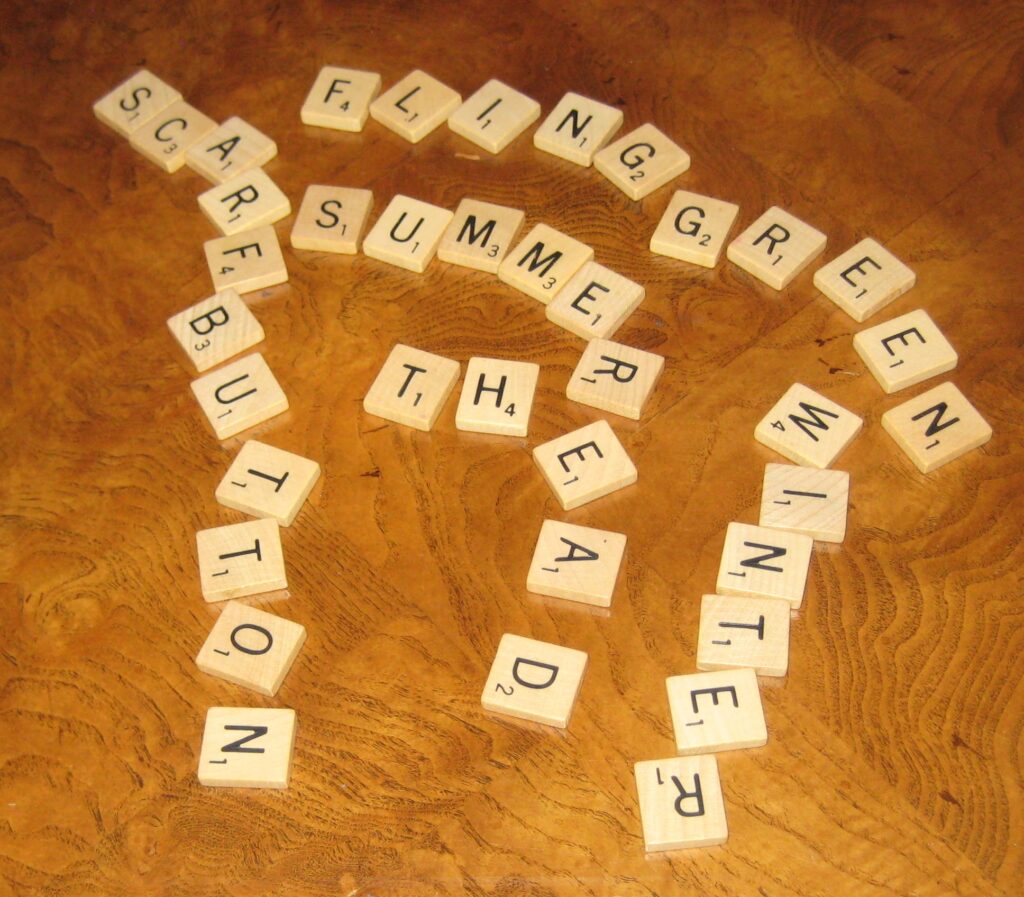
Now, drill down, zero in on one aspect of this scene. It could be a button on someone’s coat, or something someone is holding, or food someone is fixing.
Or someone’s shoes, or an every day useful item.
Prompt: I see . . .
Or: I know . .
Or: I think . . .
Or: I remember . . .
Please practice self-care when writing about difficult topics:
“Well, he has a broken leg but that’s the least of his problems. He has suffered some trauma to his head. In this country we . . . how can I put it? . . . we would say he is brain dead.”
On the 13th of January 2011 my twenty-seven-year-old son Thomas was rushed to intensive care in Porto, having fallen through a skylight whilst searching for somewhere to paint graffiti. I received a phone call from a doctor in the hospital, and when I asked her how bad it was she explained his injuries to me. Her English was good, but I couldn’t quite take it in.
His step-father and I had to get from Italy (where we lived at the time) to Portugal as quickly as we could. The hospital was waiting impatiently for me, his next of kin, to arrive so that I could give permission for his organs to be donated. His partner and my other four children came to Portugal, travelling from Australia, Singapore and England. Together we moved through the days after the accident supporting each other.
When I look back now, I remember those first few days as a sort of numbness. I floated around in a mist of confusion and disbelief, with grief knocking me sideways when it arrived without warning in erratic bursts. The paperwork and tasks that have to be attended to after a death do, to a certain extent, distract the newly bereaved for some of the time. Funeral arrangements, cremation, bringing the ashes home; there was a great deal to organise. Then when all that was over, my children returned to their own lives, my husband and I to Italy, it was then I realised I needed some other kind of support.
I found it in writing creative non-fiction.
I began to write a letter to Tosh (his nickname) just to tell him what was going on. I wrote eight thousand words that were meant to be just between us. I never intended to share those words but as the years went by my writing became more important to me. I enrolled for online courses, began creating poetry, wrote short stories and flash fiction. A play and even a novel. But I kept coming back to Dear Tosh. In September 2019, I was accepted onto the MA in Creative Writing Course at Exeter University and I completed that in 2020. For one module I pulled out my letter to Tosh and began to re-structure it into something that I felt I could share with others; at that time, it was just 5000 words.
For the tenth anniversary of his death, I completed Dear Tosh, my first memoir, which was published in May 2021. It’s made up of twenty-seven letters, one for each year that he lived. It felt as though I spent time with him as I wrote, telling him all the events that had happened in the family and the world since he left us. I found it therapeutic to write, and even though it opened up the wounds of loss, it also helped me come to terms with so much that surrounds the loss of a child. One of those things for me, was the organ donation. I had no counselling for this, and the whole idea of it haunted me like a recurring dream for months and years after his death. Writing about it, sharing my feelings with Tosh, actually exorcised my fears and I was able, at last, to accept it.
Writing the book wasn’t all doom and gloom. Much of it made me smile and even laugh out loud — and readers often have the same reaction — so many memories brought back, of fun times with the family when the children were little. I have a strong sense of humour and realise that I have passed this on to my children and that it comes through in my writing.
Writing saved my mental health, I’m sure of it. I would urge anyone to write about their loss in any way they can. It doesn’t matter if it’s never shown to anyone. The act of writing your innermost feelings can act as therapy. Grief may be difficult to share verbally but writing it down is a release and you never know, it might turn into a beautiful work of creative non-fiction.
Ninette Hartley is a writer, mother, grandmother, wife and teacher. She has followed many paths – from acting and dancing to magazine publishing, and even driving a pony and trap – but she has always come back to storytelling.
Ninette has an MA in creative writing and has been published in three short story collections. Her first memoir Dear Tosh, published in May 2021 has been shortlisted in the Selfies Book Awards and long-listed in the Dorchester Literary Festival Writing Prize 2022 (shortlist and winner announced in August 2022). In 2015 she was shortlisted for the Fish Publishing Short Memoir Prize, and was longlisted for the Poetry Prize in 2020. She has won or been placed in several flash fiction competitions.
After eight years living in rural Italy she moved to the Dorset countryside with her husband, Geoff, and beloved rescue dog, Jpeg.
Memorable writing that sparks imagination. Lean in. Hear the writer’s voice on the page.
Defrosting
By Patricia Morris
After all these years, I stand in front of the refrigerator this afternoon and hear my mother’s voice, “Don’t stand there with that door open!”
I chuckle. I’m standing here because I can’t remember what I came to the refrigerator for. As that kid, some 60 years ago, I was probably looking for something to eat. Maybe a slice of bologna. Maybe the green Jello salad with a layer of cream cheese on top. Maybe that rare delicacy – a green olive stuffed with a bit of red pimento. Whatever it was, I’d grab it and close the door at my mother’s command.
I imagine what she was thinking. Holding the door open meant using more electricity, which meant a higher electric bill, which meant more financial worries. It also meant more ice build-up in the small freezer compartment that sat along the top of the interior of that short squat white machine. This was long before the days of automatic defrost. Ice would build up on the top and sides of the narrow shelf every time the door opened and closed. Every couple of months or so it took pans of boiling water and a strong dull knife to clean it out, making room again for the ice cube trays and freezer paper-wrapped blocks of hamburger and bacon.
A few years after my mother was gone, of all the household tasks that fell to me, defrosting was the one I dreaded the most. I would let it go for too long, until the contents of that small compartment were engulfed by a virtual glacier. It would take hours and multiple pans of boiling water to loosen it enough to chop away at it with my small freezing hands. Tears were shed. I felt like Cinderella – before the ball. And I never actually made it to a ball. I just kept cooking and cleaning and doing laundry and homework, knowing I didn’t want this to be my life forever. I was too dutiful a daughter to plot an escape, and yet one ensued.
So, after all these years, here I stand in front of a refrigerator with a completely separate, frost-free freezer compartment, powered by 100% local renewable energy that I don’t worry about paying for, trying to hurry up the search in my memory bank for what I opened that door for anyway.
Patricia Morris lives under the trees in Northern California and writes on Monday nights at Jumpstart Writing Workshops. She dates her love of stories to being read to while sitting on the lap of her Great-Aunt Ruth, a children’s librarian. Her writing has appeared in Rand McNally’s “Vacation America, the Ultimate Road Atlas,” and The Write Spot anthologies “Possibilities” and “Musings and Ravings From a Pandemic Year,” edited by Marlene Cullen.
After all these years I am beginning to understand that I have to face the fact that old age is getting a toehold. I am not exempt. I am loathe to use it as an excuse, not wishing to define myself by numbers, but the signs are there, harder and harder to ignore. Harder and harder to resolve or fix. There has been a resetting of the bar. Firm reminders that I cannot slow this process down by sheer will.
I have come to accept certain limitations. It seems I will not be hiking the entire Appalachian Trail after all. It does remain beyond my capabilities, no matter that someone else born in the same year might accomplish that very thing. I face the fact that I have missed my window. Cross that dream off the list. And others, on and on.
Acceptance does not mean capitulation. I continue to fight the good fight, in search of The Answer. Or at least An Answer. Miracle foods, diet plans, sleep improvement strategies, exercise regimens, body work, anti-inflammation protocols. But the bottom line is, no matter how well we treat them, our bodies will not last forever. They will fail us in one way or another. Physical decline, mental struggle – the old gray mare just ain’t what she used to be.
I see it in daily banter, my cohort joking about various calamities of our advancing years. Or commenting to my daughter about my sense of abrupt aging and waiting for reassurance that it is not so. It is not forthcoming. Apparently, she concurs. I might have been willing to be talked out of it, but it seems we are on the same page, acknowledging the limitations of my years. I am caught up short. I had not expected her to agree so readily. I vow to double down and prove us both wrong. Cleaner diet, more yoga, Pilates, massage, and meditation. I will show her! And myself. But the task seems more daunting by the day.
I spent the weekend with dear friends just a few years ahead of me. I am alarmed by what I saw. They have capitulated to failing bodies in many ways and I want them to take action! To be proactive, do things to improve their lives. I watched him put on his hiking socks. Sitting in a rocking chair on the porch, it must have taken him ten minutes to wrangle his feet into the woolen tubes. He could barely reach, trying to move up and over his expansive belly, breathing hard and grunting his way, he cursed as the sock got hung up on curling toenails which he can no longer manage to keep trimmed. It was not a pretty picture. His wife commented that we really were not meant to live this long. Our bodies just wear out. But I stiffened my resolve to work towards staying limber and active, determined to avoid the fate of not being able to reach one’s own toes. I will never let that happen to me!
I reassured myself as I headed out on a brisk morning walk, full of self-righteousness. No need to let oneself succumb to the vicissitudes of aging. Just keep moving I told myself as I strode out, arms pumping. By the time I returned home, my hips had stiffened to the point that I was hobbling up the stairs and wracking my brain to find a remedy for this ridiculous outcome. Tart cherry juice! Good for inflammation! Green tea laced with turkey tail mushrooms. Yoga poses, acupuncture. I may go down, but I will go down fighting, always believing that somewhere in there I will find, if not the fountain of youth, some fix for what ails me. There is an answer somewhere and I am determined to discover it.
I read a book not long ago which describes aging as a spiritual process. At some point I will have to embrace that premise, that aging is a master course in acceptance, of infirmity, of pain, of loss and ultimately of death. It’s not that I am afraid of dying, just getting old and dependent. So I fight the good fight, understanding I may have to hang up my gloves for good one day and focus on the spiritual aspects of the end of life. But not yet! Not just now. New books to order, new podcasts to watch. New hope to be excavated – magical supplements and elixirs, intermittent fasting, cold water plunging, avoidance of alcohol. Maybe it’s all just a distraction, but I’m not ready to throw up my hands and admit defeat. I am determined to keep my toenails cut and the ability to ease my socks on without strain.
We’ll see how it goes.
Susie Moses is a generative writing junkie, enjoying the process and dreaming of actually doing something constructive one day with the piles of papers and notebooks she has accrued, that are spilling out of closets and off shelves and out of drawers. But for now, just getting words down on the page is an accomplishment and a delight. She spends a good part of each year in Marin County to be near her daughters, but always is drawn to return to her beloved Blue Ridge Mountains in Virginia for a fix of East Coast flora and fauna.
You can read more of Susie’s writing here and here.