The Seagulls Came and I Knew

  • The Seagulls Came and I Knew

    Memorable writing that sparks imagination. Lean in. Hear the writer’s voice on the page.

    The Seagulls Came and I Knew

    By Norma Jaeger

    The seagulls came to the back yard. We didn’t live that close to the coast, Portland, about 80 miles inland. We had never had seagulls in the yard before, as best I recall.  But there they were, drinking out of the bird bath, flapping around querulously, and generally making strident seagull noise, breaking the otherwise early Saturday morning quiet. 

    I had returned the night before from an intense, two-day job interview in Seattle.  With the seagulls in the backyard, such gulls and their cries, being ubiquitous in Seattle, I knew I would be offered the job. Because I had become disenchanted with my job in Portland, I was pretty clear I would accept the job. What I did not know, but realistically what I should have considered, based on what I had always observed about government in Washington, was how the decision would ultimately turn out.

    While I thought I was moving to Seattle, what was really going on was a short stop on my way home to Idaho – there, to an unclear future but one that became the best future of all – 22 years ago. 

    Birds, as ancient augurs, have always conveyed both positive and negative omens.  

    It takes time to sort it out.

    Norma Jaeger spent more than thirty years managing and evaluating addiction and mental health programs in Portland, Oregon and Seattle, Washington.  She developed programs for pregnant and postpartum women, children’s mental health programs, and several programs for individuals in the criminal justice system. 

    She was the Program Manager for offender programming at the Idaho Department of Correction for one year leaving to become the Statewide Coordinator for expansion and support to Idaho’s 70+ Drug, Mental Health, and Veterans’ Courts.

    She served two terms on the Board of Directors of the National Association of Drug Court Professionals, and received the Stanley M. Goldstein Hall of Fame Award from that association in 2018. 

    She taught for fifteen years at Boise State University in the Department of Criminal Justice.

    She currently serves as Executive Director for Recovery Idaho, a statewide recovery community organization.

    She holds a Masters’ Degree in Health Administration and is completing a dissertation for a Ph.D. in Public Policy and Administration from Boise State University, focused on procedural justice. 

    She is honored to serve as Executive Producer for “I Married the War,” a documentary film illuminating the stories of wives of combat veterans.

    Believing that writing can be a meaningful pathway of support for recovery from mental health issues, addiction, and trauma, Norma organized “Poetry for Recovery and Writing for Recovery,” a successful online program.

  • Burgeoning

    Memorable writing that sparks imagination. Lean in. Hear the writer’s voice on the page.

    Burgeoning

    By Su Shafer

    How many petals are in a peony?

    There’s no way to tell from the bud – a closed hand

              holding more than you can imagine.

    They unfold slowly, the way a smile spreads

              before a secret is told.

    Each petal

              a curled finger uncurling

              an alluring promise of beauty to come

              a whisper – just wait, just wait…

    And then suddenly

    It blooms

    Su Shafer is a creative crafter, fabricating bits of writing in poetry and short stories, and generating characters that appear in paintings and sit on various bookshelves and coffee tables.

  • Adversity . . . Prompt #665

    The idea of using prompts is to inspire writing in a freeform style.

    There are no rules, except to write without too much thinking.

    Let your thoughts flow and capture them in writing.

    Give your inner critic time off during this writing.

    The challenge of freewriting is getting Self out of the way.

    With freewrites, you are writing for yourself, not for an audience.

    Give yourself permission to be open to whatever comes up while you are writing.

    Writing Prompt: How do you handle adversity?

    There are several prompts, ideas about freewrites, and resources about how to write without adding trauma in “The Write Spot: Writing as a Path to Healing,” available from your local bookseller and as both print books and ebooks on Amazon.

  • Cleaver Magazine

    “Cleaver” publishes craft essays on writerly topics. If you are a poet, fiction writer, essayist, or graphic narrative artist and would like to propose a craft essay, contact the editors with a query before submitting.

    Guidelines: offer a reaction to or exploration of one’s personal experience as a prose writer/artist/creative; pieces that delve into something you’ve either found compelling, learned along the way, figured out, gotten obsessed with, found surprising, and want to share with other writers.

    Quirky is okay.

    Nothing too scholarly/academic/ teacher-y.

    Aim for between 800 and 2000 words.

    “Riding West Towards The Woods” by Deb Fenwick is a sample of the type of writing “Cleaver” is looking for.

  • Resilience . . . Prompt #664

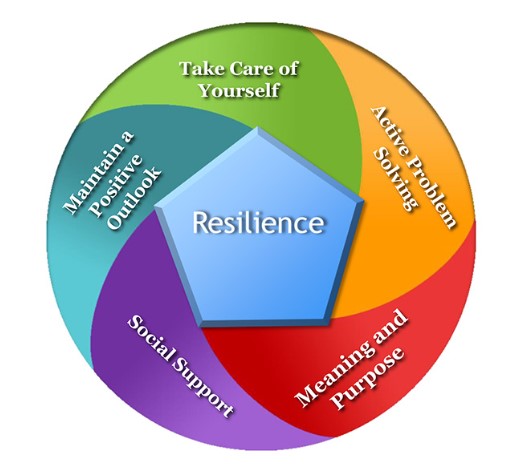
    “Resilience is the ability to scrape yourself off the floor relatively quickly after a giant trauma, medium-size setback or everyday disappointment.

    Resilience is a set of coping mechanisms we develop over time. This quality is determined by how we take care of ourselves, the people we surround ourselves with and what we do to find meaning and purpose in our lives.”

    — “How to Bounce Back From Anything,” by Elaine Chin, M.D. and William Howatt, PH.D, Good Housekeeping magazine, July 2018

    Writing Prompts

    How do you define resiliency?

    What are your coping mechanisms?

    What do you do to take care of yourself?

    Is there someone in your life who hinders your ability to be resilient?

    Write about the times you have been resilient.

    #justwrite #iamwriting #iamawriter

  • You Think You Know Me . . . Prompt #663

    Writing prompts inspired by the June 5, 2022 interview with Kevin Powell and Dr. Adrian Arancibia.

    Prompt #1: You think you know me, but you don’t know . . .

    Prompt #2: Same as first prompt, but this time write in your parent’s voice, or from your parent’s perspective,

    Or: Write from the point of view of Someone Important in your life.

    Write as if your mother or father or Important Person were writing, “You think you know me, but what you don’t know . . .

    #justwrite #iamwriting #iamawriter

  • What fascinates you? Prompt #661

    Write about what fascinates you, or what you are obsessed with.

    #justwrite #amwriting #iamawriter #freewrites

  • I’m not sure . . . Prompt #660

    Use any of these sentence starts to inspire writing:

    I’m not sure if . . .

    I’m not sure about . . .

    I’m not sure when . . .

    I’m not sure why . . .

    I’m not sure how . . .

    I’m just not sure.

    #justwrite #amwriting #iamawriter

  • Never would I ever . . . Prompt #659

    Writing Prompt:

    Never would I ever . . .

    #iamwriting #iamawriter #justwrite
  • Never Should You Ever

    Memorable writing that sparks imagination. Lean in. Hear the writer’s voice on the page.

    Never Should You Ever

    By Ken Delpit

    Whether it’s

    “Never would I ever,”
    Or “Never will I ever,”
    Or “Never could I ever,”
    Or “Never can I ever,”
    Or “Never should I ever,”
    Or “Never have I ever,”

    You cannot help but marvel
    At what an eternity “Never” is.
    At what a commitment “Never” is.
    At what a delusion “Never” is.

    Few such utterances can hold true,
    When a single exception renders them moot.

    Most such utterances harbor doubts.
    We just cannot help ourselves in our passions.

    Who among us say these things?
    Why, everyone, of course.

    Who among us mean these things?
    Well, everyone, of course.

    But who among us are truthful about “Nevers”?
    Well, some of us are…
    Or, intend to be, at least,
    At the time, that is,
    For the most part, anyway.

    So, take heed at the notion of “Never.”
    Its purpose is rigid,
    But its use is fluid.

    Lest you think “Never” always means forever,
    Never should you ever. 

    Ken Delpit, in moments of introspection, grapples with intentions versus realities. “Nevers” and “Alwayses,” generally well-meaning pronouncements, are sly co-conspirators in life. They come in lots of flavors. They come in myriad weights. They come with varying degrees of truth…, or not. They can be purveyors of principle, and they can be agents of deception, including of self. Ken is happy to have found free-writing for exploring such ponderables, not so much for finding answers, but more for discovering questions.

    #justwrite #iamwriting #iamwriter