Have you been wanting to write?

  • Have you been wanting to write?

    Have you been wanting to write? Perhaps this is the summer for your writing. How about this. . . let’s all (me, too) take the month of July to write 15-20 minutes a day. If you have more time, write longer. But let’s commit to a minimum of 15-20 minutes every day.

    What to write about? Whatever is on your mind. Need some ideas . . . some prompts to get started?

    Click on Prompts  . . . Choose a prompt. Set your timer and Just Write!

    SorensenReady? Set? Let’s go.

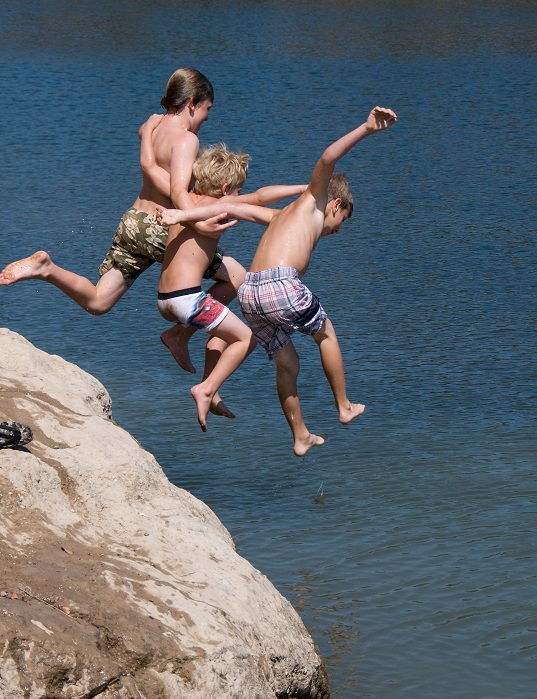
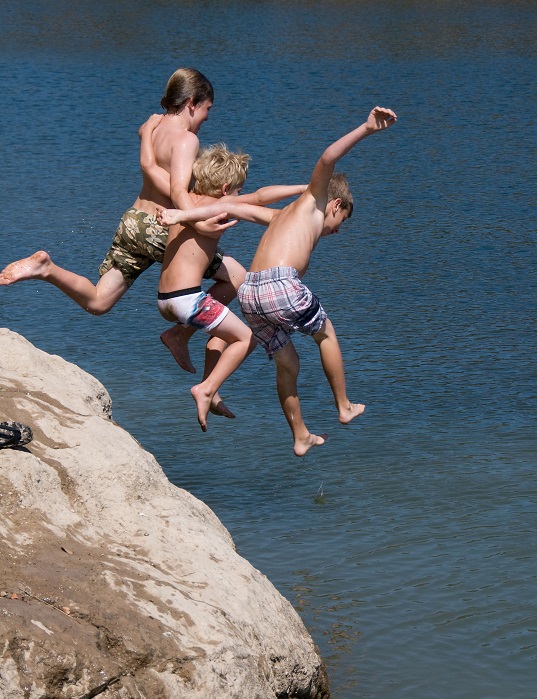
    Photo by Kent Sorensen


  • National What? Day . . . Prompt #165

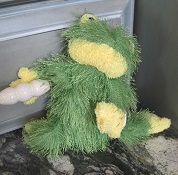
    frogPrompt: Take Your Fill-In-The-Blank To Work Day

    Take your dog, cat, frog, aunt/ant to work day.

    From the June 2015 Costco Connection: Summer is typically a time when many businesses see a drop-off in customers, so they create ways to engage customers.

    Here are some specially designated days and, of course, you can write on any of these. Have fun. . .  Let your imagination take over.

    June 1: Flip A Coin Day

    June 3: Repeat Day

    June 4: Hug Your Cat Day

    June 8: Best Friends Day

    June 10: Iced Tea Day

    June 18: National Splurge Day

    June 19: Sauntering Day

    June 26: Take Your Dog to Work Day

    You can search the internet for all kinds of “official” days.

    Just Write!

  • Random Words #163

    Lola.200Use these words in a freewrite:

     elaborate, bitter, cool, leave, mist, arm, moon, bare, peach, vision

     Post your writing on The Write Spot Blog.

  • Tweak, form, shape and sculpt . . . Prompt #161

    Choose one topic from below, these are prompts that have recently been posted here on the Write Spot Blog:

    Prompt #158: If pets could talk

    Prompt #159: Unforgettable

    Also Prompt #159:  Strange But True

    Prompt #160: Only in America

    Also Prompt #160:  Happy Endings

    Today’s writing prompt:  After you have written a freewrite (from above list), write one line for every four sentences from that freewrite. Take out all unnecessary words.

    Condense or distill your writing to the most important aspects.

    Tweak, form, shape and sculpt until you have a poem.  Then . . .

    Submit to The Voices of Lincoln Poetry Contest.

    WinnerNo fee to enter. You don’t have to be a resident of Lincoln to submit.  Send by July 25, 2o14  Go for it!


  • What is a freewrite and what is a writing prompt?

    So. . . what is all this talk about freewrites and writing prompts? What does it all mean?

    A freewrite is a style of writing that is . . . well. . . freeing. The writer hears or reads a word, or a phrase, and just starts writing. Often a timer is set, so there is the “under the gun” feel of a deadline, a limited time to write.

    Click here for more information about freewrites.

    I post writing prompts writing prompts, on The Write Spot Blog. Sometimes the writing prompts are fun and playful. Sometimes they inspire memoir type writing. Other times they work well for fiction writing.

    Mostly the prompts are what you make of them. . . you can go light and stay on the surface, skating on the edge, or you can go deep.

    This type of writing is an opportunity to explore and perhaps come up with ideas for writing or . . . for solutions to situations. . . or for personal growth and transformation.

    Shed your ideas about what perfect writing means.   Give yourself permission to be open to whatever comes up. Writing isn’t always about talent, it’s about practice and going into another dimension. Rather than write for an audience, write from an instinctual level.

    Creative writing is an act of discovery. Immerse yourself in writing. Let go of your worries and write. Write to a satisfying inner desire to go to a meaningful place.

    Go deeper into the recesses of your mind and really write. Write from the well that stores the fears. Let the tears come, let your stomach tie up in knots. It’s okay to write the story that is difficult to tell.

    Get through the barriers to go to a deeper level. See your story and tell it.

    Want to practice this freewrite type of writing? Right now? Ready? Here ya go:
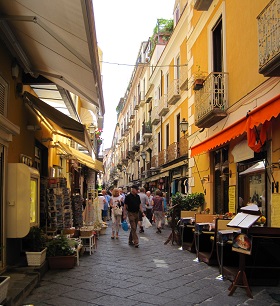
    Sorrento.Street

    Take an imaginary walk through your hometown and see what people and what places pop up. Take a few minutes to remember the smells, and notice what feelings come up as you walk through your town.

    Write what you remember about your town. Just write.



  • If you have built castles in the air . . .

    “I learned this, at least, by my experiment: that if one advances confidently in the direction of his dreams, and endeavors to live the life which he has imagined, he will meet with a success unexpected in common hours. He will put some things behind, will pass an invisible boundary; . . . If you have built castles in the air, your work need not be lost; that is where they should be. Now put the foundations under them.” — Henry Thoreau, Walden or Life In the Woods

    Marlene’s Musings:  In order to advance confidently as a writer. . . you need to think like a person who is in the business of writing.  It’s one thing to be a writer, it’s another thing to be a published author.  And if you don’t care about being published. . . then I hope you are enjoying your writing.

    CastleBuild those castles with word pictures, include a moat, a forlorn prince or princess, a formidable problem to overcome.  Throw in a fire-breathing dragon, a jealous cousin. . . Just Write!

  • The Language of Your Childhood is Poetry. Prompt #155

    April is Poetry Month. Let’s talk about poetry.

    The following is inspired from a workshop with Pat Schneider.

    Poetry is about music of language and comes in all forms: Music, nursery rhymes, hymns, jump rope rhymes.

    Look in anthologies for different kinds of poetry, different styles, different authors as poets.

    Guess what . . . You don’t have to like all poetry.

    Think about the language of your childhood. Imagine sitting around your kitchen table, or the living room couch or sofa . . . depending on where you grew up, you might call this item of furniture ” the davenport.”

    Remember your family’s way of talking. Hear poetry in music that was spoken around the kitchen table. Remember the language of your childhood.

    When writing poetry, don’t strain the language. Use normal words. Fall into the poetic playground.

    One way to write poetry: Take the melody from a song that you know and sing new words to make up your own song.

    Lola.200Prompt: Write a short poem – using a theme running in your head – a song you like, a rhyme, hymn, nursery rhyme, jump rope rhyme. Or, don’t even worry about a rhythm. Just go with whatever comes up.

    Write a poem about a time at the kitchen table when you were little.

    Or a poem about night time.

    Or a summer memory.        Just Write!