 Today’s writing prompt:
I surrender . . . or I finally surrendered.
With a prompt like this, you can also write the opposite:
I will never surrender . . .

Today’s writing prompt:
I surrender . . . or I finally surrendered.
With a prompt like this, you can also write the opposite:
I will never surrender . . .
 Imagine a conversation between two people of different backgrounds talking about March 13, National Day of . . .
Explain National Day [choose one from the list below] as if these two people were talking in person, over the phone, or via emails. They could be friends. Or perhaps they have never met in person.
National Elephant Day – Thailand
Coconut Torte Day – Australia
National Good Samaritan Day – United States. A day for unselfish actions to help those in need and to celebrate kindness.
National Earmuff Day – United States, in honor of the 1873 invention of earmuffs. At the age of fifteen, Chester Greenwood of Farmington, Maine was credited for inventing the winter wear out of necessity—his ears were cold.
National K9 Veterans Day – United States
A lot of things changed after the bombing of Pearl Harbor in 1941. Oil, leather and rubber were rationed. Men were drafted. Women rolled up their sleeves and built war supplies. And dogs were called to duty. During the first World War, the United States took notice of the European use of canines as sentries, message carriers and several other functions.
National Open an Umbrella Indoors Day There is a superstition that opening umbrellas indoors will bring bad luck. National Open an Umbrella Indoors Day encourages you to do just that and note if you have any bad luck.
Amber fluid = beer
Ankle biter = small child
Bikkie = biscuit (also “it cost big bikkies” – it was expensive)
Billy = teapot
Bonnet = car hood
Boot = car trunk
Brolly = umbrella
Cooker = stove
Drink with the flies = to drink alone
Dummy = pacifier
Holiday = vacation
Jumper = sweater
Lift = elevator
Mobile = cell phone
Nappy = diaper
Nick = steal
Ring = call
Rubber = eraser
Tap = faucet
Trainers = sneakers
Ready! Set! Just Write!

Think of a house or an apartment you lived in – either where you grew up or one that comes to you most strongly: a place that seems most pertinent or the place you want to discover more about.
Use a pen or pencil and draw a blueprint of the house or apartment.
Sketch the floor plan, include doors (front, back, side), stairs, and each room within the house. Let your hand and mind be the guides. Don’t worry about getting it exactly correct.
Use color to explore
When you feel done with the blueprint, use color to explore the house/apartment and your feelings.
Color the rooms, or outline the rooms, using the actual or basic color of the walls, the rugs and furniture.
When you feel done with coloring, write whatever comes up.
Examples
The house was yellow I hated that color. It made me think of . . .
The red front door stood out like . . .
My pink/blue room was a sanctuary. I could . . .
I liked the green kitchen best. This is where I . . .
You can also write opposites:
The house was yellow. I loved that color. I never realized until now . . .
The red front door blended in. I never thought . . .
My pink/blue room was hellish. I could never . . .
I disliked the green kitchen the most. This is where I didn’t . . .
Go where your mind wants to go. Just write.
 You may already do this . . . Use musical lyrics as prompts. Here are a couple for you:
“She lost him. But she found herself and that was everything.” Taylor Swift
“I used to drive out to John’s house,” says Paul McCartney. “He lived out in the country, and I lived in London. I remember asking the chauffeur once if he was having a good week. He said, “I’m very busy at the moment. I’ve been working eight days a week.” And I thought, “Eight days a week! Now there’s a title.”
Have a go. Just start writing. Be open. Be surprised. Let the ink flow. Let your fingers fly across the keyboard. Then share. Post your writing on The Write Spot Blog.
Homonyms (also called homophones) are words that sound like one another but have different meanings. Some homonyms are spelled the same, like bark (the sound a dog makes) and bark (the outer layer of a tree trunk). Enchanted Learning
Freewrites mean writing freely. You are free to write whatever you want.
Use any or all of the following words in a freewrite:
Flower – Flour Beach – Beech Bough – Bow
Fur – Fir Morning – Mourning Birth – Berth
Red – Read Time – Thyme Eye – Aye
New – Gnu You – Ewe You’ll – Yule
If ewe are knew too freewwrites oar kneed eh refresher . . .
If you are new to freewrites or need a refresher:
Freewrites . . . What Do You Call Them?
What is a freewrite and what is a writing prompt?
 If yule cast yer aye on the Festive Spirit Blog Hop ewe mite read sum thing gnu and interesting!
What makes up a good life?
What are the ingredients for a good life? If you could combine essential ingredients to produce a good life, what would those ingredients be? Is there a secret ingredient?
If there was a recipe for a good life, would people embrace it? Would they conform or rebel or ???
If you were going to stitch qualities for a good life into a quilt, what bits and pieces would you need? What would the final piece look like?
Is this even a fair or answerable question? Are there too many variables to consider?
 If you could create, cajole, conjure, form, shape a good life, would you? What would it look like. . . that good life many people strive for.
Today’s writing prompt: What do you think a good life is all about?
Photos of bicycle and mallet by Jeff Cullen. (Click on Jeff Cullen to see his Fotolio photos)
 Writing Prompt: Tell about an award or a prize you won.
Do you have a villain in your story? Is this scoundrel executing gruesome acts? Is it hard for you to get into the head and heart of the “bad guy?” Does he or she have a heart?
Here’s an idea about how to flesh out your baddie. . . so that he/she is someone you can live with for the duration of your writing.
Do a freewrite. The antagonist was once a child. What were his/her passions as a teenager? What games did they play as children? What delighted this child? Write about his/her first car.
Choose a prompt and write as if you were answering from the villain’s point of view. Imagine you are a neighbor or a relative of the undesirable person. Write about the mean person from someone else’s point of view.
What is the turning point, or the chain of events that changed this innocent toddler into a dreadful creature?
Probably not much of this brainstorm writing will make it into the final cut, but it will help you understand this despicable creature and make him/her come alive.
Remember: There usually is a wicked character in stories. . . that’s what gives stories their heft, their meatiness.
An example is Anna Quindlen’s “Every Last One.” We meet an individual who is charming, likable . . .lovable. Then an event changes everything and everyone. Use a book of your choice as your textbook. Study how the author developed the character of the “bad” guy.
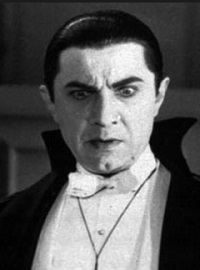 No one was born bad. How did they get that way? You are the puppet master . . . create and control your characters, even the evil ones. Just write!
“When we seek closure, we reach out to the zipper. it keeps us warm, prevents things from falling out of purses and lets us cram way too much into our suitcases. When it gets stuck, so do we. Without it, life would be filled with the endless ennui of buttoning and snapping.” — Helen Anders
Today’s writing prompt: Zipper