How to catch the ideas that flit by.

  • How to catch the ideas that flit by.

    Today’s Guest Blogger post is from one of my favorite authors, Rachael Herron.

    Rachael writes:

    A comment by David Sedaris on a podcast gave me an a-ha moment recently, and I wanted to share it with you.

    I’d always wondered how he got his essays so brilliantly specific—filled with the kind of particulars that put you right into the spot where he stands.

    From Me Talk Pretty One Day, “For the first twenty years of my life, I rocked myself to sleep. It was a harmless enough hobby, but eventually, I had to give it up. Throughout the next twenty-two years I lay still and discovered that after a few minutes I could drop off with no problem. Follow seven beers with a couple of scotches and a thimble of good marijuana, and it’s funny how sleep just sort of comes on its own. Often I never even made it to the bed. I’d squat down to pet the cat and wake up on the floor eight hours later, having lost a perfectly good excuse to change my clothes. I’m now told that this is not called “going to sleep” but rather “passing out,” a phrase that carries a distinct hint of judgment.”

    His humor comes from the details.

    But how did he remember those details? When you’re reading his work, you’re right there, exactly with him.

    I have a legendarily bad memory. This is why I blog and journal.

    But I’ve been stumped in the past as to how to catch the things that flit by, the words I want to remember, the colors of the sunset I’m in front of, the smell from the Korean barbecue on the corner.

    I’m not willing to drag out my big ole journal and plop down on the sidewalk to catch my ideas and put them into beautiful sentences. Therefore, I lose a lot of them. I want to live in the moment, not next to it.

    The tip David Sedaris gave me? He jots down snippets, and then later transcribes and expands them in his diary.

    I’ve often jotted snippets into a tiny Moleskine (because those can seriously go through the washer and come out with your words intact — ask me how I know). And I journal.

    But combining the two — grabbing the few words and expanding them later — this is a really powerful combination that’s netted me some great stuff recently.

    So I’ve taken to carrying a purse, even though I hate to do so. I find that tapping ideas into my phone doesn’t have the same feel as grabbing a notebook and pen and scribbling the words that lead to other ideas.

    Of course, I don’t stop the party. I don’t announce that I need quiet for my creative inspiration. My goal is that no one notices what I’m doing. It’s the bank robbery of journaling — get in and get out before anyone sees your face.

  • What Got Taken Away From You?   Prompt #335

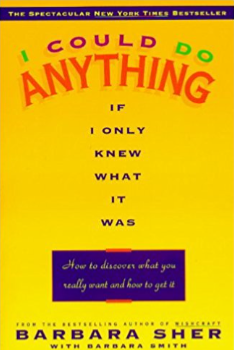
    The following is from I Could Do Anything If I only knew what it was, by Barbara Sher.

    Once someone I cared for deeply did something very unethical, so I tried to totally revise my feelings about him. “He’s not a good person,” I said. “I don’t know how to love him anymore.”

    And a very wise woman told me, “Your love belongs to you. You mustn’t let anyone touch it, not even him. You can keep away from him, but don’t try to destroy your love. That love is yours. Keep it.”

    It won’t really break your heart to remember something that got snatched away from you, even though it may feel that way.

    Prompt:  What got taken away from you?

    New York Times Best Seller author Barbara Sher believes we each have a genius inside us, our Original Vision, and we’ve had it since birth. Our culture tends to discourage that vision, but it remains within us, waiting to be fulfilled.

  • Revive Your Past . . . Prompt #334

    Revive Your Past

    Something inside you is too loyal to permit you to turn your back on everything you loved and simply walk away. No matter how many times people tell you to let the past go, it’s never possible. You’ll never move wholeheartedly into the future unless you take your beloved past with you.  And that’s exactly as it should be.

    There’s no reason to turn your back on a happy past. Sometimes we try to turn away from the past because we feel it somehow betrayed us. It’s as though we loved our past, but our past didn’t love us. So we go on strike and pretend we don’t care, as if to punish fate for being unkind. Fate never cares, of course, so we only hurt ourselves.

    Prompt:  What do you . . . or what does your character pretend to not care about?

    Today’s prompt is inspired from I Could Do Anything If I Only Knew What It Was by Barbara Sher.

    For more prompts about writing about your past, click on:

    Praise Your Past

    How To Write A Memoir—Part One

    How To Write A Memoir—Part Two

    How To Write Without Adding Trauma

  • Praise Your Past . . . Prompt #333

    You can use these prompts to write about something that happened to you or something that happened to someone you know. You can also use these prompts to develop your fictional characters.

    Prompt: Praise your past. Write a few sentences about the best time in your life. What did you love about that time?  What did your work, or life, at that time, look like, smell like, taste like? Could be a big thing or small things.

    Letting yourself describe every lovely detail will give you back something you lost, a precious time you put out of your mind. When you remember that time by praising it, you’ll have rescued it. You’ll have pulled it out of the corner where you threw it a long time ago.

    Prompt: What did you, or the character you have created, throw into the corner?

    Inspired from I Could Do Anything If I Only Knew What It Was by Barbara Sher.

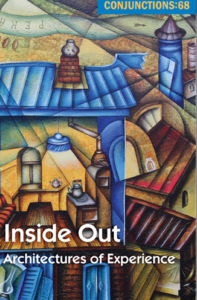
  • Conjunctions Magazine-unique literary journal

    “The sheer size of Conjunctions—book length at nearly 400 pages per issue—is unique in the literary journal landscape. The scope allows editors to take chances on different voices, perspectives, styles and genres that relate to the central theme, and to publish more longform work— such as novellas—that might quite literally not fit in other journals.” —Writer’s Digest, October 2016

    About Conjunctions

    “Conjunctions is an award-wining journal of provocative, innovative fiction, poetry and narrative nonfiction; a living notebook where contemporary masters and astonishing new voices publish their risk-taking, immaculately crafted work.” — Micaela, Morrissette, managing editor


    Submitting to Conjunctions

    All submissions from writers in the US should be directed by mail to the editorial office:

    Bradford Morrow, Editor
    Conjunctions
    21 East 10th St., #3E
    New York, NY 10003


    In order to receive a response, you must enclose a self-addressed envelope stamped with sufficient postage for our reply and for return of your ms (if you request that). If you could also include your email address in your cover letter, that would be most appreciated.

    Please do not send submissions via USPS Priority Mail or any other delivery method that requires a signature, and please be sure that your SASE is an appropriate size for return of your materials.

    Electronic and simultaneous submissions will not be considered. Allow twelve weeks for our reply before querying.

    Our biannual print/e-book collections are generally themed. Find out more about the theme and reading period for the issue in progress.  We cannot predict when a given issue will close to new work, but we typically read into August for our fall issues and into February for our spring issues.

    We read year-round for the weekly online magazine, which is not subject to thematic restrictions.

    We accept short- and long-form fiction, poetry, and creative non-fiction. We do not accept academic essays or publish book reviews. Because we strive to provide a forum for unconventional work, we have no official restrictions regarding word count or the number of individual literary works contained in a single submission. However, we ask that writers use common sense when it comes to sending extremely long work or multiple works.

    Please do not send synopses or writing samples and ask us to indicate interest; just send the work itself.

  • Trust your intuition for creative writing.

    Guest Blogger Suzanne Murray inspires our writing to flow from a dream-like state of consciousness and to trust our intuition.

    Suzanne writes:  How Do We Allow Creativity to Flow?

    When we get lost in a good book it’s because the writer got lost in letting the story come through as they wrote.

    I remember the first time when I got on a roll with my writing, where I knew I was writing something good. I stopped and looked around the room to see where it was coming from because I knew it wasn’t coming from my everyday self.

    Since then I have come to understand writing comes from a dream-like state of consciousness of allowing what wants to be written to unfold. It doesn’t involve thinking or trying to figure it out but rather feeling and sensing what wants to be born and following that golden thread.

    All creativity comes from this place of allowing something beyond our understanding to lead us. We can even create our lives from this place of expanded awareness. The trick is to let go of our need figure things out with our mind and our need try to control things to make things happen the way we think we want. Rather we let ourselves be surprised by what wants to unfold. We let go of the resistance we feel to letting go and letting our creativity and life flow.

    We focus more on our heart and intuitive knowing. We pay attention to the inspiration that comes from that place and take action from there. We relax into being and let go of the need to push to complete our to do list.

    We are more present in the moment, paying attention to the world around us.
    From this place we can pick up on the clues the universe or our creative self is giving us. Life becomes
    an adventure in allowing, an exploration of infinite possibilities. What if we think of our creativity and lives as a good book that we get lost in, where we can’t want to see happens next.

    About Suzanne Murray:

    EFT (Emotional Freedom Techniques)
    I’ve been working with EFT in new ways that allow us to laser in on the issue and shift it at the core. We often make significant shifts in a single session.

    CREATIVE LIFE COACHING

    Would you like to live from an expanded place of grace, ease and flow? Would you like to tap the wisdom and power of your heart and soul? We work with soul based ways to let go of limitation and gaining clarity of the next steps to living a more joyful, authentic life.

    CREATIVITY COACHING

    Do you want to experience the pleasure and joy that comes from adding satisfaction and meaning and a sense of well being to your life through creative expression. I will offer practical, emotional and soulful strategies to help you fully uncover your creative gifts and support yourself in expressing them. I will provide encouragement and support in understanding of the creative process and its stages and exercises for accessing the wisdom of your imagination. I’ll help you set realistic goals and support you in achieving them. We will work with tools for coaching yourself through the issues that get in the way of your creativity including career concerns, blocks, limiting beliefs, relationship issues and the existential and spiritual questions that can arise from wanting and needing to create.

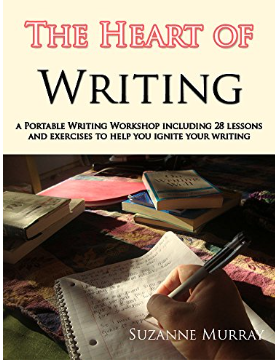
    The Heart of Writing eBook
    Jumpstart the Process, Find Your Voice, Calm the Inner Critic and Tap the Creative Flow

    I have been working an exercise a day through your The Heart of Writing eBook. I love it! It’s like being in class again. – Tonya Osinkosky

    Now available on Amazon Kindle!

    and available is a pdf download from my website (includes a one hour mp3 interview about writing process)


  • The real summer vacation. Prompt #331

    Write about your summer vacation.

    Not the “My Summer Vacation” essay you wrote in school in September.

    Write about what really happened.

  • So, what is a story?

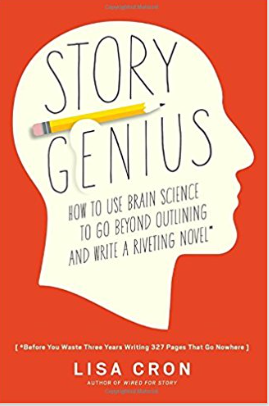
    Today’s post is by Lisa Cron, author of Story Genius and Wired for Story.

    We think in story. It’s hardwired in our brain. It’s how we make strategic sense of the otherwise overwhelming world around us. Simply put, the brain constantly seeks meaning from all the input thrown at it, yanks out what’s important for our survival on a need-to-know basis, and tells us a story about it, based on what it knows of our past experience with it, how we feel about it, and how it might affect us. Rather than recording everything on a first-come, first-served basis, our brain casts us as “the protagonist” and then edits our experience with cinema-like precision, creating logical interrelations, mapping connections between memories, ideas, and events for future reference.

    Story is the language of experience, whether it’s ours, someone else’s, or that of fictional characters. Other people’s stories are as important as the stories we tell ourselves. Because if all we ever had to go on was our own experience, we wouldn’t make it out of onesies.

    So, What Is a Story?

    Contrary to what many people think, a story is not just something that happens. If that were true, we could all cancel the cable, lug our Barcaloungers onto the front lawn, and be utterly entertained, 24/7, just watching the world go by. It would be idyllic for about ten minutes. Then we’d be climbing the walls, if only there were walls on the front lawn.

    A story isn’t simply something that happens to someone, either. If it were, we’d be utterly enthralled reading a stranger’s earnestly rendered, heartfelt journal chronicling every trip she took to the grocery store, ever—and we’re not.

    A story isn’t even something dramatic that happens to someone. Would you stay up all night reading about how bloodthirsty Gladiator A chased cutthroat Gladiator B around a dusty old arena for two hundred pages? I’m thinking no

    A story is . . .

    A story is how what happens affects someone who is trying to achieve what turns out to be a difficult goal, and how he or she changes as a result. Breaking it down in the soothingly familiar parlance of the writing world, this translates to

    “What happens” is the plot.

    “Someone” is the protagonist.

    The “goal” is what’s known as the story question.

    And “how he or she changes” is what the story itself is actually about.

    As counterintuitive as it may sound, a story is not about the plot or even what happens in it. Stories are about how we, rather than the world around us, change. They grab us only when they allow us to experience how it would feel to navigate the plot. Thus story. . .  is an internal journey, not an external one.

    Articles by Lisa Cron:

    “Ten writing insights from brain science guru, Lisa Cron.”

    2 Ways Your Brain is Wired to Undermine Your Story – And What To Do About It


  • Submit to Politico Magazine

    POLITICO Magazine is always looking for smart, timely journalism aimed at a broad, but well-informed audience with a deep interest in politics. We publish both original reporting and distinctive opinion journalism that illuminate the people, ideas, and institutions that matter most in American politics and government. We’re much less interested in garden-variety op-eds, especially on narrow subjects or those with a limited shelf life.

    What works: Big swings at big subjects. Deep dives on the hidden forces shaping politics in a key state. Timely, original reporting on matters of national importance. Well-targeted book excerpts. Profiles of the major players influencing the political debate – or the backstage players who soon will. Unique data or new findings that challenge the conventional wisdom. Smart, elevated media criticism.

    What doesn’t: Op-eds on committee hearings, obscure pieces of legislation or highly specific regulation. Clichés. Talking points and predictable partisan rants. Your random thoughts on politics. Anything boring.

    If you think you have a story that will enlighten, challenge and surprise our readers, check out the How To Pitch Page.