
Uncanny ready for your submissions

  • Uncanny ready for your submissions


    Uncanny Magazine  is an online Science Fiction and Fantasy magazine featuring passionate SF/F fiction and poetry, gorgeous prose, provocative nonfiction, and a deep investment in the diverse SF/F culture.  Each issue contains intricate, experimental stories and poems with verve and imagination that elicit strong emotions and challenge beliefs, from writers of every conceivable background. Uncanny believes there’s still plenty of room in the genre for tales that make you feel.

    Uncanny looks for new and classic speculative fiction, podcasts, poetry, essays, art, and interviews.

    Submissions

    Oct 2 to Oct 16, 2017:  short story submissions and poetry submissions.

    Note from Marlene:  Sorry for the short notice. It’s good to always have something ready to submit for these short notices.

    Fiction Guidelines

    Uncanny is looking for original, unpublished speculative fiction stories between 750-6000 words. Payment is $.08 per word (including audio rights).

    Poetry Guidelines

    Uncanny is looking for original, unpublished speculative poetry of any length. Payment is $30 per poem.

    Nonfiction Submissions

    Uncanny doesn’t accept unsolicited nonfiction submissions. Payment is $50 per essay on acceptance.

    Art Submissions

    Uncanny pays $100 for reprint art.
  • Favorite outfit or school uniform . . . Prompt #339

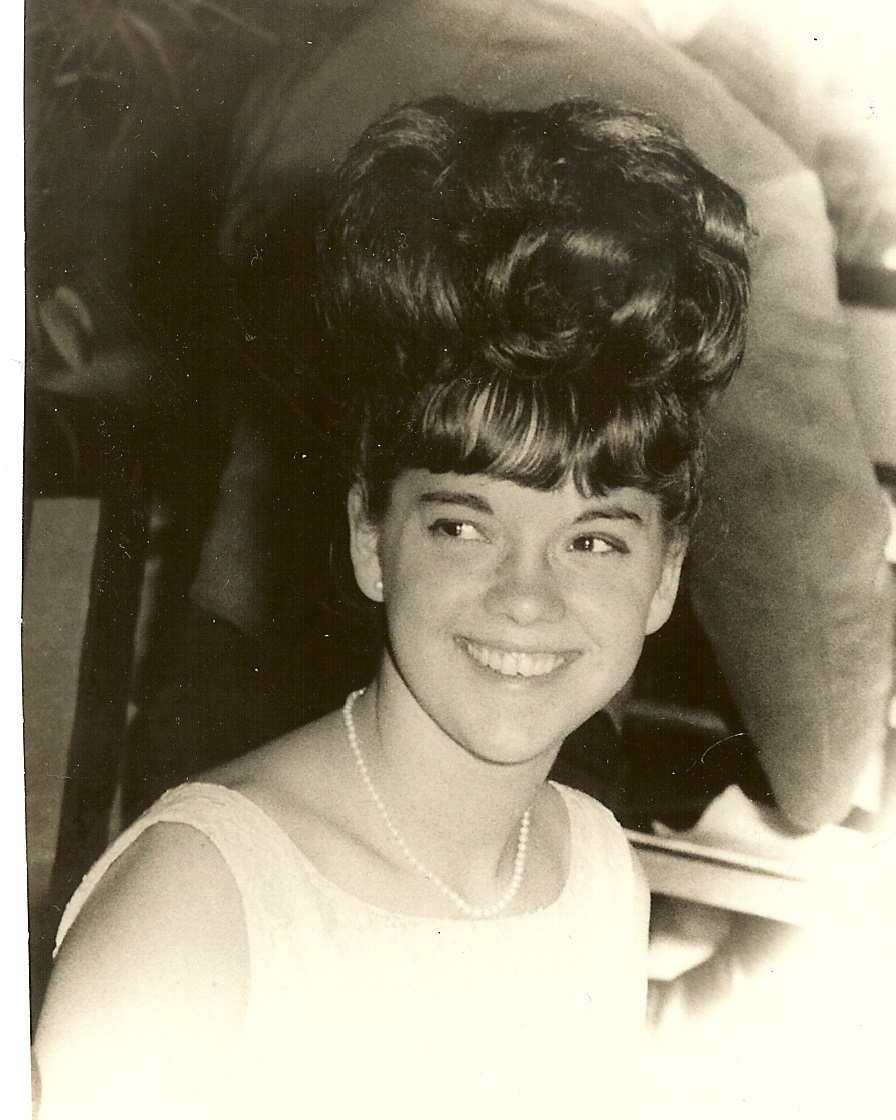
    Write about a favorite childhood outfit – dress, pants, top or favorite childhood dressy outfit – on what occasions would you wear it?

    Or write about school uniform.

  • Ecotone magazine invites reimaging place in writing and art

    Ecotone’s mission is to publish and promote the best place-based work being written today. Founded at the University of North Carolina Wilmington in 2005, the award-winning magazine features writing and art that reimagine place, and our authors interpret this charge expansively. An ecotone is a transition zone between two adjacent ecological communities, containing the characteristic species of each. It is therefore a place of danger or opportunity, a testing ground. The magazine explores the ecotones between landscapes, literary genres, scientific and artistic disciplines, modes of thought.

    Submission guidelines

    Ecotone, the literary magazine dedicated to reimagining place, welcomes work from a wide range of voices. Please review guidelines before submitting. We strongly encourage writers to read work we’ve published before sending their own. A selection of work from recent issues is featured our website, where you can also order a copy of the magazine.

    Ecotone is open to submissions, by post and via Submittable, from August 15–October 1, and from December 15–February 1. We adhere strictly to posted dates. Any mailed submission postmarked outside the listed submission periods will be recycled unread. 


  • Being Kind . . .  Prompt #338

    Write about a kindness a stranger did for you.

    Or a kindness you offered to a stranger.


  • Immerse the reader

    “Writers can learn a lot from reading comic books and graphic novels, such as about brevity. Of course, comics do have the benefit of imagery. That said, the importance of scene can’t be understated. I’m always telling my students: Show us moments instead of wildly narrating an entire story and describing what’s happening. Try to find ways to immerse the reader.” Roxane Gay, September 2017 Writer’s Digest

  • Declutter . . . Prompt #337

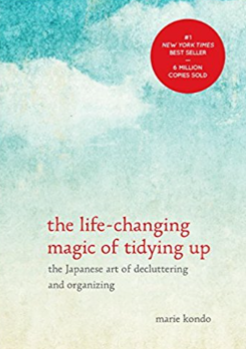
    “When I put my house in order I discovered what I really wanted to do.”  These are words that professional organizer, Marie Kondo, hears repeatedly from her clients.

    “Their awareness of what they like naturally increases and, as a result, daily life becomes more exciting.” — Marie Kondo, the life-changing magic of tidying up, the Japanese art of decluttering and organizing

    There are a couple of ways you can use this writing prompt:

    Either clean something out: a drawer, the refrigerator, a file drawer or a file folder, a room, a car, a garage.

    Or mentally picture decluttering something in your life.

    Show that it’s not just physically making space, it’s also making mental space, letting go of an old self and making room for who you are now, and who you want to be.

    Prompt:  Write about cleaning or decluttering and the results.

  • Fire Up The Reader’s Brain 

    “Once you are clear about how to choose your scenes, develop them to create ‘the dream’ of your memoir. The term ‘fictional dream’ comes from John Garner’s The Art of Fiction in which he writes that we weave a world for our readers with every detail we include —every scene, description, character and piece of dialogue. When we fail to offer continuous cues to scenes in that world, the reader falls out of the dream.

    The best way to create this dream is to write vivid scenes that stimulate the brain to see, feel and taste that world. Research in the neuroscience of writing demonstrates that when we read a story with sensual details, our brain fires up in the areas of visualization, taste and sound.”

    Excerpted from “You Must Remember This” by Linda Joy Myers, The Writer February 2016

    Posts about using sensory detail in writing:

    Use Sensory Detail And Be Specific

    Delicious! By Ruth Reichl

    Just write the scene as you see, feel, hear, sense, taste, dream it!

  • Does your memoir have a theme?

    Should your memoir have a theme? Yes, according to Brooke Warner.

    “Your memoir has an atmosphere, the air a reader breathes, and it’s called theme. Its presence is felt in every scene, whether or not it’s explicitly named by the author.” —Brooke Warner, “Back to Port,” The Writers, February 2016

    “If your theme is vague, such as transformation, try to articulate what initiated your transformation.”  Warner gives the example of Wild  by Cheryl Strayed and H Is for Hawk by Helen Macdonald, both about transformation while working through grief.

    Find your theme and tell your story.

    Read Brooke’s guest blog post, here on The Write Spot Blog: Why Keep Writing When No One Is Listening.

    Just Write!

  • CICADA is a YA lit/comics magazine and is . . .

    CICADA is a YA lit/comics magazine and is fascinated with the lyric and strange and committed to work that speaks to teens’ truths. We publish poetry, realistic and genre fic, essay, and comics by adults and teens. (We are also inordinately fond of Viking jokes.) Our readers are smart and curious; submissions are invited but not required to engage young adult themes.

    Especially welcome: works by people of color, people with disabilities, LGBTQAI+ folks, genderqueer folks, and other marginalized peoples. Not welcome: cultural appropriation. 

    Fav writers, YA and otherwise: Sarah McCarry, Nnedi Okorafor, Sherman Alexie, David Levithan, Daniel Jose Older, Holly Black, Kelly Link, Chimamanda Ngozi Adichie, Ntozake Shange, Anne Carson, Jacqueline Woodson, ZZ Packer, Angela Nissel, Sofia Samatar, Malory Ortberg, Saeed Jones, Octavia Butler, Andrea Gibson.

    “There’s room in the world for your dark weird truths.” Associate editor Anna Neher on what Cicada wants.   

    The above is excerpted from Cicada’s Submission Guidelines.   

  • Rewrite “What I Did This Summer” . . . Prompt #336

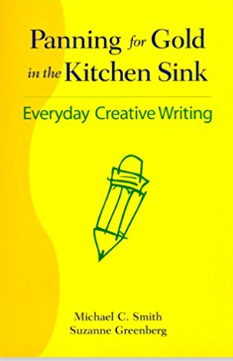
    Today’s writing prompt is excerpted from Everyday Creative Writing, Panning For Gold in the Kitchen Sink by Michael C. Smith and Suzanne Greenberg.

    Ben Johnson, a seventeenth-century English writer and scholar, characterized poetry as “What has been oft thought but ne’r so well expressed.” In so saying, Johnson relieves poets of the obligation of coming up with new ideas and focuses on the perhaps infinite number of ways that ideas can be expressed.

    To illustrate this idea, consider that most of us were required to write a “What I Did This Summer” essay at some point in our school careers. While the subject matter for these essays is largely the same among classmates – camp, swimming pools, summer jobs – the ways in which we wrote our stories those details we chose to highlight and those we chose to omit, are what gave each piece its own flavor and originality.

    For example, the following were written by two sixth-graders.

    1. I went away to camp this summer, which was interesting. I had never been to camp before and I enjoyed meeting new people. I slept in a bunkhouse with five other girls. I went sailing and learned how to macramé, which really is more boring than it might sound. I made a new friend who was very nice. We did a lot of activities together, which made everything a little more interesting than it was before. It’s important to have a good friend at camp.

    2. Has anyone ever tried to convince you that tying knots is fun? How about sitting on a stagnant pond waiting for a gust of wind that never comes? Well I spent the summer waiting to be convinced that either of these activities were fun. At least I made a friend, Bobbie. Finally, we got smart and started hiding behind the bunk and reading her sister’s old issues of Seventeen when it was time for knot-tying class – whoops, I mean macramé.

    Everyday Creative Writing, Panning For Gold in the Kitchen Sink  by Michael C. Smith and Suzanne Greenberg

    For another prompt about vacation writing, please click on The Real Summer Vacation.