Write Memoir in Voice of Narrator

  • Write Memoir in Voice of Narrator

    Whether you tell your story chronologically, or with flashbacks, or with intercutting, it’s important to write your memoir in the voice of the narrator. Examples of these different ways of telling a story are used in The Write Spot Anthology: Discoveries.

    “Maintaining a solid narrative structure is critical to ensure readers move in step with the sequence of life events. . . When they [readers] can follow your progression as a character, they can also fully enter your story.” —Dorit Sasson, “Refresher Course,” The Writer, February 2016

    Note from Marlene: When writing about something that happened in childhood, use appropriate age-based language. Show character growth by using adult language when writing about the character as an adult.

    Examples of narrative structure, character growth and details on how to use intercutting in your writing can be found in The Write Spot Anthology: Discoveries.

  • Helen – Literary and Arts Magazine

    Helen – A Literary and Arts Magazine is published biannually in innovative print options and digital media. In Spring 2016, Helen moved from a traditional print form to a more innovative structure. Most writing is published online except for the micro prose printed on poker chips to celebrate their hometown of Las Vegas, Nevada.

    “Our goal is to inspire and support emerging writers in all genres.”

    They also publish a weekly blog series called “Friday Night Specials.”

    Submit: Contests
    Visual Prompts
    Visual Prompt Contest

  • Write so the reader is a part of the experience

    “A writer’s problem does not change. It’s always how to write truly and having found what is true, to project it in such a way that it becomes a part of the experience of the person who reads it.” — Ernest Hemingway


    Photo by Breana Marie

  • Someday . . . Prompt #343

    Today’s Writing Prompt:  Someday . . .

    I like the possibilities this prompt suggests, perhaps an opportunity for reflection.

    Note from Marlene: Write whatever comes up for you. Trust the process of free writing. Write with no worries about the outcome. Write for yourself with no cares about the end product. Just Write!

    Photo by Christina Gleason.

  • Personal Essay As Therapy

    “One reason we choose to write essays instead of another kind of nonfiction piece is because we can use the personal essay as a kind of therapy. Sometimes the act of writing gives us the opportunity to work through the conflict and come up with another way of looking at the situation.

    As the writer explores her problem, owns it, and then comes up with a resolution that will change how she relates to her problem in the future, the reader will be looking at her own life and doing the same thing. That’s why the essayist must be committed to the process of discovery and must be as honest as she possibly can be about what she uncovers.

    More than any other piece of nonfiction, the personal essay has to be written and rewritten and rewritten, often many times, to get to the heart of what it is we really want to say.” — Gloria Kempton, “Making a Point,” August 2006 Writer’s Digest Magazine

    Note from Marlene:  So true! Much of writing is re-visioning, re-thinking, re-writing. My essay in The Write Spot Anthology: Discoveries about how I spent my summer in 1974 was originally written that autumn. I spent the next 43 years revamping it. Yeah, that’s a lot of rewriting, but it got better with each twist and turn. It took that many years to fine tune my writing and to realize what the message was. I’m not suggesting you need 43 years to tweak your writing to where you like it. I am suggesting that you Never Give Up.

    Just write!

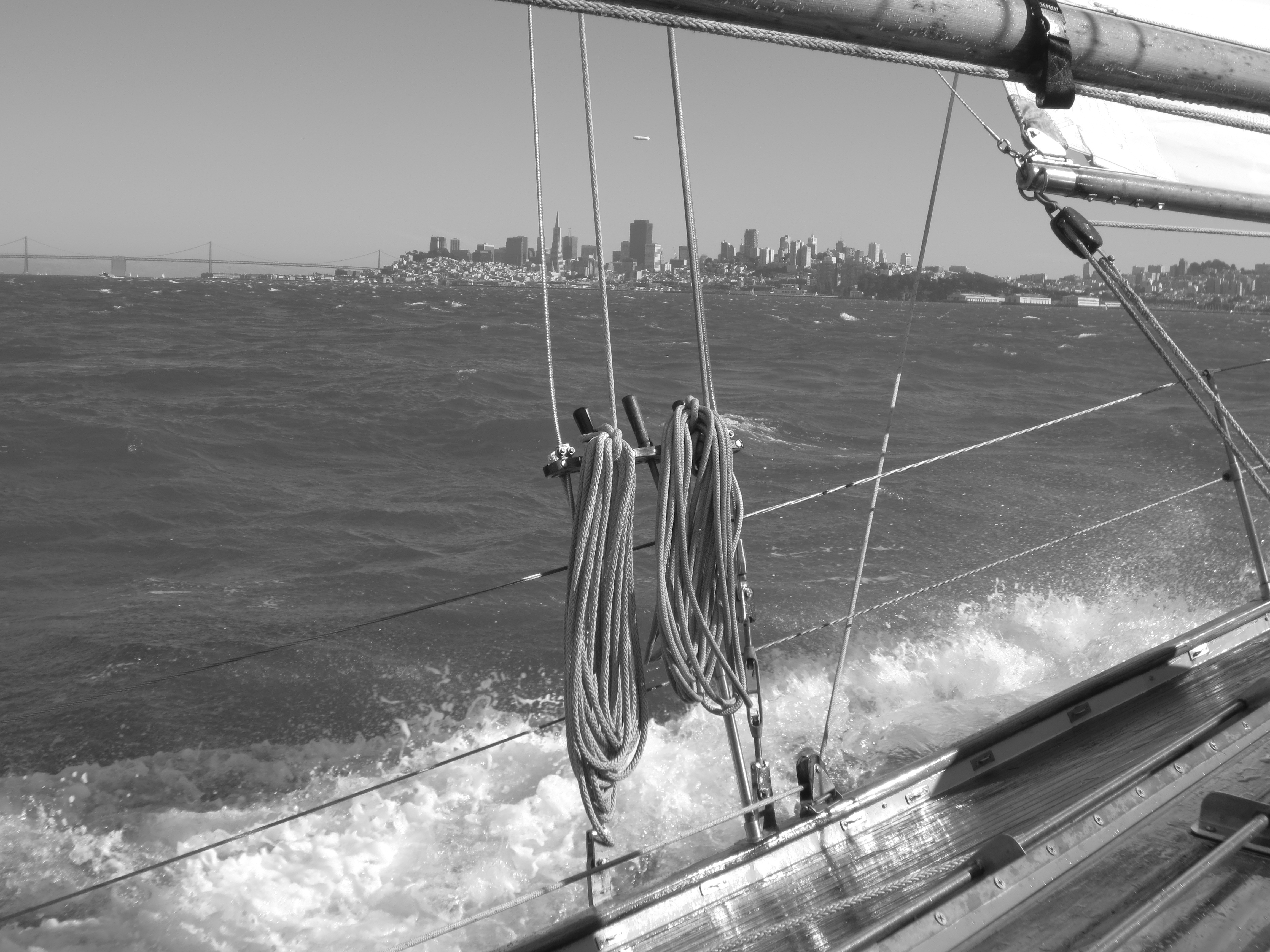
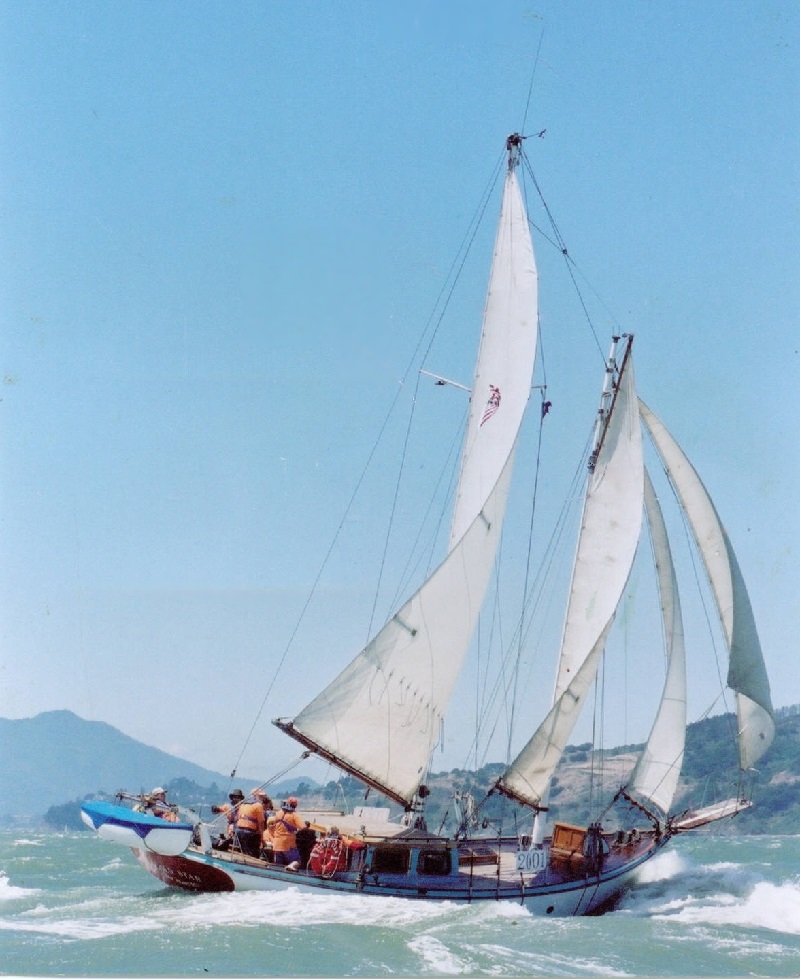
    Photo: The Schooner Gold Star, my home for most of the summer in 1974.

  • Wordrunner: Rites of Passage

    Wordrunner is accepting fiction, memoir and poetry, with the theme rites of passage  for an echapbook anthology to be published March 2018.

    The rites of passage theme includes any kind of passage through life, time or space.

    Submissions will be open from December 1, 2017 through January 31, 2018. *

    Submit up to three poems or a short story, novel or memoir excerpt, or personal essay (1,000 to 5,000 words). There are separate categories for each genre (poetry, fiction, nonfiction). Note that really long poems are not suitable for this venue. Send us your best.

    *Note from Marlene:  Polish your writing now, so you will be ready to submit during the submissions timeline.

    Payment: $100 for collections, $5 to $25 for poems, stories and essays published in the annual anthology.

    Submission fee: $2 for poems; $3 for prose

    All rights revert to authors.

  • Does your book concept have legs?

    Today’s guest blogger, Jerry Jenkins, has written a thorough article, “How to Write a Book: Everything You Need to Know in 20 Steps.”

    I love lists, so of course I was intrigued to find out more. And I love it when writers talk about passion.

    Listed below are a few of Jerry’s steps about writing a book, excerpted or paraphrased from his comprehensive list (link at the bottom of this post).

    • Where to start…
    • What each step entails…
    • How to overcome fear, procrastination, and writer’s block…
    • And how to keep from feeling overwhelmed.

    Establish your writing space.

    If you dedicate a room solely to your writing, you can write off a portion of your home mortgage, taxes, and insurance proportionate to that space. You can also write in restaurants and coffee shops.

     Assemble your writing tools.

    Try to imagine everything you’re going to need in addition to your desk or table, so you can equip yourself in advance and don’t have to keep interrupting your work to find things like:

    Stapler

    Paper clips

    Rulers

    Pencil holders

    Pencil sharpeners

    Note pads

    Printing paper

    Please click on the link below to see the rest of the list.

    Break the project into small pieces.

    Writing a book feels like a colossal project, because it is! But your manuscript will be made up of many small parts.

    An old adage says that the way to eat an elephant is one bite at a time.

    Try to get your mind off your book as a 400-or-so-page monstrosity.

    See your book for what it is: a manuscript made up of sentences, paragraphs, pages. Those pages will begin to add up, and though after a week you may have barely accumulated double digits, a few months down the road you’ll be into your second hundred pages.

    So keep it simple.

    Start by distilling your big book idea from a page or so to a single sentence—your premise. The more specific that one-sentence premise, the more it will keep you focused while you’re writing.

    Settle on your BIG idea.

    To be book-worthy, your idea has to be killer.

    You need to write something about which you’re passionate, something that gets you up in the morning, draws you to the keyboard, and keeps you there. It should excite not only you, but also anyone you tell about it.

    If you’ve tried and failed to finish your book before—maybe more than once—it could be that the basic premise was flawed. Maybe it was worth a blog post or an article but couldn’t carry an entire book.

    Think The Hunger GamesHarry Potter, or How to Win Friends and Influence People. The market is crowded, the competition fierce. There’s no more room for run-of-the-mill ideas. Your premise alone should make readers salivate.

    Go for the big concept book.

    How do you know you’ve got a winner? Does it have legs? In other words, does it stay in your mind, growing and developing every time you think of it?

    Run it past loved ones and others you trust.

    Does it raise eyebrows? Elicit Wows? Or does it result in awkward silences?

    The right concept simply works, and you’ll know it when you land on it. Most importantly, your idea must capture you in such a way that you’re compelled to write it. Otherwise you’ll lose interest halfway through and never finish.

    From Marlene:  Are you getting the idea that Jerry Jenkin’s article is a complete guide to writing a book?

    It’s worth a click: How to Write a Book: Everything You Need to Know in 20 Steps.

     

  • Thumbnail sketches

    Figure drawing classes often start with timed gesture drawings of initial poses lasting as short as five seconds before the model moves. Gradually the time increases to 10, 15 and 30 seconds. By the time you get to a minute, it feels as if you have all day to capture the pose on your sketch pad. The idea is to keep you free, dexterous and more focused on process than product. Such short bursts also keep you from taking yourself too seriously—otherwise, you’d quickly become frustrated. —“Train Your Eye for Better Writing,” by Tess Callahan, Writer’s Digest September 2017

    Tess suggests you can do the same with writing. “At odd moments throughout the day, in a diner or in transit, jot down gestures, expressions or snatches of overheard dialogue. . . . Whether or not these little moments make it into whatever story you are writing, they will deepen your awareness of human expressions, inflections and gaits.”

    Most visual artists don’t start on a big canvas without doing countless thumbnail sketches that help sharpen their skills and drive their vision. Writers can benefit from the same.—Tess Callahan

  • The Wax Paper

    The Wax Paper

    The Wax Paper is a broadsheet publication open to all forms of written word, image, and collected conversation. The first priority of The Wax Paper is to expand our understanding of the people we share the world with, and in doing so, expand our understanding of ourselves. Pieces will be selected on their ability to illuminate the humanity and significance of the subjects that inhabit the work.

    The Wax Paper was inspired by the life of Louis “Studs” Terkel. Our name is taken after his first radio show, The Wax Museum, a groundbreaking program, emblematic of his democratic fondness of variety, in which arias were played alongside folk ballads. We look to populate The Wax Paper with pieces that share the spirit inherent in Studs’ written work.  Work that required patient observation, remained steadfast in its empathy, and displayed genuine vitality.

    Studs Terkel’s voice and the voices he collected are a necessary antidote to the rising flood of overtures and platitudes gushing from advertisers, politicians, corporations, and zealots. Their whispers and broadcasts are often seductive and well-crafted. They tickle our fleeting desires and exploit our fears. The Wax Paper stands in direct opposition to their messages. We will oppose them by publishing pieces created with careful observation, empathy, and vitality.

    Submission Guidelines


  • The reader reads for dialogue.

    “The reader reads for dialogue more than anything.

    The writer’s habit is to describe, but the reader would rather hear the character.”

    —    Anthony Varallo, May 2017, The Writer