The Rumpus

  • The Rumpus

    How could you resist submitting to a magazine named The Rumpus!

    “The Rumpus is a place where people come to be themselves through their writing, to tell their stories or speak their minds in the most artful and authentic way they know how.” — The Rumpus

    “The Rumpus is dedicated to fostering new voices: We want to introduce you to authors you’ve never heard of before . . .”

    The Rumpus has boosted the careers of writers such as Roxane Gay and Cheryl Strayed. Maybe you’ll be next on the “boosted career” list.

    Submit!


  • Super Power. . . Prompt #342

    If you could have a super power, what would you choose?

    Why did you choose that super power?
    What would you do if you had that super power?

  • I don’t know what I’m doing . . .

    “Eventually, I stop looking back and being prissy about the beginning, but I’m pretty prissy about it for a long while. At a certain point, I only go forward. I allow myself to write a chunk where I can say, ‘You know, I don’t know what I’m really doing here. It’s a bit messy.’ I cut myself some slack. I can also write with blind spots where I say, ‘I know I’m going to have to figure this out later I don’t know what the answer is right now but that’s OK,’ and I can keep writing.” —Julianna Baggott

    Excerpt from “Pure Writer,” by Elfrieda Abbe, The Writer Magazine, January 2016

    Note from Marlene: When you get to a “stuck” place in your writing, type ‘xyz” or “something herein red at your sticky spot.You can come back to that unsettled place later and fix it. 

    Take a break. Get up, walk around, have a sip of water, look out a window. Then get back to your writing.  Just Write!


  • Emulate Writers to Improve Your Writing

    The following is an excerpt from “Train Your Eye for Better Writing,” by Tess Callahan, September 2017, Writer’s Digest:

    “I encourage my students to read deeply a broad range of writers, and after each one, try writing a few sentences in that wordsmith’s style. For example, take a signature line from William Faulkner. . . and, while keeping the sentence structure intact, pluck out all of the nouns and verbs and replace them with your own.

    Don’t place these emulated lines directly into your own writing. . . Instead, the idea is to practice emulating lines so that the many different styles can work their way into your brain, spin around in the blender of your subconscious, and serve to inform your own unique voice.

    No art form exists in a vacuum. The impressionists were friends and rivals who hung around in the same cafes, shared, traded and borrowed, and pushed one another forward. Dancers learn from dancers. New musical genres develop because artists keep responding to one another.

    The excellent book Reading Like a Writer by Francine Prose helps readers pull aside the curtain to notice what the author-magician is doing, to isolate how each one manages gesture, dialogue and character development, and to learn from others’ strengths and weaknesses.”

    Note from Marlene:  You can use any author’s writing for this exercise. Suggest using a genre that you want to write in. No matter what, Just Write!

    Another blog post that might be helpful:  How to be a better writer.
  • Writers are such heady creatures . . .

    “Writes are such heady creatures that we often forget our characters have bodies and senses. To fully imagine a life, one has to supply undeniable details about the exterior world so that when the novelist has to make the truly improbable leap to the interior world of another human being, the reader is primed to believe us.”  —Julianna Baggott

    Excerpt from “Pure Writer,” by Elfrieda Abbe, The Writer Magazine, January 2016

  • Flash fiction: What it is and where to submit

    “Flash fiction goes by many names: microfiction, sudden fiction, short-short, postcard fiction, etc. Its word count runs anywhere from 140 characters to over a thousand words, generally capping out at 1500.

    A short-short story has to handle all the fictional elements seamlessly within an extremely tight space. Give these extreme parameters, what makes a piece of flash fiction truly great?”  —“Jumpin’ Jack Flash,” by Jack Smith, May 2017, The Writer

    “It’s a great artistic expression,” states Kim Chinquee, author of Oh Baby Flash Fictions and Prose Poetry. “Key attributes [for flash fiction]: Language. Imagery. Surprise. Things that are left out. Elements such as tone and point-of-view can fill in for the plot. Rhythm. And a smashing title and ending.”

    Smith writes in this article, “Hundreds of publications are open to flash fiction.”

    Here are some of them:

    Atticus Review

    The Carolina Quarterly

    Smokelong Quarterly

    More places to submit flash fiction.

    Photo credit: christina Gleason 

  • Onomatopoeia . . . Prompt #341

    Using sound in our writing can be a way to add richness and memorable descriptions to our prose.  For this writing, first think of some sounds . . . . a train whistle . . . a fog horn . . . a cat’s meow . . . someone calling for help.

    Take a few minutes, if you can, to listen to the sounds around you right now. Think of some other sounds . . . the fizz from a carbonated drink being opened, the intake of breath when someone is surprised.

    As Jay Heinrichs says in the October 2011 issue of The Writer magazine, “Onomatopoeia:  Words that go splat”:

    “The Greeks came up with [onomatopoeia], which means ‘made-up name.’ The ono is an echo, imitating a sound for action.

    The ono . . . is a great way of bringing life to your storytelling. Things do not go “oops” in the night; they go bump. A master storyteller uses onos to make an audience feel the action.

    Include sound effects in your own stories. Rather than ‘He hit his head on the beam’ use ‘He cracked his head on the beam.’”

    Your turn . . . . the first prompt is an idea from Henrichs’ article, use sound in your writing:

    Prompt:  Pretend to sell a used car or a building or jewelry or clothing or a concept or an idea, or any item using words that match the item.

    Prompt: The one that got away.

  • Connect to the language of your work


    “You have to connect to the language of your work by paying attention to what you’re trying to say. Sometimes what you want to say doesn’t come easy. That’s fine. Give yourself time to make mistakes, to start again, to scrap good pieces that are going nowhere.” — Virgil Suárez


  • A tradition involving your grandparents. Prompt #340

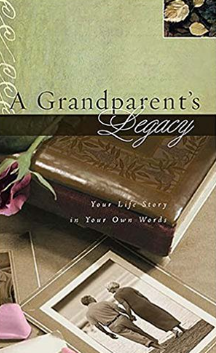
    “As the years slip past, we become more and more aware of what’s really important in life. With every passing season, we see more clearly and know more surely that the love and traditions a family shares are treasures beyond value.” — A Grandparent’s Legacy: Your Life Story in Your Own Words by Thomas Nelson

    It occurs to me (Marlene) that we think our lives are boring. We think “No one wants to hear about me.”

    But. . . aren’t you curious about your grandparents and your ancestors? Maybe you are lucky and know all about them. If you are like me, you know little about your family that came before you.

    So, write your stories. Write stories about your parents, grandparents, aunts, uncles. I bet someone will be interested. I bet more than one person will be interested.

    Write about a tradition involving your grandparents. Or about anyone in your extended family.

    Just Write!

  •  Nervous about sharing your writing?

    “Do you ever feel nervous about sharing so much in print?”

    Roxane Gay answers, “Absolutely. The only way I really have the courage or stupidity to share my writing is by believing that no one is going to read it. I have to tell myself that because I‘m actually very shy and private in real life. It’ hard to share such personal stories. But here I am!

    It’s difficult at this point to maintain the delusion. It was much easier when I was publishing in small literary magazines and nobody knew who I was.” Roxane Gay, September 2017 Writer’s Digest

    Note from Marlene:  So, even prolific writers are nervous about their work being made public.  Here’s a thought:  Don’t worry. Just write!

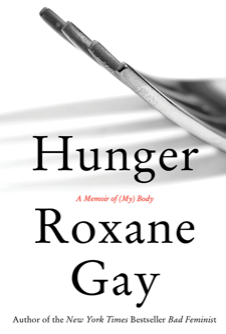
    Roxane Gay’s writing appears in Best American Mystery Stories 2014, Best American Short Stories 2012, Best Sex Writing 2012, A Public Space, McSweeney’s, Tin House, Oxford American, American Short Fiction, Virginia Quarterly Review, and many others. She is a contributing opinion writer for the New York Times. She is the author of the books Ayiti, An Untamed State, the New York Times bestselling Bad Feminist, the nationally bestselling Difficult Women and the New York Times bestselling Hunger. She is also the author of World of Wakanda for Marvel. She has several books forthcoming and is also at work on television and film projects.