Guest Blogger Margie Lawson: Give the reader a visual.

  • Guest Blogger Margie Lawson: Give the reader a visual.

    If you have written with me (Marlene), or if we have worked together on a writer/editor collaboration, you have heard me say “give the reader a visual.”  I’m so excited to discover Margie Lawson and her thoughts about visuals. The following is an excerpt from her May 20, 2016 guest blog post on Writers In The Storm.

    Margie Lawson – Guest Blogger:

    Most writers know Show Don’t Tell, but sometimes they think they’re showing when they are telling.

    Here’s my oh-so-easy check.

    Read the sentence that you think SHOWS the reader something.

    Ask yourself —- What’s the Visual?

    You may be surprised that the sentence doesn’t provide a visual.

    Wondering why I care?

    Wondering why I think you should care?

    Most readers have a video playing in their mind of the scene they are reading.

    If a writer TELLS instead of SHOWS, the reader’s screen goes blank. No imagery. No power.

    When the writer TELLS, they’re sharing what the POV [point of view] character is thinking. They’re intellectualizing for the POV character.

    The writer is not putting the emotional power on the page.

    TELLING:

    He looked angry.

    She seemed agreeable to the plan.

    He made a face.

    She didn’t say anything, but he could tell she was pleased.

    He knew she was nervous.

    She looked like she wanted to go with him.

    Jake seemed out of sorts.

    If you’ve read one of my blogs before, or taken one of my online courses, or consumed one of my lecture packets, you know I always provide examples that support my teaching points.

    Here comes the fun!

    Example 1:

    “Someone got hurt.”

    She studied Susan’s face. “Are you okay?”

    Whoops. What’s the visual?

    We’re missing the subtext. We need to know Susan’s facial expression.

    Example 2:

    The POV character is watching Sam.

    Sam moved around in an agitated manner.

    What’s the visual?

    Both parts of that short sentence are TELLING.

    How did Sam move?

    How does the POV character know Sam is agitated?

    What’s his facial expression?

    Example 3:

     Mike is the POV character.

    Traci seemed upset. “I need to leave.”

    Mike touched Traci’s arm. “Don’t leave. We need to talk.”

    What’s the Visual?  Mike touched Traci’s arm, but the reader doesn’t know how Mike can tell Traci is upset.

    The writer could SHOW, and share subtext, with Traci’s actions or face or voice.

    Writers don’t need to add SHOWING to every sentence or paragraph. But many sentences need those visuals. They share the emotion, hook the reader.

    Please click Margie Lawson’s Guest Blog Post to read the rest of Margie’s post on Writers In The Storm.

    Margie Lawson—editor, international presenter—teaches writers how to use her psychologically-based editing systems and deep editing techniques to create page turners. Margie has presented over ninety full day master classes for writers in the U.S., Canada, Australia, New Zealand, and on cruises in the Caribbean.

    To learn about Lawson Writer’s Academy, Margie’s 4-day Immersion Master Classes, her full day Master Class presentations, on-line courses, lecture packets, and newsletter, please visit www.margielawson.com.

    Writers In The Storm – very cool blog with a fabulous resources list.

    Writers In The Storm is a group of seasoned writers. We write in different genres and bring unique perspectives and strengths to the table.

    Along the way, we’ve discovered that there’s more to life than writing, and sometimes life can be the richest story of all.

    We chose Writers in the Storm as the name of this blog because every writer must weather the storm within: self doubt, rejection, deadlines and balancing our writing passion with everyday life. Not to mention the storm raging outside – the paradigm shift in the publishing industry.

    We began this blog in April of 2010. Over the years, we’ve narrowed our focus, to writing craft and inspiration. Many writers have helped us on the path, and we hope to give a hand back to aspiring writers.

    Writers in the storm


  • Stumped for writing ideas? First lines . . . Prompt #258

    Vivi with book 2011First lines from books can make good writing prompts.

    “There was death at its beginning as there would be death again at its end.” The Horse Whisperer by Nicholas Evans

    “Whenever my mother talks to me, she begins the conversation as if we were already in the middle of an argument.”   The Kitchen’s God’s Wife  by Amy Tan

    “I woke up to find the message in my left hand.”  Lucky Man by Michael J. Fox


    “I drove up to the restaurant and parked, then leaned back in my seat to think for a moment.” The Celestine Prophecy  by James Redfield

    “We used to stay in bed most of the weekend”  My Dream of You  by Nuala O’Faolain

    “Take care to chop the onion fine.”    Like Water For Chocolate  by Laura Esquivel

    Click here for more first lines for writing prompts.

  • The Condolence Note – What To Write

    A Kind Word Warms The HeartI was taught to write thank you notes. They’re pretty easy. “Dear Aunt Margaret, thank you for the sweater. I’m going to wear it to school.” Doesn’t matter if the sweater fit or not, or was the right color. Receive a gift. Write a thank you note.

    Condolence notes are harder. Sometimes we just don’t know what to say. Here are some ideas.

    Dear Friend, My sincere condolences at the loss of Henry. I miss him every day. Thinking of you with much love.

    Dear Elsie, I can only imagine how hard this must be. Please let me know what I can do.

    Hello Art,  How are you doing? You’ve had to deal with so much.   I’ll be near your house on Thursday. May I bring a meal? If you feel like visiting, we can have tea.

    Dear Aunt Susie, I am so sorry that Uncle Frank passed away. I remember how he always made me laugh.  I hope you are doing well. I think of you all the time. With love, Ann

    Dear Lucy, I just heard about George. I wanted to write earlier, but I was too upset and I didn’t know what to say. He meant so much to me. I miss him every time I have (name of food) or see (name of place).

    Hello Sam, I can’t believe it has been six weeks since Trudy passed away. I’m sorry I didn’t write sooner. I think of you often and hope you are doing well. Let’s have a phone visit when you are ready.

    Write from your heart. It doesn’t have to be a long letter. A short note will do, as long as it’s from the heart. Just write.

  • Green Hills Literary Lantern – Submit!

    Saturdays are “Places to Submit” on The Write Spot Blog. Today’s feature is the Green Hills Literary Lantern.   Check out the submissions page.

    ” Green Hills Literary Lantern is published annually, in June, by Truman State University. Historically, the print publication ran between 200-300 pages, consisting of poetry, fiction, reviews, and interviews, and was printed on good quality paper with a glossy, 4-color cover.  The digital magazine is of similar proportions and artistic standards. All views, conclusions, or opinions are those of the authors of the pieces and not necessarily those of the editorial staff or publishers. GHLL is indexed by the Index of American Periodical Verse (Lanham, MD:  Scarecrow Press) and The American Humanities Index.”

    Green Hills Literary Lantern

  • Antique inspires transportive writing . . . Prompt #257

    Singer Sewing MachineChoose an old object from your home. If you don’t have one, find a picture of an antique.

    Imagine that when you touch the object, you are transported to its original time and place.

    Where are you? What happens? How do you interact with the object? What emotions does the object evoke?

    Prompt inspired from Rochelle Melander, excerpt in The Writer Magazine, February 2012

  • What are you telling yourself?

    Guest Blogger Ted A. Moreno writes about description versus story and making up stories:

    Do you have a habit of making up stories? We know some people who have a tendency to exaggerate the truth. We think we know what is real. But do we really?

    Something that happened to me this morning:

    I was out for my morning walk when a police officer pulled up alongside of me in his car. He asked me my name and for my ID. He said that they had been looking for a missing person that had the potential of hurting themselves and that I fit the description. I gave him my ID, told him I wasn’t the one he was looking for and he drove away.

    Now, let me tell you a story.

    I was taking a walk, minding my own business, when a police car passed me. I nodded to the officer. A few minutes later he came back because he had nothing better to do and decided to harass me. He demanded my ID, and made up some story about looking for a missing person. I know he just wanted to mess with me because I nodded to him and they don’t like when you do that.

    What really happened?  Which is real? What is reality?

    We can spend days talking about reality, so why don’t we just try to stay in touch with reality. We want to deal with what’s real don’t we? We don’t want to waste our time dealing with what’s not real. Yet, the truth is, we do that all the time.

    I suggest that #1 is a description of what happened and that #2 is a story of what happened. See the difference?

    Those who study quantum physics have concluded that there is no objective reality “out there.” That means, for there to be reality, there must be you to describe it.  (Check out this video about the paradox of Schrodinger’s cat.)

    So we could say that reality is what we perceive, or experience. However, is it possible for two people to perceive the exact same thing, but have a different reality of that thing? Absolutely.

    The fact is that we each have our own individual reality. The reason that our personal reality can be so very different from someone else’s reality is not because of what we perceive, but because of what we make it mean. The meaning comes from us, making up stories. One of the defining characteristics of human beings is that we give meaning to just about everything by making up stories about it.

    In my work as a hypnotherapist, I help people see that we are all making up stories about what  happens to us. Because we are always making up stories, we believe them, and we can become “hypnotized” by them.

    Our reality consists of two parts:  There’s what happened, and then there’s us, making up stories about what happened. There is perception, and then there is interpretation.

    In my case, there’s what happened, (a police officer stopped me and asked my some questions) and then there’s my story of what happened (a police officer harassed me). The problem is, it’s really easy to get the two confused. We believe that our story about what happened is what happened, and that becomes our reality. Then we make decisions based on a story that for the most part, is made up.

    Meaning Making Machines Making Up Stories

    The fact is, humans are meaning making machines. We are always  making up stories about what happens to us, we can’t help it. That’s what gives each life its unique flavor. What that flavor tastes like will depend on what kind of stories you are making up. “My business failed, that means I’m a failure” has a pretty bitter taste. On the other hand “Because my business failed, I learned something that will help me succeed next time” is a little more palatable, as well as being infinitely more useful.

    Stuff “happens” all the time.  Most of the time, we can agree about what happened. Up to a point.

    We can agree that the weather is hot. But we’re not going to stop there; we are always making up stories about the weather!  We have to make up a story about what happened, it’s our nature to do so. For example:

    What happened: The temperature outside is hot.

    Your story of what happened might be: I’m going to suffer today because I hate the heat. Or, if you are a kid, you might make up a different story: It’s hot so we get to swim in the pool!

    Sometimes though, the stories we make up can be really lousy:

    WH (What Happened): I asked mommy to buy me a pony and she didn’t.

    SWH (Story of What Happened): Mommy didn’t love me.

    or

    WH: I don’t live in a mansion like the people on TV.

    SWH: I’m a loser!

    One of the biggest obstacles people have to personal happiness is that they are making up stories that are really crappy about what happened to them!

    It’s very easy to believe that what happened and the story of what happened are the same thing, but they rarely are. And if we tell this story over and over repeatedly, we can “hypnotize” ourselves into believing that the story is what happened, and that our story is reality, when all it is us making up stories which may or may not be accurate.

    If that’s not bad enough, we act as if our stories are real. In other words, we base our behavior on a made up story, sometimes with dire consequences.

    For example:

    WH: Mommy didn’t buy me a pony

    SWH: Mommy didn’t love me.

    Behavior based on your story: I resent my mother and we don’t talk. (I want to make it clear that this is just an example. Of the eight kids my mom had, I’m her favorite. That’s my story and I’m sticking to it!)

    WH: I don’t live in a mansion like the people on TV.

    SWH: I’m a loser!

    Behavior based in your story: Since I’m a loser, I’ll break the law to get what I want.

    One of the most important skills we can learn is to distinguish between what happened, and our story of what happened, because the stories that we make up will affect our lives, for better or worse.

    The quality of our lives is not determined by what happens to us, but by the stories we tell about what happens to us. What we do in our lives will in a large part be determined by the meaning we attach to our life’s circumstances. If we can become aware of those stories and how they affect our lives, then we have a choice. We can begin making up stories that empower us, instead of making up stories the dis-empower us.  The meaning of our lives is made up by us, so it’s all invented anyway. We are the creators of our lives. The only question is, what do you want to create?

    Much of my work with my hypnotherapy clients involves helping them identify stories they are telling themselves that are disempowering and downright scary. These stories rob a person of confidence, self esteem and aliveness, while perpetuating fear, doubt and unhappiness. The first question I ask of them is: “Ok, something happened to you, but what’s the story you’re making up about that, and what is that doing for you?”

    I help people to stop making up stories that do nothing for them and I use hypnosis to help people’s minds become comfortable with making up stories that speak to their courage, strength, intelligence and ability to overcome challenges.  It doesn’t take that long to start telling a new story. It all depends on how invested you are in your old story.

    So the next time you feel anger, or fear, or doubt or sadness, ask yourself: What is the story I’m telling that makes me feel this way? You can choose to tell a different story, or you may want to keep that story for now, and that’s ok. It’s your story, after all. We all have one.

    In conclusion, let me suggest that you don’t believe a word I’ve written. It’s just my story, and it works for me. I hope at least some of it works for you as well.

    Ted A. Moreno

    Originally posted on The Moreno Method Blog on March 30, 2016

    Moreno.cdNote from Marlene: I have used Ted’s relaxation cds for years and I highly recommend them for relaxation and de-stressing.

    Hypnosis Audio Recordings By Ted A. Moreno, Certified Hypnotherapist

    Hypnosis audio recordings in the form of CDs and mp3 downloads are a popular and effective way way to reinforce positive changes in your life. By listening to these recordings, you can easily go into a hypnotic state and benefit from  positive suggestions reinforcing relaxation, motivation and the desire to reach your goals.

     

  • Glimpse through the fog. Prompt #256

    FogWriting Prompt:  Glimpse through the fog.

    Set your timer for 15-20 minutes. Write whatever comes up. Keep writing until the timer rings, or until the fog lifts.  Yeah, that might take awhile.

  • Which Oz character are you?

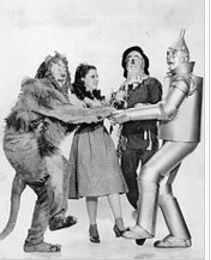
    Dorothy and friendsAs you know, there are two sides to every story (sometimes more, depending on the number of characters involved).  Let’s look at The Wizard of Oz, the movie version, with different perspectives,   different points of view.

    The Wizard: Wise and knowing? Or a fraud?

    Dorothy: Sweet and innocent? Or a spoiled orphan?

    Uncle Henry: Owner and Farm Manager? Or just a guy doing what he likes to do?

    Auntie Em: Home Sweet Home and apple pie? Or bossy?

    Hunk the farmhand/Scarecrow:  Simple minded? Or observant and resourceful?

    Hickory the farmhand/Tin Man: A hunk of machine parts? Or kind and sensitive?

    Zeke the farmhand/ Cowardly Lion: A coward? Or a leader?

    Miss Gulch/Wicked Witch of the West: Mean and ornery? Or misunderstood?

    Glinda The Good Witch of the South: Too good to be true? Or conniving (why didn’t she tell Dorothy about the shoes when they first met?)

    Toto: Just a frolicky little dog? Or pesky?

    The Winged Monkeys: Horrible? Or loyal?  Horrible and loyal?

    When developing fictional characters, consider their strengths and their weaknesses; their triumphs and their faults.  Make them feel real, like the characters in The Wizard of Oz.

    By the way, which Oz character do you identify with?

    The Wonderful Wizard of Oz Character List

    7 Theories Of What The Wizard of Oz Is Really About


  • Use emotional experience for fiction

    Vu Tran“Vietnamese American Vu Tran says when he writes fiction, he is less concerned about using any ‘factual experience’ he has had, but instead seeks to relate the ’emotional experience’ he has lived.” — The Writer Magazine, December 2015

    When I read this, I sat up and paid attention.

    “Aha,” I thought, “Brilliant idea to tap into the emotional element of an experience and bring that into fiction writing.”

    Vu Tran used a traumatic event in his life to explain a pivotal character in his fiction.

    “. . . fiction writers can often have more impact if they draw on their emotional experiences rather than just relating what actually happened.”

    Vu Tran used this philosophy when writing Dragonfly (set in Las Vegas) while in Chicago. “. .. the distance from Las Vegas worried me at first. But I decided the emotional memory of Las Vegas  . . . allowed me to recreate the city in a more realistic way than if I was taking notes in front of the casino doors.”

    Your turn. Write about an emotional experience. For ideas, click on Write Authentically About Difficult Subjects and How To Write Without Adding Trauma.

    Use the details from that writing to develop character and scene when writing fiction.

    File all of this writing where you can access it when you are ready to use it in your writing.


  • When we accumulated silent things within us . . .

    Bachelard“What is the source of our first suffering? It lies in the fact that we hesitated to speak….it was born in the moments when we accumulated silent things within us.” ― Gaston Bachelard

    I first learned of Gaston Bachelard from my writing teacher, Terry Ehret, with her response to my poem, “What I Learned.”

    Terry wrote on my paper, “Here’s a quote from Gaston Bachelard (French philosopher) that your poem makes me think of.”

    I’m no poet, but it’s been fun to dabble.  Click on Prompt #221, to read “What I Learned.”  (scroll down)