What about “They?” Arlene Miller answers.

  • What about “They?” Arlene Miller answers.

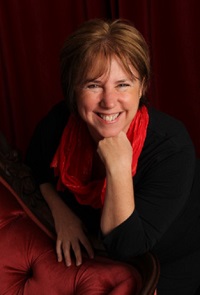
    Arlene MillerGuest Blogger Arlene Miller, The Grammar Diva, gives us a sneak preview into her recently published second edition of The Best Little Grammar Book Ever!

    If you are a member of the nerdy world of grammarians, you know that there are “controversial” grammar topics. One of those is the use of the Oxford comma. Another is the use of the singular they.

    I use the Oxford comma, and I don’t use the singular they. But both these issues are up to you. Let’s talk about the singular they.

    They is a pronoun. A pronoun is a word that stands in for a noun. We know that they is third person plural. Third person singular pronouns are he, she, and it.

     Now how many times have you said, or heard someone say, Everyone is bringing their book to the meeting or something similar? Let’s pick that sentence apart:

    This is an issue of agreement: a singular subject has a singular verb form to go with it. And a singular noun or pronoun will have a singular pronoun of the same gender stand in for it. Everyone sounds plural, but it is singular. You can tell because you use a singular verb with it; you wouldn’t say Everyone are bringingBut you would say They are bringing because they is plural. Okay, so we have a singular subject (everyone) and a matching singular verb (is bringing), but what about their book? Their is plural. It doesn’t agree.

    Now if we said Everyone on the girls basketball team has her uniform, we would all be happy.

    But if everyone refers to a mixture of male and female, or if we simply don’t know, what do we do? Well, we used to just say his or her and be done with it. Actually, before that, we probably used to just say his and be done with it — but that is not politically correct and will not do any longer.

    What to do . . . what to do . . .

    Well, most everyone just uses their. It is easier to use one word than that clunky old his or her. The English language, so far, doesn’t have a word that can stand in for either a singular male or female.

    The sentence Everyone is bringing their book to the meeting is now acceptable and considered correct. Most people use it and have been using it, without knowing or caring, forever. But many people, especially when making a speech, do use he or she, or his or her

     Many grammarians and language purists are horrified by the use — and even more, the acceptance — of the singular they.

    My advice is to rewrite your sentence to avoid the issue entirely. It is usually really easy to do: Everyone is bringing a book to the meeting.

    Problem solved . . .

    Six years ago, I published my first book, The Best Little Grammar Book Ever!. Since then, I have written five more grammar books and a novel. Now, a second edition of that first book, with a new format, a new subtitle, and new information has been published. New information, you might ask?  Does grammar change? Yes, slowly, but things do change, although there are always those (me, among them) who would rather stick to the “rules”!

    Arlene Miller, The Grammar Diva, is also a blogger, copyeditor, speaker, and former English teacher.  She is a member of Redwood Writers and Bay Area Independent Publishers Association, where she has been a featured speaker.

    Book Launch for the Second Edition of The Best Little Grammar Book Ever! Speak and Write with Confidence/Avoid Common Mistakes  will be in the form of a Grammar Workshop at Petaluma Copperfield’s Books on Saturday, August 6 at 1 p.m.

  • Unplug . . . a moment for yourself. Prompt #268

    “We often rate our days by what we’ve accomplished, applauding ourselves for a workout logged, an errand completed, a task crossed off. But consider grading today on a new curve. Give yourself credit not for doing but simply for being—for taking time to sit alone, listening, daydreaming, creating space to think. Only then can you connect with the most important person in your world: yourself. “— author unknown

    Imagine you have all the time in the world. There isn’t anything you have to do. Whatever needs to be done in your real world is magically done for you. In this dream world, you have no worries and no cares.  You are able to unplug and relax into the softness and enjoy the moments of bliss.

    As you enjoy this time of freedom, you connect with the most important person in your world: yourself.

    Unplug

    Writing prompt:  If you could unplug, what would you do?  How would you spend your time?


    When you are finished . . . Take a few minutes to ponder . . .

    What’s stopping you from doing these things?

  • EatingWell Welcomes Freelancers

    EatingWell magazine is looking for articles about cooking, nutrition science, and the origins of food and social issues related to food networks, and welcomes ideas from new writers.

    “EatingWell’s voice is journalistic and authoritative; it speaks to both men and women. We cover nutrition with a newsy, science-based approach.”

    Before submitting, become familiar with EatingWell magazine and departments. “It’s difficult for us to contract with someone to write a story—no matter how brilliant the idea is—if it doesn’t fit into a specific department in the magazine. Send us ideas for specific sections in the magazine.”

    “You increase your chance of scoring an assignment with us if you 1) develop your pitch following the format for past columns, and 2) explain why the proposed topic should be covered in a specific issue.”  Go to EatingWell Submission Guidelines for examples and pitching tips.

    EatingWell welcome freelancers.
    “In this front-of-book section, we feature seasonal picks and the latest trends in food and health (think: food policy, sustainable agriculture, wacky healthy new eating practices, etc.). While some of the Fresh section’s regular elements are written in-house or by regular contributors, much of the section is open to freelancers. Items generally range from 150 to 350 words. This is a section in which we like to try out new writers. Writers interested in contributing to the Fresh section should have a strong background in science, health and/or food reporting.

    FRESH Food: These pages are dedicated to celebrating food. Could be a restaurant, a farm find, a seasonal food, a great farmers’ market or something trendy in the food/drink market. Sustainable agriculture and food origins pieces could fit into this section.

    We’ll occasionally run something like “Local Hero in the News,” highlighting an individual (or group) who has a timely or newsy event or movement that promotes values of sustainable agriculture, food justice, nutrition education, food safety, environmental consciousness, animal welfare (as it relates to food) and/or healthful eating practices in his or her (or their) local community. Tell us about the results: What has this person/group accomplished? Who have they helped? What makes them unique?

    FRESH Life: Here we will be getting more into how food and eating intersect with lifestyle, such as travel, beauty, books (not diet or cookbooks) and gifts.

    FRESH Thinking: This page covers several facets of one current food-related issue, controversy or movement.”

    Note from Marlene: If writing for EatingWell interests you, do go to their website for more ideas of what they are looking for, plus contact information.

    EatingWell

  • You have survived. Prompt #267

    Pink LadiesThe pink ladies are about to bloom in Northern California where I live. Their proper name is Amaryllis belladonna.

    “A plant gone wild and therefore become
    rugged, indestructible, indomitable, in short: tough, resilient,
    like anyone or thing has to be in order to survive.”   —  The Ubiquitous Day Lily of July by David Budbill


    This last sentence in The Ubiquitous Day Lily of July reminds me of our pink ladies and is the inspiration for today’s writing prompt.

    Write about something you have survived.

  • Ingram Spark? Bookbaby? CreateSpace?

    Shirin BridgesGuest Blogger Shirin Bridges sheds light on Ingram Spark, BookBaby, and CreateSpace.

    The following is an excerpt from Shirin Bridges’ June 24, 2016 blog post on Goose Tracks.

    I was recently asked for the pros and cons of Ingram Spark vs. BookBaby. The answer, I quickly realized, is a complex one, greatly dependent on the particular publishing goals for the book. I also thought that in any decision tree, Amazon’s CreateSpace would have to rate a mention. So what follows is my attempt to delineate the decision tree I would adopt in choosing between these three services . . .

    [Note from Marlene: For the full post, please go to Shirin’s informative blog, Goose Tracks].

    1. How important are bookstores to your sales strategy?
      If NOT VERY, skip to 4.
      If VERY, keep reading.

    Self-published authors will find it almost impossible to get wide distribution in bookstores. Period. The reasons are legion but boil down to two words: workload and risk. Most self-published authors aren’t represented by distributors that bookstores are already doing business with, and there’s little incentive to slog through the paperwork to set up a new account or to take your books on consignment and handle you outside the system.

    . . .  bookstores might be a valid cornerstone of some self-publishers’ sales strategies. A good example would be if you have a book with a very specific market that can be reached through very specific bookstores. Take Katy Pye‘s Tracking the Flash: My Lighthouse Travel Log. Where would you sell that? Gift shops attached to lighthouses, or bookstores in the neighboring towns. If you’re a buyer in one of those stores . . .  You’d probably at least take a peek at something so specifically lighthouse-y.

    You may also decide for emotional reasons that getting into bookstores is important to you. It’s perfectly valid to feel that if you’re going to go to all this trouble to write, fund, and publish a book, you’re going to enjoy a book launch party and the pride of having your book on a shelf in your local bookstore(s). Depending on your relationship(s) with your local bookstore(s), this might be a real possibility and may even lead to a reasonable number of sales. Amanda Conran, for example, was guaranteed a launch party at Book Passage in Corte Madera, for the excellent reason that she works there. She sold around 120 copies of The Lost Celt on her big day. That’s about half the total sales of most self-published titles . . .

    . . . if you decide that bookstore sales are important to you, then drop CreateSpace right off the bat. Most independent bookstores will not knowingly take a CreateSpace book. They hate Amazon that much, and Amazon doesn’t help out by playing ball either: CreateSpace offers roughly half the discount (read profit margin) that bookstores are used to getting from other distributors and publishers.

    Ingram, on the other hand, already has a relationship with just about every bookstore in the USA and an established (and accepted) discount schedule. Within the industry, Lightning Source, Ingram’s original print-on-demand offering, was thought to provide much better production quality than CreateSpace—better color handling, more trim sizes, fewer typographic anomalies, etc. Spark has probably inherited some of this perception as a halo effect, even though its production process is different. (Lightning Source accepts printer-ready PDFs, forcing someone to pay attention to typography—or so one would hope; Spark, like CreateSpace, uses a “meat grinder”—an automatic formatting system that, in CreateSpace’s past, at least, was prone to errors.)

    The Amazon stigma, if you’re targeting bookstores, is a compelling argument for favoring Ingram Spark. But how do you choose between Spark and BookBaby?

    1. Do you want someone to produce your book for you?
      If you want help, keep reading.
      If you think you can do it yourself, skip to 3.

    As Ingram wholesales for other book producers, you can benefit from Ingram’s bookstore relationships without producing your book with Ingram. BookBaby is a popular option.

    When authors gush about their experiences with BookBaby, and quite a few of them do, it’s usually because BookBaby makes everything so easy. You pay them; they take care of it. Then, once your books are produced and in all the promised sales channels, they are out of the picture. No ongoing royalties, etc. It’s a straight “for fee” service.

    They are credited with an excellent support staff who actually answer the phone. They provide easy, one-shop access to professional book designers and editors. (BARNT BARNT, that’s my alarm system blaring: for a professional-quality book, you need both of these services!) If I wasn’t a publisher myself and didn’t have easy access to designers and editors, etc., I’d probably consider using BookBaby.

    1. Do you think you can produce a book yourself?
      On the other hand, some self-publishers don’t need BookBaby’s menu of services. Some are already working with editors. I’ve been retained by a few of them, and these clients are a determined bunch who want to be more than authors—they want control of the entire publication process. (I actually brought one an invitation to submit from a traditional publisher, and he turned it down because he wanted to retain all creative control.) They want to pick their own illustrators and/or designers and have control of the cover art. They relish the challenge of marketing. They are digitally adept enough to deal with the meat grinders without suffering dangerous spikes in blood pressure. If you have your stable of professionals in hand and don’t need much additional production help, Ingram Spark is the most direct route into the Ingram database. As Ingram is America’s largest book wholesaler, that’s the catalog most independent bookstores will use when placing an order.

    Be very clear that Ingram Spark, BookBaby, and nearly all similar services offer production, fulfillment, and easy ordering of your books, but although they use the word “distribution,” they are not full-service distributors. Industry distributors like Perseus and Independent Publishers Group have sales forces. In theory at least, their sales reps will go out there and plug your book. (In reality, their sales forces have thousands of books they can plug; they will plug what they think they can sell.)

    Ingram and BookBaby, et al., do not offer sales services. They do not sell to the trade. YOU have to do the work to get a bookstore to place an order. Although you will be in the Ingram database, that database during any given season includes thousands upon thousands of titles, so unless the bookstore is actively looking for it, your book will not be found.

    1. Are you primarily interested in online sales?
      . . .  If your intent is to go online-only, the choice comes down to Amazon vs. someone like BookBaby.

    BookBaby’s advantages were covered in #2 and they apply whether or not you’re interested in bookstores . . .  BookBaby will take care of production of the print-on-demand (POS) book and conversion of the e-book, and usher both into the appropriate retail channels, dominated by Amazon for POS, and Kindle for e-books. They’ll charge you a fee for their services, and then you will take all profits minus the cut to your retailers.

    Amazon is a little trickier in that not only do you have to handle print book production yourself, you have to handle ebook production also. Even if you are not intimidated by this, there will still be two separate Amazon companies with their own procedures that you’ll have to deal with: CreateSpace for the POS book; and Kindle for the e-book. If you would like your e-book available for every device, you will also have to convert your book into multiple e-book formats and distribute them separately to non-Kindle platforms like iBooks and Kobo.

    One plus of persevering and tackling CreateSpace and Kindle yourself is that you can take advantage of Kindle’s Select program. This gives you higher royalties and various marketing perks in exchange for a period of exclusivity—at a minimum, 90 days. Another advantage is that your POS books are directly in the Amazon system. You don’t have to ship books to them; they print them right off their own printers. But one of the most compelling reasons to consider the CreateSpace + Kindle bundle is profit. By not paying the likes of BookBaby, you can invest less in the production of your book. (Although, repeat repeat: I would really urge you to pay for a book designer for the cover, a professional editor, and ideally a separate copyeditor—so any apparent savings may be a false economy.) CreateSpace is also thought to generally offer lower per-book prices than Ingram Spark, although costs vary with page count and format. When you get into the publishing business, you will be bowled over by how thin the margins are, so any penny saved is a penny earned.

    OK, at this point I’m not sure if I’ve bored or depressed you into a stupor or confused you with all the branches of my decision tree, so I’m going to close with one last question:

    1. Do you really have to choose between them?
      Going back to the original question of whom I would choose, BookBaby or Ingram Spark, and having introduced Amazon as a third candidate myself, here is what I would try if I were a self-publisher with a commercial fiction novel. If, say, I had a romance, or a piece of sci-fi, or a mystery—all genres that do well digitally—and I were a first-time publisher with few professional contacts, I would:

    Go to BookBaby and have them help with design and editing, because, as I hope I’ve made abundantly clear, both are necessary to give your work its best shot, and unless you are from an affiliated field, you might not know what good design and editing is. BookBaby not only gives you access to those services, but their suppliers have been vetted, and from what I can see, BookBaby knows a thing or two about professionalism and design, so “better than nought” as they say in northern England (pronouncing the “nought” as “nowt”).

    Have them distribute your POS book, including to Amazon and Ingram. You will get the world’s largest online retailer, and the world’s largest bricks-and-mortar wholesaler as sales channels—recognizing that the responsibility for sales (pushing consumers to those channels) falls 100% on you.

    Order 100 (more if you’re really brave) print copies and sell them hard to friends and family. Take sample copies into all the independent bookstores within a 50-mile radius (my personal definition of “local”) and try to negotiate consignment deals. Do the math carefully here because you should expect to give away a commission of at least 40%. That may leave you with little profit.

    At the very least, negotiate a book launch party with the best independent bookstore within that radius. I work very, very hard at bringing my own crowd, knowing that I will get exactly three members of the public who happened to wander in.

    Have lots of photos taken signing books. This is your author’s moment, and most self-published authors will look back and realize they spent a few thousand dollars on it, so suck as much joy out of this marrow as you can.

    In the meantime, happy writing!

    Note from Marlene: Please go to Shirin Bridges’s blog, Goose Tracks, for the rest of her amazing and thorough report on this topic.

  • Something you will never forget . . . Prompt #266

    Today’s prompt is inspired by Hal Zina Bennett, Write From The Heart

    Pink lemonadeFor some people, summer means sipping cool drinks. For others, summer might mean sitting around a campfire after a day of hiking, swimming, exploring. Summer might mean telling stories —tall tales or short ones— while lounging on a porch, a patio or a boat deck. There is a rhythm to summer, unlike any other time of year.

    Summer ’round the campfire brings out story tellers. The shaman storyteller of ancient times, embraces his own life experience, tells stories to the community that gathers in a circle around him, a fire blazing at its center. In the telling of what most deeply touched his life, the shaman helps others to see that they are not alone. And in the process both storyteller and listeners are healed.

    Imagine now, that you are sitting ’round a campfire, very comfortable with the folks you are sitting with. It’s story telling time. Each person tells a story about a time that was so meaningful, it is something they’ll never forget.

    Prompt: Write about something you will never forget.   Remember: first thoughts are where the energy is. If you can, start writing where your first thoughts take you. If that becomes difficult, write about another time, another story. And when you are finished writing, please take a few minutes to do some clearing (described below).

    Right after writing: Take a deep breath in. Hold for a moment. Let it out. Shake out your hands. Another deep breath in. Let it out.

    Again: A deep cleansing breathe in. Hold and release.

    If you wrote about something that leaves you feeling wonderful, keep it. Hold it close to your chest.

    If you wrote about something that leaves you feeling uncomfortable . . .  release it. Gather your thoughts and your words. Send them up in the campfire smoke. Send those thoughts up with the smoke.

    We’re going to replace the space that those thoughts occupied with an image that comforts you.

    Choose an image that is comforting to you. Any image you like, as long as it soothes. Give it a color.

    Fill the space in your heart with this image and the color.

    Take a deep breath in. Hold for a moment. Let it out. Stretch. Another deep breath in. Hold and release. Congratulate yourself. Even if you didn’t write, you may have thought about what you could have written. Maybe, when you have time, you will write on this topic: Something you will never forget.

  • The California Sunday Magazine

    California Sunday MagazineThe California Sunday Magazine is looking for freelance writers, photographers and illustrators.

    From their website:

    The California Sunday Magazine roams across California, the West, Asia, and Latin America, telling stories for a national audience. We also produce a live event series, Pop-Up Magazine. We explore science, business, entertainment, politics, technology, art, social issues, sports, food, and more. We’re curious about everything. We publish stories regularly on the web and in print — delivered monthly with select Sunday copies of the Los Angeles Times and the San Francisco Chronicle.

    Interested in working with us? Check out our job openings.

    Writers

    We’d love to hear your story ideas. We’re not hiring staff writers or contributing writers yet. But we look forward to working with a wide network of independent, freelance writers. Our rates for reported features will be competitive with national print magazines. And you’ll work with exceptional editors. Send a note to writers@californiasunday.com to receive our Contributor Guide.

    Photographers and Illustrators

    Photographers and illustrators are welcome to share their work for consideration. We are open to seeing a variety of work as we assemble a roster of talented contributors and hope to be a meaningful outlet for artists for a long time. Send a note to artguidelines@californiasunday.com to receive our Contributor Guide for photographers and illustrators, as well as very occasional emails that will let you know if we’re developing a special issue or looking for work on a particular theme.

  • Note to your younger self . . . Prompt #265

    Before you start writing on this prompt, how about a little relaxation?

    Sit back. Relax into your chair. Both feet flat on the floor. Hands resting lightly.  Take a deep breath in. Relax it out. Roll your shoulders in a circle.  Other direction.  Drop your chin to your chest and roll your head in a circle. Other direction.

    Take a deep breath in. Ease it on out.

    Now, We’re going to time travel back in years.

    Time Machine

    Think back to the person you were ten years ago. See yourself as in a snapshot.

    Now go back to when you were 25. Remember what you looked like. What were you doing? Just take a moment to remember yourself at 25.

    Hand writing in journalNow go back to when you were twenty.

    Take a look at yourself when you were 15.  What were you like at 15? What influenced you?

    When you’re ready, write a note to your younger self.

  • Call the Authorities!

    Guest Blogger Elaine Silver: How to show your expertise in your writing.

    Think about any book that you have read that really grabbed you. Take some time to read parts of that book again with the idea in mind of writerly authority.  Once you start looking for it, you will be dazzled at the facility with which the author commands the story.

    You can write like that too.

    Let’s examine the word authority. What feeling do you get reading the word “authority?” Do you feel rebellious, like you don’t want to listen to someone else? Do you feel like you want to immediately say “no” to a request? If you answered yes to these questions, then you think of authority as something that subjugates you.

    Or conversely, when you think of authority, do you feel secure knowing that someone else knows more than you do about something? Do you envision someone who can give you guidance and advice? Does having someone around in authority make you feel like all is handled?

    Or do you have both reactions to the word—positive and negative?

    It is my experience that many people are ambivalent about authority—both as it is exercised by others and by themselves. We seem, as a culture, to be confused about it. To whom do we give authority and why? When do we claim it ourselves? This ambivalence is understandable since we live in a heterogeneous culture with many value systems and many people claiming power over us who may not have our best interests at heart.

    What does this have to do with writing, you may ask? Well, actually, everything.

    The word authority comes from the word  “author.” From the Latin:  auctoritatem (nominative auctoritas) “invention, advice, opinion, influence, command,” from auctor “master, leader, author.”

    In my work as an editor, one issue that I deal with frequently is a writer who is reluctant to become an author, a leader—someone who is actually claiming authority over what the reader is reading and understanding.

    I can tell you that the writer/author/leader who does not claim authority might as well hang up her keyboard and call it a day.

    Here are two examples:

    I recently helped a vocal coach with a book about the technique she has developed to teach her singing students. She is without question an absolute authority on teaching singing and her students have had remarkable results using her methods. However, the initial version of the book did not reflect these facts. She backpedaled on many of her explanations of her methods. She wrote in passive sentence structures

    I asked her to describe to me how she acts in her studio sessions with her students. She painted a picture of herself as a confident leader who creatively deals with every issue that comes up and inspires her singers to move past their perceived limitations to achieve vocal prowess that they did not think possible. Armed with that knowledge, we changed her book and her writing to reflect this powerhouse of a teacher. Now her message comes through beautifully and forcefully, as it should.

    Another client of mine who is writing a memoir found herself awash in a powerful story but she was writing it as if she had no idea what was going on. This made me, as surrogate for the reader, uneasy and insecure. How am I supposed to trust this author if she doesn’t trust herself?

    This writer made the mistake many writers make. She did not take charge of the story and instead let her main character (her younger self) run the show. And the show she ran was a meandering and bumbling mess, much like her life. The author was confusing the actions of her main character with her own role as author. Once she began to differentiate between herself and her protagonist, the book gained cohesion and clarity while story remained an account of chaos and confusion. What a lovely achievement!

    No matter what the story is or who the main character is, the author must act as captain and keep steering the ship with a steady hand even in unruly seas.

    We read because we want to see the world through the eyes of the author. We want to know what he knows. We ask and expect her to be our leader and show us some new terrain. We expect our author authority to navigate us safely into and through an uncharted, exciting land that we have not experienced before.

    Know your story. Know the journey you want to take your reader on. Lead with confidence. Write with Authority.

    Elaine Silver.200Elaine Silver helps writers realize the greatest potential of their writing by discovering their true intent and translating it to the pages of their books. She has written on topics as varied as choosing the right college to the innovations in green building techniques. Elaine’s specialty is seeing how your message will be perceived by others and guiding you to create your best work.

    Elaine will be one of the editors on the Editors Panel at Writers Forum on July 21, 2016, 6:30 pm to 8:30 pm at Petaluma Community Center.

  • Here and There. Prompt #264

    Today’s writing prompt comes in two parts.

    Before writing on this prompt, I have a suggestion.  Do a little relaxation first. Just for a few minutes. Use your own method or follow this method:

    Relax into your chair. Feet flat on the floor. Hands loose, resting on your thighs.

    Take a big, deep breath in, feel your chest expand.  Let it out like a deflated balloon.

    Another deep breath in. And release.
    This time, when you take a deep breath in, bring your shoulders up to your ears. Shrug them down hard with the out breath. Another one.

    Let your head drop forward on your chest. Rest there for a moment. Rotate your head in a circle. Opposite direction.

    As you read about the next prompt, please place the palm of your writing hand on any place in your body that calls for attention. If you can’t put your hand there, bring your breath there. Take deep breaths as you need to.

    When you read the next prompt, notice what part of your body has a reaction.

    Prompt, Part 1: Write about a place that is uncomfortable for you.

    As you think about this, take your hand and rest it on the part of your body that is having a reaction.   Or put your breath there.

    The place that causes discomfort could be a small place like a corner, a closet, a chair, a nook. It could be a larger place, a building. It could be a barn or a city.  This could be a place that makes you feel very uncomfortable . . . it could have you itching and twitching with discomfort.

    When you are ready, Write about that uncomfortable place.

    Don’t leave yourself feeling uncomfortable . . . go to Part 2. If you don’t have time to write, at least daydream about . . .

    Prompt, Part 2:  Write about a place that you are comfortable in.

    First, make a short list of places you could write about. Just a list. Don’t start writing about the place just yet.

    With your comfortable place in mind, start writing with this opening:

    bookshawl“How do I love thee? Let me count the ways . . . ,” based on the poem How do I love Thee?  by Elizabeth Barrett Browning

    Be sure to end on a positive note:  A place you are very comfortable in.

    Thank you, Claudia, for the idea of palm of hand or breath for body-mind connection.  Thank you, Marjorie, for teaching me how to breathe and shrug.