The Louisville Review

  • The Louisville Review

    the Louisiana ReviewFrom its founding in 1976, The Louisville Review has “fostered the development of new writers. Each poem and story submitted to TLR is judged entirely on its own merit.”

    In 1996, to celebrate twenty years of continuous magazine publication, the Fleur-de-Lis Press was launched. To date, eighteen books have been published.

    Brief Guidelines – please click on Submissions for full guidelines.

    TLR accepts unsolicited submissions of fiction, poetry, nonfiction, and drama year round. All work must be previously unpublished. Simultaneous submissions are accepted. All submissions are considered based on quality of writing above all else.

    Fiction and Nonfiction

    Prose submissions should be double-spaced and page numbered. While we do not have a set word limit, please know that our editors are less likely to choose longer pieces simply because it leaves less room in the journal for other work.

    Poetry   

    Poetry (up to 5 poems) need not be double-spaced. If submitting online, please be sure all poems are in a single document before uploading.

    Drama

    Drama should appear in standard format.. You are welcome to submit selections of a longer work, though pieces that are able to stand alone work best.

    The Children’s Corner

    The Louisville Review accepts submissions of previously unpublished poetry from students in grades K-12. We seek writing that looks for fresh ways to recreate scenes and feelings. Honest emotion and original imagery are more important to a poem than rhyming and big topics—such as life, moralizing, and other abstractions. All Children’s Corner submissions must be accompanied by parental permission to publish if accepted.

  • This dream of mine. Prompt #279

    Vivi.SleepWrite about a dream you have or have had.

    Could be a night time dream.

    A day dream.

    A dream of something you long for.

    Turn your dream into a poem: haiku, pantoum, or any form of short piece that works for you.

    Share your dreams. Writing them, posting them, might help shed light on questions you have.

    Giving your dreams “air” . . . letting them see the light of day might help manifest them.

    Go for it. Just write!

  • Rubbing Aladdin’s Lamp

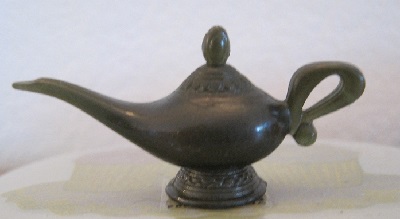
    Aladdins Lamp

    “The past,” Phillip Lopate says, “is an Aladdin’s lamp we never tire of rubbing.”

    Guest Blogger Norma Watkins studied with Phillip Lopate. The following is what she gleaned working with the master of the personal essay.

    The hallmark of personal essay and memoir is its intimacy. [Links below on memoir writing.]

    In a personal essay, the writer seems to be speaking directly into the reader’s ear, confiding everything from gossip to wisdom: thoughts, memories, desires, complaints, whimsies.

    The core of this kind of writing is the understanding that there is a certain unity to human experience. As Montaigne put it, “Every man has within himself the entire human condition.”

    This kind of informal writing, whether a short piece or a book of memoir, is characterized by:

    • self-revelation
    • individual tastes and experiences
    • a confidential manner
    • humor
    • a graceful style
    • rambling structure
    • unconventionality
    • novelty of theme
    • freshness of form
    • freedom from stiffness and affectation

    The informal writing of the personal essay and memoir offers an opportunity toward candor and self-disclosure. Compared with the formal essay, it depends less on airtight reasoning and more on style and personality. We want to hear the writer’s voice.

    How do we achieve this?

    Use a conversational tone. Instead of seeing our memoirs as collections of facts we are leaving to the future, strive to write as if this were a letter to a friend.

    We have a contract to the reader to be as honest as possible.

    Humans are incorrigibly self-deceiving, rationalizing animals. Few of us are honest for long. Often, in shorter personal essays, the “plot,” its drama and suspense, consists in watching how far the essayist can drop past her psychic defenses toward deeper levels of honesty. You want to awaken in the reader that shiver of self-recognition.

    Remove the mask. Vulnerability is essential.

    The reader will forgive the memoirist’s self-absorption in return for the warmth of his candor.

    The writer must be a reliable narrator. We must trust that the homework of introspection has been done. Part of this trust comes, paradoxically, from the writer’s exposure of her own betrayals, uncertainties, and self-mistrust. This does not mean relentlessly exposing dark secrets about ourselves, so much as having the courage to cringe in retrospect at our insensitivity that wounded another, a lack of empathy, or the callowness of youth. As readers, we want to see how the world comes at another person, the irritations, jubilations, aches and pains, humorous flashes. These are your building blocks.

    Ask yourself questions and follow the clues. Interrogate your ignorance. Be intrigued by limitations, physical and mental, what you don’t understand or didn’t do.

    Develop a taste for littleness, including self-belittlement. Learn to look closely at the small, humble matters of life. Develop the ability to turn anything close at hand into a grand meditational adventure. Make a small room loom large by finding the borders, limits, defects and disabilities of the particular. Start with the human package you own. Point out these limitations, which will give you a degree of detachment.

    You confess and, like Houdini, you escape the reader’s censure by claiming: I am more than the perpetrator of that shameful act; I am the knower and commentator as well. If tragedy ennobles people and comedy cuts them down, personal writing with its ironic deflations and its insistence on human frailty tilts toward the comic. We end by showing a humanity enlarged by complexity.

    We drop one mask only to put on another but if in memoir we continue to unmask ourselves, the result may be a genuine unmasking. In the meantime, the writer tries to make his many partial selves dance to the same beat: to unite through force of voice and style these discordant, fragmentary parts of ourselves. A harvesting of self-contradiction is an intrinsic part of the memoir. Our goal is not to win the audience’s unqualified love but to present the complex portrait of a human being.

    A memoirist is entitled to move in a linear direction, accruing extra points of psychological or social shading as time and events pass. The enemy is always self-righteousness, not just because it is tiresome, but because it slows down the self-questioning. The writer is always examining his prejudices, his potential culpability, if only through mental temptation.

    Some people find a memoir egotistical, all that I, I, I, but there are distinctions between pleasurable and irritating egotism. Writing about oneself is not offensive if it is modest, truthful, without boastfulness, self-sufficiency, or vanity. If a man is worth knowing, he is worth knowing well. It’s a tricky balance: a person can write about herself from angles that are charmed, fond, delightfully nervy; alter the lens a little and she crosses into gloating, pettiness, defensiveness, score-settling (which includes self-hate), or whining about victimization. The trick is to realize we are not important except as an example that can serve to make readers feel a little less lonely and freakish.

    The Past, as we said in the beginning, is a lamp we never tire of rubbing. We are writing the tiny snail track we made ourselves. Such writing is the fruit of ripened experience. It is difficult to write from the middle of confusion. We need enough distance to look back at the choices made, the roads not taken, the limiting family and historic circumstances, and what might be called the catastrophe of personality.

    Finally, the memoirist must be a good storyteller. We hear, “Show, don’t tell,” but the memoirist is free to tell as much as she likes, while dropping into storytelling devices whenever she likes: descriptions of character and place, incident, dialogue and conflict. A good memoirist is like a cook who learns, through trial and error, just when to add another spice to the stew.

    The Art of the Personal Essay, Phillip Lopate, Doubleday, 1994.

    Note from Marlene:  For more suggestions about how to write a personal essay, please see Write Spot Blog posts:

    How to Write A Memoir-Part One

    How to Write A Memoir-Part Two

    Norma Watkins will be the Writers Forum Presenter on August 18, 2016: “Writing Memoir and How To Turn Your Stories Into Fiction.”

    Norma grew up in Mississippi and left in the midst of the 1960s civil rights struggles. Her award-winning memoir, The Last Resort: Taking the Mississippi Cure, tells the story of those years. When asked what the memoir is about, Watkins says: “Civil rights, women wronged, good food and bad sex.”

    Watkins has a Ph.D. in English and an MFA in Creative Writing.  She teaches Creative Writing for Mendocino College and  serves on the Board of the Mendocino Coast Writers Conference, and the Coast branch of the California’s Writers Club.


  • 33 Ideas You Can Use for Sensory Starts Prompt #278

    I bet you have heard “Show. Don’t tell.” What does that mean? And how does one do it?

    Answer: Sensory detail.

    As described in Imagery and Sensory Detail ala Adair Lara Prompt #277:

    1. Make a list of images
    2. Expand into sentences
    3. Use sensory detail

    BobNot interested in making a list?  You are welcome to use any of the 33 ideas listed below to start sensory writing. Or just look around, choose items within your view, and write, using sensory detail, of course. Scroll to bottom of this post for links about using sensory detail in writing.

    Expand these images into full sentences, using sensory detail. Write as if you had to describe these visions to someone who has never seen or experienced these things.

    What do these things look like? How do they sound, taste, feel, smell?  Answer these questions and that’s using sensory detail in writing.

    Write a sentence using these impressions, expand into a paragraph, a short story, a poem.

    1. The musky smell of tomatoes on the vine in the heat of the warm summer sun.
    2. The smell of a freshly mowed lawn.
    3. The rustle of a plastic bag.
    4. The burnt smell of overly cooked popped corn. Burnt popcorn.
    5. The smell of popcorn when walking past a movie theatre.
    6. The sound of someone blowing their nose into a tissue.
    7. Blaring music from a passing car.
    8. The sharp intake of breath when hearing that a friend died.
    9. Brown freckled skin of a soft banana.
    10. Gears grinding.
    11. Wind chimes.
    12. Dew on the lawn.
    13. Morning mist.
    14. Snoring.
    15. Drool.
    16. San Francisco cable cars.
    17. Crunchy pickles
    18. Snap of a fresh green been
    19. Strawberries, fresh from the vine
    20. Licking a stamp
    21. Shaking a rug
    22. Dust flying
    23. Fingers curled over keyboard – striking/ready to strike
    24. Hands on stomach. Too much watermelon.
    25. Swish of wash cycle
    26. Hands folded in prayer.
    27. Heads bowed.
    28. Grieving for what the person could have been but never was.
    29. He phoned yesterday with a single question that I answered in an instant.
    30. She didn’t mean to tell me so many sordid details and revealing incidents, but I’m glad she did.
    31. He uncorked the bottle, releasing maggots.
    32. She took the lid off and let some of the fireflies escape.
    33. I could feel her pain and had to be careful to not let her pain become my pain.

    Posts on The Write Spot Blog about sensory detail:

    Sensory Detail – Sound
    Sensory Detail – Smell

    Sensory Detail – Taste
    Sensory Details – Kinesthetic, motion in writing

    The “Queen of Sensory Detail” explains how to  how to describe a character that gets into the essential details of the person:   Elizabeth Berg Shows How To Demystify Character 

  • InfectiveInk wants you to have fun and submit.

    Do you have a snippet of writing, more than one snippet, longer than a snippet? And you just want to submit somewhere. InfectiveInk.com may be the answer.

    InfectiveInk: “Instead of focusing on genre or style, we inspect themes and universes . . . all based on the same prompt.”

    “A haunted house doesn’t have to be a horror story, in fact a haunted house could simply refer to a memory or a family that has endured a tragedy. Zombie tales can be hilarious, and the word ‘zombie’ could refer to any number of things. Mysteries can find their way into any situation. Be creative, push your boundaries, have fun, write great stories.”

    “Write to the prompt and HAVE FUN!”

    Please read Submissions Guidelines and Author Agreement.

    2016 PROMPTS:

    Submit by July 28, 2016: Little mistakes, big trouble

    We all make mistakes, usually small, and usually inconsequential, but sometimes those little things lead to surprising and troublesome places.

    Submit by August 28, 2016:  Girls! Women! Ladies! Chicks!

    Your story must have at least two female characters. You story must have no male characters, and not mention or refer to the mens in any way, (this means you must also avoid mentioning their lack of presence in the story). We’ve all read countless stories where women make no appearance, so it shouldn’t be difficult to let the boys sit one out.

    Submit by September 27,  2016: Twilight sucked, so fix it

    We’re looking for YA or new adult, horror or fantasy or sci-fi, with a bit of romance. Your characters don’t have to be teens, but keep that YA template in mind. Please avoid obvious fanfiction, unless you’re going for satire.

     Submit by October 28, 2016: Overheard

    An overheard conversation should factor into the story in a significant way Remember, there are a lot of different ways a person can accidentally (or intentionally) overhear or be overheard.

    Ready? Dig out your writing and Submit!

  • Imagery and sensory detail ala Adair Lara Prompt #277

    “Write five images every day, for seven days, using as many of the senses as possible.”— Adair Lara

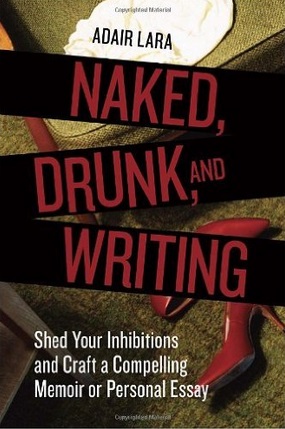
    From Adair’s book, Naked, Drunk, and Writing:

    “Writing is turning your thoughts, abstractions, generalizations, and opinions back into the experiences you got them from.”

    Adair’s example:

    “Not ‘women my age become invisible,’ but ‘they handed drinks around and forgot me, again.’”

    Using imagery involves the details about what happened.

    Show what happened so that readers can see the scene, hear the sounds, feel the sensations, taste the elements, and smell the aroma.

    Adair advises, “. . . every time you write a sentence, ask yourself, How can I show this? Try to get image and detail into every sentence. ”

    Naked Drunk and WritingTidbits from Chapter Six, Using Images and Details:

    “We want experience, not information. ‘Joan was distressed’ is information. ‘Joan looked away’ is an image. The reader notices Joan looking away, and has the pleasure of concluding for herself that Joan is distressed.”

    Today’s writing prompt is the same one Adair assigned to her students on that hot August night in the octagonal room that served as her writing classroom, the room in the sunny yellow Victorian, where we had to walk up a gazillion stairs to reach the front door.  I so want to add, . . . and where we were greeted by her tail-wagging, smiling pooch, but that would be too much, wouldn’t it?

    Writing prompt: Write five images for seven days using as many of the senses as possible. Set aside to simmer.

    Stir the imagination when re-reading your list, looking for images that call to you, that want to be sniffed out, that won’t fade away, images that linger.

    Use that imagery to write whatever comes up for you.

    For more creative and juicy writing ideas, pick up a copy of Adair Lara’s book, Naked, Drunk, and Writing, with over seven pages of “Suggestions for Writing” as Adair calls these writing prompts.

    Writing Prompt #276 and my freewrite in that post were inspired from Adair’s assignment first encountered on that hot August night in the octagonal room . . .


  • Vegetables – Not Just For Eating . . . Prompt # 276

    What are vegetables good for, besides eating?

    vegetablesSome gardens are bursting right about now with zucchini, green beans, summer squash, cucumbers, yellow squash, kale, rhubarb, patty pan squash, lettuce, have I mentioned squash?

    Here in northern California, growing squash is easy and so abundant that we don’t leave our car doors unlocked, or we might find a bushel of zucchini on the seat.

    Write about other things that vegetables can do.

    Inspired from Adair Lara‘s writing workshop.

    Write about new uses for vegetables.

  • Grist, The Journal For Writers

    Grist

    From the Grist Website:

    Grist seeks high quality submissions from both emerging and established writers. We publish craft essays and interviews as well as fiction, nonfiction, and poetry—and we want to see your best work, regardless of form, style, or subject matter.

    We read between June 15th and September 15th. Please note that we do not accept snail mail submissions. Simultaneous submissions are acceptable as long as we are immediately notified if the piece has been accepted elsewhere. Please do not mix genres in the same submission. We do not consider previously published work.

    Our submission fee (waived for current and new subscribers) is $4 for three to five poems, for one work of fiction up to 5,000 words, or for one work of non-fiction up to 5,000 words. The bulk of our reading fee goes to paying our writers; the rest covers our Submittable fees and a portion of our print publishing costs, which helps us to make a high-quality home for a wide variety of the best national and international creative and literary work available to us. We hope that you will regard this fee as an investment in you, the writers who keep us going, while also serving as a sign of your support for the literary art we all value so much.

    Average response time is 2-4 months.

    Submissions will be considered for publication in either the print issue or Grist Online. Payment is $10 per poem or 1 cent per word for prose up to 5,000 words as well as two contributor copies. Additional copies are also available at a reduced cost for contributors.

    To submit your work to the journal, please read guidelines.

    To pitch ideas or submit reviews, craft essays, or interviews to our blog, The Writing Life, please read guidelines.

    Section Guidelines:

    Fiction: Submit one story up to 5,000 words.

    Poetry: Submit 3-5 poems.

    Non-fiction: Submit one essay up to 5,000 words.

    The Writing Life: To pitch an idea for a craft essay, interview, or other piece you think would be a great fit for our blog, please contact Managing Editor for Online Content, Jeremy Michael Reed.

    ReviewsGrist seeks reviews of books published by small and independent presses in the genres of fiction, poetry, creative nonfiction, essays on craft, and books about the creative process as it relates to all artistic mediums, including visual art. While most reviews follow the standard model, experimentation with the review form is also welcome, with the understanding that clarity is always a virtue.

    We focus on small, independent, and university presses because we think there are already plenty of other outlets for books by major publishers. And while we believe that all books deserve serious, critical commentary, we don’t see much value in wasting our time (or our readers’!) on a review of a book we don’t recommend. So: as a reviewer, we want you to be honest, but we also want you to highlight the books you’re excited about, and leave aside the others.

    We look for approximately 700 words, are happy to request books for you, and will work with you on establishing a timeline that works for you (although we usually ask reviews be completed in 4-8 weeks).

  • I just don’t feel like it. Prompt #275

    ledger.ink wellWrite about something you do not want to do.

    Will you end up doing it anyway? Will you be bitter, annoyed, resentful?

    Will you do it with grace, composure? Or will you rant and rave the whole time?

    Maybe you just won’t do it.

    Maybe it’s too silly to even think about. Or too petty, not worth your time.

    Write . . . just write about something you don’t want to do.

  • What do you pretend to not care about? Prompt #274

    Excerpt from I Could Do Anything . . .  If I only knew what it was, by Barbara Sher

    Sher. I could do anything I wantRescuing Your Past

    Something inside you is too loyal to permit you to turn your back on everything you loved and simply walk away. No matter how many times people tell you to let the past go, it’s never possible. You’ll never  move wholeheartedly into the future unless you take your beloved past with you.  And that’s exactly as it should be.

    There’s no reason to turn your back on a happy past. Sometimes we try to turn away from the past because we feel it somehow betrayed us. It’s as though we loved our past, but our past didn’t love us. So we go on strike and pretend we don’t care, as if to punish fate for being unkind. Fate never cares, of course, so we only hurt ourselves.

    Prompt:  What do you pretend to not care about?