Prompt Contest: A Picture is worth . . .

  • Prompt Contest: A Picture is worth . . .

    A picture is worth . . . you know. . .  lotsa words.

    Redwood Writers, a Branch of the California Writers Club, is sponsoring The 2016 Prompt Contest.

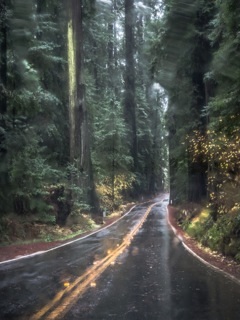
    prompt-contest-tim-mayWrite a fictional story inspired by this “Highway through the Redwoods” photo by Tim May. The connection between the story and the photo must be apparent to the judges. The words “redwood” and “highway” must be somewhere in the story.

    DUE DATE:  October 16, 9:00 p.m.

    Fiction only.

    Contest submissions are open to all California Writers Club members and to non-member residents of Sonoma, Napa, Mendocino, Marin, Lake, Humboldt and Solano counties.

    $8 for California Writers Club members; $12 for non-members

    1,000 words or less

    1st place:  $100, a certificate  suitable for framing, and a signed photo by Tim May

    2nd place: $50 and a certificate suitable for framing

    3rd place:  $25 and a certificate suitable for framing

  • Paint Colors . . . Prompt #291

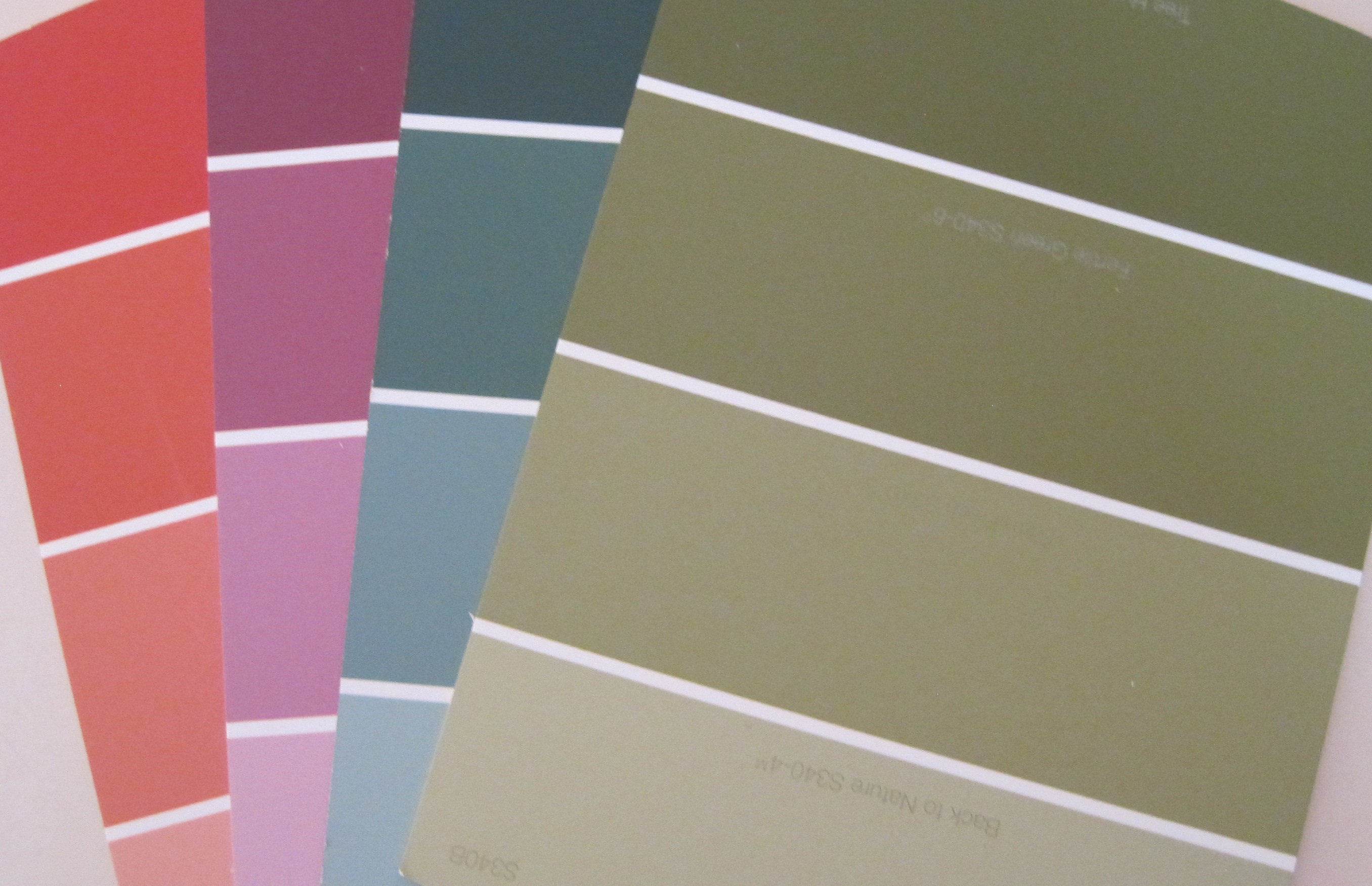
    paint-colorsHave you ever noticed the names of paint colors? They are so creative. . . they could be wonderful writing prompts.

    Writing Idea: Keep a file folder of phrases to inspire your writing. These could be phrases that someone else wrote. They could be snippets you wrote to be used in future writing.

    This folder can also contain lists like these names for  paint colors. You never know when or how you might want to use them. You might find a unique name for a character.

    Or a fabulous name for: a fictional town, a store, a street name, a pet.

    My favorite:  Amethyst reflection . .  . I can imagine using this to refer to eye color.

    Aqua Rapids

    Bubble Turquoise

    California Chamois

    China White

    Cloud Nine Blue

    Crystal Clear White

    Deco Red

    Festival Green

    Fiesta Rojo

    Fire Roasted

    Fitzgerald Smoke

    Frank Llyod White

    French Silver

    Inness Sage

    Innocent White

    Jacobean Lace

    Kissable Pink

    Lime Freckle

    Minstrel Rose

    Moon Doggie

    Moroccan Ruby

    Orchid Blush

    Prague Purple

    Racy Red

    Red Hot Jazz

    Royal Cranberry

    Salisbury Stone

    Seville Scarlet

    Silver Blue Sea

    Spiced Berry

  • Movie Quotes . . . Prompt #290

    Movies! Do you love ’em or are you meh about ’em?  Do you get “lost in books?” Can you get the same kind of Calgon-take-me-away lost in movies?

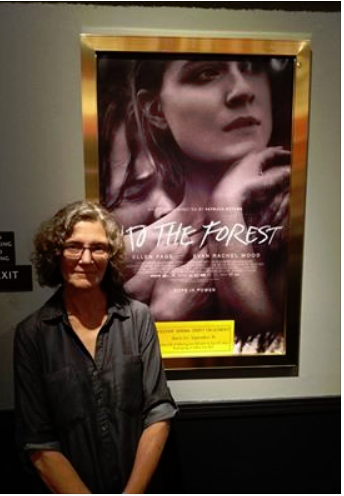
    jean-hegland-and-movie-posterJean Hegland is a gifted writer. Her novel, Into The Forest, has been made into a movie and is now at theatres and will soon be available on DVD. I wouldn’t normally go to see this type of movie, but the opportunity came up to view Into The Forest, the movie, with Jean answering questions after the viewing. Thank you to independent bookstore Copperfield’s Books for sponsoring the viewing. And thank you to Jean for writing an amazing and memorable story. Thanks, also, to Ellen Page, who saw the possibility of the type of movie this could be. See it, if you can, even if, like me, you have to close your eyes during some scenes. The cinematography, the acting, the dialogue, the story line = all amazing and unforgettable.

    At the time of this posting, there are no authorized quotes from Into the Forest. Hmmm. . . guess you have to read the book and/or see the movie.

    Today’s writing prompts are lines from movies. Choose one and just write.

    ~ “Men like my father cannot die. They are with me still, real in memory as they were in flesh, loving and beloved forever.” How Green Was My Valley

    ~“My name is Inigo Montoya. You killed my father. Prepare to die.”Princess Bride

    ~ Write about a time you had a close call.  In Butch Cassidy and the Sundance Kid, there’s a scene where Butch and Sundance chase up a mountain to avoid the relentless posse, only to find themselves at a dead end. The only way, says Butch, is to jump a hundred feet or so to the fast-moving stream below. But Sundance won’t hear of it.

    Butch: “ It’s the only way. Otherwise we’re dead.”

    They argue about it for a while until Sundance admits the real reason he doesn’t want to jump.

    Sundance: “I can’t swim.”

    Butch, “You stupid fool, the fall’ll probably kill you.”

    ~  Gene Wilder agreed to play Willy Wonka under one condition: that his character make a wildly grand entrance:

    “When I make my first entrance, I’d like to come out of the door carrying a cane and then walk toward the crowd with a limp. After the crowd sees Wonka, they whisper and then become deathly quiet.

    As I walk toward them, my cane sinks into one of the cobblestones I’m walking on and stands straight up, by itself; but I keep on walking, until I realize that I no longer have my cane. I start to fall forward, and just before I hit the ground, I do a beautiful forward somersault and bounce back up, to great applause. ”

    His reason for wanting to include the dramatic entrance: “Because from that time on, no one will know if I’m lying or telling the truth. ”

    If you have seen Willy Wonka and The Chocolate Factory, with Gene Wilder:  Do you think his entrance worked?  Did it help or hinder his character’s believability? Did the entrance affect you?

    A scene from Willy Wonka:

    Computer Operator: “We’re about to witness the greatest miracle of the machine age. Based on the revolutionary Computonian Law of Probability, this machine will tell us the precise location of the 3 remaining golden tickets. ”

    Computer Operator pushes button on the machine.  Computer prints out a response:  “I won’t tell. That would be cheating. ”

    Computer operator pushes button on the machine again. “Iam now telling the computer that if it will tell me the correct answer, I will gladly share with it the grand prize. ”

    The  machine prints out another response. “What would a computer do with a lifetime supply of chocolate? ”

    Operator sighs: “I am now telling the computer exactly what he can do with the lifetime supply of chocolate. ”

  • Reed Magazine- Oldest literary journal west of the Mississippi River

    reed-magazineReed traces its heritage back to 1867, when the first issue of The Acorn was published by the students of California State Normal School, the institute that would eventually become San José State University.

    What began as a small publication for student work has grown into an international literary presence, receiving thousands of submissions from writers across the globe. A West Coast journal with worldwide reach, Reed, like California, is an ongoing, expanding, and wondrous mosaic of thoughts, ideas, and emotions.

    Reed MagazineSubmissions Open June 1 to November 1.

    Fiction, Nonfiction, Poetry, Art

    Fiction – under 5,000 words.

    John Steinbeck Award for Fiction – up to 5,000 words, $15 fee to enter. Winner receives a cash prize of $1,000.

    Non-Fiction – under 5,000 words

    Gabriele Rico Challenge for Nonfiction – This award is for a work of creative nonfiction up to 5,000 words and requires a reading fee of $15. The winner of the Rico Challenge receives a cash prize of $1,333.

    Poetry – submit up to five poems with your submission.

    Edwin Markham Prize for Poetry. This award requires a reading fee of $15. You may submit up to five poems per entry. The winner of the Edwin Markham Prize receives a cash prize of $1,000.

    Art – up to five pieces of art, including photography (include details about the medium, including modifications made to a photograph). Send submissions in an easy to open format, such as a .jpg or .pdf file.

    Mary Blair Award for Art. This award requires an entry fee of $15. You may submit up to five pieces per entry. The winner will receive a cash prize of $500.


  • Movies as inspiration for writing. Prompt #289

    movie-scriptMovies can be a wonderful inspiration for writing. I recently saw the movie, Sully. Even though I knew how it ended, I was teary-eyed. I was filled with emotion at how people helped one another. Director Clint Eastwood did an amazing job of telling the right amount of backstory and the right amount of Sully’s personal life. The focus was on the people involved . . . the human interest story.  There were lines of dialogue that were exquisite.

    When using a movie as an inspiration for writing, you can write about the theme or mood of the story, a line of dialogue, a memorable scene, whatever interests you.

    Write about:

    A road trip. Thelma and Louise

    How you learned to dance. Dirty Dancing

    A time you were tricked, or you tricked someone. The Sting, two con men outcon a con.

  • I wasn’t the first . . . Prompt #288

    Today’s writing prompts are inspired by author Julia Park Tracey, Alameda’s Poet Laureate.

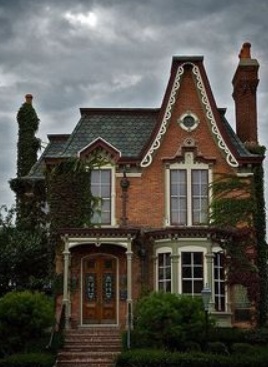
    victorian-housePart 1: Quotes from Veronika Layne Gets The Scoop by Julia Park Tracey.

    “I wasn’t the first reporter to arrive at the scene, but I wasn’t the last, either.”

    “A Victoria house — one of those multihued beauties with turrets, fish-scale shingles, gingerbread trim, iron railings, a weathervane, a trim of every description on widows’ walks and sun porches —a majestic painted queen from the late 1800s —burned like a marshmallow too close to the coals.”

    “You finally get a story, the story, and it changes before the ink is even on the page. And then it’s past, it’s history, and there’s not enough to cover for the following issue. On to the next assignment.”

    Note from Marlene: When you look at writing prompts, you can look at the entire quote, or take a section, or a word and write from there. For example, you could write about “I wasn’t the first to arrive at the party.”

    The second quote intrigued me because I love the description of “burned like a marshmallow too close to the coals.”  It seems to me that not many people would think of comparing a house fire to roasting marshmallows.

    Part 2: Lines from Home at the Edge of the World, Alameda Poet Laureate Julia Park Tracey,  Inaugural Poem

    There are houses down your shaded streets –
    beneath your oaks, your ginkos, your avenues of palm –
    Leaded in glass, shingled in fish-scale, spangled with gingerbread,
    Victorian ladies tarted up for Carnival,
    their history and lore curving like a staircase into view.

    Gentlemen strolled in spats, ladies swung their parasols,
    bay breezes curling with fog and the clank of halyards, snapping flags. Water, at every turn,
    glittering to shore, to ship, to ankles and toes.

    Note from Marlene: In your collection of writing, mark places of exquisite writing. You might be able to use these nuggets later . . . in a story or a poem.

    Julia Park Tracey is an award-winning author, journalist and blogger. Tracey was the founding editor, and later, publisher, of The Alameda Sun. Her work has appeared in Salon, Good Housekeeping, Scary Mommy and Thrillist. She is the Poet Laureate of Alameda, California, and holds a BA in journalism and MA in English. Her publications include three novels (Tongues of Angels and two Veronika Layne mysteries); two biographies, I’ve Got Some Lovin’ to Do: Diaries of a Roaring Twenties Teen and Reaching for the Moon: More Diaries of a Roaring Twenties Teen; and Amaryllis: Collected Poems.

    She reads and teaches poetry to all ages and grades, leads literary events citywide, and representing the city at literary events such as Litquake.

    Julia will be the Writers Forum Presenter on September 15, 2016.

    To read the entire inaugural poem click on Home at the Edge of the World.


  • The Forge Literary Magazine

    the-forge
    The Forge Literary Magazine publishes one prose piece per week selected by a rotating cast of editors.

    Forge accepts unsolicited submissions via Submittable. Less than 3,00 words are preferred, but Forge “will consider work of rare quality up to 5,000 words.”

    What to submit: Flash and micro prose. “Literary excellence is our only criteria.”

  • Write about a favorite movie. . . OR . . . Prompt #287

    Write about a favorite movie. Why do you like it?

    OR . . .   write about a movie you really didn’t like. Did you watch it to the end?  Why? Why didn’t you walk away?

    A note about freewrites:  You don’t have to write on the prompt exactly as it’s written. You can write about “Why didn’t you walk away?”  Write freely, with no attachment to the final product. Just write.

    favorite-movie-of-all-time

  • How to start your book . . . not with the weather, not with a dream . . .

    and not with “my name is.”  So . . . how could you, how should you begin your novel?
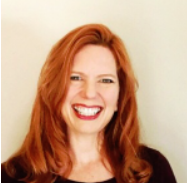
    bryn-donovanGuest Blogger, Bryn Donovan, writes about: What Happens on Page One: 30 Ways to Start a Novel.

    Note: This post contains spoilers for Star Wars: The Force Awakens.

    Note from Marlene:  Edited for brevity. Scroll down for link to original post.

    Bryn writes:

    Even when you have a basic idea of your story, sometimes it’s hard to know where to begin it.

    One of the best things you can do with your first five or ten pages is to get readers to care about what happens to your main character (or one of them.)

    In my opinion, and in the opinion of most editors, a prologue that only serves as backstory is generally a bad idea. It makes a novel feel like it’s taking too long to really get started. You can weave the backstory into the present-day action. Build some mystery and anticipation about past events.

    Many of us begin the story too soon in the first draft, with too much backstory.

    Ask yourself what happens in the story to jog your character out of her usual rut and take her in a different direction. A lot of people refer to that thing, that event that changes everything, as the “inciting incident.”

    (Something I have yet to do in my own stories is make the character’s own action lead to the change, rather than having her react to something. For instance, in my favorite movie of all time, Mad Max: Fury Road, Imperator Furiosa changes everything by deciding to rescue the sex slaves of a horrible dictator. And in Star Wars: The Force Awakens, Finn rewrites his own destiny and everyone else’s as well by having a crisis of conscience. This leads him to make a daring escape with an imprisoned Resistance fighter.)

    In Blake Snyder’s screenwriting book, Save the Cat (a terrific resource for fiction writers), he lays out an outline that establishes a baseline for the main character: Here’s what his life is like, here are some of his issues, and oh, in case you were wondering, here’s the theme, stated by some character or other. The inciting incident (or what he calls “the catalyst”) happens a little ways in.

    It’s also possible to have the inciting incident on the first few pages, or even in the first sentence. That’s really up to you. But you don’t want to go too long before that first big thing happens.

    As my friend Trish tells her improv students, Start on the Day Everything Changes.

    [Bryn lists ways not to start a novel. Please go to her blog for this list.]

    Here are 30 ideas of places to start… maybe one of them will work with your story! For some of them, I’ve given examples of novels that begin in that way.

    As with the plot lists in my Master Lists for Writers book, you’re not cheating by using one, because these are all really broad! Each one of them could go a bunch of different ways.

    The arrival of a letter, email, or package. The Thirteenth Tale, Diane Setterfield

    A main character in a frustrating situation.

    A main character in an awkward or embarrassing situation.

    The discovery of a dead body. Thief of Shadows, Elizabeth Hoyt

    The death of somebody in the family or the community. All The Pretty Horses, Cormac McCarthy; The Known World, Edward P. Jones

    ~This is a popular one, and understandably so, because an ending is a new beginning.

    The beginning or the middle of a disaster. All the Light We Cannot See by Anthony Doerr, kind of.

    ~It could be a bombing, a plane crash, or a tornado.

    The aftermath of a disaster.(Their Eyes Were Watching God, Zora Neale Hurston

    A kiss.

    A performance, or the conclusion of one. Bel Canto, Ann Patchett

    A main character in the hospital. Kindred, Octavia Butler

    A main character declaring that he is in big trouble. The Martian, Andy Weir

    A main character who’s clearly in big trouble. What Is the What, Dave Eggers

    ~She might be getting mugged or running from Nazi soldiers. Readers will start caring about her immediately.

    The arrival of a plane, ship, or train. The Count of Monte Cristo, Alexander Dumas

    ~The character might be on board, or she might be watching it come in.

    A scene at a party, a bar, or a nightclub. War and Peace, Leo Tolstoy; The Name of the Wind, Patrick Rothfuss

    A fight. The Warrior, Zoë Archer

    The character may be part of the fight, or just witnessing it.

    A character moving in to a new place.

    It could be a neighborhood or a dorm room.

    A broad statement about one’s life. One For the Money, Janet Evanovich

    ~One For the Money begins, “There are some men who enter a woman’s life and screw it up forever. Joseph Morelli did this to me — not forever, but periodically.” That’s a great hook.

    A dramatic moment in the middle or end of the story. The Secret History,Donna Tartt.

    ~You can begin in the moment and then backtrack to explain how they got there. For instance, the prologue of The Secret History begins, “The snow in the mountains was melting and Bunny had been dead for several weeks before we came to understand the gravity of our situation.”

    A trial in a courtroom.  Snow Falling on Cedars, David Guterson

    A job interview.

    ~ I really like this idea because you could get a lot of information across about your character naturally. She might be giving appropriate answers while her internal monologue tells you the rest of the story. Also, an applicant at a job interview is in a vulnerable position, which I think would create empathy for your heroine right away.

    A main character meets someone new. Wuthering Heights, Emily Brontë

    A street scene. Perdido Street Station, China Miéville

    ~Your character could be getting an errand done or going to visit somebody. For a novel that takes place in an historical, futuristic, or fantasy setting, this can be a good way to establish a sense of place as well as establish your character’s normal life and priorities.

    A main character in a triumphant situation.

    A character or characters getting dressed, shaving, putting makeup on, or doing their hair. The Makioka Sisters, Junichiro Tanizaki

    A big, happy occasion such as a wedding or a graduation.

    ~Of course, it might or might not be happy for your main character, who may be a participant or someone in the audience.

    One character teaching another how to do something.

    A visitor showing up at the door. The Big Sleep,Raymond Chandler.

    A main character coming across a significant object.

    A character committing a crime.

    A character or characters completing a task. Our Mutual Friend, Charles Dickens

    Originally posted on Bryn Donovan’s Blog, ” tell your stories ~ love your life.”

    For the complete blog post, please click on: “What Happens on Page One: 30 Ways to Start a Novel.”

    Bryn’s goal for her blog: “Share as many writing resources as possible, encourage people to remember how amazing they really are, and inspire myself and others to get as much out of life as we can. Hope you like it!”
     

  • Let’s go to the movies. Prompt #286

    lets-go-to-the-movies

    Write about going to the movies .  . . either as a child, teenager or adult.