Conjunctions . . . submit if you dare.

  • Conjunctions . . . submit if you dare.

    ConjunctionConjunctions is accepting submissions for the Fall 2016 issue, Conjunctions: 67, Other Aliens, a collection of works of literary science and speculative fiction: innovative short stories, poetry, and essays that explore the vast precincts of unfamiliarity, of keen difference, of weirdness and not belonging.
    “’Alien’” is a powerful and flexible word. Aliens are Other, aliens are the stuff of science fiction and fantasy, aliens are traditional literary figures who, when we witness our ‘normal’ lives through their strangers’ eyes (think Frankenstein), cause us to see ourselves anew. Indeed, we become the unfamiliar ones. ”

    Conjunctions on the Web features an ever-expanding constellation of innovative fiction, poetry, drama, interviews, and other work by some of the leading literary lights of our time. . . We are always adding new selections to our current inventory of contemporary writing.

  • Know your characters intimately. Prompt #255

    renoir-dancing-150x150How to flesh out fictional characters . . . Give them depth . . . Get to know them intimately.

    Let’s say your fictional character has just received devastating news such as a job loss, death of a family member or close friend.

    How does he react?

    What are her immediate thoughts?

    What actions does he take next?

    Imagine your fictional character had an epiphany about a betrayal, a loss, an old grievance. . . something new has been revealed. What does he or she do?

    Take a few minutes to write about the purpose this character serves in the story.

    Ready?  Just write!

  • Components for a great story – by Guest Blogger Francis H. Powell

    Guest Blogger Francis H. Powell writes about creating a great story.

    Confronted with a blank screen, poised to  tap away,  how to go about creating that great story. Perhaps one primary consideration is the theme.  Maybe the theme should  be a ghostly shadow within the confines of the story, not screaming at the reader, but there none the less.  It may make the reader think about their own lives, there might be a moral to be learned, but a writer should not take on the role of a preacher.

    Then there has to be a plot, all the conflict or struggle that the main character or characters go through. The conflict should develop in intensity and excitement, reaching some kind of climax.  If you are writing a novel there may be a number of conflicts interspersed, but a short story will have only one principal conflict.

    Moving onto story structure,  the story has to entice the reader, right from the first sentence.  Equally then, ending has to round things off perfectly.  You may have your theme and an outline of the story, but how are you going to tell it… a writer needs to decide about writing the story either in “first person” or in “third person.”  Will you be using “he,” “she,” and “it”—so writing in third person means telling a story as if it’s all about other people., or will you be writing using “I”—so writing in first person means telling a story as if it happened to you.  If in your head you have a rough idea of the theme,  you will also know which tense you are going to use,  either “present tense” or “past tense.” Writing in past tense means writing as if the story already happened, which is typical  manner in which most stories are written. Writing in present tense means writing as if the story is happening right now.  Normally you can’t mix the two.

    An important consideration is the characters.  I like to “live” with characters in my head, before committing to write about them.  For me the name of the character, says a lot about the character, for example in my short stories, I have a character called “Bugeyes” and the story revolves around the fact that he is a person who suffers intensely, due to his oversized eyes.  Lead characters should be someone readers can feel something in common with, or feel empathy. In my stories I love to create evil characters.  My characters are far from perfect, have flaws and idiosyncrasies.  Characters are interesting if they are not too one dimensional,  even evil characters have to have some kind of redeeming feature, or perhaps they have been victims themselves in one way or another.

    Settings are also paramount. In my book there is quite a range of different settings,  some are set in America, for example my story “Opium” is set in America, post-civil war.

    Then there is the question of language,  it has to really correspond with your story.

    A writer will tend to use actions and speech to let readers know what’s happening. Showing , rather than telling, using  direct more “real life” quotes like “Go away!” instead of indirect quotes like “She told him to go away.”

    You don’t have to write over elaborately to write well. Don’t shy away from using simple words and simple sentences, so you words and sentences cut through easily.

    I often spend a long time mulling over what is the best word to use, glued to a thesaurus. Each sentence and paragraph should resonate, I often spend a lot of time, writing and rewriting so as to get the optimum sentence. Some sentences or paragraph can be redundant. You can get carried away, lose sight of the story, or go off on tangents.

    Francis H. PowellFrancis H. Powell‘s, Flight of Destiny , is a book of 22 short stories.  Born in a commuter belt city called Reading  and like many a middle or upper class child of such times, Powell was shunted off to an all-male boarding school at eight, away from parents for periods of up to twelve weeks time.  What better way to put all angst into short stories.

    Powell began writing while living in Austria.  His writing evolved while living in Paris. Flight of Destiny won the Compilation/anthologies category in the Pacific Rim book festival.


  • No one knows . . . Prompt #254

    ledger.ink wellToday’s prompt:  No one knows. . .

    You can write from real experience, or respond as your fictional character would respond.

    No one knows . . .


  • Broad Street seeks writing that shows the truth in a new way

    Broad Street magazine is “always looking for more talent . . .  so if you have an interesting piece of nonfiction—poetry, essay, reportage, memoir or other writing—or art” . . . Submit!

    “Nonprofit semi-annual magazine featuring true stories told in many different ways. Seeks beautiful crafted poetry, essay, reportage, memoir or other writing that present the truth in a way that’s new and special.” — The Writer magazine, June 2015

    Submisssions/themes, see if there is something just right for you. Upcoming theme:

    Birth, School, Work, Death (submit until April 1, 2017 for spring/summer 2017 issue).
    The Seven Ages of Man have become the Four Ages of Humankind.  We’re born, we learn, we work, we die. Broad Street has conceived of a four-part magazine with several features exploring each phase of life.  Give us your origin stories, your schoolroom struggles, your cubicle frustrations, your tales of passing on.  Where has this road taken you?

    Broad Street


  • Literary Agent Mary C. Moore has personal experience with The Rejection Form

    Mary C. MooreGuest Blogger Mary C. Moore (literary agent) writes about the rejection form letter.

    I recently wrote a short story, my first in over a year. Inspiration struck and I listened.

    Unlike novel writing, short stories are short-term rewarding because you reach “the end,” while you are still loving that muse whispering in your ear. I was particularly excited about this story, as I knew exactly which magazine I was going to submit it to. A few years ago, said magazine had rejected another story of mine, but with glowing praise and a request to see more of my work. I kept that in mind, because this magazine is a professionally paying market and one that would be quite a feather in my writing resume. Thus after some furious late nights, anxious waiting for the beta reads to come back, and a lot of editing, I sent off my beautiful 3k-word gem to this magazine.
    Another rather sweet aspect of short stories is these days most magazines use submission software. This means you can stalk, I mean track, your submissions. And, at least in the SciFi/Fantasy professional market, many of them have fairly quick turn around times. This is in part because they don’t allow simultaneous subs in part because the stories are shorter. Altogether it’s a much quicker and less frustrating process than novel submissions.

    So a week full of checking the website later, there it was, that email. I took a deep breath and opened it to find… a form rejection letter.

    The range of emotions that followed is one every writer is familiar with. But there was one more.

    Understanding. Working for a literary agency, I’ve sent out hundreds of form rejection letters over the years. And recently I opened up my own inbox to queries. In the beginning I tried to make each response a bit personal, a note here, a comment there. I knew what it was like to be on the other side, and that experience pushed me to communicate personally as much as I could, especially if the writing had potential. However, I discovered, to my dismay, that the majority of personal rejections were not appreciated, in fact they were often responded to with a “could you clarify this?” or “can you take this further?” or “what can I edit to change your mind?”

    My personal notes were not received as the compliments they were meant to be, but rather as an opening for an editorial conversation. One that I had to ignore. It made me feel guilty, not continuing the conversations, but there is not enough time in an agent’s schedule to answer every author question that floats through our inbox. I was also spending more time coming up with ways to make the reason I was passing on the project sound nice and encouraging and editorially useful, rather than focusing my energy on considering each submission carefully. Which made me reluctant to open my inbox. I had burned out. Thus more and more I found myself responding with a form rejection, both in the interest of time and clear communication. My defense of the form rejection:

    • It’s a clear answer.
    • You receive said answer faster.
    • It’s less emotional.
    • It helps prevent slushpile burnout, so the agent/reader can focus on what’s important, considering the submission itself, rather than coming up with something to say in response to it.
    • The form rejection helps to keep expectations in check.

    I know most authors who don’t do their research don’t understand this, because they don’t see the other side. I can’t count the number of times I’ve heard writers say, “it couldn’t be that hard to respond to a query!” Let me tell you, yes, yes it can.

    Every once in a while, if the writing jumps out at me, or if I’ve met the author in person, I will still respond personally, but for the most part I’ve become a fan of the form rejection. Sure you could argue that if I hadn’t gotten that personal response back in the day, I wouldn’t have been as eager to submit to the magazine, but I also wouldn’t have had as high of hopes. At least you can take comfort in the knowledge that I’m getting them as good as I’m giving them. We all just have to keep on keeping on. My so-called gem of a short story is already sunk into another slushpile.

    Originally posted 1/4/16, “In Defense of the Form Rejection,” on Mary C. Moore’s Blog.

    Mary will be the Writers Forum presenter on May 19, 2016

    Mary C. Moore has been with Kimberley Cameron & Associates since 2012. Mary specializes in science fiction and fantasy, although she does appreciate a wide breadth of the literary canon. She started reading at an early age, and her love of reading continued, as she earned her B.S. in biology from the University of California San Diego. She was a veterinarian’s assistant, then a field biologist, and then a zookeeper.

    Mary’s passion for writing and books caused her to veer off her original path and drew her to publishing. She graduated from Mills College, Oakland with an MFA in Creative Writing and English and after freelancing for two years as an editor and writer in non-literary sectors, she began an internship with Kimberley Cameron & Associates and found she loved working as a literary agent as much as she loved writing.
  • Dead End . . . Prompt #252

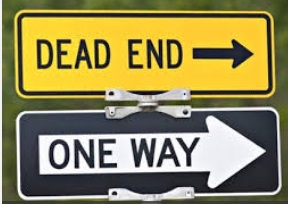
    Dead EndToday’s Writing Prompt:

                    Dead End

                    OR:

                    One Way


  • “I really don’t believe in a wasted draft.”

    Tea ObrehtNovelist Téa Obreht:

    “I don’t believe in a wasted draft . . . Even work you consider to be your worst is good for something. Every effort teaches you about your desires and tendencies, or guides you toward some new possibility . . . every line you wrote . . . has value.”

    Téa Obreht, author of The Tiger’s Wife,  interviewed by Gabriel Packard, “Writers On Writing,” The Writer magazine, May 2016

  • Find the right magazine for your article.

    Rachael Herron wrote an article, soon to be published in Vogue magazine. Not about “fashion, beauty, culture, living, runway, met gala.”

    Rachael’s article is about clearing out craft supplies.

    Imagine that.

    What a brilliant idea! I imagine most crafters would benefit from an article about how to organize material and/or encouragement to let go of scraps of fabric, wisps of ribbon, etc.

    Do you have a special skill, a hobby, a special interest? Write about it. Think about a magazine that might seem an unusual fit. Tweak your essay to fit the magazine’s demographics. Research the magazine’s mission statement, purpose, intent, masthead.

    Do you have a pet peeve, an obsession, a unique collection? Turn your thoughts into an article, then research and submit!

    Browse magazines at the library. Search online for potential magazines.

    Find the right magazine for your piece:

    Every Writer

    Wikipedia List of American Magazines

    How a Freelance Writer Should Submit an Article to a Magazine by David Kirk
    Magazines that accept freelance articles.

    All Indie Writers.

    The Write Life’s list of where to publish personal essays.

    Share your ideas and your publishing success stories here, on The Write Spot Blog.

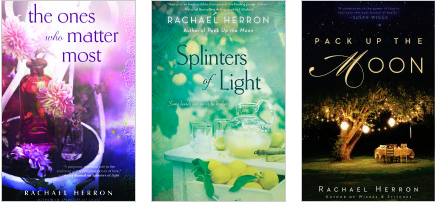
    Not only does  Rachael Herron write, she knits. And she writes about knitting.

    Herron.3 covers