Sensory Detail

  • Sensory Detail

    Readers want to see the action and feel emotions. Readers want to be transported into other worlds. In a way, we want magical things to happen when we read: to be carried away, transformed. Writers can achieve these seemingly wondrous events by using sensory detail in writing.

    When including sensory detail, think of body parts: eyes, ears, nose, tongue, body and some add a sixth sense: mind.

    Verbs that describe the senses: see/sight, hear/sound/auditory, smell, taste, feel/touch, intuit.

    The sixth sense can be described as telepathy, intuition, perception, imagination. . . those traits that use the mind to create and understand. Some people believe the sixth sense is the ability to problem solve; using our minds to read and interpret signals, to pick up or sense energy.

    You can access any of these sensory details in your writers tool kit to create vivid and memorable writing.

    For the next few weeks, we will explore sensory detail on The Write Spot Blog.

    Sight. . . Seeing . . . is perhaps the most common sensory detail to write about. It’s easy to describe physical details: blue eyes, brown hair. So, how about going a little deeper? Perhaps more specific, or unusual. . . something the reader isn’t expecting, but believable. Something to make the reader sit up and take notice:

    She had bright auburn hair, pink cheeks, and wore crimson fingernail polish. She also wore high-heeled pumps and a red-and-white-striped dress. She looked and smelled like a peppermint drop. —To Kill a Mockingbird, Harper Lee

    You can use simile to create memorable details, like Sandra Cisneros does in Caramelo:

    Doubt begins like a thin crack in a porcelain plate. Very fine, like a strand of hair, almost not there. Wedged in between the pages of the sports section, in the satin puckered side-pocket of his valise, next to a crumpled bag of pumpkin seeds, a sepia-colored photo pasted on thick cardboard crudely cut down the center.

     Do you see the crack in the plate?

    There is also texture in this excerpt: porcelain, the fine strand of hair.

    With the mention of “sports section”. . . can you see the newsprint and feel the weight of the newspaper?

    The puckered side-pocket invites a visual image as well as texture. Can you “see” (imagine) the color of the satin side-pocket even though it’s not mentioned?

    Being specific with details adds to the ability of the reader to see the activity/action (scene).

    Cisneros could have written “a crumpled bag of chips,” but that’s vague. I bet you can feel that crumpled bag and maybe you can hear it. You can probably see the pumpkin seeds. Perhaps you salivate at the thought of what the pumpkin seeds taste like.

    Even if you have never seen a sepia-colored photo pasted on thick cardboard, you can imagine it. You can see this specific color (sepia) and feel the texture of the cardboard. In your mind’s eye, you might even imagine who is in the photo.

    Cisneros covered all the senses: sight, sound, taste, feel, and if you are extraordinarily sensitive, you might smell the salt in the seeds, or you might smell the musty valise, you might even imagine/smell the paste that was used to stick the photo onto the cardboard. I think she includes the intuitive sense with the word “doubt” and “wedged” (what does this hint or say to you?) and the cut cardboard (perhaps cutting someone out of the photo?).

    Simile — A simile is a figure of speech that compares unlike things by using the words like or as:

    Doubt begins like a thin crack in a porcelain plate. Very fine, like a strand of hair . . .

    Your turn: Notice sensory detail in what you are reading. Post your findings here, on The Write Spot Blog.  And try using sensory detail in your writing.  Just Write!

    Suitcase.notecards

  • Hoot . . . a literary magazine . . . on a postcard!

    Hoot publishes fiction, non-fiction, poetry, and book reviews.

    “Our issues are small and cool looking, so you can also stick ’em on your fridge, or in your husband/wife’s briefcase, or leave one on a restaurant table for some random person to enjoy. Imagine, literature that you can pass around!”

    Hoot accepts submissions year-round.

    PROSE: 150 words or less

    POETRY: 10 lines or less. It has to fit on a postcard.

    BOOK REVIEWS: These will be published online, or on the back of a postcard when possible. Still 150 words or less. Must be of a recently published book (within the last year). The book must be published by an independent or small press.

    You may submit as many works as you like, but only two per submission. All work must be previously unpublished. Simultaneous submissions are allowed–but please let Hoot know if your work is placed elsewhere.

    “Depending on how generous we’re feeling, we also often give feedback with our rejections.”

    Submit: To use online submission manager: $2 to submit up to two pieces of work. Hoot also accepts submissions by regular mail, for no fee. All pieces are considered for both print (postcard) and online issues, unless you specify otherwise.

    Hoot.250

  • Awards . . . Prompt #174

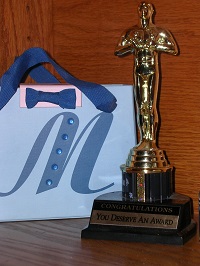
    You deserve an awardYou can write on this prompt from your point of view or from someone else’s point of view. You can also write as your fictional character would respond.

    Write about an award you have received. Perhaps a certificate, a leather/letter jacket in high school, lapel pins, crowns, diplomas, trophies.

    Is there an award you didn’t receive and thought you should have?  Did your fictional character deserve an award and didn’t get it?  How did he/she respond?

    Writing Prompt: Awards

  • One Year From Now . . . Prompt #173

    Writing Prompts OvalToday’s writing prompt: One year from now . .

    Write whatever pops up for you. No thinking, no judging, no editor on shoulder . . . just write!

  • Baby shoes for sale. Never worn.

    “Baby shoes for sale. Never worn.”  Hemingway wrote this six-word tale that has become the ultimate short, short-story.  The reader can fill in the blanks. I wonder how many variations of a theme these few words have inspired.

    Grant FaulknerGrant Faulkner honed his skills to write short, 100-word essays and writes in the August 2015 issue of The Writer magazine:

    “A flash writer has to paint characters in deft brushstrokes, with the keenest of images in such limited space. Shorts require immediacy; they’re a flicker of light in the darkness, a prick, a thunderclap . . . Paring down my writing and focusing on what goes unsaid and unexplained help me build suspense.”

    Faulkner says, about Hemingway’s six-word story, “The story moves by implication– the empty space around those few words invite the reader to fill them, transforming the reader into a co-author.”

    If this type of writing appeals to you, start writing now. Faulkner’s 100 word story will accept submissions after September 15. Hone your short story skills now and be ready to submit.

    Just Write!

  • Fiddleblack Journal might be right for you.

    Fiddleblack journal might just be your cup of tea.

    “Fiddleblack’s mission is a basic path toward the discovery (and sometimes rediscovery) of literary and speculative works that eloquently capture what it means to know the finite bounds of self and place. A long road of inspiration led to Fiddleblack’s founding, trailed through many unconnected sources, from Cormac McCarthy to Michel Houellebecq.”

    Our role as a curator encourages us to accept diverse work, and to publish what sings, speaks, or stares as well as it possibly should. But we see our place in the world of small presses clearly: slipped off and secluded somewhere in the metaphorical sand. Fiddleblack is interested in works of fiction, poetry and creative nonfiction that make purposeful commitments to figuring out whom one is meant to be, and how it is that one should exist in the space enclosed around him.

    We have a thin tie in each of us to physical boundaries. That is, to this room or this yard or this town or this region. These ties can be severed at anytime—at which point, we’re floating. What comes next? Is one shuffled loose, left to connect again to another space? Is one somehow halved and made again?

    With limitless potential, we believe it’s the duty of all our writers to explore their work with a strong sense of existence within these spatial bounds. We’re interested in this actual process, and less so where one eventually arrives. Attempts to answer these questions, whether focused on the human condition or a relatively speculative world, are all the better and likely to encapsulate an existential infinity.”

    Fiddleblack accepts unsolicited submissions of fiction and creative nonfiction. The submissions we receive without solicitation are considered for our digital journal only.”


  • More random words Prompt #173

    LolaWhat can you write, using these words:

    whisper, eternity, soar, frantic, thousand, chain, live, lie

    Post your freewrite on The Write Spot Blog.

  • Favorite summer activity. Prompt #172

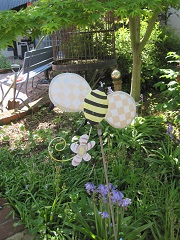
    Summer Bee.Sandy Baker yardWhat is your favorite summer activity?

    You can write about what you like to do now or a favorite activity when you were younger.  If you are writing fiction, what does your fictional character like to do in the summer?

    Writing Prompt:  Favorite thing to do in the summer.

  • Give up perfectionism.

    “The most important thing that I have learned, or that I’m trying to learn, is to give up perfectionism, because when you keep trying to make the story do all the things you want it to do, you keep failing, and you end up going around and around in circles. You end up confusing yourself and your talent, and you begin to view things as a failure, even though they’re not failures.”

    Akhil Sharma Akhil Sharma, interviewed by Gabriel Packard, The Writer magazine July 2015.

    Akhil Sharma is the 2015  Folio Prize winner and professor of creative writing.

  • Writing has been a freeing force

    Do you want to write true stories, but worry about hurting people’s feelings?

    Megan Kaplon, in an interview with Helen Macdonald, author of H is for Hawk:

    “When working on academic projects, she (Helen Macdonald) experiences anxiety about being correct, about saying the right thing, but writing memoir has been a freeing force.”

    “When it’s yourself, you feel the truth inside yourself. . . It becomes something utterly manifest when you know you’re writing something from the heart.” – Helen Macdonald

    Quotes from “Giving sorrow words,”  The Writer, July 2015

    Heart.black outlineMarlene’s Musings: In my opinion, you cannot go wrong when writing from the heart. Sometimes, when writing memoir, it’s wrong to write for an audience. Write for yourself. And if you find an audience, then hooray! But first, write from your heart. You can use these guidelines when writing about difficult subjects.

    Some of my favorite memoirs, where, I think, the authors wrote from a sacred heart place.

    What Have We Here, Susan Bono
    You Can’t Catch Death, Ianthe Brautigan
    Imperfect endings, Zoe Fitzgerald Carter
    Captive Silence, Alla Crone
    I Give You My Word, Janice Crow
    Ellevie, Marcelle Evie Guy
    A Life in Stitches, Rachael Herron
    Grief Denied, Pauline Laurent
    To Have Not, Frances Lefkowitz

    Your Turn: Who are your favorite memoirists, or authors who write true stories?