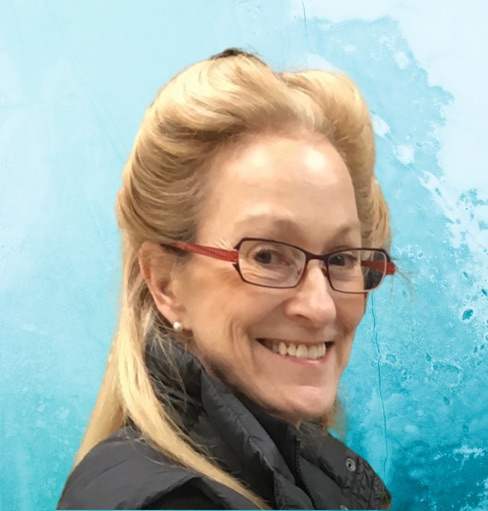
Cheryl Moore grew up in the mid-west, went to college in San Francisco, then lived in foreign lands before returning and eventually settling in Sonoma County.
In recent years, she lives in a house and garden where deer nibble on roses, raccoons dine on fallen figs, and her bird feeders are busy.
A nearby river offers opportunities to observe waterfowl.
Seeing and writing about these miracles of nature are adventures in living.
“Because in a busy, noisy world, it is our connections with one another that truly elevate our days.” Real Simple editor Leslie Yazel Sept. 2017
I love finding quotes with the word, or the idea of, connections in them.
I have been fascinated with the idea of connections for a long time. And so it isn’t a surprise that one of the books in The Write Spot series has the theme of connections.
Here’s an excerpt of the updated Connections description:
Ready to share your experiences but not sure how to start? Use this book of evocative essays and writing exercises to unlock your unique voice.
Connections is a vastly diverse set of stories, vignettes, and poems. Choosing selections penned by interconnected individuals such as mothers and granddaughters, sisters, and best friends, Cullen deftly highlights emotions and feelings to help spark your own adventure in tale-spinning. And by joining these fascinating women on a journey through traditions and yearnings as old as time, you’ll gain insight into the deep worth of sharing your own path through life.
The Write Spot to Jumpstart Your Writing: Connections is the poignant second book in The Write Spot series on how to be a successful wordsmith. If you like well-crafted thoughts, tender-hearted reflections, and journeys through history, then you’ll love Marlene Cullen’s inspirational collection.
“Chatting with a stranger makes you happy. Connecting with another person, even briefly—like talking to the barista brewing your coffee or a random seatmate on the train home from work—gives you a feeling of belonging and improves your mood.” — “Your Body’s Trying to Tell You” May 2016 Reader’s Digest
Sue Fagalde Lick writes about the ups and downs of being published.
I have three books coming out next year: A memoir, a full-length poetry book, and a poetry chapbook. Different genres, different subjects, different publishers. I didn’t plan it this way, but it’s happening. I have also had a run of acceptances for short pieces.
I should be overjoyed. Isn’t this what I wanted?
But I feel guilty boasting about my three books when other writers are not able to get even one acceptance. It’s the “people are starving overseas while I’m complaining about ice cream making me fat” conundrum.
After years of mostly no’s, I’m reading proofs, approving cover designs, and preparing for “pub dates” like a real writer. How will I promote three books at once? What if something goes wrong between the signing of the contract and holding the books in my hands?
I’ll deal with it. Just to have these editors say yes is a triumph.
I have to remind myself that I earned this and that it’s okay to succeed. I submitted the memoir, which is about Alzheimer’s disease, for years. I entered contests. I pitched to agents and editors. Those who responded said it was swell and they had a loved one with dementia, but they didn’t think they could sell it. Until one, sub #59, said she could.
Both poetry books were finalists in contests sponsored by publishers that feature Northwest poets. They didn’t win, but they caught the attention of editors who wanted to publish them. I have met both editors through my work as president of the Oregon Poetry Association. My name was not on my manuscripts, but I knew they published books like mine featuring poets from the Pacific Northwest, so my chances were good.
I did the work, and now I’m reaping the results. Lords, that sounds like boasting, but it’s true. Like Thanksgiving dinner, I shopped, prepped, set the table, and got up at 5 a.m. to put the turkey in the oven. Now all the food is ready, and it’s time to share the meal.
Can you make it in the writing world if you don’t grow up in a literary family, if you live in a tiny town in Oregon that doesn’t have a decent book store, if you don’t attend a prestigious university where your roommate’s dad just happens to work for Simon and Schuster, and you don’t win all the fellowships and prizes?
You can—if you follow the recipe.
* Write. Set yourself a writing time and keep to it religiously, even when it seems like every word is garbage.
* Rewrite. The first draft is the raw clay you will shape into a finished piece. Sometimes you’ll need to take it apart and start over from scratch. Sometimes you’ll need to hire a professional editor to help you see what could be better. My memoir looks nothing like the massive manuscript I started with. The editor of the full-length poetry book took out 15 poems that “didn’t sing” and changed the title. Now the whole book sings.
* Submit your work. Send it to multiple places at once. Keep track on a spread sheet, and when something is rejected, send it out again. And again. I received 98 rejections last year, but I also got some acceptances. Follow the submission guidelines regarding length, format, theme, etc. Send them exactly what they’re asking for.
* Read what they publish before you submit. If your work would not fit, move on. If you wouldn’t buy their books, they probably wouldn’t buy yours, and you wouldn’t want them to.
* Enter contests. The entry fees are high, but one win or acceptance because someone saw and liked your work will cover everything you have spent.
* Study your craft. After many years writing for newspapers and magazines, I earned my master of fine arts degree in creative writing at age 51. I continue to take workshops, read craft books, and trade critiques with other writers. There’s always more to learn.
* Become a presence in the writing world. Post on social media. Ask questions and get discussions going. Comment on other writers’ posts, read and review their books. Attend their readings and book launches. Answer their questions and share connections.
* Join and be active in writing organizations. Through my work with California Writers Club, Willamette Writers, the Nye Beach Writers Series, and Oregon Poetry Association, my name is out there, and I have met people who can help me not only get published but provide blurbs and reviews.
* Volunteer. The editor of a journal I admire needed someone to sit at their table at the AWP book fair for a few hours. I said yes. When she wrote to thank me, she also asked me to write for her.
* Keep at it. I started submitting my work to magazines and newspapers when I was in high school. Overnight success can take a lifetime.
Don’t feel guilty if you succeed. Just enjoy it. And take an extra helping of stuffing.
Sue Fagalde Lick, a former journalist, is a writer/musician/dog mom living in the woods on the Oregon Coast. Her books include Stories Grandma Never Told, Childless by Marriage, Love or Children: When You Can’t Have Both, the novels Up Beaver Creek and Seal Rock Sound, and two poetry chapbooks, Gravel Road Ahead and The Widow at the Piano. Coming in 2024 to a bookstore near you: Blue Chip Stamp Guitar, Dining Al Fresco with My Dog, and No Way Out of This: Loving a Partner with Alzheimer’s.
Don’t call her in the morning; that’s when she’s writing.
“Dorothy Parker’s Ashes” is an online magazine that publishes fresh, contemporary first-person essays and art by women and gender non-conforming writers.
“For our contributors, middle-aged or older women who have seen a thing or two, the act of writing is the act of living more purely distilled. Many have spent their careers shepherding other writer’s work and now, in their retirement, they’ve got something to say.
The longer we live, the more memories settle deep within, emitting an invisible, occasionally noxious gas. By giving them form, we set ourselves free. We elongate some things, cut others short.
We probe the seams underneath for the weak spot, hoping the puncture of our attention will allow all the pent-up emotion to rush through the hole where it escapes with a long sigh. In the end, that is the reward. (In other words, we don’t pay.)— Rebecca Johnson and Bex O’Brian
“We all have shadows, fears, insecurities, and doubts. Acceptance of them all leads us to realizing an unconditional love for ourselves.
When we can begin to love the parts of ourselves that we’ve deemed to be unlovable, when we invite in our shadows and let them know they are welcome, when we acknowledge and become curious to our fears, doubts, and insecurities, then we begin to realize that our innate nature (Love) has the capacity to hold them all.
Everything within us is part of us. When we accept this, our true nature is revealed.” —Alister Gray
Writing Prompt: Explore your fears, doubts, and insecurities as a curious child would explore sand, rain, flowers.
Observe. Imagine. Create.
Invite your shadow self to peek around the corner. Take a deep breath in. Let it out. Another deep breath in. Hold for a moment. Release.
Acknowledge your fears, doubts, and insecurities.
Give words to these thoughts.
What does fear look like?
What does doubt feel like?
How does feelings of insecurity affect you, and your work, and your relationships?
Let your thoughts dance on your page as you explore these feelings.
As you write, remember to take deep breaths and release.
Guest Blogger Jan Pezarro shares what she learned about beats, using her experience with lung cancer to illustrate physical, emotional, and setting beats.I hope you enjoy this entertaining and informative writing about different kinds of beats as much as I did.— Marlene
Jan Pezarro:
“A few beats missing here.”
In the first year of my MFA program, after 40 years in business and on my way to fulfill a long-held ambition to write a book, my mentor added this comment to my submission. I was pretty sure she wasn’t referring to golden or purple beets, but neither did I know exactly what she meant by “beats.”
My knowledge gap of storycraft tools and techniques was formidable. Lectures on structure, place, scene, and character sent me repeatedly to the internet for supplemental tutoring. The process reminded me of trying to read a text in the original Greek by translating each word in turn.
My mentor’s margin note sent me scurrying back online, where I learned there are several kinds of beats.
You may be familiar with the “Blake Snyder beat sheet,” a method for sequencing screenplay scenes, which Snyder describes in his groundbreaking book, Save the Cat! His fifteen beats offer screenwriters a template for tracking their heroes’ pursuit of their goals, from “Opening Image” to “Final Image” and all the plot events, wins, losses and subplots in between. Jessica Brody has since adapted Snyder’s beat sheet for novelists and memoirists in Save the Cat! Writes a Novel.
But the kind of beats I’m focusing on these days relate to smaller units of storytelling—sentences or phrases—that help plunge readers into the scene. Action beats, for example, depict what the character is physically doing, emotion beats reveal the character’s feelings, and setting beats provide context and depth.
Action seemed like a suitable jumping-off place. I went hunting for a place in my draft memoir where I could replace a dialogue tag (he said, she said) with an action beat.
Original:
If I was not sufficiently recovered from surgery, we would have to cancel the trip. “I should be OK with a September date,” I said. “That leaves two months for post-op recovery.”
Revision:
“I should be OK with a September date.” My shoulders slumped as I sighed in despair. But in the next moment, I straightened and looked at Andy. “It still leaves two months for post-op recovery.” I would just have to heal faster.
Just writing the action beat took me back to the moment. I could feel the hopelessness that I would be unfit for travel, and the moment of resolve that I would make it work. The beat added to the wordcount but made the narrative more interesting and moved the plot forward.
Next, I looked for opportunities to replace an emotion (sad, happy, angry, etc.) with an emotion beat that would reveal more about my character’s internal state.
Original:
“Have you ever experienced stigma because you have lung cancer?” Linda asked sadly. “It really hurts.”
Revision:
“Have you ever experienced stigma because you have lung cancer?” Linda hugged herself as her eyes filled with angry tears. “It really hurts.”
The emotion beat disposed of a dreaded adverb and added insight into the motivation for Linda’s next action.
A setting beat avoids halting the forward pace of the story by having a character take action within the setting, talking while observing the setting, or emotionally reacting to the setting.
Original:
The operating room looked like an ordinary room: four white walls with just a few cabinets and a long table covered with a gleaming array of medical instruments. The surgical team stood around a narrow bed in the centre of the room.
Revision:
The orderly wheeled my gurney into the operating room, maneuvering around a long table covered with a gleaming array of implements that looked like a buffet carving station. I didn’t recognize the room from what I’d seen in television medical shows.
I turned my head to look at him. “It looks like an ordinary room, not an operating theatre.”
The orderly arched a tweezed eyebrow and waved a hand at the assembled surgical team of ten. “What do you mean by an ordinary room?”
Adding action beats and dialogue to the setting picked up the pace while providing additional detail about the orderly.
Understanding and using beats with purpose has enriched my storytelling and breathed life into my characters. Best of all, I can’t wait to begin the revision process—to find places and spaces to achieve different effects and improve my scenes.
All I had to do was get the beats in.
Originally posted as “I Have The Beat,” in Brevity’s Nonfiction Blog, June 28, 2023
Jan Pezarro uses the power of storytelling to entice consumers, influence politicians, and motivate employees. She is currently querying a series of essays exploring the psychological impacts of illness caused by personal behaviour. Jan is an MFA student at the University of King’s College in Nova Scotia and is 40,000 words into her first book, a memoir called Breathing Lessons: How To Outlive Lung Cancer With Medicine And Mindset. Read more on her website.