
-
Blue Lake Review

Sonoma County poet Dave Seter has a poem “Relative Strangers” in the Blue Lake Review (online journal), November 2020 issue.
Our goal is to bring compelling, meaningful, insightful fiction and poetry to you every month. Something you can ponder and gnaw on. Something to bring light, or at least, growth and understanding to our readers on a regular basis. No frivolous pieces here. Your time is too valuable. We’re serious about our words, and are selective in what we present to you, sifting through the mountains of words to pull out the diamonds.
You, too, can see your writing in Blue Lake Review. Write. Revise. Polish. Submit!
-
Windows. Prompt #535

Writing prompt: Windows.
Or, more specifically: Peeking into windows.
Imagine it’s Halloween Eve. Or Christmas Eve. Or New Year’s Eve.
You are walking and see lights in windows.
Peek into a window. What do you see?
-
Is “Go Big or Go Home” Right for You?
Guest Blogger P.A. Cornell explores measuring success with writing . . . when can you call yourself a writer?
Not so long ago I was speaking with someone about how much I’m enjoying being a short fiction writer. I was trying to convey all the great opportunities that short fiction can offer: variety in setting and characters, finding your voice, etc. They kept nodding, but I could tell my words weren’t really penetrating, and when I finished, they said, “Okay…but why think so small? You’re working on a novel, right? I mean, go big or go home is where it’s at!”
Is it though?
In our society we tend to equate success with tangible things like fame and income, and this does have some validity, but is this the right measure of success for all of us? When it comes to writing, there are some very specific signs of a successful career: fame and fortune—if you can achieve them—are at the top, but along the way there are other markers like getting an agent, publishing a book (preferably with a Big Five publisher), and winning the top awards. Many people both in and out of the industry still have the attitude that if you aren’t working toward these lofty goals, you’re not a “real” writer. I disagree.
Before I was published, I was told I wasn’t a real writer, but every author in the bookstore was once an unpublished writer. And when you think about how many books are submitted to publishers each year and how few actually end up published, the odds are not unlike winning the lottery. Does this mean that every book that’s rejected is garbage? Are their authors not real writers? As someone who once read the slush pile for a publishing house, I can assure you that many of those rejected books are great, but there are only so many spaces to fill. Published, or not, their authors put in the work of learning their craft and completing their book—something which is no small achievement. And what about someone who chooses to self-publish; are they not a real writer?
To me, a writer is someone who expresses themselves through the written word and does so in a way that’s dedicated, with the aim of one day having someone else read what they’ve written. That’s it. I say this because I see so many writers beating themselves up for not fitting the description of the “successful author” that seems so prevalent. And if they’re not belittling their own efforts, there are so many others who will see a writer who hasn’t gotten a major book deal, or won awards, or who writes as a hobby rather than as their main career, as somehow less-than. I’m here to say it’s okay to think small.
There are so many paths available to us as writers, and none of these is superior to any other. None of them make you more of a writer. The goals we set for ourselves are so personal and have such varied motivations behind them—our measure of success should be just as personal.
It’s also okay if your goals change over time. When I was younger, I too fell into the trap of what it meant to be a successful writer. I wanted to publish a book—or series of books—and have them all become bestsellers and have the world know my name. The thing is, I didn’t so much want these things for myself, I wanted them as a means of proving to other people that I was a real writer.
As I’ve grown older, I’ve reexamined what my measure of happiness is as far as my career is concerned, and a lot of this goes back to what made me want to be a writer in the first place, when I was a little girl. Back then I just loved stories. Stories to me were magical, and when I learned that they came from the imaginations of people called writers, I just wanted to be a part of that. To me, that was how I could contribute to the world and somehow make it just a tiny bit better. That’s exactly what I’m doing right now, as a short fiction writer.
Do I have other goals? Sure, but fame and fortune aren’t really what I’m striving for these days. Sure, it would be nice to see my own book on store shelves, and I certainly wouldn’t turn down a decent advance. Likewise, if someone wants to give me an award I’d be elated. But are these things I need in order to consider myself successful? No.
My goals these days are simple. I intend to continue writing—and hopefully publishing—my short fiction. One day I’d like to publish a short story collection, but how it’s published is something I’ll decide when the time comes. I know writers who are published traditionally, self-published, or are hybrids of the two, and all these paths have pros and cons to consider, but all are valid options. One thing I do know is that short story collections tend not to be huge money-makers, especially if you’re not a big-name author—and I’m okay with that.
Maybe I’ll even write a novel one day, but I no longer dream of a long career as a series novelist. There’s nothing wrong with choosing that if it’s right for you, and I suppose if I did have a super successful first novel and publishers were knocking down my door begging for the sequel, I’d consider it. What I’m trying to say is that in the scenario where that doesn’t happen—the one where I quietly publish a book and it’s not widely read, doesn’t make me rich and famous, but a few readers do enjoy it and tell their friends—I’m still happy, and I’m still a real writer. I no longer feel the need to prove that to anyone.
I have friends who want more, and that’s fine. I’ll cheer them on as they achieve their goals. I’ll spread the word about their major book deal, movie option, or award. I’ll buy all their books and tell people I “knew them when.” I’ll be incredibly proud of them—but that doesn’t mean I want to be them.
There are real people behind every story, book, or article that’s written. People with lives that don’t always allow them to “write every day.” People with enormous obstacles to overcome. People who write for fun. People for whom the very notion of fame is enough to trigger their anxiety. People who are yet to be published but are working diligently on a story they know will one day see the light of day, even if they have to publish it themselves. And there are people who—like me—are just enjoying exploring new worlds and characters through short fiction or poetry or what have you, and who’ll decide later if they want something else. All these people are still writers, and every one of them is the real deal.
P.A. Cornell is a Chilean-Canadian SFF writer who wrote her first science-fiction story as a third-grade assignment, and still has it in her possession over three decades later. A member of the SFWA and graduate of the Odyssey workshop, her short fiction has appeared in several anthologies and genre magazines. For a bibliography visit pacornell.com.
Note from Marlene: I relate to: “. . . I quietly publish a book and it’s not widely read, doesn’t make me rich and famous, but a few readers do enjoy it and tell their friends—I’m still happy, and I’m still a real writer. I no longer feel the need to prove that to anyone.”
My series of Write Spot books fills the category of “not widely read,” but for the readers who have enjoyed them: Thank you! And even if those books weren’t published, I would still call myself a writer, which took me years to be able to say.
I am a writer. How about you? Are you a writer? Say that out loud.
I am writer.
Welcome aboard the writing train!

-
Number Please. Prompt #534
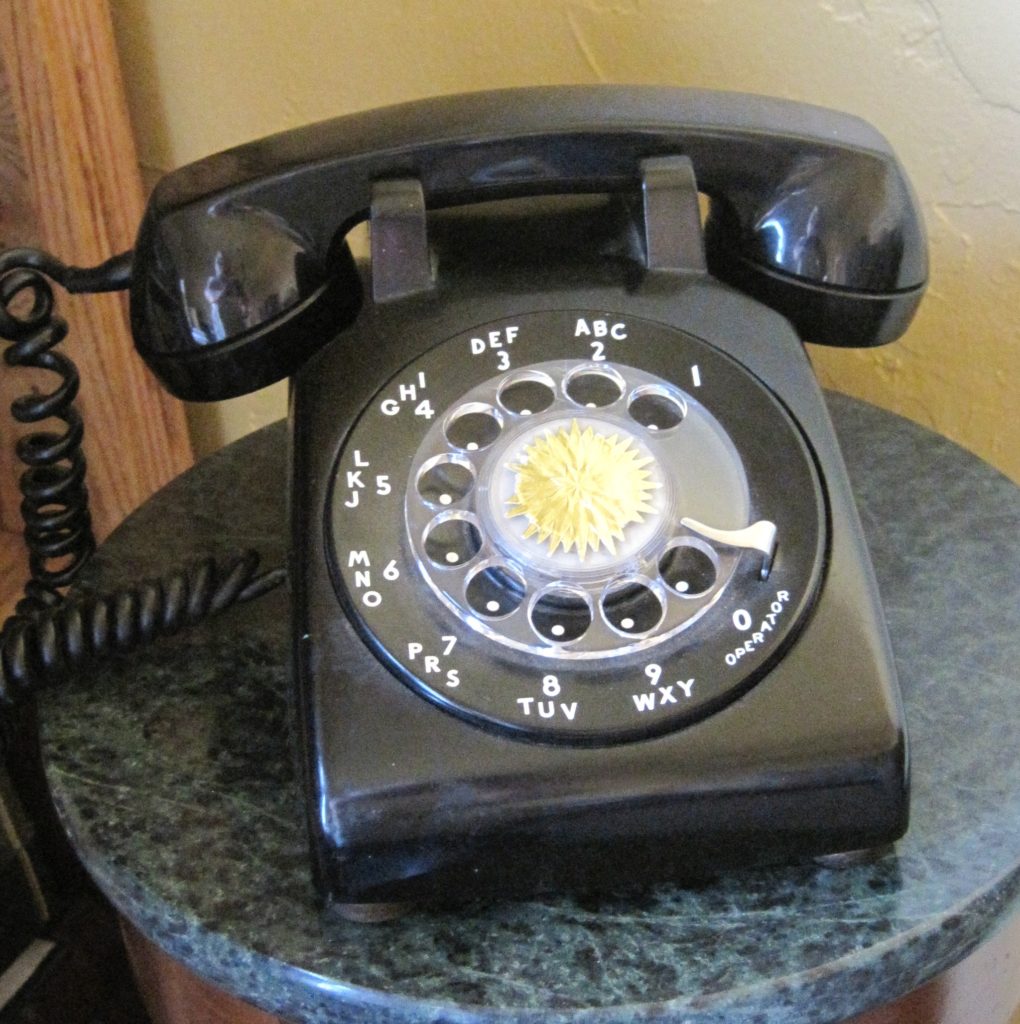
Do you remember the phone number you grew up with?
Write about a memorable conversation on that phone or a memorable conversation in the kitchen or living room or bedroom of your childhood home.
-
Write hot. Revise Cool.

“As Ray Bradbury says, don’t rewrite—relive. Your fiction is about creating emotion in the reader, and you can’t do that well without feeling it yourself.” —”The Geyser Approach To Revision,” James Scott Bell, July/August 2011 Writer’s Digest
Note from Marlene: This is true for memoir writing also.
“You’ve finished your first draft . . . You’ve written hot. Now you’re ready to revise cool with the help of creative spurts.
. . . wait at least two weeks before you do a first read-through of a draft. Then, go through it as fast as possible, as if you were a reader, resisting the urge to tweak anything just yet.”
Good advice for those who can do this. This isn’t my style, but it might be yours.
I do agree with waiting to revise. Let go of the attachment to your writing, your beautiful writing. Keep your darlings in a separate file if they can’t be used in the writing you are revising. They might be perfect passages for another piece of writing.
Write hot. Revise cool.
-
Telling Your Truth

“Telling your truths—the difficult ones and the joyful ones and all the ones between—is a big part of what makes for good writing. It is also what brings you pleasure in the process of writing. Most people who create and tend a garden don’t spend time on their knees pulling weeds just for the perfect end result—the gorgeous display of flowers that others will exclaim over. They pore over gardening books, order bulbs, water a sickly shrub, arrange the flagstones to make a pleasing path, all because they enjoy the doing of it. So, too, it should be with your writing. You want to see your writing grow, to find your daily work absorbing, to discover you can do better on the page than you could three years ago. None of this will happen if you shy away from the truth. The rewards that you seek are the rewards that go with courage: you take the risk and you feel the satisfaction of becoming a better writer.” —Writing the Memoir, by Judith Barrington
Using the freewrite method of writing, you are free to write whatever you want with no worries about the outcome.
Click on the links below to learn more about freewrites.
What, why, how . . . freewrites
Freewrites: Opening Doors to Discoveries
Just Write!
-
Looking For A Silver Lining

Reader’s Digest is looking for stories with a silver lining:
If you wished 2020 had a fast-forward button, you’re not alone.
In spite of the challenges, many of us discovered unexpected reasons to be grateful this year.
Perhaps you discovered a new skill—or a new friend?
Did you learn something wonderful about yourself—or about a neighbor or even a stranger?
Write about the best thing to come out of your year and Reader’s Digest might publish your story.
Write and submit!
-
Never The Same . . . Prompt #533

Today’s prompt is inspired by a poem I wrote in response to the fires that ravaged Northern California, October 2017 and to the devastation throughout the world.
The sentiments seem true today, especially “adjusting to a new normal” and the feelings of frustration, anger, and hope.
October 10, 2017
by Marlene Cullen
Sonoma, Napa, Solano, Santa Rosa will never be the same.
Las Vegas concert goers will never be the same.
Hurricane victims will never be the same.
This City, That City . . . the list too long.new perspectives
new fears
new ways of thinkingfrustrated with nature
angry with wrong-doers
angry with bureaucracy
angry in generalnow we know what we don’t want to know
the unimaginable can happen
there are no guaranteeswhat will we take away
what have we learned
what do we needwe need time to process
we know the five-year drought
and the heavy rains
made tinder that caught sparks
fueled by heavy winds
creating flying embersbut the why lingers—why this devastation
our beautiful Northern California landscape
disfigured by ash and rubble
looks like war was fought
in its yards and parks and on its hillsidesthis scarring of the earth
the inconceivable, unthinkable
happenedhow can so many people lose everything
I am affected emotionally and spiritually
I have my house, my belongings
but do I have my right mindtears spill down weary cheeks
we carry on, adjusting to a new normal
trying to make sense of that
which cannot be understoodthere is the before
and now—the after
the camaraderie and sense of community
the amazing goodness of peoplemy writing partner asks if I’m okay
I answer, no, but I will beWriting Prompt: Write about the mood or theme of the poem, a stanza, a line, a word. Just start writing and follow whatever comes up for you.
“October 10, 2017” was published in Phoenix Out of Silence . . . And Then. Redwood Writers 2018 Poetry Anthology, edited by Les Bernstein and Fran Claggett-Holland. Available through Amazon.
-
Chug, Chuff, Hiss, Squeal, Off We Go
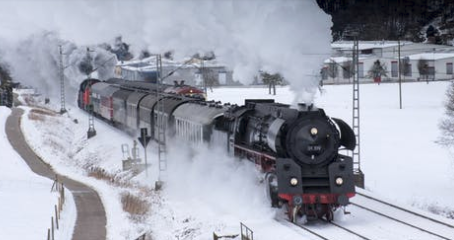
Today’s post is inspired by Nancy Julien Kopp’s blog post about using sound in writing.
Nancy wrote:
This morning, I was catching up on email when I heard the whine of a train whistle, blown several times. I wondered if it was the historic Union Pacific train, known as Big Boy, making its way across Kansas this week in celebration of 150 years of the Transcontinental Railroad. It was due to stop here in our town at 9:30 a.m.
The sound of that whistle made me stop and listen. I always liked to hear train whistles when I was a child. We lived across the street from the railroad tracks, so we were treated to that arresting sound on a frequent basis. I can remember being in bed on a summer night, windows open, hoping for the train to come by and announce its presence. When I did hear it, I wondered where it was going. My own world in those days was quite small, but I knew a train went to many places.
What do you think of when you hear a train’s whistle? Does it trigger any memories for you? Do you think of it as mournful or cheerful? Is it different at nighttime when the train moves through the darkness than it is on a sunny day?
Readers knows what a train whistle sounds like, so you don’t need to write “The train blew its whistle.” You can enlarge that thought to make it more interesting: The train’s whistle whined loudly as it passed by the crossing gates, growing dimmer and dimmer as it sped down the track.
Write a sentence or two for each of the items below, using sensory detail.
jet plane
waves on the shore
ball hitting a baseball bat
washing machine
school bell
air brakes on a bus
popcorn popping
crying child
church bells
piano
cow mooing
birdsong
Note from Marlene: Adding sensory details enhance the story and help readers “see” the scene and the characters.
The Magic of Sensory Words by Enchanting Marketing.
Write Spot Posts about sensory detail:
The neurological impact of sensory detail.
Imagery and sensory detail ala Adair Lara Prompt #277
Using sensory detail in writing.
See more posts about using the senses in writing by typing “sensory detail” in the Search Box on The Write Spot Blog.