Under the Gum Tree

  • Under the Gum Tree

    Sonoma County author Nicole Zimmerman’s “The Nature of Beginnings” was recently published in Under the Gum Tree.

    This Sacramento-based, reader supported, quarterly literary arts magazine publishes creative nonfiction and visual art in the form of a micro-magazine.

    Under the Gum Tree

    What does it mean to “tell stories without shame”?

    “Imperfections are not inadequacies; they are reminders that we’re all in this together.” —Brené Brown

    Under the Gum Tree has been championing the mantra of telling stories without shame since 2011. We see our mission as sharing stories that remind readers of our shared humanity. Too much of the human experience gets hidden behind constructed facades based on what we perceive the world expects from us. Stop hiding. Live a story. Tell it without shame.

    If you write true stories, also called creative nonfiction, (and literary nonfiction, by some) and you’re taking storytelling to a level beyond “I was twelve years old when my mother died,” then you might be ready to submit to us.

    We publish personal essays, memoir, and creative nonfiction stories that:

    reveal authentic vulnerability. These are stories that you’re embarrassed or afraid to share because you’re more worried about how people you know will react than what you learned and how it changed you. Those are the most powerful stories because you’re risking something for the sake of helping someone else.

    provoke conversation. The stories that are the hardest to tell inevitably make at least one person say, “Wow. Me too. And I thought I was the only one.” The stories that are the hardest to tell give others permission to tell their hard stories, and it perpetuates a cycle of storytelling.

    examine a universal truth. Most people keep the hard stories to themselves out of fear—fear of how others will react or judge them—but once a story gets shared, we finally realize how common the human experience really is. Sure, everyone’s individual experience is unique. (Isn’t that what makes a good story?)  But we can always relate to things like love, forgiveness, perseverance—you know, the stuff that everyone encounters no matter their circumstances.

    We consider submissions (2,000 words or more) for the following departments:

    Features: Longer features may explore a department topic or any other unspecified topic.

    Stomping Ground: This department is for stories about family—and we use that term liberally, because isn’t the friend you’ve had since you were eight, almost nine, years old, more like a sister?

    Sound Track: This department is for stories on interacting with music and how it interacts with us. Is there a specific song, group or artist that has had a significant impact on your life? Have you had a meaningful live-music experience? Are you a musician who also writes about how music affects the human experience?

    Fork and Spoon: This department is for stories, and even recipes, on how food, cooking, eating and drinking affect life. The dinner table means different things to each of us—it can be a comfortable place that facilitates intimate communion, but to someone else it might be an awkward place of forced conversation. These food interactions shape us more than we know.

    24 Frames A Second: This department is for stories on film, perhaps one of the more powerful storytelling mediums. Is there a specific film that has changed you in some way—caused you to think differently or see the world from a new perspective? Are you consistently moved by the work of one particular actor or director?

    Those Who Wander: Tolkien wrote, “Not all those who wander are lost.” Travels are from one neighborhood to another, one state to another, one country to another; on vacation or a pilgrimage, for family or for work, so many of these changes in our physical locations trigger meaningful reactions in us and the way we view the world around us. This department is for stories about travel and the individual ways moving around this globe affects us.

    Flash: Every issue includes a flash feature, which is a short-short piece of creative nonfiction, under 1,000 words.

    Visual Art: We consider submissions of visual art and photography. Every issue features two artists: a photographer and a visual artist. Art should be recent, no more than 2 years old, and should be previously unpublished in literary magazines or journals.

    Submission Guidelines

    Under the Gum Tree accepts submissions on an ongoing basis, and all submissions will be considered for one of our quarterly issues. To submit writing, photography or art to be considered for publication, please read and follow the guidelines.

    Please don’t email with questions until you have familiarized yourself with these guidelines and the details on this page.

    Submit

    With the submission fee, you receive the current issue (digital—a $7.99 value!) FREE. 
  • Boost Dialogue with Beats . . . Prompt #532

    Too much dialogue can be boring to read. Interspersing action with dialogue makes a story interesting.

    In real life, we don’t talk without movement, neither should characters on a page. Plus, action gives clues to the character’s personality, habits, status and more.

    For example:

    “I dunno,” Remy said.

    Well, kind of boring. But what if detail were added:

    “I dunno,” Remy said, polishing the top of his boot along the back of his jeans.

    Readers can “see” this action and learn more about Remy’s character.

    Beats

    “Dialogue benefits from variety. A good way to maintain reader’s interest is to insert a variety of beats into dialogue. Beats are descriptions of physical action that fall between lines of speech.” —“Amp Up Dialogue With Emotional Beats,” by Todd A. Stone, Nov/Dec 2010 Writers Digest

    Facial Expressions

    Facial expressions signal emotions.

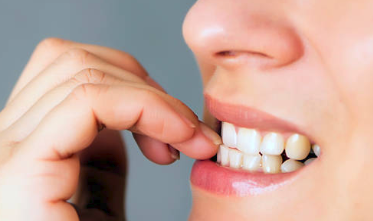
    “When a character raises an eyebrow or furrows his brow, this action, or beat, interrupts the dialogue and telegraphs a change in the character’s emotional state. As an exchange progresses and the emotional intensity rises—as the character’s dissatisfaction grows into anger, for instance—a character might set his jaw, bite his lip or narrow his gaze. His eyes may darken, his face may redden, his nostrils may flare and so on.

    Watch a TV show with the sound off. See how actors use facial expressions to signal emotions.”

    Physicality

    Of course, facial expressions aren’t the only way to physically show emotions. Body language can indicate a range of emotions.

    “Characters can point, steeple their fingers, clench hands into fists, pound tables, hold their hands up to surrender, cross their arms in front of their chests, throw up hands in resignation or despair.”

    Movement

    “Characters can cross the room, push back from a desk or table to get physical and emotional distance from a heated conversation, an intimate moment or another character. They can move in closer to become more threatening or more intimate, or to drive a point home. Use movement to support and enhance your dialogue.”

    Bigger Moves

    “If it fits your character, use big actions: Throw a fit, throw a plate or throw a punch. If your character has a hair-trigger temper, bypass eyebrow raisings and go straight to breaking furniture.

    Make sure the actions are consistent with the character’s traits. Every action should be a reflection of the character’s objectives and emotions, and of the scene. If the character seldom shows emotion, focus on small details that show true feelings, a tightening around the eyes, a deliberate forcefulness in each step as he walks across the room, a tense grip on a pen.”

    If you have a work in process see where you can add beats to dialogue.

    Prompt: Recall a recent conversation. Write it out, including physical gestures, facial expressions, and movement. Write as if you are writing a scene for a character to act out.

  • Multiply Your Energy

    “Keep watch for the energy vampires. Stay with people who multiply your energy.” —Jon Batiste

  • Strategies For Stress Reduction

    By now, many of us know the drill to stay safe during the 2020 pandemic: Wash hands, wear a mask, and social distancing. But what about our mind, body, and spirit?

    “My lab’s study found the best recipe for dealing with everyday stressors is to try to simultaneously plan ahead about what you can control and stay in the moment mindfully.” —Shevan D. Neupert, Ph.D, “How to Soothe Your Soul,” August 2020 Consumer Reports

    The activities listed to soothe your soul in this article are the same as the restorative activities in the resource section of The Write Spot: Writing as a Path to Healing.

    ~ Prepare and plan. “Tasks that distract you now but also benefit you in the future are wonderful.” — Joyce A. Corsica, Ph.D, “How to Soothe Your Soul,” August 2020 Consumer Reports

    If you are working on a writing project, plan for the result. If you are submitting your writing to a publication, start with a projected date, then work backward to establish goal dates.

    Use the same strategy if you are publishing a book. Target a date for completion to send to an agent, or to self-publish. Work backward to set need-to-finish-by dates.

    First draft completed, revision completed, beta readers, proofread, ms to editor, etc.

    If you want to write, but haven’t started a project, start with a freewrite. Choose one of the prompts on The Write Spot Blog and just write.

    ~Just write freely with no worries about the outcome.

    ~ Nurture in nature. Walk outside. Open your door and breathe in fresh air, if you can. Look at nature out a window . . . a tree, a lawn, a garden. Go on a virtual tour of national parks.

    ~ Listen to music to soothe your soul or put on lively music.

    ~ Dance or move with the groove. Check out The World Groove Movement.

    ~Stretch.

    ~ Yoga. There are many free yoga youtube instructions.

    ~ Emotional Freedom Technique (EFT).

    ~ Hypnotherapy for relaxation and stress reduction.

    ~Searching for “help with stress” online resulted in 899,000,000 results. Overwhelming, yes. But you might find something to help with stress that you hadn’t thought of.

    Good luck with managing your stress during these turbulent times.

    I’m hanging in there with you.

  • Failure is an option.

    “You have to be able to fail until you achieve what you want to be.” —Jon Batiste

  • What energizes you? Prompt #531

    What motivates you to get out of bed in the morning?
    What do you look forward to?

    What energizes you?

  • A Blues Poem . . . Prompt #530

    A blues poem takes on themes of struggle, despair, bad weather, any suffering.  

    It can also be funny: Fruit Flies Everywhere.

    Three-line Blues Poetry

    A statement in the first line,

    A variation in the second line,

    an ironic alternative in the third line.

    My baby walked out that door.

    My baby walked out

    and now my broken door won’t open up no more.

    And

    I had to walk back to Texas.

    I had to get on my feet

     cuz my baby she took my Lexus.

    Four-line:

    When a woman gets the blues

    She hangs her head and cries

    But when a man gets the blues

    He hops on a freight train and rides

    With both types, you can continue the pattern. You can also repeat lines.

    You can write something in narration, then pull out lines to condense for a poem.

    You can start with these lines:

    When I woke up this morning . . .

    I heard on the news . . .

    Excerpted from Writer’s Digest magazine, “Writing Your Woes” by Miriam Sagan, August 2004

  • Collage in Poetry . . . Prompt #529

    I would like to share collage in writing with you, some things I learned from the poet Dave Seter.

    His poem, “Fargo Airport, Waiting in a Bar” in The Write Spot: Writing as a Path to Healing is an example of using collage in poetry. The lines in italics in his poem are from signs on the wall and on the label on a bottle. He seamlessly incorporates “lines from others” into his poetry.

    Look around you . . . what writing do you see that you can use in your writing?

    Perhaps: A book title, a greeting card, writing on décor, writing on a tissue box, or a piece of mail.

    Or: A note you have written, writing on a coffee mug, a sign on a wall.

    A label on a jar, a can, or a bottle.

    You can also use song lyrics as a jumping off point for your writing.

    Writing Prompt: Today . . . or . . . Yesterday

    Incorporate written words that you see into your writing.

    A stanza from “Fargo Airport, Waiting in a Bar” by Dave Seter:

    Waiting for a funeral, it seems the years collapse

    into one moment. I want to find

    the right thing to say to firemen and farmers,

    who are kind, as they offer from

    A Bucket of Beer Nine Dollars.

    Dave Seter is the author of  Night Duty,  and Don’t Sing to Me of Electric Fences, a poetry collection due out from Cherry Grove Collections in 2021. A civil engineer and poet, he writes about social and environmental issues, including the intersection of the built world and the natural world.

    Born in Chicago, he now lives in Sonoma County, California. He earned his undergraduate degree in civil engineering from Princeton University and his graduate degree in humanities from Dominican University of California, where he studied ecopoetics.

    Dave wrote his master’s thesis, “Introducing Godzilla to Marianne Moore’s Octopus of Ice at the Intersection of Global Warming, Environmental Philosophy, and Poetry,” based on Marianne Moore’s collage poem, “An Octopus (of ice).”

     “This paper explores the question: How can a poet write an ecologically aware poem about global warming?”

  • When I was in 7th grade . . . Prompt #528

    When I was in the seventh grade . . .

    Fill in the rest . . . what happened when you were in seventh grade?

  • When I was six years old . . . Prompt #527

    When I was six years old . . .

    Finish the sentence: When I was six years old . . .