Forgive. Prompt #519

  • Forgive. Prompt #519

    Invictus is a 2009 film starring Morgan Freeman and Matt Damon.

    The story is based on the book Playing the Enemy: Nelson Mandela and the Game That Made a Nation about the events in South Africa during the 1995 Rugby World Cup.  

    After spending 27 years in prison, Nelson Mandela was released and elected as South Africa’s first black president, he preached reconciliation.

    When he decided to support the country’s rugby team — long a symbol of white oppression — his countrymen were stunned.

    “Forgiveness liberates the soul,” Mandela explains to a crowd. “That’s why it’s such a powerful weapon.”

    Prompt: Forgiveness.

    Write about the concept of forgiveness or absolution.

    Write about someone you could forgive, or someone who might forgive you.

  • Travel. Prompt #518

    Write about the farthest you have traveled.

    Or

    Write about the time you were farthest from home.

    Or

    Tell about a time you missed your plane, train, bus, gondola, cab ride.

  • A house . . . Prompt #517

    Write about a house you no longer go to.

    Or a house you would like to visit.

    Or a house you will never again go to.

    Write about a house.

  • What does age have to do with it? Prompt #516

    Now that you are of a “certain age,” you know a thing or two.

    What do you know now that you didn’t used to know?

  • Suleika Jaouad and The Isolation Journals

    Guest Post by Suleika Jaouad, creator of The Isolation Journals.

    The Isolation Journals was founded on the idea that life’s interruptions are invitations to deepen our creative practice.

    Suileika:

    When I started The Isolation Journals project, I had no idea so many would join me.

    In late March 2020, I was quarantining in my parents’ attic, having left New York City as Covid-19 was surging. I was no stranger to isolation. For much of my twenties, I was in treatment for leukemia, unable to travel, eat out, see friends, even take a walk.

    Now isolation was back—this time on a global scale.

    The Isolation Journals is an artist-led community and publishing platform that cultivates creativity and fosters connection in challenging times.

    We are in an unprecedented moment. This is one small way to stay grounded and hopeful to transform our isolation to connection.

    Suleika’s August 2, 2020 Isolation Journals Post:

    Today’s prompt is inspired by the relationship between movement and creativity. It’s something that artists and thinkers have observed for millennia. One of the earliest examples is the legend of Aristotle, who paced while he taught, and his students—called “the Peripatetics,” a word that means “to walk around”—followed suit. As Thoreau wrote in his journal, “Methinks that the moment my legs begin to move, my thoughts begin to flow.” 

    But what is new is scientific evidence to support the age-old phenomenon. In the last decade, studies have emerged showing that movement and thinking are symbiotic, and some neuroscientists theorize that the evolutionary process that allowed us to develop the ability to walk upright is the same one that helped us develop conscious cognition. It’s a fascinating idea, one with so many implications for the creative practice.

    I’ll say one last thing before getting to the prompt—that we’re all different, with varying access to places to walk, with bodies that have different abilities and disabilities. Because of that, it’s natural that how we move will vary as widely as the writing that will follow it. Just find what works for you; as always, this practice is yours, so make it your own.
    Prompt 103. The Singular Glory of a Solo Walk In mid-March, I was working on a grueling last edit of my memoir Between Two Kingdoms. From early in the morning until late at night, I sat hunched over my computer in my parents’ attic, second-guessing every comma, re-thinking every word. I was panicking, sure it was a total disaster, and my quarantine roommate Carmen offered to read the entire manuscript out loud with me. Between the stress of the deadline and being so sedentary, our bodies ached. From time to time, we’d have to take a break—walking in the woods and stopping for a spontaneous snowball fight, or doing yoga there in the attic.

    One afternoon, we were both in downward dog, and I said to Carmen, “I have an idea.” I rambled something vague about journal prompts and helping others complete a 100-day project. “Go write that down,” Carmen told me. “Now—before you forget it.” And I got up from the mat, and I did. I didn’t expect it would go anywhere, at least not immediately. But writing it down made the idea seem more real, and I kept mulling it over. Then as the number of cases of covid-19 rose, as cities and states and countries went into lockdown, that seed of an idea—one that had occurred in a moment when I was giving my mind a break—sprouted a week later into the Isolation Journals.

    This isn’t a one-off. When I’m stuck and can’t work something out on the page, or when my head is too full of chatter, I’ve learned to get out of my mind and into my body. I go for a walk, and as I move and fall into a rhythm, the chatter quiets. Whatever knots my thoughts are in begin to loosen. 

    It happened just yesterday. Over the weekend, Jon and I moved to an artist’s residency, to a house near a river with miles and miles of walking paths. I’ve been sick—last week I tested positive for Lyme disease, which has made my joints swollen, my movements slow and labored. But yesterday morning, I felt good enough to take a walk, and on a long gentle amble, I began to get an idea of what I want to write next. Right now, I’m just seeing little glimpses, like glints of sunlight on the river, but it feels good to be inspired again. As I settle into our new digs, I’m setting a new intention to take a quiet, solitary morning walk before I write. I trust that soon enough, the seed of this next idea will begin to sprout.

    Your prompt for the week:
    Begin with a movement that roots you in your body. Maybe take a walk outside, or dance around your house, or take deep breaths and blow each exhale through loose horse lips—whatever will get you out of your head. Capture what springs to mind using the voice recording app on your phone or by jotting quick notes. Do this for as long as you’d like.

    Next, write in your journal about what came up. You can elaborate on the thoughts and ideas you had, or you can get meta, reflecting on how movement carried you into a new contemplative space. 

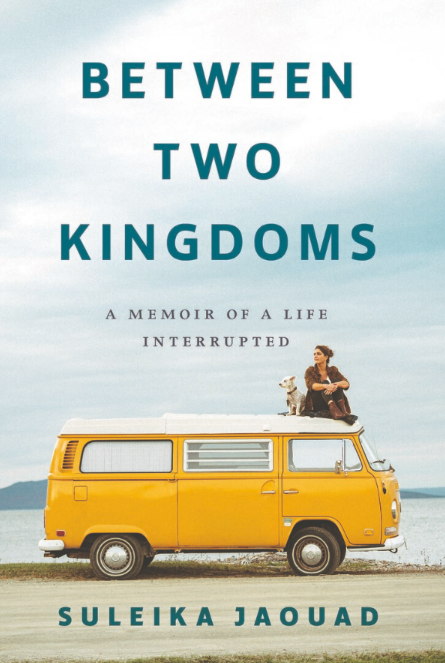
    Suleika Jaouad is an Emmy Award–winning writer, speaker, cancer survivor & author of the forthcoming memoir, Between Two Kingdoms.

    She is the creator of The Isolation Journals, a global movement cultivating community and creativity during hard times.

    You can pre-order her book, due to be released February 2021, Between Two Kingdoms, A Memory of A Life Interrupted.    

    Suleika’s humorous, informative, meaning-full Ted Talk.

    “The hardest part of my cancer experience began once the cancer was gone,” says author Suleika Jaouad. In this fierce, funny, wisdom-packed talk, she challenges us to think beyond the divide between “sick” and “well,” asking: How do you begin again and find meaning after life is interrupted?” — Official TED Conference, 2019

  • The last piece of the puzzle. Prompt #515

    Writing prompt: The last piece of the puzzle.

    You know what to do . . . Just write!

  • What are you confused about? Prompt #514

    We know what we know.

    What’s more interesting:

    ~ What don’t you know?

    ~ What are you confused about?

  • Today I . . . Prompt #513

    Today I . . .

    Write from your point of view or from a fictional character’s pov.

    Don’t have a fictional character? Today might be a good time to create one.

    Use these words in your writing:

    Illusion, jar, hope, shatter, widget, super, awkward

    Hope = hoping, hopeful

    Jar = jars, jarring

    Writing Prompt: Today I . . .

  • The Three Questions

    Guest Blogger Shawn Langwell shares smart writing tips, focusing on three important questions.

    Octavia E. Butler said, “You don’t start out writing good stuff. You start out writing crap and thinking it’s good stuff, and then gradually you get better at it. That’s why I say one of the most valuable traits is persistence.”

    Writing and leadership have a lot in common. Both require creativity, passion, and persistence. Both are conversations. And every good author as well as effective leaders know their audience. Each requires a level of confidence and humility to listen. To listen to the suggestions of an editor. To listen to the inner voice that says you need to sit your butt down on a regular basis and write. Or, upon awakening to listen and follow the conviction of a dream so vivid and powerful that the story just unfolds and becomes a book and a short memoir entitled: “Cathartic Writing: The Healing Power of a Story Now Told,” included in The Write Spot: Writing as a Path to Healing, by editor Marlene Cullen.

    I am still very much a rookie when it comes to writing and, like many people, tend to overthink the entire process before I even write the first word. For me, focus is a key to establishing a successful plan for any endeavor. Sure, there’s a lot more to writing than focus but I have found that lack of focus tends to lead to overthinking, which is a result of fear about not knowing where you want to go or believing enough in your abilities that one becomes consumed with analysis paralysis.

    Not everyone wakes up from a dream with a crystal-clear vision of what they want to write. Sometimes you need to kick that doubt to the curb and sit your butt down in front of your computer and write. Don’t worry about the results, yet. And certainly, don’t try and edit as you go. Some may be able to do this, but I find it messes with my flow and I get back onto the perfectionism merry go round and lose any emotion or momentum I may have finally gained.

    Writing is messy and not many like being messy. Writing also means you must become vulnerable. You are putting your thoughts and ideas out there for the world to see and some people may not like them.

    “Almost all good writing begins with terrible first efforts. You need to start somewhere. Start by getting something—anything—down on paper. What I’ve learned to do when I sit down to work on a shitty first draft is to quiet the voices in my head.” ― Anne Lamott

    I’ve been in sales and marketing for over twenty-eight years and, like authors, occasionally feel stuck. A few years ago, I went to a colleague to get input on a big proposal I was working on. He stopped me before I even got started and asked me if I had done a needs assessment.

    “What do you mean? Yes, I know they need to increase their business.” I said.

    “No. Have you asked them the three questions?”

    “The three questions?”

    “Before you can give a business presentation or any type of communication you need to ask these three questions:

    One: Who do you want to reach?

    Two: What do you want to say to them?

    Three: What do you want them to do?”

    Before they write or submit for publication these same three questions need to be decided by every author or speaker.  In other words, who is your audience or what genre do you want to write?

    Are you writing fiction or non-fiction? Each of these will dictate the voice, narrative and theme of your work.

    Lastly, What’s the purpose of your writing? Is it to entertain (Fiction)?

    Or, is it to inform? Persuade?  Or share a unique experience? (Non-fiction).

    Taking time to focus on these three questions has dramatically helped me increase my success rate in sales and made it easier to get started with writing. I have learned that answering these questions up front and not worrying about writing crap at first takes the pressure off. My persistence in practicing these steps has enabled me to finish three years of creative writing at the junior college, write and submit to three additional anthologies, give six speeches for Toast masters, and be asked to share a few words about the process with other writers like you.

    I look forward to meeting you on August 5th when we explore this a little more in depth at a Writers Forum Zoom Event.

    Be well, Shawn Langwell

    Note from Marlene: Shawn leads the parade in a series of Zoom talks based on the anthology, The Write Spot: Writing as a Path to Healing. Please join us for these free Writers Forum events.

    Shawn Langwell is a graduate of San Francisco State University with a Bachelor of Science Degree in Marketing and Advertising. He earned certificates from Dominican University, Barowsky School of Business Executive Education Leadership Program, and the San Rafael Chamber of Commerce Leadership Institute.

    He is President of Redwood Writers, a branch of the California Writers Club, and immediate past President of Toast of Petaluma.

    Shawn’s personal mission is to add value to people and businesses everywhere. He is a sought-after speaker for recovery and has over 33 years of continuous sobriety. He lives in Petaluma, CA with his wife, three adult children, and a Maine Coon cat, Cleo.

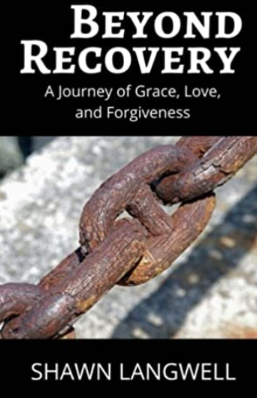
    Shawn is the author of the memoir, Beyond Recovery: A Journey of Grace, Love, and Forgiveness.
  • An argument. Prompt #512

    “At the time it seemed very important. That’s the funny thing about arguments. Now, I can’t even remember what it was all about.”

    Quote by Dr. Chilton in the movie, Pollyanna.

    Writing prompt: Write about an argument or a disagreement.

    After you have written all you want on this subject, put on your screenplay hat. Write this same scene from the point of view of the other person involved in the argument or disagreement.