Our stories . . .

  • Our stories . . .

    FairiesReading
    Story Time

    “Our stories make us stronger and better.” — Holly Curtin

    Just Write!

    #amwriting #iamawriter #justwrite

  • That Vulnerable Feeling

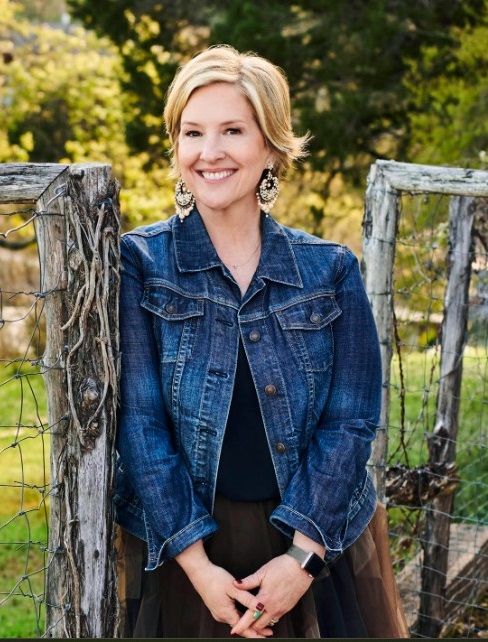
    Dr. Brené Brown

    “Vulnerability is not winning or losing; it’s having the courage to show up and be seen when we have no control over the outcome.

    Vulnerability is not weakness; it’s our greatest measure of courage.” — Brené Brown 

    Note from Marlene: I think that sharing your writing is an act of trust and courage. That vulnerable feeling is real.

    #justwrite #iamawriter #amwriting

  • People will never forget . . .

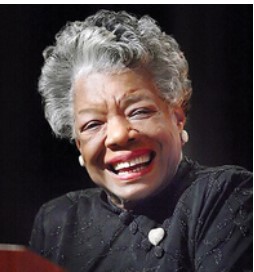
    Maya Angelou

    “I’ve learned that people will forget what you said, people will forget what you did,

    but people will never forget how you made them feel.” ― Maya Angelou

  • Healing Starts When You . . .

    “Healing starts when you write about what happened and how you felt about it then, and how you feel about it now.

    And in order for our writing to be a healing experience, we need to honor our pain, loss and grief.” — “Opening Up By Writing It Down” by James Pennebaker

    The Write Spot: Writing as a Path to Healing” has an expansive section on how to write about difficult subjects without adding trauma.

  • It’s Just The Programming

    Do you wonder why you think what you think?

    “It’s just the programming.” Ted A. Moreno offers these words for contemplation:

    We believe what we’re told. That’s what we do as little kids. From the time we’re born until 8 or 9 years old we take in everything as absolute truth. So when people come to my hypnotherapy office because they don’t feel good about themselves, or they feel less than, I tell them “Hey, It’s the programming. Just the programming. The mind viruses you caught from someone else. It’s not your fault. It’s not who you are, it’s just how you are thinking and what you believe, and the good news is that you can change your thinking and what you believe.

    Excerpt from: “Embrace Your Place: Powerfully Claiming Your Existence, Episode 408”— November 17, 2022, by Ted Moreno

    Ted A. Moreno is a hypnotherapist, success performance coach, published author, educator and sought-after speaker who helps his clients become free from fear and anxiety, procrastination and bad habits such as smoking.

    He is a Certified Hypnotherapist, Certified NLP Practitioner, and holds the Master Certification as a Therapeutic Imagery Facilitator. In addition, Ted is an Honors Graduate of the Hypnosis Motivation Institute and a recipient of the Director’s Award from HMI, awarded for exceptional professional achievement during clinical residency.

    Ted’s book, “The Ultimate Guide to Letting Go of Negativity and Fear and Loving Life” is available on Amazon.com.

  • The Stories We Tell

    “Jo [Gaines] shares how the process of writing her new book led her to see more clearly the fullness of her story: Every piece, worthy. Every chapter, a bridge. Every moment that shaped her, brought to the surface.” Winter 2022, Magnolia magazine

    “I ended up discovering a lot in my story: clarity, healing, deeper truths I didn’t know I could get to. But mostly, these pages brought me back to myself, back to those tender little moments I thought I’d lost. In writing down my story, I had the chance to relive some of the very best chapters of my life.” —Joanna Gaines, Winter 2022 issue of Magnolia magazine.

    Your turn: Books like Joanna’s as well as The Write Spot books might help you write your stories, and like Jo, you might find clarity and healing, remembering what you have forgotten.

    “The Stories We Tell: Every Piece of Your Story Matters” by Joanna Gaines and all The Write Spot books are available from your local bookseller and from Amazon.

  • I write to understand . . .

    “So, while I still write for understanding, for truth, for clarification, to tell a story, to help people, to help myself and even for fun—I also write for communication, for discussion, for connection.

    In a world that can feel fragmented and lonely, I write to bring myself closer to others.” —Diane Forman, “Why I Write,” Brevity’s NonFiction Blog, October 31, 2022

    More on “Why Write?”

    Why Do You Write?

    Why I Write

    Just Write!

  • Meeting My Father

    “Whether you have a fractured relationship with your dad or family, or you have untold stories of your own, now is the time to bring them out of the darkness and let them shine and be a beacon to inspire and move others.

    You never know who you can possibly help until you share pieces of your own heart through writing or by showing up, fully present, with a heart full of love.” — Shawn Langwell

    “Father’s Day has ALWAYS been hard for me BUT I decided to write a short poem forgiving my father, finally, fully. Thank you to The Good Men Project for publishing the poem. It is called, simply, MY FATHER.” — Kevin Powell

    Note from Marlene: Thank you, Shawn and Kevin, for giving me the courage to post My Father story.

    “Meeting My Father,” by Marlene Cullen.

    When I was seven years old, I was embarrassed that I knew the meaning of the word sober.

    I heard “Is Bill sober?” more times than I care to count. That’s all my mother, grandparents, aunts, and uncles asked about my father.

    The only holiday I remember celebrating with him was a rainy Christmas Eve. My mother couldn’t talk him out of driving to her mother’s house for our annual party. I was petrified in the back seat as he wove in and out of traffic.

    The only time I missed having a father was an occasional Father’s Day, and that was more of an awkward feeling rather than a sense of missing out on something. 

    I never called him “Dad.”

    My father was a merchant seaman and would be gone months at a time. He brought home exotic toys from far away countries, intricately carved hope chests from Japan, clothes for me and my sisters, always too small.

    When he was home, it meant he wasn’t working. When he wasn’t working, he was at a neighborhood bar. My mother would drive from bar to bar looking for him. My younger sisters and I waited in the backseat of our 1950 Chevy while Mom coaxed him to come home. I tried to find ways to entertain my sisters while we baked in the stifling heat.   

    We moved in with my father’s parents when I was nine. My father lived with us off and on, mostly off. He drifted away as alcoholism took over his life.

    My parents divorced when I was twelve. And so, we began the torturous Sunday afternoon visitations. My mother would conveniently be gone when he arrived at our flat. He would be conveniently drunk. We took a taxi to a restaurant on Market St. My father slurred his words when he ordered. I cringed in embarrassment.

    When I was sixteen, I rode the bus down Mission Street to my new job. I looked out the window and saw my father slumped in a store entryway. That’s when I began to think of him as a Third Street Bum and good for nothing. As the bus lurched forward, I felt shame. My stomach tightened. My throat constricted. Tears blurred my vision. I stared straight ahead. There was nothing else for me to do.

    One year later, I was getting ready for school when the phone rang at 7 am. I answered quickly, not wanting the ringing to wake up my grandmother, who had returned late the night before from visiting my father in the hospital. I was angry at whoever was calling so early. The voice on the other end of the line identified himself as “Bill’s doctor,” and then, “Bill died this morning.” Just like that. I was shocked that he gave no consideration who he was giving this news to. I must have gone into my grandmother’s bedroom and told her there was a phone call for her. I don’t remember what I said to my mother. I finished getting ready for school, like it was any other day.

    My father died on March 22, 1966, at the age of thirty-seven, emaciated from cirrhosis of the liver.

    As a young mother, watching my husband with our daughter, I realized I was bitter and angry with being deprived of a father. I began to think of him as just the sperm donor.

    [Then, a miracle happened. I met a woman who knew my father as a teen-ager.]

    Georgia and I talked for two hours. She told me about their escapades, the pranks they played, and the normal teenage stuff they did. Georgia said my father would take the bus to meet her after work and escort her home, to keep her company and make sure she made it home safely. She said he was a gentle and quiet kid.

    After our conversation, I realized my father was once a happy-go-lucky kid. He went to dinner dances at the Claremont Hotel in Berkeley in the 1940s and he had many friends. He was more than a slumped figure in a doorway.

    Seeing my father through the lens of his teenage friend is one of the best gifts I have received. I felt I met my father as a real person the day I talked with Georgia.

    I will be forever thankful to Georgia for introducing my father to me as a caring young man and a valued friend.

    My father wasn’t just a Third Street bum and he was more than merely a sperm donor. William (Bill) Scott was a loving son, a loyal friend, and a Marine Corps veteran. He was a husband and a father, struggling to navigate the challenges of life.

    He is a part of me, imperfections as well as the good parts. He is a part of my granddaughter who shares his hazel-colored eyes.

    Bill Scott was Somebody. He was my father. And if he had the chance, he might have been a wonderful grandfather. I like to think so.

    Excerpt from “Meeting My Father,” in the anthology “The Write Spot: Memories,” available from your local bookseller and as both a print and ebook through Amazon.

    Note: That’s my father, William (Bill) Scott, on the cover of “The Write Spot: Memories.”

  • Write to exorcize . . .

    “Write to exorcize what’s haunting you. Write about whatever it is you can’t get out of your head—a person, a place, a fear, a fictional scene, a memory from your past, a fantasy for your future. Allow yourself to think obsessively and shamelessly about only that one thing for as long as it takes to get it down on paper.” —Puloma Ghosh, on The Isolation Journal, created by Suleika Joauad.

    The Isolation Journals is Suleika’s newsletter for “people seeking to transform life’s interruptions into creative grist. Both free and paid subscriptions are available.”

    #justwrite #iamawriter #iamwriting

  • Jon Batiste, radar, and writing

    Jon Batiste

    “I believe this to my core, there is no best musician, best artist, best dancer, best actor,” he began. “The creative arts are subjective and they reach people at a point in their lives when they need it most. It’s like a song or an album is made and it’s almost like it has a radar to find the person when they need it the most.” — Jon Batiste, during his 2022 Grammy winner for best album acceptance speech

    I think writing can be included in the creative arts category.

    When we’re lucky, our writing radar picks up news and events when we need them to enhance our writing.

    And that includes writing communities like The Write Spot.

    Welcome! I’m so glad you are here.

    The Write Spot Resources Page:

    Writing Blogs and Websites

    Places to submit writing

    Community groups

    Writing magazines

    ~Marlene

    #justwrite #iamwriting #iamawriter