“And there’s scientific work that backs up the healing benefits of writing” —Ericka McIntyre, “The Veterans Writing Project,” Writer’s Digest, Jan/Feb 2020
The Veterans Writing Project provides free creative writing workshops for veterans, service members, and their family members.
Passion is the engine that has to fire the whole thing.
Successful writing is all about passion, to create a world that’s full and complete and engrosses the reader. First and foremost, the reader is you.
If you’re writing about a world in which you need to research to learn about it, then feel passionate about it. If you’re not passionate about what you’re writing, you’re writing the wrong thing.
You want heat, you want fire. That’s what we gather around and warm our hands with.
Excerpted from “Fired Up,” by Jessica Strawser, Writer’s Digest, Nov/Dec 2016
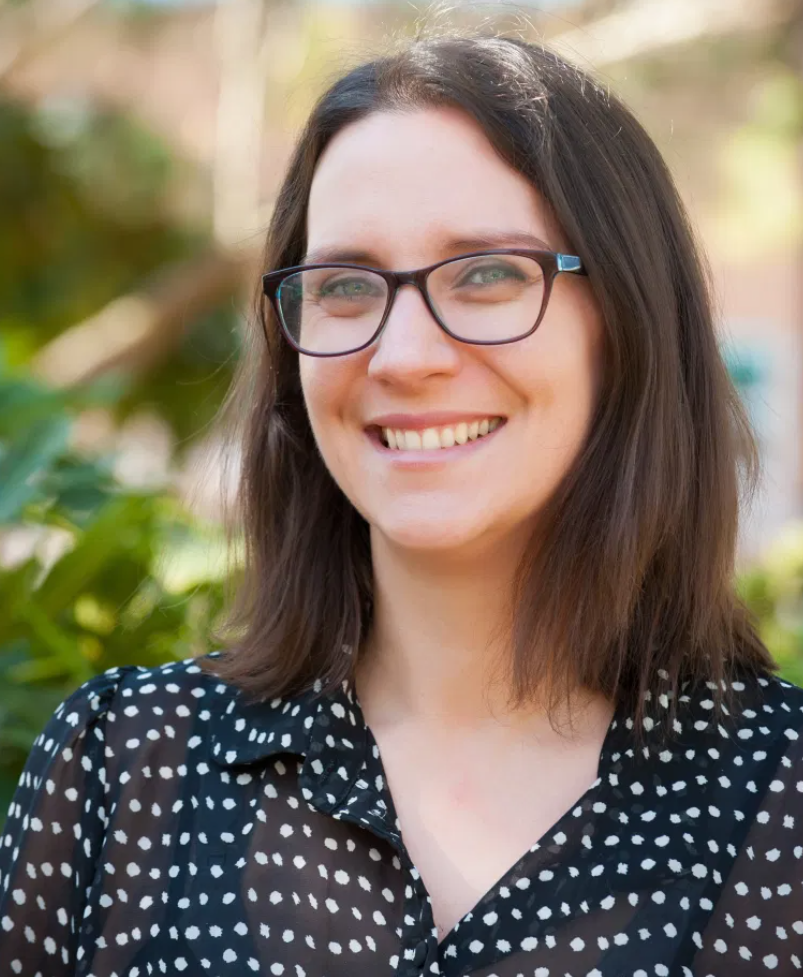
“I am not a writer because I write a certain number of words every day. I am a writer because I use story to reimagine worlds. My value as a writer, citizen, and human is not rooted in my productivity, I tell myself on those brain foggy, exhausted days in which small humans climb on my limbs with no mercy.” —Ruth Osorio, excerpt from Ruth’s guest blog post in Brevity magazine.
As of Fall 2018, I am living my undergraduate student dream as an Assistant Professor of English and Women’s Studies at Old Dominion University. My family lives in Norfolk, VA, where we spend our days chasing kids on the beach. I am also involved in local grassroots organizing tackling the school-to-prison pipeline and school suspensions in Norfolk Public Schools.
“I was a six-year-old wild child. My parents tried to tame me by warning me about all the terrible threatening things in the world that could hurt me. On the surface, I ignored or defied them, but late at night their fears took root in my mind and strangled my dreams.
One Friday morning, I asked my precious grandmother, who had escaped from the Cossacks and didn’t seem to be afraid of anything how she had learned to be so brave. She lifted my fingertips to her wrinkly warm lips one by one, kissing them as she whispered, ‘I’ve told you that each print proves what a precious one-of-a-kind being you are, worthy of great care. Never again will there be another such as you. So pay attention to the warnings and protect the miracle of your life.’
Pausing, she stretched out my arm so and pointed it straight ahead.
‘Move away from what you are afraid of if it threatens you, but also remember to move towards what you want to give to the world.’
Before I could unleash a long string of questions, she placed my palm on the center of my chest and said, ‘Think of it as a riddle, my darling, because every riddle is a bridge to what you are here to make possible.’”
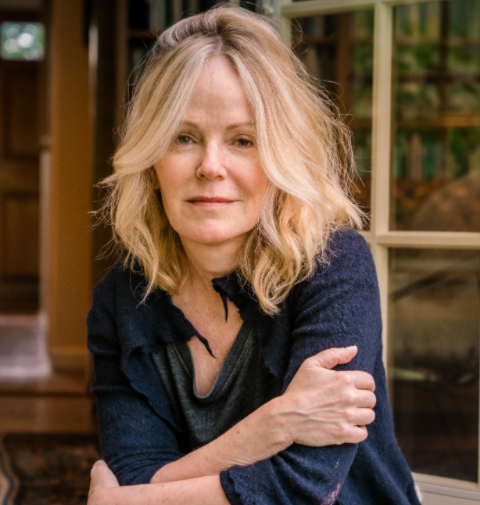
Dawna Markova followed her precious grandmother’s footsteps to become a midwife, but rather than babies, she helps birth possibilities within and between people.
She has lived many incarnations in the past seven decades as an author, teacher, psychotherapist, researcher, executive advisor, and organizational fairy godmother.
One of the creators of the best-selling Random Acts of Kindness series, Dawna is the author of many other inspirational books, including: Living A Loved Life: Awakening Wisdom Through Stories of Inspiration, Challenge and Possibility; I Will Not Die an Unlived Life: Reclaiming Purpose and Passion; Reconcilable Differences: Connecting In a Disconnected World; Collaborative Intelligence: Thinking With People Who Think Differently; A Spot of Grace: Remarkable Stories of How You DO Make a Difference.
We read for many reasons and different kinds of pleasures. One of those pleasures is recognition—of a moment, a place, a feeling state. It’s the writer’s job to find language for those moments, those feeling states, that allows the reader to access their own feelings, that makes them think, “Oh, I never thought of it that way before. I could never find the words or the language for that.” Illuminating ordinary life, to me, is one of the most beautiful ways to write and to read. —Dani Shapiro, in conversation with Suleika Jaouad
I’m a worrier, trying to be a planner. I imagine what could go wrong so I can plan for when that happens. I suppose I should say “if” it happens. My worries seldom happen. Instead, things happen that I could never have imagined.
But, as Leo Buscaglia said, “Worry never robs tomorrow of its sorrow, it only saps today of its joy.”
A therapist said to me, “Worry is modern man’s voo-doo.”
I get that.
“Worry is like a rocking chair: it gives you something to do but never gets you anywhere.”– Erma Bombeck
Well, as I sit and rock, I could plan what I would do if my worries came true.
“When I look back on all these worries, I remember the story of the old man who said on his deathbed that he had had a lot of trouble in his life, most of which had never happened.” – Winston Churchill
So where does that leave us? Some writers play the “what-if” game all the time. They get some of their best ideas that way.
I think we need to know when our worry-thinking disables us and when our worry-thinking helps us.
It’s good to have a plan if an immediate evacuation becomes necessary, such as having a to-go bag ready to go at a moment’s notice. And having an emergency kit easily accessible is a good plan.
Being positive can help worriers. Not dwelling on “something bad is bound to happen.” But rather, be prepared.
Part of that preparation might be positive thinking for mental health.
“The best and most beautiful things in the world cannot be seen or even touched – they must be felt with the heart.” — Helen Keller
In times of difficulty, or chaos, “look for the helpers,” as Mr. Rogers said.
“Nothing is impossible, the word itself says ‘I’m possible’!” Audrey Hepburn
“Try to be a rainbow in someone’s cloud.” — Maya Angelou
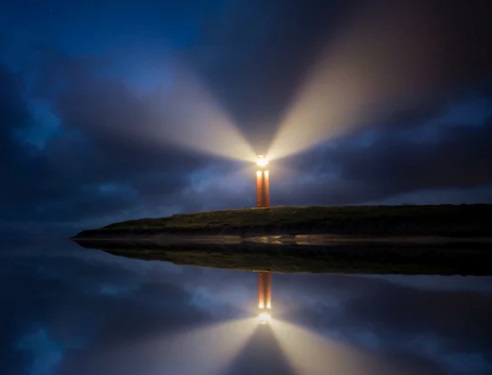
If you are writing the clearest, truest words you can find and doing the best you can to understand and communicate, this will shine on paper like its own little lighthouse. Lighthouses don’t go running all over an island looking for boats to save; they just stand there shining.—Anne Lamott, Bird by Bird
“As Ray Bradbury says, don’t rewrite—relive. Your fiction is about creating emotion in the reader, and you can’t do that well without feeling it yourself.” —”The Geyser Approach To Revision,” James Scott Bell, July/August 2011 Writer’s Digest
Note from Marlene: This is true for memoir writing also.
“You’ve finished your first draft . . . You’ve written hot. Now you’re ready to revise cool with the help of creative spurts.
. . . wait at least two weeks before you do a first read-through of a draft. Then, go through it as fast as possible, as if you were a reader, resisting the urge to tweak anything just yet.”
Good advice for those who can do this. This isn’t my style, but it might be yours.
I do agree with waiting to revise. Let go of the attachment to your writing, your beautiful writing. Keep your darlings in a separate file if they can’t be used in the writing you are revising. They might be perfect passages for another piece of writing.