“The reader reads for dialogue more than anything.
The writer’s habit is to describe, but the reader would rather hear the character.”
— Anthony Varallo, May 2017, The Writer

“The reader reads for dialogue more than anything.
The writer’s habit is to describe, but the reader would rather hear the character.”
— Anthony Varallo, May 2017, The Writer
 “Writes are such heady creatures that we often forget our characters have bodies and senses. To fully imagine a life, one has to supply undeniable details about the exterior world so that when the novelist has to make the truly improbable leap to the interior world of another human being, the reader is primed to believe us.” —Julianna Baggott
Excerpt from “Pure Writer,” by Elfrieda Abbe, The Writer Magazine, January 2016
“You have to connect to the language of your work by paying attention to what you’re trying to say. Sometimes what you want to say doesn’t come easy. That’s fine. Give yourself time to make mistakes, to start again, to scrap good pieces that are going nowhere.” — Virgil Suárez
“Writers can learn a lot from reading comic books and graphic novels, such as about brevity. Of course, comics do have the benefit of imagery. That said, the importance of scene can’t be understated. I’m always telling my students: Show us moments instead of wildly narrating an entire story and describing what’s happening. Try to find ways to immerse the reader.” Roxane Gay, September 2017 Writer’s Digest
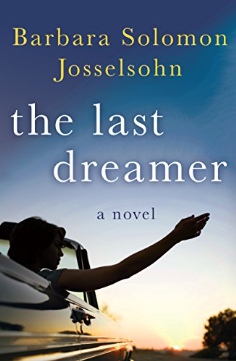 If you have attended a Jumpstart Writing Workshop, you may have heard me say, “There are two kinds of writing I like. One is when the writing speaks to universal truths—something we can all relate to. The other is when the writing speaks to me personally.”
This excerpt from “The Review Rat Race,” a “5-Minute Memoir” by Barbara Solomon Josselsohn expands upon that thought.
“To me, success meant having readers who felt that my novel articulated something important, something they had felt deeply inside but had never been able to express or fully understand before my book came along.” —Barbara Solomon Josselsohn *
That often happens in Jumpstart . . . the writing touches us deeply as the writer articulates in ways that we hadn’t been able to express or understand prior to hearing their freewrite.
* Excerpt from January 2017 issue of Writer’s Digest Magazine.
 “The bigger the issue, the smaller you write. Remember that. You don’t write about the horrors of war. No. You write about a kid’s burnt socks lying on the road. You pick the smallest manageable part of the big thing, and you work off the resonance.” —Richard Price
 “All humans understand and use story on an intuitive level. It’s our most effective teaching tool.” — Deb Norton, “Story Structure, Simplified,” WritersDigest, February 2017
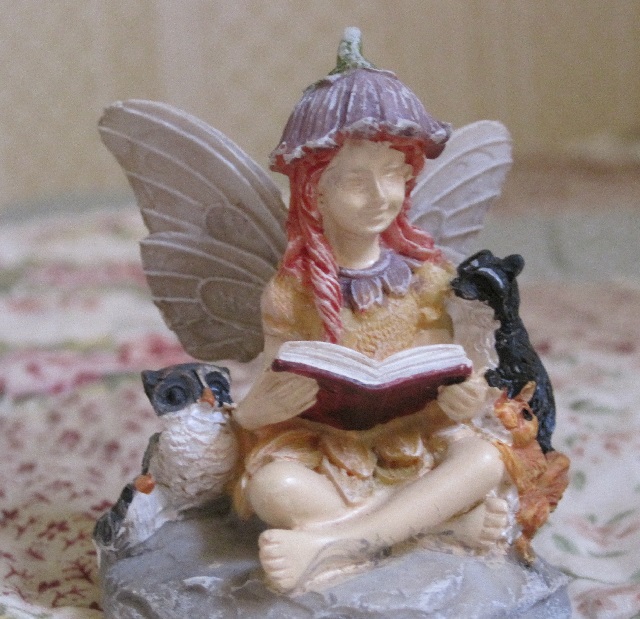 What makes a happy reader?
Robert Keiner answers, “It’s all about being invited in by the writer. If a writer begins showing off with obscure or precious writing, that gets in the readers’ way. . . The job of the writer is to ignite a fictional daydream in the brain of the reader and then step away and become invisible so the story becomes the readers’ own.” — WritersDigest, February 2017
“Forgiveness liberates the soul,” Mandela explained to a crowd. “That’s why it’s such a powerful weapon.”
The movie “Invictus,” featuring Matt Damon, Clint Eastwood and Morgan Freeman is about Nelson Mandela, who spent 27 years in prison. After he was released and elected as South Africa’s first black president, he preached reconciliation.
When he decided to support the country’s rugby team — long a symbol of white oppression — his countrymen were stunned.
“Forgiveness liberates the soul,” Mandela explained to a crowd. “That’s why it’s such a powerful weapon.”
When writing, especially freewrites, you may experience epiphanies that will enlighten and inform you. Best wishes to you as you write. Just write.