Layering

  • Layering

    Layering: The goal of layering in writing is to take unrelated elements and bring them together in a single piece of writing.

    “Layering means that we’re weaving in different elements of our story, characters, writing craft, etc. Some writers even start with just one element—such as writing their whole story just as dialogue—and then layer in everything else once they have the shape of the story.” — Jami Gold

    Ideas to add layering in your writing.

    Start with lists:

    List #1: Some facts about yourself or your fictional character

    List#2: Favorite food or music

    List #3: Favorite movies or TV shows

    List #4: Philosophical sayings

    List #5: A type of clothing or furniture

    Freewrite: #1: Using a word or phrase from each of the lists, spend a few minutes creating a piece of writing.

    Freewrite #2, Layering: Add an outside event as a metaphor to echo the theme of your freewrite.

    If you are writing about love, compare two people in love with two doves sitting on a wire.

    Use the movie, “Love Story,” or the TV show, “Love Boat,” or a book one of the character picks up from the coffee table while waiting for the other person.

    One of the characters could pick up something from a loveseat.

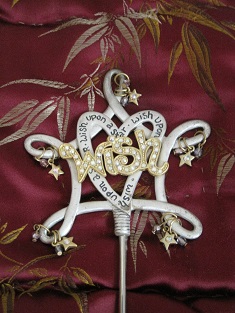
    A pin in the shape of a heart could snag on a sweater.

    If your theme is death, use an analogy from the game of chess.

    Quotes

    You can use quotes to mirror the theme of your writing:

    “Love means never having to say you’re sorry.” — “Love Story”

    “Love is heavy and light, bright and dark, hot and cold, sick and healthy, asleep and awakeit’s everything except what it is!” — “Romeo and Juliet.”

    Ideas to layer your writing:

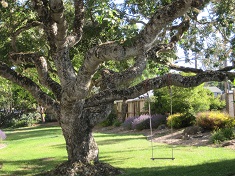
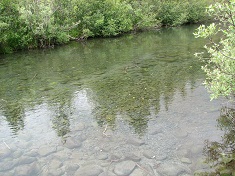
    Use something from nature: Land formations, flora, vistas, terrain, etc.

    Something human-made: Buildings, dams, highways, art, transportation.

    Use your imagination and create a memorable piece of writing by layering.

    Examples of layering in writing:

    Delicate as a Hummingbird’s Heart

    Reverberations

    Memory of a ‘giorno dei morti’ in Italy

    Thanks to Becca Lawton for inspiring this prompt at Writers Sampler in 2009.
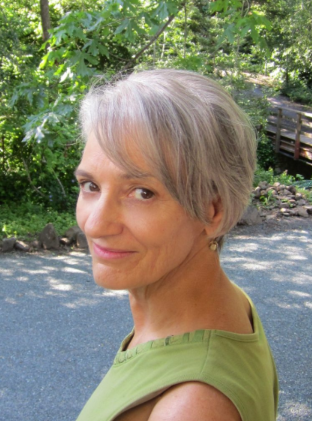
  • Staying Grounded and Centered.

    Today’s insightful post is by guest blogger, Rebecca Lawton.

    I have a dear friend who jokes that, in 2020, we’ll have no need for glasses. A long-time wearer of glasses himself, this friend also loves punning. With or without glasses in 2020, we who love writing and reading want to see clearly in all our endeavors.

    For me, seeing clearly means staying grounded and centered, understanding what I’m observing with all senses. Doing so requires that I stick with various creative practices, whether in writing, communicating, playing music, reading the work of others, or learning new skills and ideas.

    Basically, for everything.

    I consult writing-related resources as well. This time of year, I offer a list of them on my blog. For the first time ever, I’ve also included a few references for clearing the mind.

    May your practice buoy good health and happiness, for you, yours, and those you meet. May the goodwill you generate extend to the well-being of the planet. I join you in working for all of that. Joyful 2020.

    Books by Rebecca Lawton


  • What haunts you? Prompt #284

    Sit still for a moment. . . take a few deep breaths. Relax into your chair.

    For this writing experience, tap into what haunts you. As Rebecca Lawton says in Cool Writing Tips:

    ” See the detail of the memory with clear eyes and write it down as best you can remember it.”

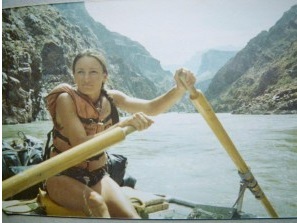
    Becca RowingThere will be a repeat series of Becca Lawton’s Cool Writing Tips. This will only be available for the month of September, 2016. Sign up now so you don’t miss a single inspirational tip.

    Write as if you were dying” features Rebecca Lawton as a guest blogger and highlights one of her Cool Writing Tips. I found her friendly style of writing about writing to be affirming and inspiring. I think you will, too.

  • Write as if you were dying

    What would you write if you knew you would die soon?

    Today’s Guest Blogger, Rebecca Lawton, took the plunge and explored what it means for our work to be “so essential that we must complete it before we leave this earth.”

    Becca’s Cool Writing Tips during the month of August were such a success, she’s repeating the series in September. So, if you missed out in August, you have another chance to be inspired by Becca Lawton’s Cool Writing Tips.

    Becca opened the second week of Cool Writing Tips with this provocative quote from Annie Dillard:

    Write as if you were dying. At the same time, assume you write for an audience consisting solely of terminal patients. That is, after all, the case. What would you write if you knew you would die soon?

    Becca responds as if she were having an intimate conversation with Annie:

    Ms. Dillard, I’m so glad you asked that question. Now if I could only answer it.

    “What would you write if you knew you would die soon?” is a good question, but it’s one I find myself turning from, wanting to say, “Next!”

    Because to answer the question of what we’d write if we knew we’d die soon acknowledges that we will, in fact, die.

    And, the truth of the matter is, we will. Someday. Die. Hopefully not today or anytime soon, but sometime. And, given that fact, what should we write today?

    When I was writing my first novel I was also raising a child and working for a consulting firm that took the biggest part of my days. I’d rise early to steal a few hours before changing hats to care for my daughter and then go off to work. As I drove to the office, my characters still spoke to me, making their case that they needed my attention, and now.

    I’d promise to get back to them and then immerse myself in my consulting work. I’d only begin tuning into the novel again on my way home.

    Often—almost every day —I worried that I wouldn’t live long enough to see my novel finished. The thought that I might not finish this important life’s work terrified me. Not even when I was running the biggest rapids in the United States every day had I so considered death a possibility. Not even when I realized how quickly my daughter was growing did I feel immortal. No—it was the writing.

    That we find our work so essential that we must complete it before we leave this earth strikes me as a positive sort of feeling, if paranoid.

    Because, if we can’t really face the question as posed in Anne Dillard’s quote, maybe we can at least check  in with ourselves about how we’re spending our time. We can ask ourselves, “Would I keep slaving away at this thing if I knew it was the last thing I’d ever write (or paint or design or photograph?) If no, then why don’t I regroup?”

    We’re all terminal—but that’s okay. As Annie Dillard says, let’s assume that’s who our audience is. Because that is also who we are. And if we let that simple fact keep us honest and on track, I believe it will.

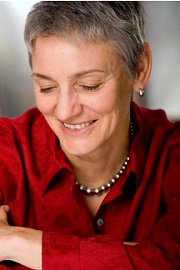
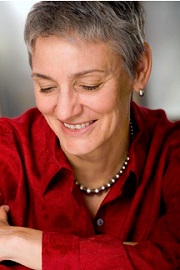
    Becca LawtonRebecca Lawton is the award-winning author (and co-author) of seven books. Her  path as a writer and fluvial geologist started with her first career, rowing rafts on the Colorado in Grand Canyon and other Western rivers.

    Some of her writing stems from observations in the field as a guide and researcher. Her essays and stories have been published in Aeon, Brevity, Hakai, More, Orion, The San Francisco Chronicle Magazine, Shenandoah, Sierra, Thema, Undark, and many other journals and anthologies.

  • Is pre-writing for you?

    Guest Blogger Becca Lawton writes about pre-writing.

    Excerpt from Becca Lawton’s 8/31/15 blog post, about her time in Canada on a Fullbright Scholarship to research her book:

    Writing a novel is such a huge undertaking that I’m amazed anyone writes more than one . . . I’m completing a submittable draft of my second novel . . . Now that I’m dragging my sorry carcass to the finish line, it’s fun to look back at this post written September 29, 2014, soon after the start of the project, when I was just starting to pour all my hope and energy and learning into it:

    I just completed sixty pages of prewriting for a second novel . . . They’re filled with answers to questions like, “Who are the main characters in your book?” and “What are their wants in every scene?” and “Is the setting recognizable yet unique?” I’ve modified the questions from a checklist developed by Janet Neipris, from her book To Be a Playwright, a resource I find essential. Typing up to ten pages each morning before breakfast, I completed the questionnaire in a week. At home it would have taken me a month. Although the impatient part of me wanted to zip through all the questions with an “I don’t know” or “Who cares?” I focused on each one with as much focus as I could muster. Grudgingly I’ve come to admit that if I pour myself into a pre-write of this kind, the book’s first draft flows much easier. Prewriting saves time, guesswork, and rewriting sweat. A week saves months or years of labor later. I know. I’ve written books both ways.

    Becca Lawton. . . buoyed by the knowledge that I can start the first draft of my second novel tomorrow morning. That knowledge feels like a precious gift after more than a year of dreaming, applying, and then preparing to come to Canada on a Fullbright Scholarship to research a book. Every day I’m grateful for the support.

    Photo by Melinda Kelley
     
  • We all have an intuitive sense. . .

    I think we all have an intuitive sense, but we get side-tracked by what others think or we get distracted by all the “noise” both inside our heads and outside. It’s hard to get quiet and listen to what we think. But when we do, we experience the joy of discovering what’s going on for ourselves.

    A passage in Reading Water, Lessons From The River, by Rebecca Lawton, describes a situation when Becca was a white water rafting guide and had one person, a friend, in her raft. They capsized, lost the boat and nearly drowned. Becca managed to save the life of her friend.

    After it was all over, Becca asked her friend: “Do you regret running it?”

    Becca’s friend answered, “It might have been the right choice for you,” she said, “But from now on, I’m making my own decisions.”

    Here’s an idea for getting in touch with your intuition and writing deeply.

    You can use suggestions for relaxation from the June 24, 2014 Just Write Post, “Listen to your body as a way to creativity.”

    Settle comfortably in your chair. Breathe in deeply through your nose. Exhale loudly. Take a few deep breaths and let go. Release your worries. Let go of your fears. Just let go.

    Follow your inner sense, your intuition, your gut level feeling  …  pay attention, use what you’ve got. Don’t fight it. Relax into your own judgment and decision making.

    Choose a writing prompt and Just Write.

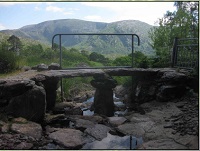
    Old meets new bridge.Jim C. March Old bridge meets new. Photo by Jim C. March.


  • I went deep into storytelling mode — Becca Lawton

    Today’s quote is from Write Free – Attracting the Creative Life by Rebecca Lawton and Jordan E. Rosenfeld.

    Rebecca wrote:

    “I wrote another personal essay, in part with the column in mind but mostly with the intention of simply telling my story. There was a message I wanted to convey in the piece: one of loss and sadness, but also of triumph and survival. Because I had taken my focus off publication while writing, I went deep into storytelling mode. Much of the writing for the piece was done in subconscious writing fashion. When I finished a decent draft, I went outside to water my flower garden. I felt a certainty that hadn’t been there before. the essay was so good, so moving. I knew it would be published — if not in the target column, then certainly elsewhere.”

    WandNote from Marlene: What strikes me as being important in this passage is when Becca let go of the thought of publishing, she was able to go “deep into storytelling mode.” That’s my wish for you.

    Write whatever you want to write. Don’t worry about a thing. . . don’t think about publishing, don’t think about anyone looking over your shoulder. No judging. No criticizing. Just write.

  • Stroll down memory lane . . . Prompt # 81

    Today’s writing prompt is inspired by Rebecca Lawton’s May 26, 2014 blog post, which begins:

    “Candles of buckeye blossoms and their subtle fragrance have always confirmed the return of summer. Seeing them this week reminded me that certain sights, sounds, and smells trigger strong memories. The whisking sound of a broom on stairs recalls family vacations at the lake, where our host rose early to sweep fallen live oak leaves. The musky scent of open water reminds me of being on a raft enjoying the primal sensations of floating a muddy river. The first bars of a Beatles song bring back the excitement of junior high school dances. Sipping tequila reminds me of kayaking from Loreto to La Paz on the Sea of Cortez.”

    Click here to read the rest of the post.

    Writing Prompt: Stroll down memory lane . . . pause when a remembered event causes a visceral reaction: you might feel a sensation in your gut . . . write about that event, using sensory detail.

    You can use the Summer Prompt as a starting place. Not the “how I spent my summer vacation” September school essay. Focus on detail . . . using sensory description in your writing. Capture that musky lake smell, the charred wood campfire smell. Go with tactile detail: the sticky marshmallows on your fingers, the feel of a rough floor on your bare feet, the bright sun fighting closed eyelids. Wake up! Go deep in your writing. Reach out and capture those feelings. . . whatever they are.

    BuckeyeAfter you write, take a look at the responses to Prompt #77    (scroll down) . . . folks used wonderful detail writing about summer.

    Join us! Write your freewrite. Post your writing on The Write Spot Blog.

  • Rebecca Lawton Week

    This is “Rebecca Lawton Week” on The Write Spot Blot. Today’s inspiration for “Just Write” is from her book, Reading Water, Lessons from the River:

    The water-level fluctuations, both daily and seasonal, gave us regular lessons in how the river varied depending on flow. The thalweg, or deepest or best navigable channel, didn’t always follow a direct path. On one key day early in my training, I followed a boatman friend named John through the long, straight, placid reach of the Stanislaus below Razorback Rapids. As I rowed down the middle of the river, choosing the course where the main flow had been weeks before, I noticed John’s boat meandering from one side of the river to the other. He kept his hands on the oars but barely exerted himself, simply using the oars to adjust his boat’s position on the water surface. He moved briskly downstream through the calms with little effort. Even as I rowed steadily to keep up, he beat me by finding the strongest flow and doing the bare minimum to stay on it.

    “It’s true,” John told me later. “You’ve just got to use the current. It’ll carry you if you don’t fight it.”

    Water.BreanaNote from Marlene: Sometimes our writing meanders, like John and his boat, and that’s just fine. Find the current in your writing. Let your mind wander and let your freewrite take you on a meandering route and you might find the rhythm for your best creative writing. Just Write!

    Photo by Breana Marie.

    Click here for Rebecca Lawton’s website.

  • I Spy. . . Prompt #80

    Today’s writing prompt is inspired from the book, Write Free, Attracting the Creative Life by Rebecca Lawton and Jordan E. Rosenfeld

    This writing exercise is called: I Spy

    List a few things that happened this morning or yesterday. They don’t have to be big or memorable, just whatever falls into your mind.

    The goal is to slow down and take stock of those things you do not normally notice.

    Writing Prompt: Focus on one event and write how you felt about this encounter. Jot down your feelings and then do a freewrite.

    fish 2Did the event make you think of anything else? Did it remind you of other events, experiences, memories or feelings? What were you thinking while it happened, or just before or after?

    Write your freewrite. Type your freewrite and save it.  Log on and post your writing on The Write Spot Blog.