The only sin writers can commit is . . .

  • The only sin writers can commit is . . .

    “The only sin writers can commit is not to write.” — Eleanor Hyde, originally in the August 1976 issue of the Writer Magazine, reprinted in the August 2014 issue.

    Note from Marlene: So, you are itching to write and need a jumpstart? Go to the prompts page of this blog for ideas.

    Click here for more prompts and read what others have written. Scroll down and click on a plaque.

    Writing Prompts


  • Aprons . . . Prompt #88


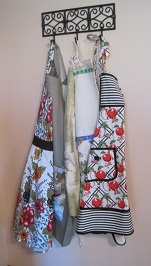
    ApronsMy grandmother put her apron on every morning right after she put on her house dress. She wore an apron every day, even to parties. She made all her clothes, including her aprons. She always chose a small flower design and used colorful seam binding for trim around the edges.

    I also wear aprons, but only when cooking and eating. . . saves many an outfit from food stains.

    Today’s prompt is: Aprons

    Thank you, Kathy Myers, for the inspiration to hang my aprons in the kitchen.

    Thank you, Pam Swanson, for emailing so many years ago, “The History of Aprons.”


                                            THE HISTORY OF APRONS

    The principal use of Grandma’s apron was to protect the dress underneath. Because she only had a few dresses, it was easier to wash aprons than dresses and they used less material, but along with that, it served as a potholder for removing hot pans from the oven.

    It was wonderful for drying children’s tears.

    From the chicken coop, the apron was used for carrying eggs, fussy chicks, and sometimes half-hatched eggs to be finished in the warming oven.

    When company came, aprons were ideal hiding places for shy kids.

    And when the weather was cold, Grandma wrapped her apron around her arms.

    Those big old aprons wiped many a perspiring brow, bent over the hot wood stove.

    Chips and kindling wood were brought into the kitchen in that apron.

    From the garden, the apron carried all sorts of vegetables.

    After the peas had been shelled, it carried out the hulls.

    In the fall, the apron was used to bring in apples that had fallen from the trees.

    When unexpected company drove up the road, it was surprising how much furniture that old apron could dust in a matter of seconds.

    When dinner was ready, Grandma walked out onto the porch, waved her apron, and the men knew it was time to come in from the fields to eat.

    It will be a long time before someone invents something that will replace that ‘old-time apron’ that served so many purposes, especially what many children and grandchildren received from the simple apron. . . Love!

    Adapted from:  The History of Aprons,  which may have been originally from  Grandma’s Apron.

    Writing Prompt:  Aprons

  • Three-part prompt . . . Prompt #87

    Today’s prompt is three parts. Take about 20 minutes, or as much time as you need, for each section.

    Part One: Write a list of events from this past month:

    What aggravated you?

    What frustrated you?

    What made you laugh or cry?

    pin

    What made you lose your temper?

    What was the worst thing that happened?

    The best?

    The most disturbing or weird?

    Part Two:  Choose one thing from your list and write about it. Write whatever comes to mind. Write what you would really like to say to the other people involved.  Take your time with this. Write until you have no more to say on the subject.

    Write what happened from your point of view.  Lola.200

    Part Three: Only do this after you have done Part Two — If another person was involved, step into his or her shoes. Write what happened from the other person’s point of view.

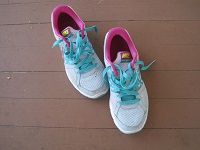
    shoes.women                                                    shoes.men

    Just Write!

  • What should you throw away but just can’t? Prompt #86

    Write about something you should throw away but just can’t.

    IMG_1650

  • Your intangible treasure. Prompt #85

    What is the one intangible thing you treasure above all else?

    Intangible, meaning: you can’t touch it, feel it, smell it, hold it, see it . . . it may be a character trait, a personality trait, a quirk. . . a feeling. . . .

    Prompt:  Write about something intangible that you treasure.

    LifeJanePhoto by Jane Person


  • Fourth of July . . . Prompt #84

    July 4th is coming up. . . . what does this mean to you? Do you consider yourself patriotic? What does being patriotic mean to you?

    Which reminds me of one of my all-time favorite “brain teasers.”

    Fourth of JulyDo they have fourth of July in England?


    Yes. . .and third of July and fifth of July.

    Writing Prompt:  What does July Fourth mean to you?

  • Right now . . . Prompt #83

    Ireland, photo by Jim C. MarchSet your timer for 12-15 minutes and write.

    No judging.   Shoo your inner critic away.     Just write.

    Today’s Prompt:  Right now . . .

    Photo taken in Ireland by Jim C. March

  • Listen to your body as a way to creativity.

    In this Just Write post, we’ll take a look at the idea of listening to your body as a way to get past blocks toward your creativity.

    First, turn off your cell phone or put to vibrate. Unplug from Facebook and emails. Eliminate as many distractions as you can.

    If you are experiencing extreme grief or pain, please get professional help. This post, of course, cannot replace the need for professional assistance.

    Ready? Here we go.

    We all experience grief, trauma, sadness. And we have our own ways of handling those stresses. There is no one right or wrong way to handle these difficulties. What is right for one person, may be wrong for someone else. What works for me, might not work for you, so take what works for you from this post, ignore the rest.

    Let’s take a moment now to breathe, relax and get settled.

    Take a deep breath in and let out with a whoosh.

    Deep breath in. Relax. Let go.

    Drop your head to your chest and rotate in a circle.

    Rotate shoulders in a circle.

    Scan from head, down to your toes. Check in with your body.

    Notice places that are tight. Notice any uncomfortableness.

    As you scan your body, become aware of any place that draws your attention – notice what part of your body calls out to you.

    Place the palm of your hand on the part of your body that calls your attention. Or bring your breath there if it’s not reachable with your hand.

    Allow your hand to be filled with the information of that place.

    Take a deep breath in. Let it out with relaxing sigh.

    Thinking about that place in your body that calls out . . . what do you notice? Who hangs out there? Who do you see?

    If you could have a conversation with that part of your body, what would it sound like?

    If you have blockages in your life, your work, or your creativity, your body can tell you what’s going on. If you are stuck, notice where you feel it in your body.

    When you pay attention to that stuck feeling, you can work past it and then you will be free to work as you wish. Discover what’s really bothering you.

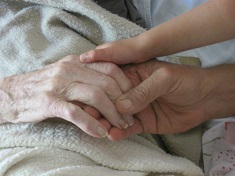
    When you are ready, write about what you have discovered. Write about that place in your body that wants attention. Or just write about whatever is on your mind.Hands
  • Stroll down memory lane . . . Prompt # 81

    Today’s writing prompt is inspired by Rebecca Lawton’s May 26, 2014 blog post, which begins:

    “Candles of buckeye blossoms and their subtle fragrance have always confirmed the return of summer. Seeing them this week reminded me that certain sights, sounds, and smells trigger strong memories. The whisking sound of a broom on stairs recalls family vacations at the lake, where our host rose early to sweep fallen live oak leaves. The musky scent of open water reminds me of being on a raft enjoying the primal sensations of floating a muddy river. The first bars of a Beatles song bring back the excitement of junior high school dances. Sipping tequila reminds me of kayaking from Loreto to La Paz on the Sea of Cortez.”

    Click here to read the rest of the post.

    Writing Prompt: Stroll down memory lane . . . pause when a remembered event causes a visceral reaction: you might feel a sensation in your gut . . . write about that event, using sensory detail.

    You can use the Summer Prompt as a starting place. Not the “how I spent my summer vacation” September school essay. Focus on detail . . . using sensory description in your writing. Capture that musky lake smell, the charred wood campfire smell. Go with tactile detail: the sticky marshmallows on your fingers, the feel of a rough floor on your bare feet, the bright sun fighting closed eyelids. Wake up! Go deep in your writing. Reach out and capture those feelings. . . whatever they are.

    BuckeyeAfter you write, take a look at the responses to Prompt #77    (scroll down) . . . folks used wonderful detail writing about summer.

    Join us! Write your freewrite. Post your writing on The Write Spot Blog.