Make a list . . . important and trivial . . . Prompt #617

  • Make a list . . . important and trivial . . . Prompt #617

    Make a list of issues, important and trivial, in your life right now.

    What frustrated you in the past week?

    What made you laugh or cry?

    What made you lose your temper?

    What was the worst thing that happened?

    The best?

    The most disturbing and weird?

    Choose one item from your list and write about it. Write whatever comes to mind.

    If another person was involved, write what you would really like to say to that person.

    Then . . . after you write . . .

    Tell the same story from the other person’s point of view. Don’t judge. Just write.

    #amwriting #justwrite #writingprompts

  • Memory of a ‘giorno dei morti’ in Italy

    Memorable writing that sparks imagination. Lean in. Hear the writer’s voice on the page.

    Memory of a ‘giorno dei morti’ in Italy

    by Simona Carini

    What I remember most about that day is the cold wind. It was blowing strongly, and yet it could not push away the heavy low clouds and wipe the sky clear, so it was dark in the early afternoon. The cypresses lining the gravel path from the cemetery’s heavy iron gate to the chapel swayed as if wailing unconsolably. A group of people had walked the narrow road from the village to the cemetery in a procession led by the priest, Don Gabriele, imposing in his black cassock, which swirled around his legs at the mercy of the biting wind.

    A child then, I was terrified not of the cemetery, which I had been visiting regularly with my father since an early age, but of the elements: the wind could topple trees or tombstones, make pots and vases tumble from columbaria, and if it stopped, the low clouds would weep torrents of rain on us. I had accompanied my aunt Lucia to the ceremony. She was rapt in devoted prayer, while I observed the other villagers and wondered why nobody looked concerned.

    The prayer came to the closing “Amen” and all we could hear was the wind. I thought the shared part was over and I could walk with my aunt to our family’s vault and the stories it held and told, stories I never got tired of hearing. But in a gloomy, bass voice, Don Gabriele started singing over the wind:

    “Dies irae, dies illa …”

    I froze.

    “He’s conjuring up ghosts,” I thought.

    I wanted to run away but could not move. I knew we were honoring the dead and it would have been disrespectful to leave the ceremony, but why did it have to be so scary?

    Never again did I go with Aunt Lucia to the cemetery on November 2nd and in my mind on the Day of the Dead the sky is always blotted out by a mass of pewter clouds, the wind blows hard, and God is angry.

    Born in Perugia, Italy, Simona Carini writes poetry and nonfiction and has been published in various venues, in print and online, including Intima – A Journal of Narrative Medicine, Italian Americana, Sheila-Na-Gig online, Star 82 Review, the Journal of Humanistic Mathematics, the American Journal of Nursing. She lives in Northern California with her husband and works as a data scientist at an academic research institution.

  • Dem Dry Bones

    Memorable writing that sparks imagination. Lean in. Hear the writer’s voice on the page.

    Dem Dry Bones

    By William Frank Hulse III 

                In my hometown, the old hospital is where I was born. The same holds true for almost all of my 1947 vintage classmates. The old hospital was built in 1923 and razed in ’65 when the new hospital was completed. The memories I have of the old hospital and the memories I have of the old high school are sufficiently intertwined that I can hardly separate them. Both places were mighty scary after dark – mighty scary. Both buildings had basements with very little light from outside, so they were scary with shadows and dark corners, if the lights were out – even if it was high noon. There were classrooms in the high school basement – physics, biology, chemistry and home economics and student restrooms. The hospital basement was almost exclusively storage, as I recall. My memory of the hospital centers around three trips there for stitches. I wasn’t accident prone but I was adventurous and didn’t always look before I leaped!

              When we were 13 years, there were three of us who were far past adventurous. We were bold, audacious and mischievous in the extreme. We didn’t break the law but we sure bent it into a pretzel. We were thrill seekers. There was no leader of the pack. One day Larry would have a crazy idea, the next Robert would get an unwise notion – and on the third yours truly would have a flight of fancy and no parachute whatsoever. The only reason we didn’t get in trouble was due to the fact that we were nighthawks, typically on a Friday night.

              I’ve probably failed to mention the fact that my Dad’s dad, my grandfather for whom I’m named, was the high school janitor and a bus driver. Granddad knew more about me than he let on because I’d ridden on the school bus he drove for a year. I behaved – to be sure. Granddad didn’t brook any nonsense even from his favorite grandson. That would be me. I inherited Granddad’s gleam in my eye and a propensity to laugh from dawn to dusk and then some. Sometimes, I would help Grandad clean the school. I wasn’t looking for a job – I just enjoyed being around him. When he got back from his bus route, he’d go back into the high school and give it a once over before the next day’s activities.

              Being in the high school after ‘business hours,’ I figured out two or three different ways to do so – even when Granddad wasn’t around – especially when he wasn’t around. I’d been known to smoke in the boy’s room but hadn’t ever been caught. I figured I was bulletproof so I told my nighthawk pals we should invade the high school one night. We didn’t have vandalism in mind – we were just intrigued by being someplace we weren’t supposed to be. One Friday night, a senior with a large dose of ornery took a cow up on the top floor. He left hay and water but that cow roamed the halls for the whole weekend and dropped manure deposits about every 10 feet. School opening was delayed that following Monday while Granddad and I cleaned up after ol’ Daisy. Nobody thought it was funny – everybody thought it was hilarious. Most of the teachers and Granddad pretended to be upset but the truth is it was a heckuva prank.

              My memory is a little fuzzy here but I think the three of us brainstormed a prank to top the cow in the high school. It might’ve been my idea but Robert and Larry have graduated from this life and are probably smoking in the boy’s room in heaven. Bless ‘em. But back in 1960 we were full of enthusiasm for one particular prank. We wanted to ‘liberate’ the skeleton in the biology lab. We named him Mr. Bone-jangles. At first, all we wanted to do was bring him out for a weekend – a furlough of a sort. But try as we might, we couldn’t figure out a way to get old’ Davey Bones back into the high school biology lab. We knew Mrs. Ahrend would be calling the FBI and Scotland Yard to help recover her lab partner. Getting caught by the authorities – that would be bad. And for me, having Granddad and Dad find out I was involved would be a fate worse than death. So, just for the record and in case they’re watching down from one of Heaven’s fishing ponds, “It wasn’t me.” I’m just reporting the facts as best I know them. Sorry, Larry and Robert, but you’re on your own.

              Davey Bones somehow ended up in my basement. To this day, I’m still baffled how it happened. I was certain Mom and Dad wouldn’t find ol’ Bone-jangles because he was back in the darkest corner of the basement where my aunt and uncle’s non-essentials were stored. They had moved to Oregon and had planned to retrieve the goods when they came back to visit.  I think their junk may still be back in that musty corner. They’ve been gone for 20 years now but they might need that stuff – you just never know.

              On Sunday afternoon we put an old shirt and trousers on Davey and found two perfect blue marbles for his eyes. About 11:00 that night we all snuck out and retrieved our pal and took him up to the hospital and ceremoniously left him on the front steps. We had made a placard and put it on his lap. It said, Rest in Pieces. The skeleton was back in the biology lab later that week. Three years later, Mrs. Ahrend was our biology teacher. She looked right at us but warned the entire class to expect fire and brimstone if Mr. Bone-jangles ever went AWOL again.

              The old days were nothing short of amazing. I was careful not to tell my son about our shenanigans. He didn’t have the sense God gave a goose and that was like father like son.      

    William Frank Hulse III is a native Oklahoman, born and raised in the Indian Cowboy Oilman community of Pawhuska. He began his college career at Central State College in Edmond but enlisted in the U.S. Army in 1968. While serving in the military Frank completed his undergraduate degree with the University of Maryland. Upon his return to civilian life in 1975, Frank was employed by Phillips Petroleum Company for almost 30 years. Since retiring he plays guitar and writes.

    Note From Marlene: You are welcome to comment on this story on my Writers Forum Facebook Page.

    #amwriting #justwrite #creativewriting

  • Magnificent Hydrangea from Safeway

    Memorable writing that sparks imagination. Lean in. Hear the writer’s voice on the page

    Magnificent Hydrangea from Safeway

    By Elizabeth Kirkpatrick-Vrenios

    Just like clockwork – this gorgeous flower wilts two hours after I place her in the vase. I carefully fill the water with the little food packet that comes with the flowers, cut the stems, arrange her perfectly, arrange her hair, fix her makeup, and convince her she will be the star at our dining table.

    “What do you need?” I ask.

    “Just some loving care – and oh, yes, will you feed me some sugar and trim my nails? And while you are at it, fluff up my gown.” 

    Dutifully I oblige, but just as the guests sit down, the flower drops her head to her chest, her leaves droop and she gives up the ghost with just a single petal dropping theatrically to the tablecloth.

    There she is, right on target, pulling a Theda Bara (I think I hear a theatrical sigh and see an eye roll as she expires). She flops on the table and goes through her death scene in front of everyone as if before a camera.

    I thought it was a fluke the last time I bought her cousin, a white peony – (she had winked at me in Safeway, claiming she would make me proud and shine gloriously on my dining room table if she were treated right). But she had collapsed just as the main dish was being served.

    This hydrangea is a particularly good actress. I am fairly certain of this, for there is an audible gasp from my dinner guests, when she acts her way through her death scene. One very sensitive lady (pale, skinny, a vegan) rises and dashes for my bathroom, another rather rotund bald man tips his wine over as he hastily shoves his chair back, and a third covers her mouth with her flowered napkin. 

    There is stunned silence as I lean over, pick up the limp dead actress, and gingerly carry her to the garbage can in the kitchen. As she collapses, she moans something about being abused and mistreated by the woman of the house. 

    The nicest thing I can say is that while I never liked Miss Hydrangea-Theda Barrow’s type of acting, she provided some excitement to what was a fairly dull meal.

    One thing I know for sure, the next actress I bring home for the bouquet will be something closer to a mum.

    Elizabeth Kirkpatrick-Vrenios’ award-winning chapbook, Special Delivery, was published in 2016, and her second, Empty the Ocean with a Thimble by Word Tech Communications.  

    Twice nominated for a pushcart prize, she has poems published in various anthologies and journals including Stories of Music, The Poeming Pigeon, Love Notes from Humanity, Stories of Music, American Journal of PoetryCumberland River Review, Unsplendid, Edison Literary ReviewPassager, and NILVX. 

    She is a Professor Emerita from American University, a member of international Who’s Who of Musicians, and has spent much of her life performing as a singing artist across Europe and the United States. 

  • A Perfect Getaway . . . Prompt #610

    Write about a perfect getaway.

    #amwriting #justwrite #freewrites #creativewriting

  • Know Your Colors

    Memorable writing that sparks imagination. Lean in. Hear the writer’s voice on the page.

    Know Your Colors – An Introduction to the Plant Mood Chart

    By M.A. Dooley

    Luckily, my face turns colors when I feel emotions. Whether I am sad or happy or embarrassed, angry, jealous, afraid, confident, guilty, content, confused, giddy, flirtatious, thoughtful, nostalgic, hesitant, determined, focused, agitated, brazen –or if I feel a song coming on–I can consult the Plant Mood Chart. Rather than grasping at some external label that’s not quite accurate, I hold up the chart at the mirror, or sometimes with a friend, to make sense of the inside of me. It’s quite convenient, saving me lots of time and effort.

    Much like the little cannister with the PH and alkaline hues used to test hot tub water, but far more complex, the color chart corresponds to feelings and can even suggest a backstory as in, “What happened that brought me to this point?” 

    Although little understood by the public, there is a consistent body of work by Species Translators over hundreds of years.  They were doctors, spiritual leaders, druids, medicine women, scientists, and athletes who uncovered a correlation between emotions, humans (who change color) and plants including trees, fruits, flowers and vegetables. I just checked as I am writing this, and sure enough, I’m a white orchid, focused on explaining how the system works. Later on, I might be a pink lady – a little flushed with excitement to share my research with a broader audience – and then shrinking back in sepia, like an acacia, as some consider me a whacko, which turns me embarrassed into bright tomato.

    Yet there is a great deal of science behind the Plant Mood Chart similar to the deeply analyzed Bach’s Flower Remedies. Recent neuroscience has shown how the amygdala strengthens the part of the brain’s cellular memory reaching back to reconnect with earth’s ancients – plant beings. They are the ones that came first, offering life to all that followed. Biologists and healers alike know that plants actually feel and communicate. Plants not only have feelings but create feeling. Like us, they exist partly underground hiding their vulnerable veins, cool and safe, but also seek the sun their heads shining for all to see.

    As we breathe in their shifting colors, the more we become like plant beings. Today, we have a growing evolutionary opportunity to adapt as carbon emissions increase along with our CO2 intake. Oxygen transmuted by the sun through chlorophyll makes me turn ivy green with envy of their design to efficiently transfer and store life energy.

    With so much wind driven cross pollination, subatomic particles get into genetic codes and distribute globally. Most color changers are part wood fairy (my 24 and Me results indicated Corklorian Sprite at 1.3%). Many people are finding it natural to burrow into a soft barked redwood (sienna – comfort) or hide amongst the autumn fern (pale yellow – shyness) or wave their arms in the meadow like a big sunflower (golden – pride). Since we don’t always have a mirror and the color chart handy to verify our emotional states, listen with the ancients and their children rooted and sprouting from the earth to learn the colors of feeling. Our relationship to plant beings becomes our guide to understanding ourselves.

    M.A. Dooley is an architect, mother, skier, runner, and dancer who spent most of her life exploring the Santa Cruz Mountains, Sonoma County, the Sierra Nevadas, and the San Joaquin Delta.

    M.A. has been published in The Write Spot: Musings and Ravings From a Pandemic Year, and Poems of a Modern Day Architect, Archhive Books, 2020.

    M.A.’s writing has appeared in Sunset, San Francisco Chronicle, and The Press Democrat.

    #amwriting #justwrite #creativewriting

  • Kept since childhood . . . Prompt #609

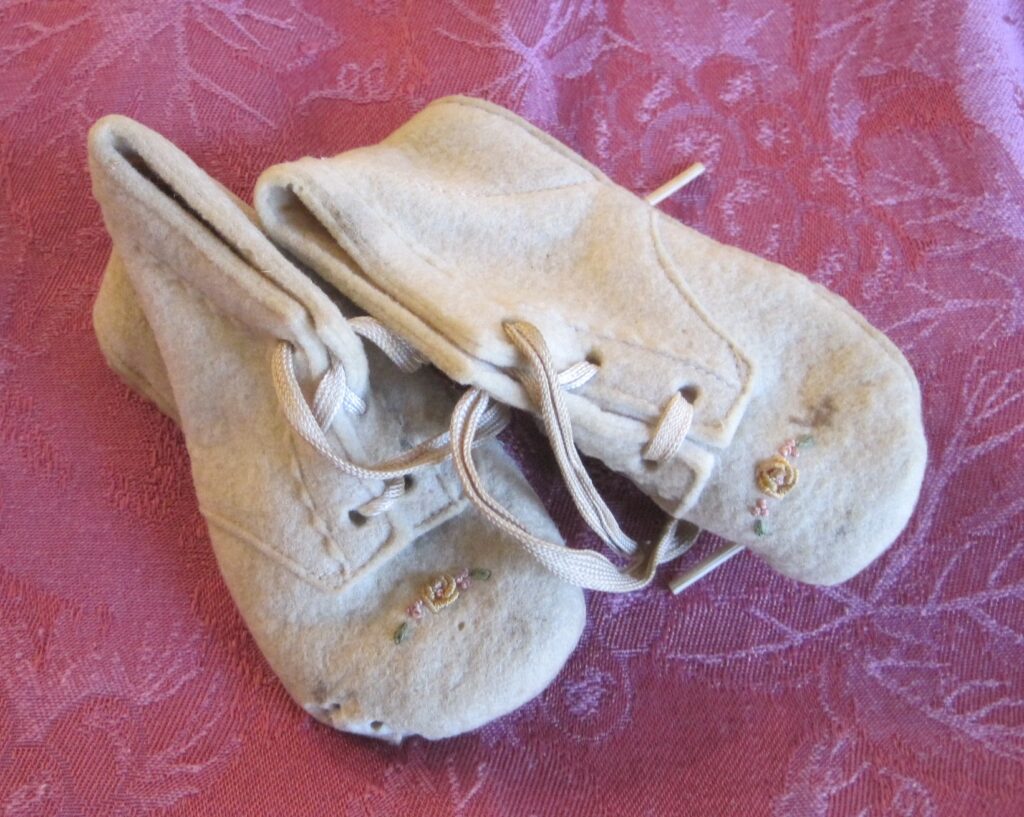
    Write about something you have had since you were a child.

    #amwriting #justwrite #creativewriting #memories

  • I left my heart . . . Prompt #608

    Writing Prompt:

    I left my heart . . .

    #amwriting #justwrite #creativewriting
  • Just Looking

    Memorable writing that sparks imagination. Lean in. Hear the writer’s voice on the page.

    Just Looking

    By Ken Delpit

    What’s in a look?

    Quite a lot, actually. Consider looks in their simple verb forms, for instance.

    The meanings range from imperatives to advisories to admonitions to out-and-out warnings.

    Look away. Look up. Look over there. Look down. Look around. Now, look here! Look sharp! Look out! Look at you!

    Or, consider the noun forms. As with its cousin verb forms, noun looks span a range of meanings, from complimentary to critical to probing to mysterious.

    Let’s take a quick look. That is a bad look for him. They kind of gave me a funny look. We need to take a deep look. Now, that is a good look for you. I was left speechless when she gave me that look.

    Or, consider “ing” forms to describe appearances and states, from transitory to reputational to habitual.

    Looking tired. Looking confident. Looking like a winner. No thank you, just looking. Looking surprised. Looking smug and haughty. Looking like you’re enjoying yourself. Looking Good!

    In short, if you find yourself stranded on a desert island, and you have only a few words at your disposal, you could survive pretty well if “look” is among them. Well, that and a solar-powered satellite cell phone.

    Thank you, Ken, for this fun take on the word look.

    Ken Delpit has been writing for quite a while, that is if you count computer programming and technical documentation as “writing.” Since leaving those professions behind, Ken has discovered an exciting new world of creative writing. He is now giddily exploring new devices, such as adjectives, subtlety, mystery, and humans with emotions and feelings.

    Aternatives for the word look, from Daily Writing Tips:

    “Look, it’s perfectly acceptable to use the verb look, but don’t hesitate to replace this fairly ordinary-looking word with one of its many more photogenic synonyms. Many of these substitutions come in especially handy when it comes to finding one word to take the place of look-plus-adverb or look-plus-adjective-and-noun, as the definitions demonstrate.”

    1. Blink: to look at with disbelief, dismay, or surprise or in a cursory manner
    2. Browse: to look at casually
    3. Consider: to look at reflectively or steadily
    4. Contemplate: to look at extensively and/or intensely
    5. Dip (into): to examine or read superficially
    6. Eye: to look at closely or steadily
    7. Fixate (on): to look at intensely
    8. Gape: to look at with surprise or wonder, or mindlessly, and with one’s mouth open
    9. Gawk: see gape
    10. Gawp: see gape (generally limited to British English)
    11. Gaze: to look steadily, as with admiration, eagerness, or wonder
    12. Glare: to look angrily
    13. Glimpse: to look briefly
    14. Gloat: to look at with triumphant and/or malicious satisfaction
    15. Glower: to look at with annoyance or anger
    16. Goggle: to look at with wide eyes, as if in surprise or wonder
    17. Leer: to look furtively to one side, or to look at lecherously or maliciously
    18. Observe: to look carefully to obtain information or come to a conclusion, or to notice or to inspect
    19. Ogle: to look at with desire or greed
    20. Outface: to look steadily at another to defy or dominate, or to do so figuratively
    21. Outstare: see outface
    22. Peek: to look briefly or furtively, or through a small or narrow opening
    23. Peep: to look cautiously or secretively; see also peek (also, slang for “see” or “watch”)
    24. Peer: to look at with curiosity or intensity, or to look at something difficult to see
    25. Peruse: to look at cursorily, or to do so carefully
    26. Pore (over): to look at intently
    27. Regard: to look at attentively or to evaluate
    28. Rubberneck: to look at in curiosity
    29. Scan: to look at quickly, or to look through text or a set of images or objects to find a specific one
    30. Skim: see scan
    31. Stare: to look at intently
    32. Stare (down): to look at someone else to try to dominate
    33. Study: to look at attentively or with attention to detail
    34. Watch: to look carefully or in expectation
    35. Wink: to look at while blinking one eye to signal or tease another person

  • Ekphrasis . . . Prompt #606

    Ekphrasis: Art describing other art.

    Created by the Greeks, the goal of this literary form is to create a word-painting, so the reader can envision the item described as if it were physically present.

    Write whatever the image conjures up.

    You can see ekphrasis art at the Artists’ Co-op of Mendocino, a collaboration between writers and visual artists where writing is paired with visual arts. Writing was nspired by art as well as art that inspired writing:  2021 Ekphrasis X Exhibition.

    #just write #amwriting #ekphrasis