All Summer Long . . . Prompt #595

  • Play . . . Prompt #593

    Today’s writing prompt is . . . Play.

    Here’s my play on the word play:

    Playwriting. Play at writing. Be playful about writing.

    Go to a play: Sit. Watch. Listen.

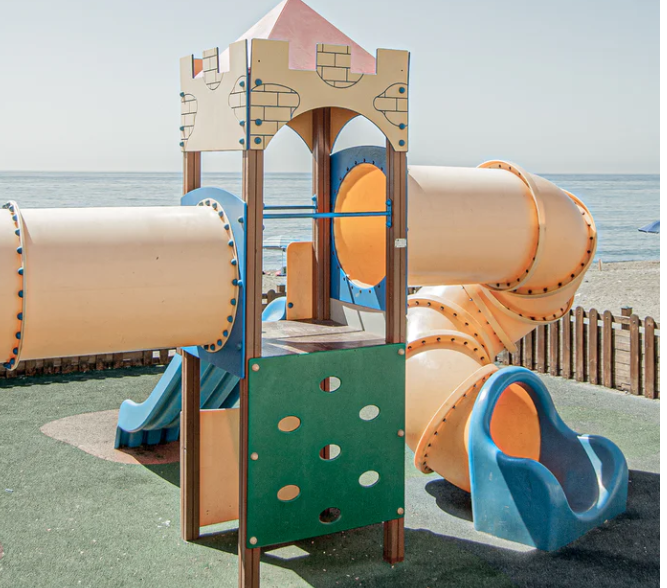
    Go to a playground: Run. Swirl. Fly.

    Put into a playpen: Baby. Puppy. Kittens.

    Be playful: Tweak an ear. Nudge a rib. Flirty smile.

    Play around: Scandal. Heartbreak. Disrupt.

    Play through: Move aside. Slow poke.

    One act play: Short

    Three act play: Three sections: Beginning, middle, end.

    Play: Vacation, sand, beach, Coppertone.

    Play date: Strollers, nanny, my house or yours?

    La Playa: Mexican beach, Tequila, Sunrise, Margaritaville.

    Play around: No-no?

    Play around at writing: Yes-yes!

    Your turn: Write on the word “play.”

  • Pastiche . . . Prompt #591

    Today’s writing prompt is not the usual 15-20 minute freewrite. Instead, it’s a bit more challenging and will take time to pursue.

    When you are ready for the challenge . . . Create a pastiche.

    Pastiche (pronounced pass-TEESH) is a creative work that imitates another author or genre. It’s a way of paying respect, or honor, to great works of the past. Pastiche differs from parody in that pastiche isn’t making fun of the works it imitates – however, the tone of pastiche is often humorous.”

    Examples of Pastiche

    The TV show 30 Rock is about a television studio, so there are plenty of opportunities for pastiche. In various episodes, the show mimics classic shows like “The Brady Bunch” or “Seinfeld” and major television events like the Olympics. From the tone of the show, it’s clear that these imitations come from a place of irreverent love, so they fall into the category of pastiche rather than parody.

    Pastiche is common in music, as musicians try out new styles in order to keep their sound from getting stale.

    An example is Queen’s “Thing Called Love” (a pastiche of Elvis Presley).

    Hip-hop frequently employs a broad pastiche of jazz, blues, and R&B sounds.

    Quentin Tarantino’s Kill Bill films are a simultaneous pastiche of two genres: westerns and kung fu movies.

    The Purpose of Pastiche

    The main purpose of using pastiche is to celebrate great works, or genres that a given show, movie, or story does not actually belong to.

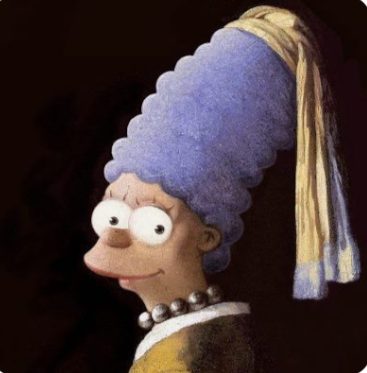
    A secondary purpose of pastiche can be to create variety. In a show like “The Simpsons,” the writers and animators use pastiche to shake up the look and feel of the show.

    Examples of Pastiche 

    Allen Ginsburg’s “Howl” is a pastiche of “Song of Myself” by Walt Whitman. By employing Whitman’s poetic form, Ginsburg hoped to speak to his generation in the same way Whitman did to his.

    Much of Amy Winehouse’s music is a pastiche of classic soul and R&B. The instruments, rhythms, and the sound of her voice all sound highly reminiscent of music from the 1950s and 60s – even her hair was modeled on the styles that were popular in that generation. 

    Tips for Writing a Pastiche:

    Study the original work

    Restructure the original work

    Infuse your own meaning

    Prompt: Use a well-known story from a book, TV show, movie, play, libretto, opera, or a song . . . And write a pastiche.

  • Ode To A Table

    Memorable writing that sparks imagination. Lean in. Hear the writer’s voice on the page.

    Ode to a Table

    By Julie Wilder-Sherman

    Lined with age, scratched without intent, indentations of mountain ranges from 7th grade homework reside in her second panel.

    Rings of white from overly hot cups and larger spheres from sizzling casserole dishes placed upon hot pads too thin.

    Dents on corners from swift, careless movement, black pen lines etched through paper, bleeding into the wood. 

    The long, suffering life of my dining room table, surviving, still standing with the family that unthinkingly scarred her.

    Julie Wilder-Sherman began reading books at an early age, encouraged by her mother who would allow her to take books to bed when she was as young as two years old. Raised in a family of readers, writers, performers, musicians, and political activists, Julie followed her dream of singing professionally and met her husband, bassist Jeff Sherman, while singing on The Love Boat. Together they enjoy cooking, eating, reading, and traveling to all corners of the world. Julie remains politically active and helps to manage the Petaluma Postcard Pod supporting democratic candidates, issues, and policies. 

  • Cool Desserts . . . Prompt #590

    July is National Ice Cream Month

    Write about a memorable ice cream or cool dessert.

    Or write about interesting or unusual ice cream desserts.

    Wicked Slush

    Dave and Julie Pokorny have created a destination experience in Petaluma, CA with their unique Wicked Slush.

    Soft serve with a twist.

    “Back East, it was Carvel. The creamiest, dreamiest, tallest, most improbable tower of soft serve ice cream, covered in chocolate magic shell. Remember?

    You had to crack through the shell to get to the goodness inside.

    Well, in Petaluma, we have Wicked. Creamy, dreamy, towering swirls of soft serve ice cream, made from local, organic Straus Family Creamery Dairy. Now imagine this in not only chocolate or vanilla, but in any one of 26 different flavors! And that magic shell? How about 6 different flavors? How about this concoction sitting in a crunchy sweet waffle cone? Yep. That’s how we roll at Wicked.”

    Thanks to Robert Cullen who let me know that July is National Ice Cream Month.

  • Using a book as your how-to textbook.

    Choose a book you like and in the genre you want to write as your how-to-write manual.

    For example, Maiden Voyage, a memoir by Tania Aebi:

    Aebi starts her story on her 37th day at sea, at a point when she is terrified. Rather than give us the back story of how all this began, she starts at a high action point.

    She describes her immediate situation: Because of strong winds and choppy waves, she hasn’t been able to eat, sleep, relax, or think.

    We get the sense of imminent danger. And then, to build suspense and tension, she reveals, “The weather can only get worse.”

    We hear a little about her emotional and mental state. She wants to go home to her family. ALL this, on the first page.

    Still on page 1, we get a “visual” – seeing her as she gets into her foul weather gear. There is action. She’s doing something about her immediate situation—she can’t change the weather nor sea conditions, but she is capable and we get a sense of history—she’s been sailing for quite a while. With this information, there is a slight moving away from the immediate situation, as if the camera is moving back a little, giving a broader perspective, or a wider range of view.

    Your turn:  Get a copy of a book you like and you don’t mind writing in. Either underline or  highlight places where there is action, dialogue, narration. You can use a different color for each category. Note how much narration is used versus dialogue versus action.

    If the book you want to write is contemplative, there will be more narration, or hearing the main character’s thoughts.

    If your book is a suspense/action book, of course there will be more action scenes.

    If it’s a mystery book, there may be more dialogue.

    These are some ideas for you. The main thing is: Just Write!

  • It

    By Cheryl Moore

    It’s as slick and slippery as an eel living in a low walled enclosure, searching all the crevices to find bits of debris that didn’t find their way to the long, dark tunnel at its root. It spends most of its days and nights resting against the hard, upper ceiling except at meal times when it is an important assist in processing the food, or when in company its primary function is to express thoughts into language.

    So many kinds of languages it helps to express — the hard, umlauted words of German, the soft shushes of Portuguese or Polish, the rapid clip of Spanish or Italian, even the clicks of Khoisan, and of course, the vast vocabulary of English which has borrowed from all over the world.

    Such a useful organ, the tongue, it may even be aware of when to hold its peace.

    When Cheryl Moore came to California in the early 1960’s, she realized she’d found her home. Then moving to Petaluma in the 70’s, she was as close to paradise as she’d ever be.

    Travel has taken her to Europe and the Middle East. She has written on these memories as well as on the flora and fauna of the local river and her own garden.

  • What am I ready to let go of?

    By Julie Wilder-Sherman

    Well, what am I going to do with all these masks?

    Store-bought.

    Handmade.

    Giants-themed.

    Kitty cats.

    Bejeweled.

    Blue flowers with yellow backgrounds.

    Yellow flowers with blue backgrounds.

    Plain, monochromatic.

    Busy, colorful.

    Cloth mosaic.

    A quilt of masks.

    Wait!

    That’s it.

    A Quilt. Of. Masks.


    Imagine millions of masks sewn together like the AIDS quilt, honoring what we have survived and what we have lost. A memorial, a tribute and dedication to what we have endured.  

    I’m ready to let go of seeing half-faces. Of asking people to repeat themselves. At nodding to those speaking, pretending to understand. At straining to hear the muffled words behind the shield.

    I’m ready to let go of images of cops and robbers. Of old movies with lepers, their faces partially covered. Of images of Isis terrorists with covered faces holding rifles over captives kneeling in front of them. 

    I’m ready to let go of the anger.

    The anger.

    The anger.

    He did this to our nation. You know who I mean, and I won’t say his name. He prolonged it due to his stupidity and ignorance and narcissism and . . .

    But.

    Back to the masks.

    I’m ready to let go and make peace with the memory of the masks. 

    I’ll bundle them up, put them in a bag and wait. 

    Someone will have the fortitude and talent to weave these cloths together and create something beautiful and meaningful out of something so horrific and ugly.

    San Francisco native Julie Wilder- Sherman is a long-time resident of Petaluma, California. She began reading books at an early age, encouraged by her mother, who would allow her to take books to bed when she was as young as two-years- old. Julie would “read” them until she was ready to go to sleep. To this day, Julie reads every night before turning out the lights.

  • Best Year of Your Life . . . Prompt #551

    If you could choose the best year of your life, what would it be and why?

  • Boost Dialogue with Beats . . . Prompt #532

    Too much dialogue can be boring to read. Interspersing action with dialogue makes a story interesting.

    In real life, we don’t talk without movement, neither should characters on a page. Plus, action gives clues to the character’s personality, habits, status and more.

    For example:

    “I dunno,” Remy said.

    Well, kind of boring. But what if detail were added:

    “I dunno,” Remy said, polishing the top of his boot along the back of his jeans.

    Readers can “see” this action and learn more about Remy’s character.

    Beats

    “Dialogue benefits from variety. A good way to maintain reader’s interest is to insert a variety of beats into dialogue. Beats are descriptions of physical action that fall between lines of speech.” —“Amp Up Dialogue With Emotional Beats,” by Todd A. Stone, Nov/Dec 2010 Writers Digest

    Facial Expressions

    Facial expressions signal emotions.

    “When a character raises an eyebrow or furrows his brow, this action, or beat, interrupts the dialogue and telegraphs a change in the character’s emotional state. As an exchange progresses and the emotional intensity rises—as the character’s dissatisfaction grows into anger, for instance—a character might set his jaw, bite his lip or narrow his gaze. His eyes may darken, his face may redden, his nostrils may flare and so on.

    Watch a TV show with the sound off. See how actors use facial expressions to signal emotions.”

    Physicality

    Of course, facial expressions aren’t the only way to physically show emotions. Body language can indicate a range of emotions.

    “Characters can point, steeple their fingers, clench hands into fists, pound tables, hold their hands up to surrender, cross their arms in front of their chests, throw up hands in resignation or despair.”

    Movement

    “Characters can cross the room, push back from a desk or table to get physical and emotional distance from a heated conversation, an intimate moment or another character. They can move in closer to become more threatening or more intimate, or to drive a point home. Use movement to support and enhance your dialogue.”

    Bigger Moves

    “If it fits your character, use big actions: Throw a fit, throw a plate or throw a punch. If your character has a hair-trigger temper, bypass eyebrow raisings and go straight to breaking furniture.

    Make sure the actions are consistent with the character’s traits. Every action should be a reflection of the character’s objectives and emotions, and of the scene. If the character seldom shows emotion, focus on small details that show true feelings, a tightening around the eyes, a deliberate forcefulness in each step as he walks across the room, a tense grip on a pen.”

    If you have a work in process see where you can add beats to dialogue.

    Prompt: Recall a recent conversation. Write it out, including physical gestures, facial expressions, and movement. Write as if you are writing a scene for a character to act out.