Lies, humiliation, secrets . . . Prompt #604

  • Lies, humiliation, secrets . . . Prompt #604

    Memoir is similar to many elements of fiction: Careful scene setting, pacing, tension, conflict.

    Seduce the reader with a confiding tone.

    Reveal secrets. The best secrets are those that the author reveals or learns about self in the process, “Ah, did I really think that?”

    Readers are interested in your conflicts.

    It’s important to modulate good times and bad times.

    “The best memoirs explore and reveal conflict in a way that illuminates and startles.” —Kat Meads

    Consider the scope of your memoir. It’s not necessary to start from when you were born and work your way up. Don’t try to write about everything. Take one aspect. The year you were in Paris, for example.

    If you go with a chronological way of telling, share just the important events that shaped you.

    The idea is to look objectively at your life to write a richer subjective memoir.

    Part of writing memoir is reacquainting ourselves with ourselves.

    Ways to delve into writing your memoir:

    Your childhood home

    ~Draw a picture of a house you grew up in. If you grew up in more than one house, pick one at a time to write about.

    ~ Write three memories that took place in this house.

    ~Put an x on those rooms where the memories took place.

    ~Write a paragraph about an early memory that took place in this house.

    An eventful day

    ~Pick a significant day in your life. Write a brief paragraph about what the event was and why it was significant

    ~List five or eight details about that day

    Time capsule

    ~ Write about five items that would define you to put into a time capsule

    Lies, humiliation, secrets

    Write about a lie you told. What were the circumstances surrounding that lie? What prompted you to tell it? What were (or are) the consequences of that lie? Did you get away with it? What effect has it had on you?

    Sentence starter: “The day that _________ humiliated me.”

    What is your longest kept secret?

    “You must not tell anyone, my mother said, what I’m about to tell you.” —Maxine Hong Kingston

    If you were going to start a memoir with that sentence . . . what would you write next?

    This blog post is inspired from a writing workshop with Kat Meads.

    More about writing memoir:

    Write Memoir in Voice of Narrator

    Memoirs as text books

    What is Memoir Good for?

    #amwriting   #justwrite   #memoir  

  • Poetry

    Founded in Chicago by Harriet Monroe in 1912, Poetry is the oldest monthly devoted to verse in the English-speaking world.

    Poetry wants “Unique poems that are surprising” and Poetry welcomes book reviews and other poetry-related prose.

    Explore Poems

    Featured Bloggers

    Submit

    #amwriting #justwrite #poetry

  • Ascension Garden

    Memorable writing that sparks imagination. Lean in. Hear the writer’s voice on the page.

    Ascension Garden

    By Stacy Murison

    The first time, you drive by yourself. You have some idea you are going there, but are still surprised that you know the way, without her, through the turning and turning driveways. Left, left, left, left. Park near the rusted dripping spigot. The wind blows, unseasonably warm for November.

    You bring the candy bar, her favorite, the one from the specialty chocolate shop, the one with the dark chocolate and light green ribbon of mint. You try to eat yours, but instead, stare at hers, unopened, where you imagine the headstone will go and sob without sound while the wind French-braids your hair just as she would have, and that’s how you know she is here.

    She is still pushing cicada shells off white birch trunks with her toes, dancing around pine trees with roses garlanded in her hair, singing of her love of tuna and string beans, of percolated coffee, of lemon waxed floors, of gelatin molds, of cherries, of lilacs, of chicken soup, of kasha, of home sweet home, of you.

    “Ascension Garden” was published August 16. 2021 in River Teeth, A Journal of Nonfiction Narrative.

    Posted with permission.

    Stacy Murison’s work has appeared in Assay: A Journal of Nonfiction Studies (where she is a Contributing Editor), Brevity’s Nonfiction BlogEvery Day Fiction, Flagstaff Live!, Flash Fiction MagazineHobartMcSweeney’s Internet Tendency, River TeethThe Hong Kong Review, and The Rumpus among others. 

  • Dance . . . Prompt #601

    Writing Prompt: Dance

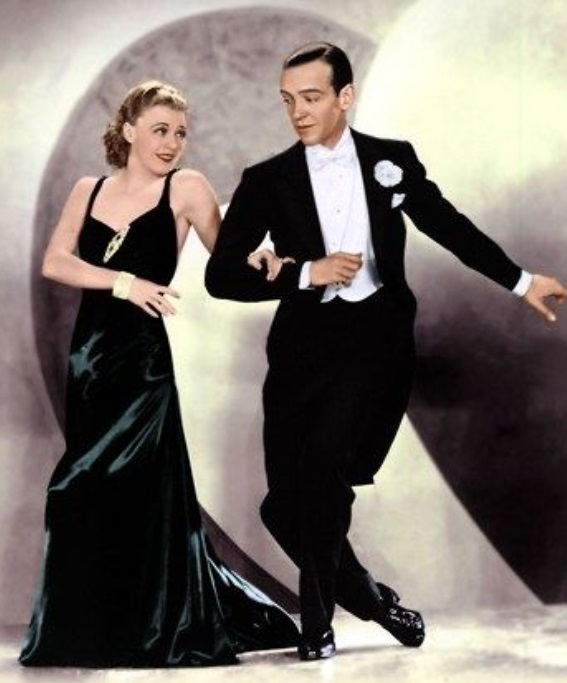
    Write about the last time you danced.

    Or write about a memorable dance experience.

  • Look on the bright side . . . Prompt #600

    Today is a banner day!

    Celebrating my oldest granddaughter’s twelfth birthday.

    And my favorite daughter and her husband’s ninth wedding celebration.

    Also celebrating 600 writing prompts on The Write Spot Blog!

    I’m taking a moment to take that in. Six hundred writing prompts.

    How did that happen!!?? One writing prompt at a time.

    The first prompt, “I remember . . . ” posted on September 24, 2013.

    And now I invite you to jump in, remember a story, and Just Write!

    Today’s writing prompt: Look on the bright side!

  • Mycorrhiza

    Memorable writing that sparks imagination. Lean in. Hear the writer’s voice on the page.

    Mycorrhiza*

    by Patricia Morris

    I live under the canopy of a grandmother valley oak. It grows in what is now called “my neighbor’s yard,” due to the way we white settlers swept through this what-is-now-called a nation over the past 300 years and took over everything. Massacred people who were living here, infected them with deadly diseases, tried to re-make them in our image. Declared that we “owned” the land, bought and sold it; built structures to live in, structures that got bigger and more permanent as time passed; built fences to delineate MINE.

    But before all this, there was the valley oak. Like all oaks, it began as an acorn, scrunched into the dirt next to a small seasonal creek. Its roots sank deeper each year, reaching for the water. Its mycorrhizal fungi spread wide, linking fingers with the grandfather sycamore nearby, and the great buckeye at the deeper part of the creek. They grew up together sharing food; sharing information; sharing tenants such as woodpeckers, scrub jays, red-shouldered hawks, squirrels, and woodrats.

    The grandmother oak watched placidly as the Coast Miwok women gathered its acorns, ground them into mush, and fed them to their families; as the Spanish and then the white folks pushed in and planted crops and orchards, grazed cattle and sheep; as roads were laid down and houses sprang up, displacing meadows and pastures.

    Fifty-one years ago what I call “my house” was built beside the oak out of dead redwood trees. The oak, by this time the oldest living being in the area, grew protective of this redwood structure, and even of the humans within it, despite all the destruction they wrought. I’ve had no doubt, since first setting foot on what I now call “my lot,” that the tree is protecting me and sending me love. Its ever-expanding canopy of leaves covers over two-thirds of my house in the summer, keeping it cool on even the hottest days. In the autumn, as its acorns hit the roof, the deck, sometimes even my head, like small exploding artillery shells, I give thanks and gratitude for the way it shares its abundance.

    On a cold, dark winter night, silver stars glitter through the outline of the oak’s bare black branches, its ancient arms reaching to the cosmos. My tiny form sits in a tub of hot bubbling water. Boundaries between me, tree, and twinkling stars dissolve into emptiness.

    * fungus which grows in association with the roots of a plant in a symbiotic or mildly pathogenic relationship. Oxford English Dictionary

    Patricia Morris lives under the trees in Northern California and writes on Monday nights at Jumpstart Writing Workshops. She dates her love of stories to being read to while sitting on the lap of her Great-Aunt Ruth, a children’s librarian. Her writing has appeared in Rand McNally’s Vacation America, the Ultimate Road Atlas and The Write Spot anthologies Possibilities and Musings and Ravings From a Pandemic Year, edited by Marlene Cullen.

  • All Summer Long

    Memorable writing that sparks imagination. Lean in. Hear the writer’s voice on the page.

    All Summer Long 

    By Deb Fenwick

    All summer long, busy house sparrows flit in the eaves of our house. Each morning, they collect tiny twigs and things I rarely notice from the ground and end up making a life with them. Seedlings sprout and reach toward a warm, welcoming sky.  Children ride bikes and screech with delight. No hands! Look at me! Watch! When the sun sets at nine o’clock, those same children, liberated from the rigidity of school night routines, line up for ice cream with wide, wild eyes as fireflies send signals across the garden. The crickets just keep chirping. 

    All summer long, there’s lake swimming in midwestern waters that have been warmed by the sun. And better still, there’s night swimming where a body, unfettered by the weight of gravity,  gets its chance to remember what it’s like to glide through dark mystery. 

    My feet don’t touch the bottom of blue-black water, and it’s just the right amount of uncertainty. I plunge into the cool deep and open my eyes to see almost nothing. Almost. Everything is opaque—shape-shifting while bubbles rise to the surface and my body moves through muffled sound. Everything I think I know in the daytime fades away under the water’s surface. When I come up for air, my eyes squint and adjust to July moonlight. Soft water splashes as I rise to stand on coarse sand. Maybe I’ll hear a screech owl. Not children screeching. They’re all asleep now. The flies send signals, and the crickets just keep chirping. 

    Deb Fenwick is a writer from Oak Park, Illinois, who spent many years learning and teaching in public school settings.