The thing about grief . . . Prompt #754

  • The thing about grief . . . Prompt #754

    Inspired by an email from Susan Bono:

    I was at Dollar Tree the other day and didn’t have quite enough cash to cover my Halloween garlands.

    As I fumbled with my card, the cashier said, “I never carry cash anymore.”

    I said, “I don’t either, but I miss it sometimes.”

    She looked at me full in the face and said, “There are things I miss every single day about the way things used to be.”

    I saw such grief in her face before she smiled and urged me to have a nice day.

    Prompt: Write whatever comes up for you . . .

    Shopping at the Dollar Tree store

    Halloween

    Cash vs credit card

    I miss . . .

    The way things used to be . . .

    The thing about grief is . . .

    Susan Bono is the author of “What Have We Here: Essays about Keeping House and Finding Home.” Available on Amazon.

    “The world is full of stories. Mine collect in journals, spill onto postcards and scraps of paper, come to conclusions in computer files, call to me in dreams. I write what I believe is true about my experiences, not just events that happened to me. 

    I’m not sure what’s more important: the raw aliveness of a dashed-off journal entry or the carefully developed and edited essay, finally (one hopes) complete.  I only know that every story is a shard of mirror that shows me pieces of who I am and what it means to be human.” —Susan Bono

  • Illuminating The Essay

    Guest Blogger Arletta Dawdy’s reflections on Susan Bono’s talk, “Illuminating The Essay.”

    Remember the bogs of Ireland or those on the moors of England in old romance novels? The one where the heroine comes to the lonesome manor to be a governess, nurse, or maid only to fall for the moody master, his neighbor or maybe the groundsman. She’s lost in the mire of boggish emotions until HE comes to her rescue.

    Well, I don’t see HIM rescuing this writer from her blogger’s mind-bog. If you noticed, I’ve been absent for, low, these many months and then I thought there might be hope showing on my horizon.

    Marlene Cullen, producer of Writers Forum, invited local heroine/publisher//teacher Susan Bono to inspire an October gathering by “Illuminating The Essay.”

    Susan has published personal narratives in her famed  journal, Tiny Lights, for nearly twenty years. She is an expert in the form and offers references, stimulation and inspiration freely.

    Susan Bono sees five keys to writing the personal essay:

    Character: the self

    Problem: give yourself a problem

    Struggle: Problem creates conflict

    Epiphany: after struggle, a flood of new understanding

    Resolution: what you do differently as a result.

    Susan calls on the work of many experts including: Phillip Lopate’s The Art of the Personal Essay; Adair Lara’s Naked, Drunk and Writing; and Louise Desalvo’s Writing as a Way of Healing.

    Many of her references specialize in memoir which Susan finds to be good resources.

    As so many good instructors do, Susan had exercises for us to try out. I found them to be great fun and marveled at the variety when students chose to share what they wrote. These are starter ideas which serve to establish the intent or direction of the essay/narrative. 

    Here they are with a couple of my answers shared:

    1. I want to tell you how [name of person] changed my life (Universal statement).

    My answer: John Steinbeck, and he did it twice: inspiring me to go into social work to change the world and to write.

    • I’m trying to figure out how I feel about______________
    • I learned about obstinance . . . from my granddaughter, with her threats not to go to sleep, hands on hips, pursed lips . . . and then dissolving into tears as she gave up.
    • I never expected to________________
    • I will always regret . . . My answer: not starting to write earlier.
    • I never thought I’d become a person who_______________________

    Paraphrasing Susan Bono’s rules:

    Reader should know within three paragraphs what the essay is about.

    Check proportion of scene with real action against summary which moves reader thru time rapidly.

    Check the frame: sense of being triggered by past event and ends by bringing back to current event.

    Use of dialogue brings others into the event.

    Use restraint when writing difficult themes as with violence, abuse . . .  need not be gory to make point.

    End or resolve with action or gesture as opposed to flowery words.

    Your Turn

    Challenge yourself:  Try answering Susan’s six openers.

    Posted on Arletta Dawdy’s Blog, October 27. 3013.

    SAVE THE DATE

    July 7, 2022: Susan Bono will talk about Ready, Set, Pivot!

    Personal narratives are documents of change. They always contain a “before” and “after.” This is really useful to remember when building our stories. In our time together, we’ll explore this concept and experiment with some structures that create natural pivots or shift points.

    Writers Forum sponsors this free event on Zoom. You need to register to attend.

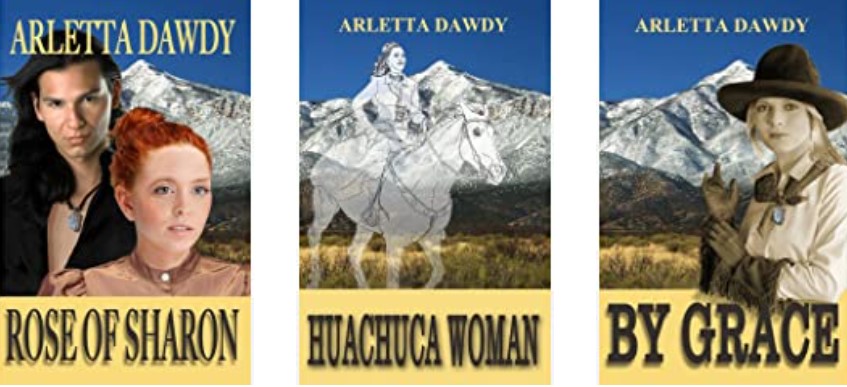
    Note From Marlene: Arletta Dawdy has written a wonderful series of historical fiction: entertaining, engaging, and “escapism” reading.

  • Writing is magical

    Photo by Robin Hewett Jeffers

    Writing is magical. Take some blank pages, write or type on them, and as if by magic, a story appears. It may be an incomplete story and it may feel fragmented, but it’s the beginning of Your story.

    Writing can be healing, especially when you write what you really want to say, rather than listing what you did that day, journal style.  The most magical writing is when you get so involved in your writing that you lose track of time, you lose track of where you are and even, who you are!

    The process of writing can be therapeutic. With this deep writing, you may experience a release of emotions, clearing the air, and seeing old things in a new way. — “The Write Spot to Jumpstart Your Writing: Connections.”

    Personal Essay as Therapy

    Just Write!

    #amwriting #justwrite #iamawriter

  • Ascension Garden

    Memorable writing that sparks imagination. Lean in. Hear the writer’s voice on the page.

    Ascension Garden

    By Stacy Murison

    The first time, you drive by yourself. You have some idea you are going there, but are still surprised that you know the way, without her, through the turning and turning driveways. Left, left, left, left. Park near the rusted dripping spigot. The wind blows, unseasonably warm for November.

    You bring the candy bar, her favorite, the one from the specialty chocolate shop, the one with the dark chocolate and light green ribbon of mint. You try to eat yours, but instead, stare at hers, unopened, where you imagine the headstone will go and sob without sound while the wind French-braids your hair just as she would have, and that’s how you know she is here.

    She is still pushing cicada shells off white birch trunks with her toes, dancing around pine trees with roses garlanded in her hair, singing of her love of tuna and string beans, of percolated coffee, of lemon waxed floors, of gelatin molds, of cherries, of lilacs, of chicken soup, of kasha, of home sweet home, of you.

    “Ascension Garden” was published August 16. 2021 in River Teeth, A Journal of Nonfiction Narrative.

    Posted with permission.

    Stacy Murison’s work has appeared in Assay: A Journal of Nonfiction Studies (where she is a Contributing Editor), Brevity’s Nonfiction BlogEvery Day Fiction, Flagstaff Live!, Flash Fiction MagazineHobartMcSweeney’s Internet Tendency, River TeethThe Hong Kong Review, and The Rumpus among others. 

  • How to Write a Personal Essay

    We aren’t born knowing how to write personal essays.

    So, how does one learn to write personal essays?

    The following is inspired from “A Few Tips for Writing Personal Essays,” by Robert Lee Brewer, March/April 2021 Writer’s Digest.

    Read personal essays!

    Then write. You will discover your style as you write.

    ~ Start with action. Save backstory for later in the essay. The beginning should have a compelling scene that hooks readers and makes them want to continue reading.

    The following is an example of “start with action.” The hook compelled me to read the entire essay.

    “When he walked into a San Francisco barbershop after the war, he was told by the owner, ‘We don’t serve Japs here.’

    The owner of the barbershop obviously didn’t know who the one-armed Japanese-American was – his name was Daniel Inouye. And, according to one website that honors heroes, he was one tough ‘badass.’” — The Jon S. Randal Peace Page, (Facebook) September 5, 2019

    ~ Build up to the reveal. Don’t reveal the ending at the beginning or even the middle. Rather, hint at a reveal or big conclusion early on and string out details to the big payoff at the end.

    ~ Share a takeaway. Many people who love personal essays aren’t in it just to read about people writing about themselves. Readers want a “takeway,” like a life lesson, a memorable event, or a good laugh. Figure out how to make your story meaningful to another person.

    ~ Let go of your fears. Don’t hold back. If you’re going to write a personal essay, write a personal essay. Dig deep into your story. You can only make a connection with readers if you are brave to tell all.

    Read personal essays to learn how to write personal essays:

    What Have We Here: Essays about Keeping House and Finding Home ” By Susan Bono

    Magazines (print and online) featuring personal essays:

    Boston Globe Ideas

    Chicken Soup for the Soul        

    Modern Love (New York Times column)

    River Teeth

    Slate

    The Home Forum

    The Isolation Journals

    The Sun

    Just Write!

  • Rubbing Aladdin’s Lamp

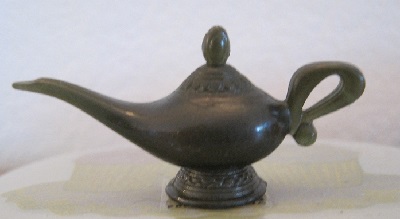
    Aladdins Lamp

    “The past,” Phillip Lopate says, “is an Aladdin’s lamp we never tire of rubbing.”

    Guest Blogger Norma Watkins studied with Phillip Lopate. The following is what she gleaned working with the master of the personal essay.

    The hallmark of personal essay and memoir is its intimacy. [Links below on memoir writing.]

    In a personal essay, the writer seems to be speaking directly into the reader’s ear, confiding everything from gossip to wisdom: thoughts, memories, desires, complaints, whimsies.

    The core of this kind of writing is the understanding that there is a certain unity to human experience. As Montaigne put it, “Every man has within himself the entire human condition.”

    This kind of informal writing, whether a short piece or a book of memoir, is characterized by:

    • self-revelation
    • individual tastes and experiences
    • a confidential manner
    • humor
    • a graceful style
    • rambling structure
    • unconventionality
    • novelty of theme
    • freshness of form
    • freedom from stiffness and affectation

    The informal writing of the personal essay and memoir offers an opportunity toward candor and self-disclosure. Compared with the formal essay, it depends less on airtight reasoning and more on style and personality. We want to hear the writer’s voice.

    How do we achieve this?

    Use a conversational tone. Instead of seeing our memoirs as collections of facts we are leaving to the future, strive to write as if this were a letter to a friend.

    We have a contract to the reader to be as honest as possible.

    Humans are incorrigibly self-deceiving, rationalizing animals. Few of us are honest for long. Often, in shorter personal essays, the “plot,” its drama and suspense, consists in watching how far the essayist can drop past her psychic defenses toward deeper levels of honesty. You want to awaken in the reader that shiver of self-recognition.

    Remove the mask. Vulnerability is essential.

    The reader will forgive the memoirist’s self-absorption in return for the warmth of his candor.

    The writer must be a reliable narrator. We must trust that the homework of introspection has been done. Part of this trust comes, paradoxically, from the writer’s exposure of her own betrayals, uncertainties, and self-mistrust. This does not mean relentlessly exposing dark secrets about ourselves, so much as having the courage to cringe in retrospect at our insensitivity that wounded another, a lack of empathy, or the callowness of youth. As readers, we want to see how the world comes at another person, the irritations, jubilations, aches and pains, humorous flashes. These are your building blocks.

    Ask yourself questions and follow the clues. Interrogate your ignorance. Be intrigued by limitations, physical and mental, what you don’t understand or didn’t do.

    Develop a taste for littleness, including self-belittlement. Learn to look closely at the small, humble matters of life. Develop the ability to turn anything close at hand into a grand meditational adventure. Make a small room loom large by finding the borders, limits, defects and disabilities of the particular. Start with the human package you own. Point out these limitations, which will give you a degree of detachment.

    You confess and, like Houdini, you escape the reader’s censure by claiming: I am more than the perpetrator of that shameful act; I am the knower and commentator as well. If tragedy ennobles people and comedy cuts them down, personal writing with its ironic deflations and its insistence on human frailty tilts toward the comic. We end by showing a humanity enlarged by complexity.

    We drop one mask only to put on another but if in memoir we continue to unmask ourselves, the result may be a genuine unmasking. In the meantime, the writer tries to make his many partial selves dance to the same beat: to unite through force of voice and style these discordant, fragmentary parts of ourselves. A harvesting of self-contradiction is an intrinsic part of the memoir. Our goal is not to win the audience’s unqualified love but to present the complex portrait of a human being.

    A memoirist is entitled to move in a linear direction, accruing extra points of psychological or social shading as time and events pass. The enemy is always self-righteousness, not just because it is tiresome, but because it slows down the self-questioning. The writer is always examining his prejudices, his potential culpability, if only through mental temptation.

    Some people find a memoir egotistical, all that I, I, I, but there are distinctions between pleasurable and irritating egotism. Writing about oneself is not offensive if it is modest, truthful, without boastfulness, self-sufficiency, or vanity. If a man is worth knowing, he is worth knowing well. It’s a tricky balance: a person can write about herself from angles that are charmed, fond, delightfully nervy; alter the lens a little and she crosses into gloating, pettiness, defensiveness, score-settling (which includes self-hate), or whining about victimization. The trick is to realize we are not important except as an example that can serve to make readers feel a little less lonely and freakish.

    The Past, as we said in the beginning, is a lamp we never tire of rubbing. We are writing the tiny snail track we made ourselves. Such writing is the fruit of ripened experience. It is difficult to write from the middle of confusion. We need enough distance to look back at the choices made, the roads not taken, the limiting family and historic circumstances, and what might be called the catastrophe of personality.

    Finally, the memoirist must be a good storyteller. We hear, “Show, don’t tell,” but the memoirist is free to tell as much as she likes, while dropping into storytelling devices whenever she likes: descriptions of character and place, incident, dialogue and conflict. A good memoirist is like a cook who learns, through trial and error, just when to add another spice to the stew.

    The Art of the Personal Essay, Phillip Lopate, Doubleday, 1994.

    Note from Marlene:  For more suggestions about how to write a personal essay, please see Write Spot Blog posts:

    How to Write A Memoir-Part One

    How to Write A Memoir-Part Two

    Norma Watkins will be the Writers Forum Presenter on August 18, 2016: “Writing Memoir and How To Turn Your Stories Into Fiction.”

    Norma grew up in Mississippi and left in the midst of the 1960s civil rights struggles. Her award-winning memoir, The Last Resort: Taking the Mississippi Cure, tells the story of those years. When asked what the memoir is about, Watkins says: “Civil rights, women wronged, good food and bad sex.”

    Watkins has a Ph.D. in English and an MFA in Creative Writing.  She teaches Creative Writing for Mendocino College and  serves on the Board of the Mendocino Coast Writers Conference, and the Coast branch of the California’s Writers Club.

  • Personal Essay is Memoir in Short Form

    If you have written your memoir, or are in the process, and it’s not shaping into what you envisioned, you could transform it into a personal essay.

    It might be easier, at some point, to concentrate on writing a personal essay, rather than a book-length manuscript.

    There are many posts on The Write Spot Blog about how to write personal essays. (Please scroll down for the how-to posts).

    You may be writing vignettes to satisfy your desire to write family stories. You can publish these with the help of many do-it-yourself publishing companies.

    If you want your personal essays to be published for public consumption, there are many opportunities for submission: Big Brick Review, Chicken Soup for The Soul, The Christian Science Monitor,  Fourth Genre: Explorations in Nonfiction and so many more places. Check the back pages of Writer’s Digest magazine.

    You can submit your writing to be included in anthologies. Conduct an internet search to find anthologies that are currently accepting submissions. An online search for “submit to anthologies” yielded thousands of results. You can also find anthologies that are looking for submissions in the back pages of Writer’s Digest magazine.

    And of course, you can check in at The Write Spot Blog anytime to find publications that accept personal essays, just click on “Places to Submit.”

    How to subscribe.250You can subscribe to The Write Spot Blog and not miss a single post. When you subscribe, posts will be delivered to your email inbox. Just fill out the information on the home page of The Write Spot Blog — Right side, scroll down.

  • Hippocampus Magazine wants your story about All Kinds of Weather

    Hippocampus Magazine enthusiastically accepts unsolicited submissions in the following categories:

    • memoir excerpt – a self-contained portion (chapter or selection) of a larger, book-length work
    • personal essay – a short narrative reflecting on a particular life experience or observation
    • flash creative nonfiction or a work of creative nonfiction in an experimental format

    Here is an article that discusses the difference between memoir and essay. And here is another.

    2014 Theme: Weather & Acts of Nature

    From storms and sprinkles to earthquakes and extreme heat, Mother Nature can pack a punch or paint a pretty picture. Weather can be wacky and wild. And weather can be calm.

    Weather often plays a character in our everyday—and not so everyday—lives. We’re seeking tales in which the weather or even a natural disaster played a significant or supporting role.

    To be clear, we’re not specifically looking for stories just about bad weather or destruction; instead, we seek any personal essay or memoir excerpt related to the weather in some way. Maybe you dated a meteorologist? Perhaps you were stuck at an airport for a day and made an unlikely friend… Maybe the sun came out at JUST the right time… Perhaps there’s a story behind your umbrella…

    Also of note: we’re not looking for essays/articles/opinion pieces solely about why climate change does or does not exist—Hippo is not the venue for that.

    We’re open to submissions for this issue now through April 30; submissions should adhere to our usual guidelines.

    We like quirky, we like edgy, we like witty, we like smart, we like to be moved, we like pieces that stick with us.

    Have fun! We look forward to your weather stories.

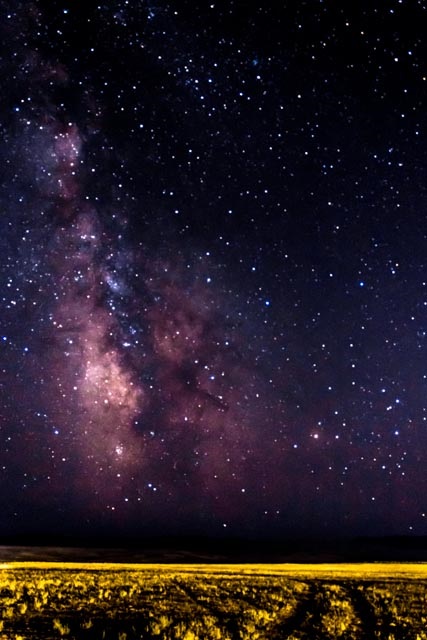
    Colby.Evening Sky

    Photo by Colby Drake. Colby Drake Design.  Check out Colby’s Facebook Page.

  • Essence of you. Prompt #45

    Step 1. Make a list of significant events that have happened in your life. Start with the year you were born . You can list important dates such as the year you graduated, got married, started jobs, vacations. Also, list emotional highs and lows:  betrayals, losses, inspirations, revelations, epiphanies.

    Step 2. Choose specific years from this list and research historical events that happened during those years.

    Step 3.  From your lists: Choose an event that you think people would want to know more about.  Or, choose events that capture the essence of you.

    Step 4: Write about the event. Include specific details and use anecdotes.* Tie in your personal events with historical events. For example:  My junior high friends and I swiveled on cherry-red stools at Woolworth’s in 1962 in San Francisco, not realizing that folks with certain colored skin were not allowed the same privileges in other parts of the world.

    *Anecdote:  A short account of a particular incident or event, especially of an interesting or amusing nature.

    Next step:  Turn this freewrite into a personal essay.  For ideas about personal essay, click on the Just Write category on The Write Spot Blog. 


    Lighting the path for reflection


  • Are there rules for essay writing?

    Pat Olsen has written an excellent article about writing personal essay in the December 2013 issue of The Writer magazine. Highlights:

    “. . . when I am so obsessed about an idea that I can’t wait to put pen to paper, the essay almost writes itself. That’s not so say I don’t struggle over every word, or that I’m done after the first draft . . . Some of the best advice I’ve received is that it’s not only what you choose to include in an essay that’s important, but it’s also what you choose to omit.”  She gives an example and then goes on to ask:

    “Are there actual rules for essay writing? If so, not all writers agree on them.” After consulting essayists, here’s what she discovered:

     Kate Walter:  “‘An essay should have a universal theme . . . No matter how unusual a story may seem,’ she says, ‘there should be a broader theme that every reader can identify with.”

     Andrea King Collier:  “‘Voice is everything,’ she notes. ‘Two people can write an essay on the loss of a parent, and it is the voice and the approach/lens of the writer that can make one sing over the other.’”

     Bob Brody: “Start with an anecdote, a scene or an observation, Brody advises. Go back in time or stay in the present. Have a single big moment or a series of big moments.”

     Amy Paturel:  “The best essays, she says, are about a transformation. ‘Between the beginning and the end of your essay, there has to be some sort of epiphany or awakening . . . ”

     Andrea Cooper:  “. . . take a break from your essay. ‘I studied once with memoirist Patricia Hampl, who encouraged us to think of revision literally,’ she says. “It’s re-vision, re-seeing.’”

    Lots of good information in this article about writing personal essay.

     Nina Amir posts writing prompts on her blog.  Her January 31, 2014 post, about personal essays, includes Writing Prompt #9, Brainstorm Personal Essay topics.

    Nina writes, “Personal essays tend to focus on one particular event and how it affected you or your life. They often have universal themes that makes it possible for readers to relate to personal stories.”