Do you prefer to collect & save things or live sparsely?

 Write whatever comes up for you!
Save in a word document. Post on The Write Spot Blog. Let’s see what you come up with for this prompt. Just Write!
Today’s prompt is inspired from Poetic Medicine by John Fox, “The Healing Power of Images.”
 “A morning glory at my window satisfies me more than the metaphysics of books” — Walt Whitman
“Images are drawn from sensory experience and help us to feel what the writer or speaker is communicating. Whitman is more satisfied by the morning glory because it is real and alive, it communicates something to him about reality that is particular, clean and unmistakable. Images offer us direct experience. They can show themselves to us through any of the senses.”
Think about the house you grew up in, or where you spent most of your childhood. Or, if you want to write from your fictional character’s point of view. . . picture a place where the protagonist spends a lot of time.
 Now, think about routes you routinely took . . . to school. . . or the library. . . a store . . . or playground
Travel back in time, or to your imaginary place, and see the sights and scenery. If you are working on fiction. . . use this prompt to visualize your story’s setting.
 Zoom out like an owl and observe the activity below. Perch on a rooftop or a pole or a high wire.
Let’s have the owl observe something on your daily route, or your character’s. A place that evokes a strong memory for you.
Take a moment and picture this place. . . an intersection, in front of a store, a front yard, a back yard, an untamed place or a place filled with human or animal activity . . . a familiar place, either from real life, or make it real with your imagination.
Zoom down, get closer to the action. Perch where you can clearly see details of the place you have selected.
Prompt: Describe as precisely as you can, the images and direct sensations you see, hear, feel, intuit, smell.
Use sensory detail: Smell, sound, taste, touch, visual: a vendor’s food cart, sewer sour milk smell, wind chimes, brakes screeching, popcorn, hot dogs, brittle wood on telephone pole, dirt, yard ornament, cigarette butts.
Today’s writing prompt is inspired from Your Mythic Journey by Sam Keen and Anne Valley-Fox.
 “Pre-modern people didn’t think of themselves as individuals — they were members of a tribe as well as of a family. Ancient philosophers knew that human dignity begins with ‘We are a people, therefore I am.’ Modern people are tribal too but we call our tribes by different names — churches, corporations, states, nations. Each of us was nurtured within and shaped by several corporate bodies, voluntary organizations and professional corporations that molded our values and behavior — schools, athletic teams businesses, clubs, temples, and local, national, and international governments.”
Prompt: I am from . . .
Note from Marlene: You can write from your personal experience, or write from your fiction character’s point of view. You may have written on this prompt previously. It’s a good one that can be used repeatedly, new things may come up, or clarification about an event may surprise you. Remember: Just write, no editing as you write, no judging, no critiquing. Just write!
The following is inspired by Your Mythic Journey by Sam Keen and Anne Valley-Fox.
Chapter 4, “The Past” It’s Still Happening.
“We love the present tense. Be here now. Yesterday is gone and best forgotten: our tradition is to have no tradition. We aren’t Europeans buried in ancient tombs and cathedrals and medieval ruins. We were born yesterday and we will be young forever. Over thirty is over the bridge. Age embarrasses us; remembrance is a function of senility. We exile the aged to Sun City leper colonies so they won’t impair our illusion of endless summer.
But history is not so easily dismissed. Repressed memories, national or personal won’t stay down. To be alive is to have a past. Our only choice is whether we will repress or re-create the past. Childhood may be distant, but it is never quite lost; as full-grown men and women we carry tiny laughing and whimpering children around inside us. We either repress the past and continue to fight its wars with new personnel or we invite it into awareness so that we may see how it has shaped the present.
The moment you begin to tell your stories you may find that memory is a trickster who picks and chooses scenes. What happened to you in the past has yet to be determined. Ninety-nine times you tell the story of the way you were whipped for stealing apples you didn’t steal. Then in the hundredth telling, you remember that you did steal them and the whole scene changes. Your memories of what happened to you in 1953 will be different in 1975, and again in the year 2000.”
 Prompt: Think of an incident that one or more people might see very differently.
Tell the story beginning with the words, “This is how I see what happened…”
Prompt: Write the story from the other person’s perspective.
No matter whether you use these prompts or not . . . Just Write!
Write whatever comes up for you. No judging, no criticizing yourself!
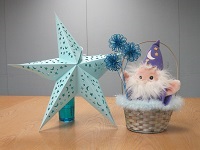 Have fun with this prompt! Let yourself go. Be silly. Be creative. Be humorous. Be serious. Just write!
Make a list of things that are meaningful to you, starting with the letter “A” . . . then go through the alphabet to the letter z. Write one sentence, or a few words, why this is meaningful to you. For example:
A – A deck of cards – playing gin rummy and hearts
B – Balloon game in the old living room
C – Crafts – glitter glue, making things with the kids
continue to the end of the alphabet
W – Wizard puppet
X – X-rays that saved my life
Y – “Y” always reminds of watching the Micky Mouse Club. “Why? Because we like you!”
Z – Zebra in orthodontist’s office
~ Now you have a list of things you can write about! Anytime you want to write and need an idea, look at your list and Just Write!
“A rough draft is inherently an experiment, or, rather, a series of experiments. each novel, each piece of writing, is a new thing with different possibilities that demand to be explored. Many of these experiments will fail, but failure is necessary to find those wondrous and magical moments of success.” — “More Ideas Faster, Writing With Abandon” by Grant Faulkner, Jan/Feb 215 Poets & Writers magazine.
 Grant Faulkner is: Executive Director of National Novel Writing Month, co-founder of 100 Word Story, writer, tap dancer, alchemist, contortionist, numbskull, preacher. Click here to read more about Grant Faulkner.
Note from Marlene: Click here for ideas of what to write about. Choose a writing prompt, set your timer for 12-15 minutes and Just Write!
Your character could be fictional or a real person.
Kurt Vonnegut says to “make your character want something.” There are several ways to go about this.
Have your character do something unexpected . . . something that surprises everyone and weave in a problem.
You can put your conservative character in an improv situation where he/she has to rap or act in a scene.
Your male character might find himself on stage, learning how to hula or belly dance.
Your female character might find herself in a lumberjack contest.
Have your wild character volunteer to help with bingo in an assisted facility.
Have your character do something unusual.
Remember these are freewrites, where you write freely for 12 to 15 minutes. This doesn’t mean you have to use these character vignettes in your novel, essay or memoir. Have fun playing around with characters.
Have fun making your character uncomfortable, make him or her squirm. Worms on a fishing pole come to mind.
Now, here’s how to really get into the heart of your character:
What does your character want? What gets in the way?
For prompts on character development, take a look at:
Character development, discovering characters, prompt #132
Flesh out your character, prompt #131
Other character’s point of view, prompt #109
Grow your characters, prompt #48
Just Write!
For this two-part prompt, we’re going to develop a character, either fictional or based on reality (especially if you are writing memoir).
How do writers develop characters? How do you get to know your character beyond their looks, their desires and where they went to school?
Step One: Give your character a hobby or an interesting job. The more unusual, the better. Bee-keeping? Needlepoint for a man. Bucking horses, art aficionado, chemist, skywriter, laundromat manager, tornado chaser. You can look up unusual jobs that pay well by clicking here, such as: Cruise ship entertainer, ice cream taster, human statue, hot dog vender, dog groomer, personal shopper, funeral director.
Sketch how your character might spend an hour of their work day, or hobby time: gathering honey, purchase yarn and patterns, ranch and corrals, visits to art galleries and museums, mixing potions in the basement. You might paint a picture what an hour of their job looks like: what do they see, who do they interact with, what do they think while working.
Spend some time with this before going to the next step.
Step Two: Interview your character as a journalist would. Stymied? Look at interviews in magazines, newspaper articles or look online and see what others have done.
You can interview your character from Prompt #131, or create a new character.
We’ll continue with character development with the next prompt.


Skywriting photo by Breana Marie