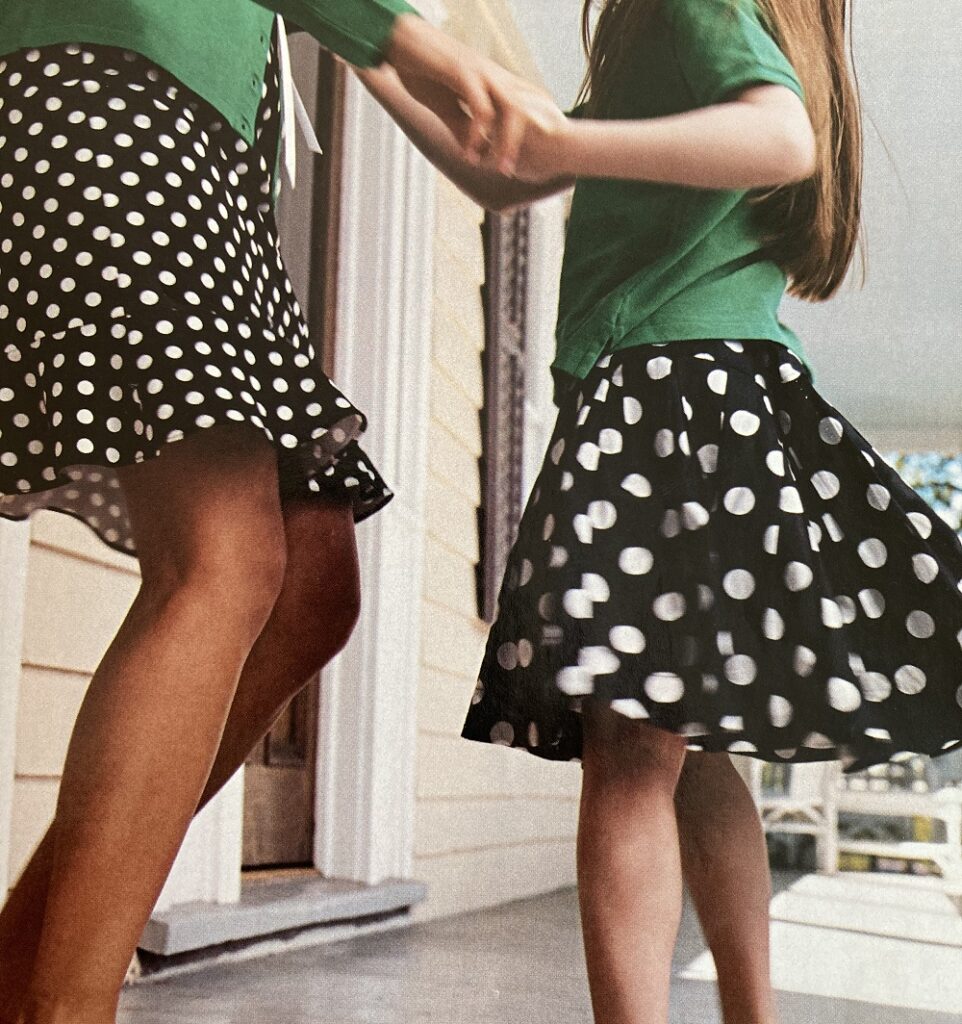
Write about your favorite thing to do . . . now . . . or in the past.
#justwrite #iamwriting #iamawriter

Write about your favorite thing to do . . . now . . . or in the past.
#justwrite #iamwriting #iamawriter
Memorable writing that sparks imagination. Lean in. Hear the writer’s voice on the page.
Halloween Special
By Graham Chalk
I am posting this for the edification and diversion of fellow travelers. I wish for no observations regarding my syntax or your tin tacks. I do not wish to hear about your grammar or my grandpa. I thank you.
Halloween Special
I have not written this story down before, although I have told it before.
Told it as if I were at confession and the listener was a priest.
But there will, I believe, be no absolution.
How much of this story is true?
I will let the reader decide.
Schools are scary places.
And when they are empty?
Then they are very scary places indeed. Full of dead echoes.
Generations of ghostly, silent feet disturbing the sleeping dust of generations
My very first ever job was working as a lab technician in a vast and ancient school.
It’s all gone now. All that time and all those buildings have crumbled into brickdust and orphaned memories.
I just checked the internet for traces of that school. I found something.
There exist very few staff group photographs from that hallowed institution. But I wasn’t in those pictures. None of the other half-dozen lab technicians were. Nor were the gardeners, cleaners, or dinner ladies. We didn’t even exist in those old and faded images.
We have all faded into ghosts.
Anyway, where was I? Oh yes: the school holidays.
All the pupils went home, while I, and a few others, remained within that maze of dark and creaky corridors. It gave us some time to do the essential chores that we couldn’t perform when the school kids were about. You know, like playing cards and flirting.
They didn’t have Facebook back then or we’d definitely be on that all day, so we had to make do with re-reading last week’s newspapers.
I’ve never really fitted in anywhere but there was one guy who really didn’t fit in with us.
It gave me such a warm glow of satisfaction to find someone who had less social skills than I had. He was the handyman. His name was Jack.
In conversation, Jack had the unnerving habit of unpicking glue (I seem to remember that it was wood glue) from his fingers and flicking it everywhere. You could tell where he had been by a little pile of dried-up adhesive..
I’m not sure why he did that.
Oh, and he lurked in the shadows, He was only about four foot tall so he was easy to miss, but he just crept about in a creepy sort of way. You’d be having a conversation about something with someone, and you’d turn around and Jack was right there. Listening. He was always where you didn’t want him to be, which was anywhere at all, really.
There would be an early warning system of his approach. He wore heavy safety boots and the metal studs on the soles would click, click, click along the polished floors. You’d always know he was there. That he was coming.
School holidays gave us plenty of time to explore the place: There are a lot of dark hidden corners to these vast old buildings. They were made to look grand and the concepts of grand and small couldn’t co-exist, so they built big back then. Really big. So the school had a faded palatial aspect to it. Gravitas. They even put concrete owls on the roof to inspire wisdom in the crowds beneath them. Not sure if that bit worked, This was in Sunderland, after all.
On one of my foraging expeditions into the forbidden corners, I came across a room I had not seen before. The door was unlocked, so after switching on the light, I proceeded inside.
“Hello, what’s this?” I asked myself in an amateur theatrical manner.
Lots of shelves and lots of boxes. Acres of dress-up clothing. It must have been where they kept the costumes for amateur theatricals.
I went back to the prep’ room where all the other technicians hung out and as they were all dreadfully bored we all set off on an adventure to investigate my discovery.
I still have a photograph that records our rummaging that day. Even before digital cameras I always had some little camera or other about my person. Ah, the pre-digital days: You’d wait forever for a bunch of expensive prints only to find you left the lens cap on the camera and everything was blank. But not today.
So we had fun dressing up. All of us, the whole team. Well, almost the whole team. We forgot to ask Jack. Oh well.
I dug deep into one of the boxes.
Hey, what have we here in this tea chest? An entire black morning suit: the sort of thing a nineteenth-century gentleman would wear when horse riding. Complete with tails and everything. Even a top hat. I had never seen an outfit like this apart from old black-and-white movies on TV on a wet Sunday afternoon.
I tried it on and it was a perfect fit. Remarkable.
And that’s when the wicked plan occurred to me.
I didn’t work alone, I mean I’m not John Wick or anything. We all hatched a plan. My workmates and I. I would dress in my morning coat, creep up, through a dark and spooky corridor, and shock and surprise the terribly creepy Jack.
Serve him right, after all.
For not fitting in and everything.
And for his anti-social behaviour.
The following day: It was a late winter’s afternoon, the sun was almost gone and the vast building began to be swallowed into dusk. Soon the real ghosts would arrive.
We found out where Jack was working. You could hear him. Down those long corridors, echoing. Even in the semi-darkness, You could hear him working. When everyone had already stopped for the day he was still working. Hammering, chiseling, sawing away like a magical little elf. You know: like the ones that fixed those shoes in the story.
So I quietly tip-toed towards him. He was hunched over his work, oblivious to the world. I stopped and cleared my throat. He turned around and looked at me. Blinked and tried to focus on me through his monstrously thick bifocals.
“Oh, hello….what?…why are you…dressed like that?”
I pulled myself up to my full height, looked down at him, and in my best Count Dracula voice I replied “I always dress….for dinner”.
I turned away from him and casually walked back to the others. They should have been witnessing the whole Academy Award performance but it turned out they had scattered when I approached him. Abandoned by my public, Hah
The next day came and it was lunchtime before someone asked the question: “Where’s Jack?”
We all looked at each other and said a collective “Oh” and then we went back to reading the funny papers.
A week went by and there was still no sign of him.
On the seventh morning, I went to work to find that the atmosphere was a little different. It was very quiet and people were unusually.. busy.
“What’s up?” I asked
“He’s dead” came the reply
I stared. I hesitated, then, haltingly I slowly muttered
“Who… is dead?”
“Jack” came the reply “Jack is dead. He went home. He went home, he made himself a cup of tea, sat down had a heart attack, and died.
I sat down,
I thought for a moment.
This was silly really.
It wasn’t as if I could have been the cause of that.
It could have been caused by anything.
But nobody looked at me all day long. And nobody looked at me much after that.
The corridors fell silent. No clicking of Jack’s heavy workboots in the dark to announce his presence.,
People didn’t seem to joke and carry on as much.
I left that job soon after. It didn’t feel right anymore.
Things moved on. I’m glad I left or I might have shriveled up and died there. All the rest of them probably did.
Life opened up for me after that and it was a remarkably rewarding life, all told.
Sometimes though, after all that time and all those faces have faded, when it’s all quiet when there’s no one else about and I’m going about my life and there’s nobody with me…
I swear I hear it,
I swear I hear him.
I live by the sea now, but even when I’m walking by the sea. Even when I’m walking on the sand where I walk with silent footsteps, even when the waves are crashing and the seagulls are calling.
I hear something. Behind me. Always behind me.
click…click…click
Graham Chalk
A little about me:
When I told my wife I was going to write this she laughed.
That was because, she said, that if I were to attempt to summarise my life I would need an awful lot of paper.
Things happen to me. I can’t help that.
I have retired from working in mental health. Done with it.
And yet….
I go for a walk with my dog under a viaduct on a sunny afternoon and a body falls to earth just behind me. Whoosh! Thump!
It’s like that, you see: the harder you run from something the closer it gets.
The jumper from the bridge was, I think, amongst other things, a message to me.
I have known far too many people who have ended themselves and the guilt that you feel is horrible. It’s rarely your fault but that doesn’t take away the feeling.
That “what if” feeling.
It never goes away.
The jumper from the bridge lived, you see. He still breathed.
It was an awfully long way down but he survived.
He shouldn’t have lived but he lived anyway.
So then I had to do something.
When the ambulance (eventually) arrived and took away his broken body I was pretty sure he wouldn’t live. Then I got a phone call.
It was from his father.
His boy lived. He was critically ill but alive. The doctors at the hospital had known many people who jumped from that bridge but none had survived.
None.
His father said that I had “saved his life” but I didn’t think that.
The doctors, nurses, and ambulance personnel did that. They saved his life.
They did that. I just hoped that now he really wanted to live.
Then I heard nothing more. I was convinced that he had died, the jumper. Then, months later his father sent me a text. His son was learning to walk again.
I don’t know if I believe in God but I do believe in something. A balance.
So. My life is a bit like that.
The harder I run from something, the closer it gets.
I now write as therapy. I once wrote for money.
I wrote for little magazines and they paid me.
One of my interests is motorcycles and motorbike rags are the magazines I wrote for. Unfortunately, these little publications have now vanished, but I do remember how much of a buzz it was to actually get paid for writing.
I liked to be paid.
And I liked to write stuff that made people giggle. It’s so much of a closed shop now: any kind of journalism. It’s a pity.
These days being paid isn’t as important to me. The internet is great though.
When I wrote for money there was no internet.
Now you can get published really easily. You just type away and press send.
My dad wrote stuff. He’s dead now. He was a railwayman but he wanted to be a writer, so after work, he’d clack clack, clack at his typewriter. He never got published.
He kept all his rejection letters. I read them after he died. It was sad. I never got on with him, but it was sad.
My real back-burner project is currently looking for an agent but is a little too controversial for the current market.
It consists mainly of interviews with crazy people.
Of which I am one, of course.
Memorable writing that sparks imagination. Lean in. Hear the writer’s voice on the page.
Changing Seasons
By Julie Sherman
My garden is feeing anxious. The hydrangeas are protesting with powdery mildew on her large leaves. The yellow stargazers are shrinking back into themselves refusing to open. The last of the white roses are reluctantly peeling back one petal at a time, objecting to the assault of cold temperatures after having owned a sunny resort for the past 4 months. The plumbago has given up altogether, and the sweet peas are trying their best to climb the trellis. The last few pink ballerinas are hanging precariously to their brittle fuchsia branches before folding in their tutus, turning brown, and falling to the ground. Only the chrysanthemums are welcoming the morning chill and pale gray skies.
The veteran plants know what’s coming and are bracing themselves, feeling tough enough to survive. They look to me for protection and comfort, knowing I will gently shroud them in netted mesh when it dips below 40.
Some of my beauties will not last. The nasturtium and alyssum will die, but their seeds will stubbornly stay hidden below the rocks and dirt until spring, then surprise me by showing up in different corners around my house. I never know where those flowery renegades will appear, but they always do.
The hummers, so brazen and audacious, are beginning to retreat. The six feeders filled every Sunday due to the hummers’ gluttony have been full for the last 10 days, only an occasional daring flutterer visiting while the others huddle together for warmth in the tree across the street.
Fall. My favorite time, my garden’s fearful time. We shift the balance and she tries to hang on another day, waiting for warmth and light to come, only to concede and brace for months of brisk, biting temperatures and darkness to come three full hours sooner than just a month ago.
I move my sleeveless cotton tops to the back of the closet pulling forward my sweatshirts, long-sleeved tops and jeans. Like my garden, I pull in, nestle, protect, and try to keep my tutu from falling to the ground.
Julie Sherman is a native San Franciscan and long-time resident of Petaluma, California. Raised in a family of readers, writers, performers, musicians and political activists, Julie followed her dream of singing professionally.
While working on “The Love Boat” for Princess Cruises, she met her husband, bassist Jeff Sherman. After a 20-year career as a professional singer, Julie worked in education and technology.
Now retired, Julie enjoys writing, baking, gardening and worldwide travel, most recently having visited Viet Nam, Ireland, and Thailand. She is the mother of twin girls, opera singer Camille Sherman and music producer Emily Sherman. Julie resides in a little house with her husband, a dog and two cats while enjoying reading, writing, eating well, and tending to her garden.
Memorable writing that sparks imagination. Lean in. Hear the writer’s voice on the page.
Seasonal Considerations in 14 Stanzas
By Christine Renaudin
Yesterday’s rain was announced,
yet came as a surprise,
we’ve grown so used to dreading drought and fire.
Yesterday’s rain was a gift
early for the wet season,
tardy for the thirsty and parched.
Yesterday’s rain relieved anxieties,
expectations, released myriads of winged
insects dancing in today’s afternoon sunlight.
Some are termites, I think, roused by the premature sprinkle.
They flutter aimlessly as if lost in the midst of dream.
In two hours, I hear, their wings will fall and drop them home to thrive or die.
Yesterday’s rain took us inside
trading shade for shelter
to share a Sunday lunch with friends.
Today the sun glistens over puddles,
the air feels clean, cobwebs glitter,
alive with earthy fragrances.
Breath deepens, heart quickens,
there is a bounce in the season:
I want to catch its tune.
Soon the grass will grow green again
before the first frosty mornings,
as usual I wish for a drizzle on my birthday.
Inside, a child wonders,
tracing California with a finger on a blue rug:
“the world does not fit on a rug.
Too many maps crowding Wikipedia
telling stories of migrations
—atoms, animals, tectonic plates, people—
Over centuries and beyond
six thousand years old for some,
several billion years for many, many, most others.
The world is worth a million maps before one rug is born
out of the weaver’s hand or the machine that replaced it,”
the child pursues aloud within mother’s earshot.
My child has grown, she thinks,
like grass on October Sundays
between new and full moon.
I see the fruit of the buckeye dangling like tiny lanterns in the dusky sky;
soon persimmons will hang round and orange in naked branches,
like ornaments out of season glowing through morning fog or against bright blue skies.
Christine Renaudin’s writing has been featured in several of The Write Spot’s Sparks, as well as in The Write Spot anthologies: “Discoveries,” and “Musings and Ravings From a Pandemic Year,” available at your local bookseller and on Amazon (print and as an e-reader).
Christine lives, writes, and paints in Petaluma, CA. She is also a dancer. Her most recent performances in 2022 include Sunset in Spring (Fort Bragg, May 2022), The Slow Show (San Francisco, September 2022), Run, Or Don’t (San Francisco, April 2023).An avid practitioner of Contact Improvisation, she facilitates the monthly West Marin Contact Improvisation Jam at The Dance Palace in Point Reyes Station. She loves to see these various practices interact and inform her art-making process.

Write about your favorite job.
#justwrite #iamwriting #iamawriter

Write about something you own that you really don’t like.
Why do you keep it?
#justwrite #iamwriting #iamawriter
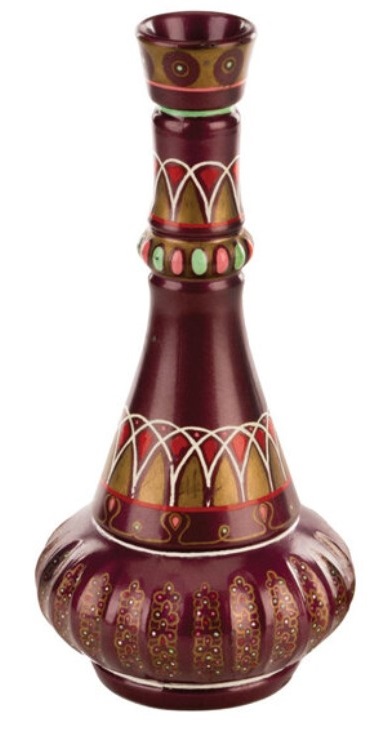
Write about your most treasured possession.
#justwrite #iamawriter #iamwriting
Memorable writing that sparks imagination. Lean in. Hear the writer’s voice on the page.
Halloween
By Tina Deason
This season holds mystery and thrill, as the sun fades and the fog clings to the earth. The darkness hides creatures and haunted beings. The empty trees have died for a bit, but plan to return in the spring. The thought of witches casting spells and making potions right out in the open after hiding away for the eleven other months of the year, intrigues me.
The creaking bones of the dead and the soft sound of earth moving as the zombies unearth themselves to rise to life. . .
And Dracula!
I had the most fear of Dracula when I was a kid. I used to slam my hand against the light switch and run up the stairs as fast as my legs could get me to the top. In my mind, I’d hear the basement door below flying open, the sound of thunder and pouring rain, and then, in the flash of lightning, he would be standing on the threshold. Dracula in his black cape with red lining and his white shirt. He’d wear his family medallion and the twinkle of his fang would scare the hell out of me. I could imagine his black polished shoes as he stood there, in the rainiest weather I could dream of, and he waited patiently for me to invite him in.
All of that happened in a split second while I ran to the top of the stairs and opened the door to the main floor of the house. On the other side of the door was a warm, cheery home where no one could get to me. Our house was built by my dad, and so I felt as if the fortress could never be invaded, and old Count Dracula could stand in the rain forever for all I cared.
At least, when I closed the door at the top of the stairs.
Tina Deason lives in Sonoma County, CA. She is a wife, mother, grandma.
She is the author of “One’s Own Sweet Way,” a novel about her daughter’s challenges with debilitating anxiety in high school.
Tina is also a spiritual leader who writes rituals and ceremonies.

Caring and sharing make emotional journeys bearable.
Write about a time someone made you feel cared for.
Or, a time you showed care and concern.
Bonus points if it was a surprise.

I’ve been struggling with . . .
Or, I struggled . . .
#iamwriting #iamawriter #justwrite