
If you knew then what you know now, what would you do differently?

If you knew then what you know now, what would you do differently?
Finding Peace
By DS Briggs
When in Switzerland I wandered into a large ornate cathedral. The choir was singing. The voices soared with the organist’s notes. I didn’t understand the language but sitting in the back pew I felt entranced and relaxed.
I live with a lot of silence within my home. I don’t usually have the radio, tv or music as background. I don’t know why. Habit? Or just a need to keep calm.
I have experienced calmness in walking outdoors. I was on the dog path, walking Boo. I heard a splash in the creek. I saw a pair of ducks swimming, dipping and eating with their bottoms-up. I took time to watch how the sunlight dappled the creek and how the brilliant red-leafed tree stood out from the myriad of greens and browns. I just stood, leash in hand, and looked. I enjoyed the calm while I watched the ripples of circles the ducks made. It was a great moment to just be in the now.
Other examples of this quiet-calm have been in walking with large, huge trees. I first noticed my heart quieting and healing when I camped in Sequoia National Park. Closer to home I found time in Armstrong Redwoods provided similar feelings to Sequoia until our most recent wildfire destroyed many of the trees.
I find more calming and quiet healing in the mountains than at the ocean. Although the waves moving in and out are mesmerizing, I don’t experience the same calming quiet that mountains provide.
Sheltering in place because of Covid, I could not go to the mountains. My experiences of quiet-calm came, however, when I would sit outside in the early morning before leaf blowers or phone calls. I just watched the birds flit . . . while sipping coffee from a warm mug in my bathrobe. Bliss.
DS Briggs writes and resides in a small cluttered kingdom, with a gigantic dog. She discovered joy in writing while in elementary school. A brief stint as a newspaper reporter while in high school, DS thought journalism would be her college major. However, her writing career stalled in college when she realized she hated analyzing comma placement and switched to social science. DS became an elementary school teacher and later specialized in teaching independent travel skills and braille to students with visual impairments. Retired now, DS has returned to her love of writing thru Marlene Cullen’s Jumpstart Writing Workshops.

“I am not a writer because I write a certain number of words every day. I am a writer because I use story to reimagine worlds. My value as a writer, citizen, and human is not rooted in my productivity, I tell myself on those brain foggy, exhausted days in which small humans climb on my limbs with no mercy.” —Ruth Osorio, excerpt from Ruth’s guest blog post in Brevity magazine.
As of Fall 2018, I am living my undergraduate student dream as an Assistant Professor of English and Women’s Studies at Old Dominion University. My family lives in Norfolk, VA, where we spend our days chasing kids on the beach. I am also involved in local grassroots organizing tackling the school-to-prison pipeline and school suspensions in Norfolk Public Schools.
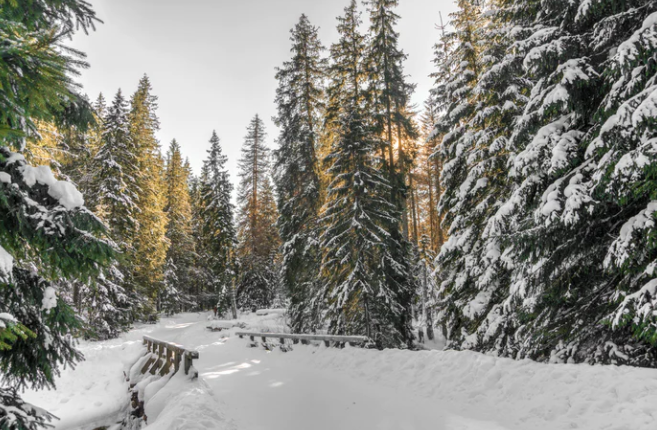
Winter.
What is the best thing about winter?
What is your earliest winter memory?
Or:
Most memorable thing that happened in winter.

Think about a relative or an ancestor who you know very little about. You can jot down names or how the person is related to you if you don’t know their names. Take about two minutes for this.
Choose one person to focus on. Time travel to when that person lived.
Write about that person in a “take me back” way . . . using location or place, date, other characters or people who lived then as details to learn about this person.
You can make things up, imagine conversation, imagine circumstances.
There are no wrong answers. Have fun exploring the possibilities of “what if?”
What if you lived during this time, what would you be doing? Where are you in this scene?
The Free February 18, 2021 Writers Forum event features Kate Farrell, Waights Taylor, Jr., and Bev Scott chatting about how to research family history and shape your story.

Create a character, or develop a character.
~ The character could be you . . . when you were younger, or looking ahead, you in the future.
~ Someone you know, dead or alive.
~ A fictional character you created.
Give your character a name:
Younger Me.
Older Me.
Someone you know.
Your fictional character.
Woman in 1940s.
Man on a Mission.
Person in a foreign country.
Get up and walk around your space, looking at things, touching things, as if you were that character. Look through the eyes of the character you are writing about. Say, or think, the name of your character as you walk around.
Walk in your character’s shoes.
Spend 3-5 minutes on this.
When you return to your chair, respond to the prompt from your character’s point of view.
Use one of these prompts as a springboard to write about a character of your choice.
What did your character see that interested them?
What does your character want to know more about?
Write from your character’s point of view:
I think . . .
I suppose . . . I remember
Thank you to B. Lynn Goodwin for the inspiration for this prompt.

Prompt #554, Character Idiosyncrasies, on The Write Spot Blog, suggests ideas to write about a fictional character, or someone you know. You can do all that for this prompt. Plus, you can fill out the answers for yourself, as if filling out a questionnaire.
Character Sketch . . . fill in the details about your character.
5 positive traits
5 opposite traits
3 least favorite things
3 favorite things
What does this person love?
What is this person looking for?
What is this person afraid of?
What is most important to this person?
What is this person’s secret?
Prompt inspired by Stefanie Freele’s June 2012 Writers Forum talk, “Developing Character.”
Please join us on February 10 and February 18 for Zoom Writers Forum talks about story telling by Kate Farrell, editor of Story Power.

You can use photos to develop ideas for creating characters.
Turn your imaginary characters into believable characters.
Use photos to establish physical characteristics
Look at images in magazines or in photo albums or online.
Choose an image for a character you want to develop.
Write a character sketch, just as an artist would draw with charcoal. Flesh out what your character looks like.
Add details that make your character unique and memorable: body shape, statuesque, angular, plump, scars, tattoos, piercings, lanky, a hulk, petite, piercing violet eyes, honey brown eyes, disarming smile, large ears, moles, hair style.
Craft your character’s personality
Analyze photos to build a personality for this character.
Is your character touching anyone in the photos?
Are they leaning towards anyone?
Note how their looks imply character traits: stoic, friendly, menacing, open-minded, pleasant, formidable, playful, serious.
A furrowed brow might indicate stress. Crow’s feet at the sides of the eyes could indicate someone who laughs often, or is frequently outdoors in the sun.
Expand your analysis
What feelings do you get when you look at your character in the photo?
Does their facial expression match their physical posture?
Imagine what happened right before the picture was taken.
Conjure up what happened right after photo was taken.
Who took the photo?
What is the photographer’s relationship to the person in the photo?
Images in school yearbooks
What do their photos and captions in their yearbooks say about them?
What is revealed in these photos? Is your character in any clubs or active in sports?
On the debate team? The newspaper or yearbook staff?
Bring your character to life
Look into the eyes of the character in the photo. What is the story behind the story?
What do their clothes say about them? Where did they shop for clothes? Did they make their own clothes?
Of course, jobs and hobbies are also important to invent a character.
How do they spend their time?
How do they spend their free days?
If they had a million dollars, how would they spend it?
Speculate
How much schooling did they have?
What did they have for breakfast?
Favorite snack?
Favorite color?
Use these ideas for starting points to produce original characters.
More prompts on character development.

How do writers develop characters? How do writers get to know their characters beyond their looks, their desires, and where they went to school?
For this prompt, you can write about your main character, a supporting character, or you can write about someone you know.
If you are writing about something that really happened, you can use that incident and those involved as your characters. When you write about real people, they become “characters” in your story.
Here’s how it works:
Interview your fictional character as a journalist would, but not at the age they are in your story. If they are older, interview a younger version of your character.
If your character is young, imagine what he or she might be like as an older person.
For your real-life person, have an actual interview, if you can. If not, imagine what they were like as a child, a pre-teen, a teenager.
Activities
Here’s a trick to really get to know your fictional characters: Write about how they spend their time. Did they undergo training or schooling for their job? Do they go out with friends? How did they meet these friends? What does their family do when they get together?
Write about how your characters spend their time. Do they collect odd items? Did they join clubs in school? What does your character do when she or he is alone?
Give your character an unusual job or hobby. Either something you know about, or something you can research. An internet search reveals thousands of job and hobby possibilities for your characters.
Ideas for jobs and hobbies at Happy DIY Home.
An example of an unusual activity: Parkour.
“Parkour can be defined as an activity involving movement through an area, typically urban in nature, in an efficient and creative way. Those who practice it are known as traceurs (French for ‘trace’) and will jump, climb and vault over obstacles in their path in order to get from A to B as quickly as possible.” — Parkour: The Ultimate Guide For Beginners, Sport Fitness Advisor
Describing an activity is a way to add the sensory detail of kinesthetics to your writing—motion in writing.
Prompt: Interview your fictional characters to discover their idiosyncrasies.
For more about character development and adding sensory detail to writing:
Flesh out your characters. Prompt #131
Character development – discovering characters. Prompt #132
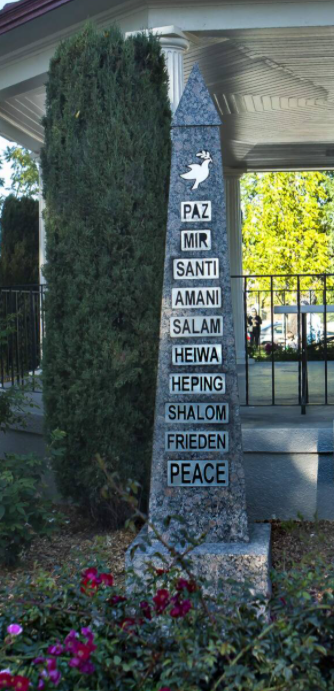
Like many, I am worried about the future of America.
I believe in the power of writing as a path to healing.
If you are feeling overwhelmed and scared, please take a few minutes to write about your feelings.
You can’t change what happened. You can change what you think.
Today’s prompt is a hope and a chance for you to write about your thoughts and your feelings, as a way to start healing.
For more prompts and suggestions for healing through writing, please consider reading the anthology, The Write Spot: Writing as a Path to Healing, available as a paperback and as an ereader through Amazon.
Prompt: What are you afraid of?