-
What money can’t buy . . . Prompt #372
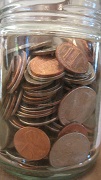 Write about what money can’t buy.
 -
The Verge for freelance tech-heads
“The Verge covers the way technology and science are changing the way we live.” — Writer’s Digest.
“Positioned at the ultra-relevant intersection of technology and culture, The Verge affords writers an opportunity to explore unique stories in longform that fit its editorial interests, such as an unexpected side effect of an app, a surveillance program people aren’t aware of, the inside story of a product’s development, a cutting-edge research programmer, an online community or trend that’s escaped notice. With numerous Webby Awards to its name, reach to an expansive audience, and respectable pay, this market holds solid potential for freelance tech-heads.” —Tyler Moss, interim editor, Writer’s Digest
How to submit: Email a clear, concise pitch detailing your story idea and why it’s a good fit for The Verge, as well as a short bio and links to previous work, to the appropriate section editor.

-
Guest Blogger Alison Luterman . . . Go deep into your writing.
 Guest Blogger Alison Luterman writes about going deep with your writing.
Originally posted in her May 1 newsletter.
Many years ago, in Hawaii, I got a chance to go “scuba diving.” I’m putting the words in quotes because it was really pretend scuba diving for tourists. There was no training involved other than the most basic instructions on how to breathe through a tube connected to the oxygen tank that was strapped to each person’s back. I think we had to sign a waiver saying we would not sue the company if we drowned. Then a group of us waded out, submerged, and voila! We were “scuba diving.”
Well, not quite. My man-friend, S., had heavy bones and big muscles and he descended like a stone to the ocean floor. I could see him fifteen feet below me picking up beautiful shells while I floated directly above him. I couldn’t sink. They gave me a weight belt affixed with all kinds of metal doodads which allowed me to at least get below the surface, but my small bones, light muscles and, ahem, general fluffiness meant that my body just wouldn’t go down to the depths where S was exploring. Instead I watched him, and enjoyed what I could see from the mid-level.
I thought about this image last week in memoir class when the timer went off—we had been writing for thirty minutes—and I softly announced that it was break time. My students ignored me and kept writing. They were down there on the ocean floor with all the sea creatures and hidden caves and to come up too quickly would have given them the bends.
I let them go on for another five minutes, at which point I set a good example by standing up and stretching. No one even looked up. They were too busy confronting dragons and consorting with mer-people.
“They say sitting is the new smoking,” I remarked helpfully. Silence, except for the sounds of pens scratching and computer keys clicking.
When they finally consented to stop writing and shared their work aloud, I was reminded again of the image of one diver floating directly above the other. Because of the nature of the reading assignment and our discussion, many of them had felt prompted to write about trauma. Trauma writing is a place where you can often viscerally feel various layers of consciousness operating at the same time. Deepest down is the Child or the Actor, the person who experienced what happened. He or she is like my friend S., at the bottom of the ocean floor, experiencing all the details.
Hovering just above the Child is the Witness-Self, taking notes. The Witness is in touch with the Child, but can see more of what’s going on than the Child does. The Child cannot see the Witness just as S couldn’t see me during our whole dive, (he told me later he had spent the whole sojourn wondering where I was.)
The Witness floats like a guardian angel near the Child’s back, even if the Child is oblivious.
Floating above them both is the Writer-Self who is close enough to the surface to be aware that there’s a whole other sunlit world out there. The Writer-Self knows how things turn out in the long run and she can, if needed, give a larger context (political, social, spiritual) to the story.
It’s important to say here that the depths can be scary but they’re also nourishing and rich. They’re the ancient birthplace and deathplace, place of mystery and regeneration. It takes courage to return there to uncover the bones and retrieve the gems. And the support of a class or group can help.
This particular class of psychic scuba divers are very dear to me, for their courage and stubbornness and willingness to stay deep until they have completed their mission, until they are down to their last sips of oxygen.
Note from Marlene: There are many wonderful writing teachers who can help you go deep in your writing. Check your local resources. In Sonoma County, writing teachers are listed in the Sonoma County Literary Update.
The Write Spot Blog posts for suggestions on how to write about difficult situations without retraumatizing yourself:
How to Write Without Adding Trauma
Suzan Hagen’s Guest Blog Post on The Write Spot Blog : Healing Through Writing
Alison Luterman is a poet, essayist and playwright. Her books include the poetry collections Desire Zoo (Tia Chucha Press), The Largest Possible Life (Cleveland State University Press) and See How We Almost Fly (Pearl Editions) and a collection of essays, Feral City (SheBooks). Luterman’s plays include Saying Kaddish With My Sister, Hot Water, Glitter and Spew, Oasis, and The Recruiter and the musical, The Chain.
Her writings have been published in The Sun, The New York Times, The Boston Phoenix, Rattle, The Brooklyn Review, Oberon, Tattoo Highway, Ping Pong, Kalliope, Poetry East, Poet Lore, Poetry 180, Slipstream, and other journals and anthologies.
Go to Alison’s website for writing workshop dates as well as her coaching and editing work.
-
I like the sound of . . . Prompt #371
I like the sound of . . .
Write about the sounds you like.

Or, write about sounds you don’t like.
-
If that one thing didn’t happen . . . Prompt #370
Write about how different your life . . . or your fictional character’s life would be . . . if that one thing didn’t happen.

-
Smell of childhood . . . Prompt #369
The smell of childhood. Write about smells from your childhood, or smells from your alter ego’s childhood.
I immediately think of food: Fresh peaches, just picked strawberries with that earthy smell, piping hot chicken potpie fresh from the oven, just-baked chocolate chip cookies, hot buttery popcorn, s’mores = toasted marshmallows, melted chocolate, crisp graham crackers. Yum!
Outdoor smells: Freshly mown grass, river, diesel, ocean, fog, smog, campfire, burning leaves, snow.



-
Atlas Obscura
“A publisher of ‘best-in-class journalism about hidden places, incredible history, scientific marvels and gastronomical wonders,’ Atlas Obscura spotlights the weird and wonderful from around the globe.” July/August 2018, Writer’s Digest.
There are two main sections on Atlas Obscura: the Places database (a.k.a. “The Atlas”) and Stories, which is the home for reported articles.
If you are pitching us a write-up of a place that you have visited or heard about, it is probably most suited to be an entry in the Places database. These are crowd-sourced submissions that go through an editorial process before being published. You can read more on how to submit a Place entry here. We generally do not pay for place submissions.
For the Stories section, we are seeking original journalism. Stories that will surprise us and article ideas that would never have occurred to us but that we won’t be able to stop thinking and talking about. We pay for stories, at rates competitive with other online-only publications.
Our stories generally have at least two of the following three components:
A sense of place
An element of the hidden
A sense of wonder
Commissioned stories for Atlas Obscura are carefully researched, well-reported, and told from an original perspective. In general, the subjects we cover are history, science, culture, and exploration. But we are hungry for stories of all kinds, particularly from voices and places that are underrepresented. Currently we are especially seeking articles reported from China, Africa, and Central and Southeast Asia.
In addition, we have a handful of planned “theme weeks” for 2018, for which we’re currently soliciting pitches from outside writers. Stories published during these theme weeks will play off of the selected topic, in a variety of creative ways:
July 2018: Landmarks Week
October 2018: In Disguise Week
Things we can rarely use:
Travelogues
First-person essays
Pitches based on an unanswered question. If you’re going to make a question the basis of a story, we need to know you have the answer.
Articles that focus on supernatural events
Event/festival coverage
Things we can never use:
Fiction
“I’ll be in X location next week, what would you like me to cover?” (Please send specific story ideas!)
We are actively looking for and assigning articles now. Rates vary based on the assignment. The most successful pitches will include a sketch of the story, the characters, your access, and the big questions/surprising ideas you think the story offers. We will carefully read every pitch, and, if our curiosity is piqued, we’ll reach out to you.
Pitches consisting of a few paragraphs with basic info about the story idea, how you would execute it, and the sources you would use—no Wikipedia, please—should be emailed to pitches – at – atlasobscura.com
Plus: Special Focus on Food
Our food & drink vertical launched in November 2017. We are actively looking for and assigning articles aimed at Gastro Obscura. Rates vary based on the assignment.
Pitches—a few paragraphs, with basic info about the story idea and how you would execute it—should be emailed to gastro-pitches – at – atlasobscura.com. Please also include links to two articles that you have written and that you are proud of. They don’t have to be about food. And if you have a plan to take/find pictures and images for the article, let us know in your pitch. That makes it easier to say yes.
-
Alter Ego. . . Prompt #368
Describe your alter ego: Looks, personality quirks, how does he/she come across?
For example, if she/he were speaking on a stage, what would people think of her/him?
What did he/she like to do as a child?

-
2018 Voices of Lincoln Poetry Contest
❉ The 2018 Voices of Lincoln Poetry Contest ❉
The theme for the Voices of Lincoln Poetry Contest is: “The Magic of ‘If . . .’ Through the Power of Poetry.”
There are five categories:
- If I Could See The Future
- If I Could Travel Back In Time
- If I Had A Robot That Knew Everything
- If I Believed Anything Was Possible
- If Money Grew On Trees
You may submit a maximum of three poems, no more than one in each of three of the five contest categories.
Everyone is encouraged to enter the contest. Poets do not have to live in Lincoln to be eligible.
Young Poets, 18-years of age or under, are encouraged to submit poems and will compete in a special “Young Poets” category.
Entry Forms and Contest Rule can be downloaded: www.libraryatlincoln.org
Poems must be received no later than Saturday, July 21, 2008
Questions—contact Alan Lowe at slolowe@icloud.com