Quiddity is a great word. But what does it mean?

  • Quiddity is a great word. But what does it mean?

    Quiddity is a multimedia arts venue featuring an international literary journal (print and audio), a public-radio program, and a visiting writer and artist series.  Each is produced by Benedictine University in partnership with NPR member/PRI affiliate WUIS, Illinois Public Radio’s hub-station.

    The print journal, published semi-annually, features exemplary prose, poetry, and artwork from emerging and established writers and artists around the world. International submissions are encouraged.

    The public-radio program and the visiting writer and artist series feature select authors and artists. Contributors to the print journal are invited to contribute to the audio journal and may have their work featured on the public-radio program.

    The term quiddity means “the real nature or essence of a thing; that which makes it what it is.” Because those who participate in the arts—crafters, readers, viewers, listeners—are its quiddity, the venue Quiddity seeks not only work from a wide and diverse pool of individuals but also to share that work with a wide audience.

    Click here for submissions guidelines.

    Quiddity

  • What if we speak truth with compassion? The power of words.

    Guest Blogger Kshatriya Millick writes about the importance of words.

    The lyrics to “Speak Life” by Toby Mac have really been weighing on my heart and mind. Hearing this song, live in concert, touched my soul and spirit in a way hearing it on the radio never did. It has caused me to think about how I speak to others. Do I use my words to lift others up or tear them down? Do I take little jabs to their characters and their lives, to feel like I am connected to something or to feel superior? Do I use jokes that are hurtful to be funny? Do I use my words to inspire others or to discourage them? These questions have caused me to evaluate how I use words in my life, and how those in my life use their words in their lives. I no longer wish to associate with people who use their words to judge, tear down, make a joke at others’ expense, ridicule, or who just don’t care what they say. I no longer want to be the person who uses her words to hurt others.

    How hard is it really for me to spread hope and kindness with my words? How hard is it really for me to speak encouragement instead of ridicule? I don’t have to be witty or “on the mark” or funny to say a word that would lift someone up. Why shouldn’t I be proud of those in my life? Why shouldn’t I learn to look at them and say, “You are an amazing person” and mean it! How hard would it be to eliminate the witty banter of sarcasm and ridicule for truth and support? Why do I need to use sarcasm as a way to prove to the world I have a “special” connection to someone?

    Words spoken even in jest can cause pain, doubt and mistrust, so why wouldn’t I watch my words? If I focus on lifting others up and “speak life” to them, wouldn’t I be the one who benefits from that action? I find when I can “speak life” and encouragement then I feel better about my day, I feel better about my relationships and I feel better about me.

    Does this mean I won’t tell people the truth or bring light to something that I see as harmful, no of course not, truth is different from what I am saying, yet it is the way we express it.

    Think about it for a minute, how do you deliver the truth to someone? Do you do it with disdain, are you a bully with your delivery, are you judgmental, or are you mean? Now think about how you respond to this kind of delivery in your life? There is no written rule that says, “Truth must be delivered with a hammer and with stones, until the person you are speaking to is a pile of brokenness and despair.” What if we speak truth with compassion? What if instead of rocks thrown we put our hand out and offer to help them walk? What if we truly treated others the way we desire to be treated and not the way we were trained to accept treatment?

    My challenge for myself is to “speak life” into each person I come in contact with, in some way. A smile, a kind “Hello,” eye contact, truth with compassion, forgiveness, a word of encouragement for the hard work they put into a goal they are working towards. My challenge includes my family and friends; sometimes it is those close to us that we ridicule the most, when they should be the first people we lift up.

    “Speak Life” by Toby Mac is a song that expresses the power of words. Words we say, words we hear, words we write, all the words we use. It spoke to me in such a way as to change my thinking about how I use my words. It changed how I hear words and it has changed me and my relationships. All my conversations now have a positive slant; I speak words of encouragement and hope before I speak words of bitterness and pain.

    Kshatriya Millick lives in Northern California and is married “to a very loving sweet man who has taught me so much about love and acceptance.” Over the last couple of years she has transformed her life. “I have gone from existing to living a joyful life. At almost 300 pounds I started my life all over with all things new from a job to a new school to a new relationship. Now at 115.8 pounds less and with a new lease on life I see each day of my life as a blessing and I adore and welcome the challenges life has to offer.”

    Ksha

  • Maybe what I have written today is messy, clumsy, raggedy . . .

    “Say to yourself, ‘Maybe what I have written today is messy, clumsy, raggedy, but that’s my poem for today.’ Maybe there is a neater poem buried inside it that I can work on tomorrow.” — Naomi Shihab Nye, April 2014 Writer magazine, “Mystical Jolt,” by Robert Hirschfield

    Lola

  • My mother always said . . . Prompt #69

    I hope today’s prompt will inspire you to write about your mother, or your mother figure.

    Prompt:  My mother always said . . .

    Or: My grandmother always said. . .

    Or: My [mother figure] always said. . .

    Marlene and Jeanne


    Marlene and her Mom, 1959, San Francisco, CA


    After you have written your freewrite, if you are inspired. . . polish, revise, edit, review your writing and submit to Lynn Cook Henriksen for her blog and possibly for inclusion in Volume II of Telltale Souls. Click here for details.


  • Use sensory detail and be specific.

    I love gorgeous writing and wonder how authors produce writing so vivid you feel as if you are in their world.

    One idea is to watch what people really do when talking, use sensory detail and be specific.

    For example, author Rachael Herron creates believable fictional characters. There is so much to like about her writing. One tool she employs well is the actions her characters engage in while talking. The dialogue develops character and moves the story along. The action makes the characters believable. Here are some examples from “How to Knit a Heart Back Home.

    Owen twisted the [plastic] spoon in his fingers. He would not rub the scar on his hip, which suddenly burned.

    Lucy took the now mangled plastic spoon out of his hand and then threaded her fingers through his.

    Dropping his eyes from hers, Owen watched Lucy’s pulse flicker rapidly in the hollow of her throat. For a moment there was no sound but the crash of the waves below.

    Back to me. . . Oh, my. I can see and hear and feel . . . the mangled plastic spoon, feel the burning scar, see the hollow of her throat and hear the crashing waves.

    Action: twisted, dropping, watched, threaded, flicker, crash

    Specific: plastic spoon, hip

    Sensory detail: burn, sound

    Your turn: give us examples of exquisite writing that use strong verbs, is specific and employs sensory detail. Share your finds with us.

    Write a scene or a vignette: a freewrite using action words (strong verbs), be specific (sycamore, not tree), sensory detail (sight, hearing, taste, touch, smell). Herron. How to Knit A Heart

    Just write!


  • If only . . . . Prompt #68

    Writing Prompt:  If only . . .

    Set your timer for 12 minutes and write “If only”   . . . .  and keep writing.

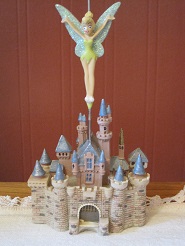
    Tinkerbell


    Prompt #68 – If only . . .


  • “Mother Memoir” Story Submission Guidelines 2014

    Lynn Cook Henriksen writes:

    When “TellTale Souls Writing the Mother Memoir…” was setup on the Amazon site, they characterized it as Volume I. I felt someone was trying to tell me Volume II would need follow, so now’s the time to start writing the story only you can write and send it to me for possible inclusion. Volume II will be mainly filled with TellTale Souls’ bio-vignettes, not as a guide to writing, since I covered that well throughout the Five Acts making up Volume I.

    For the publication of your non-fiction, telling-tale on the TellTale Souls/The Story Woman blog or possible inclusion in a future memoir collection, please follow these guidelines.

    Look over the The Story Woman Blog  carefully and you will gain insight into what we would like to see in your story (your bio-vignette). Need help?

    Tell Tale Souls.1Consider reading  TellTale Souls Writing the Mother Memoir: How to Tap Memory and Write Your Story Capturing Character & Spirit for a creative exploration, including over 40 story examples, to get your juices flowing on your path to writing your Mother Memoir.

    Here is the seminal question for you to answer, “If you could tell just one small story that would capture your mother’s character and keep her spirit alive into the future, what would it be?” Become a TellTale Soul in answer to that question by writing your short, true story about a woman who greatly influenced your life—could be your mother, grandmother, aunt, or anyone to whom you felt like a daughter or a son.

    Stories are accepted by TellTale Souls of all ages.

    Story Specifications:

    • Original, non-fiction (and not previously published)
    • Use plain, 12-point font
    • Story, bio-vignette, length is around 800 to 1800 words
    • Include a brief Author Note about what it meant to you to write this story about a mother figure (that will be added after each story)
    • Important to add your e-mail address and phone number again in the body of your email, so that I can easily communicate with you
    • Optional: Include a picture pertaining to your story in pdf or jpeg format
    • Send each story only one time

    Henriksen photoPlease email your Mother Memoir to Lynn Henriksen: lynn(at)telltalesouls.com

    To learn more about Lynn Cook Henriksen please visit her website and her blog.

    Thank you!

  • Due Dates — Making Friends with Deadlines by Michelle Wing

    Guest Blogger Michelle Wing writes:

    I have always been rather envious of writers who say they sit down at their desks each day at, say, 9 a.m., and write for three or four hours. In other words, writers who have a pattern and a discipline to their output. That is simply not how I am wired. I can’t do anything that way – exercise regimens, meals, study sessions – nope, I fail at every attempt to adhere to a strict schedule.

    Instead of berating myself over this, I have learned to look at what does work for me. What are my ideal conditions for writing productivity?

    I thrive under deadlines. Having spent over 15 years of my life working as a journalist, I am very familiar with the feeling of having to get a story out – now – just under the wire. It is its own particular type of adrenalin rush. Journalistic copy is often fairly straightforward – a news story, maybe a longer more elaborate feature, a column. But always, that common thread of having a short time frame to get the work done.

    I still have a couple of similar gigs now. I write a monthly literary column which appears in four local newspapers, and I also do a Q&A interview on stage craft for a local theater company, as part of the program handed out to patrons at the show. These writing assignments are easy for me to manage, because I simply calendar them. I know when I have to be brainstorming for ideas, when interviews must be scheduled, and when the final copy is due. No problem.

    So what about my more creative work? How do I make space for it in my otherwise very busy life? The best way I have found is to treat my prose and poetry the same way. Find deadlines. One option is to look for submission opportunities. I choose a reasonable number, and put them on my calendar or my white board. A call for pieces for an anthology, due on June 1. A contest for creative nonfiction, due on June 30. A local group asking for contributions to a poetry chapbook, due in August. I may decide along the way not to go with all of these, but at least they get me started at my computer.

    One of the reasons I enjoy working with deadlines, and having specific projects in mind, is that I am a percolator. Especially with poetry, much of my writing is done when I am not sitting in front of the blank page. It happens when I am walking, or reading someone else’s verse, or when I am sitting at a coffee shop waiting for a friend to arrive. My poems brew. By the time I sit down to write, entire lines are already formed. But I can get lazy, and not stick with an image or a poem. Knowing that I have a deadline coming up, I will encourage this process to pick up the pace a bit. Remember, I will whisper as I wake up in the morning. We have a poem we’re working on. Keep your ears open.

    This can be used just as effectively on much bigger projects. When Ruth Thompson of Saddle Road Press first approached me about writing a book of poetry, it felt completely overwhelming. How could I get a handle on something that huge? It turned out to be very basic. We set a deadline – final manuscript due by Jan. 1, 2014. As soon as I had that goal in mind, all the rest fell into place. I found I was able to do the work, pace myself, make the time, get it done. All I needed was that firm deadline.
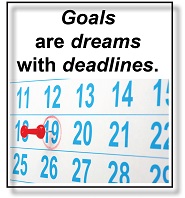
    Goals Are DreamsSo now, when asked how many hours a day I sit at my desk, I don’t feel ashamed to say that sometimes, I don’t sit there at all. Because it doesn’t matter. The dates are on my calendar; the work is in process; and I am a writer, whether or not I am at the keyboard.

    Michelle Wing_02-sm

    9780991395200_cov RC 05.inddMichelle Wing is a poet (Body on the Wall, May 2014) and writer of creative nonfiction who blogs about writing. For more information, see her website.

  • Listen to the world around you — Jörgen Elofsson

    “If you want to write about a ‘broken heart,’ it’s good to know what a broken heart feels like. I also believe you need to take the time and not rush things, keep it playful . . . and listen to the world around [you].” — Jörgen Elofsson, songwriter for Kelly Clarkson, excerpt from the May 2014 issue of The Writer Magazine.

    Jorgen Elofsson
    Photo: Jorgen

  • Write about a character and music. Prompt #67

    Today’s prompt is inspired from the May 2014 issue of The Writer magazine.

    Write about a character (real or fictional) surrounded by music. What instruments? What songs? Describe the soundtrack to the character’s story. How does music affect his or her actions, and what role does it play in the narrative?

    More from this issue:

    “Write the way people actually talk. You can use imagery and be poetic, of course, but the best lyrics sound like something people might actually say.” — Murray Horwitz, co-writer of the musical Ain’t Misbehavin’

    Writer.May 2014