Discover, flaunt, and celebrate your authentic assets. — Dame Edith Sitwell

  • Discover, flaunt, and celebrate your authentic assets. — Dame Edith Sitwell

    Discover, flaunt, and celebrate your authentic assets. — Dame Edith Sitwell

    “Her early work was often experimental, creating melody, using striking conceits, new rhythms, and confusing private allusions. Her efforts at change were resisted, but, as the New Statesman observed, ‘losing every battle, she won the campaign,’ and emerged the high priestess of twentieth-century poetry.”    Poetry Foundation

    Edith Sitwell.1

    Dame Edith Sitwell

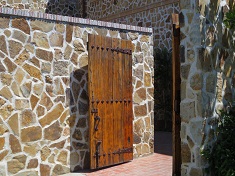
  • Standing in a doorway . . .Prompt #63

    Today’s prompt:  Standing in a doorway . . .

    French Market


        Photo by Jim C. March

  • Write short? Write long? Write strong!

    The following is an excerpt from “When every letter counts,” by Kevin Cullen (no relation to me that I know of). —  March 2014 issue of The Writer Magazine.

    Kevin writes:

    I have been in the newspaper game for more than 30 years, which qualifies me as a card-carrying old fart.

    I have tried to embrace new technologies and platforms pushed upon us by enthusiastic, young tech geeks who talk about Facebook and Twitter with the zeal of evangelicals. Online is where it’s at, even though we still  make most of our  money from the dead tree version.

    But what has all this meant for writing? Because, let’s face it, the biggest advantage all forms of written journalism have over the immediacy of TV and radio is the ability to deliver depth and strong, evocative writing.

    Writing short and writing long require different disciplines. It’s the differences between writing a poem and writing a short story. When you tweet, every letter counts. When you write for the web, enjoy the freedom.

    Note from Marlene: Ideas for strong and evocative writing posted on The Write Spot Blog. Click on titles below for inspiration for strong and evocative writing.

    Crafting scenes a reader can see — and sense

    Watershed Moment Prompt #57

    The Power of Place

    Essence of You Prompt #45

    Pen


    What to do?  Just write!


  • A room from your childhood. Prompt # 62

    Sit back, relax. Take a few deep breaths.  Relax into your breathing.

    Think about rooms from your childhood. Let your mind wander around various rooms:

    Your bedroom

    Your parents’ bedroom

    Your grandparents’ bedroom

    The room where you ate your  meals . . . kitchen or dining room

    Your grandparents’ dining room.

    Here’s an excerpt from Lynn Henriksen‘s book, Give The Gift of Story, TellTale Souls’ Essential Guide*, page 58, excerpt written by Robin.

    IMG_1899

    Jamie and I would crawl into our cozy little bed between the softest apple-green sheets that matched the apple-green carpet and the apple-green walls. We took turns as to who had to be squished against the wall and who was to be on the outside nearest Grandma.  We always took turns with everything at Grandma’s house, I figure that’s how she kept the peace.

    Now, settle into a room from your childhood.  Look around. Really look around.  Start from the doorway and move around the room. . .  write about what you see, what you remember. Include color, smell, texture. What did this room feel like? Who decorated this room?  What influenced the decorator?

    Prompt:  Write about a room from your childhood.

    * Give The Gift of Story, TellTale Souls’ Essential Guide is now out of print. Lynn’s latest book, the “new and improved model,” as she writes, TellTale Souls Writing the Mother Memoir: How to Tap Memory and Write Your Story Capturing Character & Spirit is available at Amazon and Book Passage in Corte Madera, California.

  • Two places to submit your poetry

    Sonoma County poet Nancy Dougherty has recently joined the editorial staff of California Quarterly, a journal devoted to poetry. Since this journal is small and currently off-line, the likelihood of getting published is pretty good.

    Nancy says, “The California Quarterly truly has a lot to offer in contests and as a link to other state poetry societies, which have similar journals and contests.”

    The California Quarterly is published four times a year. Submissions are accepted year around.

    Guidelines:  Submit up to 6 poems at one time, include name and address on all pages, self-addressed stamped envelope (SASE) for response. Submit unpublished poems only. Simultaneous submissions accepted.

    Send submissions to: CQ Editors, PO Box 7126, Orange, CA, 92863

    The California Quarterly is sponsored by the California State Poetry Society, a non-profit organization founded over thirty years ago. It is dedicated to the adventure of poetry and its dissemination. Although located in California, its members and contributors are from all over the U.S. and abroad. All those interested in poetry are welcome to join

    For information on membership, contests and publishing opportunities with California State Poetry Society (CSPS), please write to the above address.

    Another opportunity to publish your poetry:  “Digging Our Poetic Roots.” A project by Sonoma County Poet Laureate Katherine Hastings. For information: please go to The Write Spot News by clicking here (scroll down the News page until you get to the Poetry Corner).


  • Guest Blogger Lynn Henriksen asks, “Who is this woman you call Mother?”

    Guest Blogger Lynn Henriksen invites you on a journey.

    Who is she, really—this woman you call Mother? What could be more important than looking at your mother as an individual unto herself? Come along with me on a journey into the heart of the Mother Memoir to write a true and telling tale by answering this question:

    “If you could tell just one small story that would capture your mother’s character and keep her spirit alive for years to come, what would it be?”

    Moving your ego aside and searching purposefully for your mother’s intrinsic character can take some time to put into practice, but it is so worth your energy to discover valuable insights. Do you know what makes (made) her tick? What buoyed or drowned her hopes and dreams? What inspired her joy, tugged at her heartstrings, or thrilled her to the depths of her soul? What enlivened her spirit or dashed it to smithereens?

    As The Story Woman, I’m here to encourage you to find the answers to these questions and create a stirring bio-vignette. My mother died several years ago, but afterwards I wrote my short memoir honoring her, and I believe she felt it. I know my family appreciated it; it provided them a glimpse into her spirit that only I could pass on from my vantage point—one that could never be portrayed in mere photographs.

    It could be that you don’t even like your mother. Ouch! Perhaps, on the other hand, she’s so special to you, you’re so close to her, that you can’t bring yourself to see her as someone distinct in her own right—someone separate from you. Maybe you don’t want to look…too scary, too sad, too poignant, too intimate. As I see it, these are all valid reasons why it is essential for you to write a true story about Mother—one that embraces a special kind of memoir that peers into the heart and soul of your very first relationship.

    The beauty in writing the Mother Memoir is about honoring this most basic relationship. Whether your connection with your mom was good or bad, filled with light and happiness, or misery and regret, it is an avenue toward better understanding in all its forms. Through the process of writing your telling tale, a multitude of feelings and emotions are to sure surface. Be prepared for tears and laughter, while experiencing joy, sadness, anger, thanksgiving, angst, relief, or forgiveness and appreciate this process as a path toward healing and/or a forum for celebration. With an open heart, give thanks for the wisdom you will come to realize as the journey unfolds, since history lives within us despite the passage of time.

    Although her character is multifaceted and her inner make up complex, you’ll look for certain aspects of her personality that stand out and echo her distinct qualities. Begin by locating that one memory or cluster of events that in the telling would impart a genuine impression of the character and spirit of your mother as seen through your eyes. What aspect of her being, what specific quality, action, or anecdote can you draw upon to bring the essence of her character to light in a short memoir? You won’t trace her history in this bio-vignette or look for earth-shaking events as a basis for your story. It’s the real-life, day-to-day occurrences that connect us and often bring us to our knees.

    Once you have found the memory you want to shape into memoir, take a good, long reflective break from the well-formed picture you have formulated about your mother as it relates to this happening or string of events. Let go your assumptions—all of them—as you look for truth and honesty and discover buried under layers of façade the reasons why she acted or reacted as she did. You may be surprised by what you see and how you feel. You may experience an awakening or a shift in perception after distancing yourself from the event and applying maturity mixed with the willingness to look at your mother as an individual in her own right, from the inside out.

    Although the idea of writing a memoir can be overwhelming, remembering Mom through writing your Mother Memoir is doable. It calls for memories to be energetically crafted into words to make her spirit come alive in just a few pages creating a short, true story that has the power to reveal her essential spirit. You will come to understand its impact as you move through this process and join the ranks of TellTale Souls.

    Henriksen photoLynn Cook Henriksen, The Story Woman™, is the founder of “TellTale Souls,” an enterprise promoting writing memoir creatively through workshops, classes, speaking presentations, and her award-winning guidebook, TellTale Souls Writing the Mother Memoir: How to Tap Memory and Write Your Story Capturing Character & Spirit.  As an intuitive leader, Lynn discovered a profound way to keep spirits alive after witnessing Alzheimer’s disease ravage her mother’s mind. As an author, teacher, and entrepreneur, she has helped hundreds of people from 9 to 90 capture the memories and feelings they never thought they could record.  Lynn is a member of California Writers Club, Marin and past president of the Women’s National Book Association, San Francisco.

    Lynn will be the April 17 Writers Forum Presenter in Petaluma, California..
  • You just have to fight your way through. — Ira Glass

    Ira Glass is host and producer of This American Life.

    David Shiyang Liu recorded Ira talking about storytelling.  In Part One of the interview, you can watch Ira in the recording studio. You can also read about parts two, three and four in the caption.

    In Part Three Ira talks about the creative process. Watch Ira’s words unfold in a whimsical way.

    Ira Glass, the art of storytelling (typed with minor modifications):

    Nobody tells people who are beginners, and I really wish somebody had told this to me, is that all of us who do creative work . . . we get into it, and we get into it because we have good taste, but it’s like there’s a gap.

    For the first couple of years that you’re making stuff, what you’re making isn’t so good; it’s not that great. It’s trying to be good, it has ambition to be good, but it’s not quite that good.

    But your taste, the thing that got you into the game, your taste is still killer and your taste is good enough that you can tell that what you’re making is kind of a disappointment to you.

    A lot of people never get past that phase. A lot of people at that point, they quit.

    The thing I would like to say to you, with all my heart, is that most everybody I know who does interesting, creative work . . . they went through a phase of years where they had really good taste. They could tell what they were making wasn’t as good as they wanted it to be. They knew it felt short. It didn’t have this special thing that they wanted it to have.

    Everybody goes through that. And for you to go through it, if you are going through it right now, if you’re just getting out of that phase . . . it’s totally normal.

    The most important possible thing you can do is do a lot of work.  Do a huge volume of work.

    Put yourself on a deadline so that every week, every month, you know you’re going to finish one story. It’s only by actually going through a volume of work that you’re going to catch up and close that gap. The work you’re making will be as good as your ambitions.

    Ira Glass

    In my case, I took longer to figure out how to do this than anybody I’ve ever met.

    It takes awhile, it’s going to take you awhile, it’s normal to take awhile.

    You just have to fight your way through that.


    Thank you, Janet Ciel, for originally calling this to my attention.

  • How are you? No, really . . . Prompt #61

    How are you?    No, really . . . How. Are. You.

    Not the usual, “I’m fine. Thank you.”  That just won’t do right now.

    Take a deep breath . . . in through your nose. Exhale through your mouth.

    A couple more deep breaths.

    Now, how are you?  Scan your body. .  . start with your head. How is your hair? How are your eyes?  How is your throat?  Your stomach?  Anything talking to you?  Any body part want attention?

    Write how you are. How you really are. Go deep. Take a big breath. Go deeper. Excavate. Dig in and grab those shadowy feelings. Give them words.  Give them names. Translate the murky feelings into words.

    Let your inner self guide you through new doorways.doorway.Breana

    Now, really. How are you?


    Photo by Breana Marie


  • Short may be the new long game.

    Jessica Strawser, editor of The Writer’s Digest magazine, writes about the benefits of writing short pieces in the March/April 2014 issue of the Writer’s Digest magazine.

    “Writing short is a too-often overlooked way to break out in any field of writing. Even if —perhaps especially if —your ultimate goal is to publish a book one day.”

    She continues, “. . . a diverse approach to getting your name ‘out there’ —whether through personal essays on popular websites, feature articles in leading glossies, or short stories in respected literary journals—is far smarter than focusing your efforts in one place.”

    So, if you want to write short pieces . . . go ahead!  Follow the prompts in this blog and post your writing here!

    Lola